
 Tatiana Tantri Indah Sari
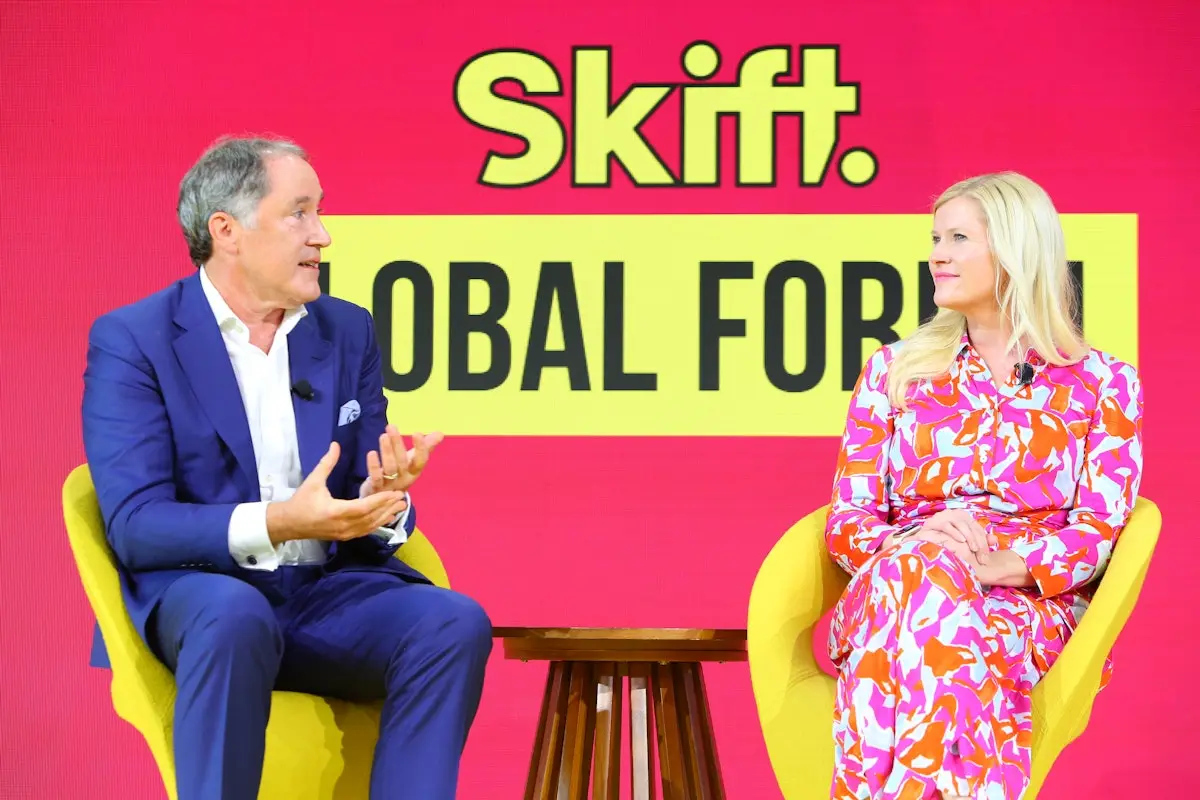
The modern hospitality landscape has long been defined by a binary choice for independent hoteliers: submit to the sweeping consolidation of mega-hotel conglomerates or risk being swallowed by an increasingly consolidated travel market dominated by online travel agencies (OTAs). However, recent discussions at premier industry forums have brought a compelling alternative into sharper focus. During a high-profile panel session moderated by Skift President Carolyn Kremins at the Skift Global Forum, Global Hotel Alliance (GHA) Chief Executive Officer Chris Hartley and Senior Vice President of Marketing and Loyalty Kristi Gole laid out a strategic blueprint that proves independent hotel brands do not need to surrender their unique brand identity to secure the benefits of global scale.
The conversation, captured in a specialized decision brief sponsored by GHA, centered on a critical industry dilemma: how independent properties can simultaneously maintain their distinct character while tapping into the lucrative distribution, loyalty, and data-gathering networks traditionally reserved for massive multinational hospitality corporations. According to Hartley and Gole, strategic collaboration offers a viable middle ground—one that empowers independent hoteliers to compete aggressively on a global stage without bearing the prohibitive financial costs associated with traditional brand acquisition or corporate conversion.
The Structural Dilemma of Modern Independence
To understand the weight of GHA’s proposition, one must examine the macro-economic pressures currently facing independent hotels. For decades, independent operators have prided themselves on offering hyper-localized experiences, bespoke interior design, and deeply personalized guest services that corporate flags simply cannot replicate. Travelers seeking authentic, culturally immersive stays frequently gravitate toward boutique properties.
Yet, the digital transformation of travel distribution has heavily tilted the playing field in favor of scale. Multinational hotel giants—such as Marriott International, Hilton, and IHG—wield massive loyalty programs boasting tens of millions of active members. These programs act as closed-loop ecosystems that drive direct bookings, reduce customer acquisition costs, and provide rich first-party data. Independent operators attempting to build comparable digital infrastructure independently face insurmountable capital expenditure hurdles. Consequently, many are forced to rely heavily on OTAs like Booking.com and Expedia, which charge steep commissions and distance hotels from direct relationships with their guests.
This structural disadvantage creates a pressing operational imperative. Independent brands need the expansive reach of an international network, but they fiercely resist the homogenization that typically accompanies corporate franchise agreements. Hartley’s core argument at the Skift Global Forum directly addresses this friction point, asserting that collective alliances can replicate the commercial power of major hotel groups while preserving the operational autonomy of individual properties.

Redefining Scale Through Alliance Dynamics
Rather than merging under a single master brand, the Global Hotel Alliance model operates on a collaborative federation framework. By uniting disparate independent hotel brands under a shared loyalty and distribution umbrella—exemplified by programs like GHA DISCOVERY—participating properties gain immediate access to an international customer base.
Hartley noted during the session that this collaborative approach delivers the essential advantages of scale—such as cross-border distribution and international customer acquisition—at a fraction of the cost required to join a traditional major hotel group. For independent owners, this means avoiding stringent brand standards that dictate everything from thread counts to lobby layouts, allowing them to retain the very quirks and cultural nuances that attracted guests in the first place.
This philosophy challenges the traditional twentieth-century hospitality playbook, which equated scale with standardization. In the twenty-first-century travel economy, data and digital connectivity have replaced physical uniformity as the primary drivers of enterprise value. By pooling resources for technology, loyalty administration, and global marketing, independent brands can project a unified commercial front while remaining fiercely independent behind closed doors.
Loyalty as the Ultimate Connective Tissue
A central theme of the discussion led by Kristi Gole was the strategic evolution of hotel loyalty programs. In an era where consumers are increasingly protective of their personal data and wary of generic marketing, loyalty can no longer be viewed merely as a transactional points-accumulation scheme. Instead, Gole positioned loyalty as the essential "connective tissue" of modern hospitality.
Effective loyalty architecture allows independent hotels to achieve three vital business objectives:
- Driving Direct Bookings: By incentivizing repeat business through valuable rewards and recognition, hotels can bypass high-commission third-party channels and secure direct financial relationships with guests.
- Collecting First-Party Data: In a privacy-first digital landscape characterized by the impending deprecation of third-party cookies, owning direct customer insights is paramount. Loyalty programs provide structured pathways to gather meaningful preference data.
- Recognizing Customers Without Homogenization: Gole emphasized that loyalty must enable cross-property recognition without making the hotels themselves feel interchangeable. A guest recognized for their status at a boutique urban retreat in Bangkok should feel equally valued at a rustic eco-lodge in Portugal, without either property losing its indigenous aesthetic.
This nuanced application of loyalty bridges the gap between digital efficiency and emotional connection, ensuring that guests feel seen and valued without experiencing corporate fatigue.

Industry Context and the Evolution of GHA
The timing of these strategic insights reflects broader shifts within the global tourism sector. Over the past decade, traveler demographics have shifted noticeably. Post-pandemic consumer behavior has accelerated a preference for experiential, unique, and sustainable travel—segments where independent and boutique hotels traditionally excel. However, rising inflationary pressures, labor shortages, and escalating customer acquisition costs have simultaneously squeezed operating margins for standalone properties.
As a result, alliance-based models and soft brands have experienced unprecedented growth. The Global Hotel Alliance, which encompasses dozens of independent brands representing hundreds of hotels worldwide, has seen its loyalty membership base scale significantly in recent years. By allowing brands to cross-sell to each other’s databases, GHA creates a symbiotic network effect where the collective whole becomes exponentially more valuable than the sum of its individual parts.
Industry analysts observing these trends note that soft brands and alliances represent one of the fastest-growing sectors in global hospitality development. Property owners seeking conversions are increasingly drawn to models that offer distribution muscle without the heavy-handed oversight of traditional franchise agreements.
Implications and the Path Forward
The dialogue between Hartley, Gole, and Kremins offers a clear preview of where the hospitality industry is heading. For independent hotel operators, the mandate is clear: isolation is no longer a viable long-term competitive strategy. To survive and thrive against deep-pocketed conglomerates, independent brands must find innovative ways to aggregate their demand and share technological capabilities.
However, the success of such collaborative models hinges on several critical operational factors moving forward:
- Technological Integration: Alliances must invest heavily in seamless, interoperable property management systems (PMS) and customer relationship management (CRM) tools that allow frictionless data sharing across disparate brand infrastructures.
- Brand Quality Control: Maintaining rigorous quality standards among member properties is essential to protecting the collective reputation of the alliance. If one independent hotel fails to deliver on guest expectations, it can negatively impact consumer trust across the entire network.
- Value Perception: Loyalty currencies must remain flexible, relevant, and rewarding enough to compete directly with the monolithic programs run by global giants like Marriott Bonvoy or Hilton Honors.
Ultimately, the insights emerging from the Skift Global Forum signal a maturing of the independent hotel sector. By embracing collaborative frameworks, independent hoteliers are proving that they do not have to choose between their soul and their scale. Through shared loyalty ecosystems, intelligent data utilization, and collective distribution strength, independent brands are charting a resilient course for the future of global travel—one that proves diversity and scale can successfully coexist.




 Dwi Wanna

 Anjar Salim

 Lukman Taruna Persada Ramadan

 Budi Mulyono
