
 Tatiana Tantri Indah Sari
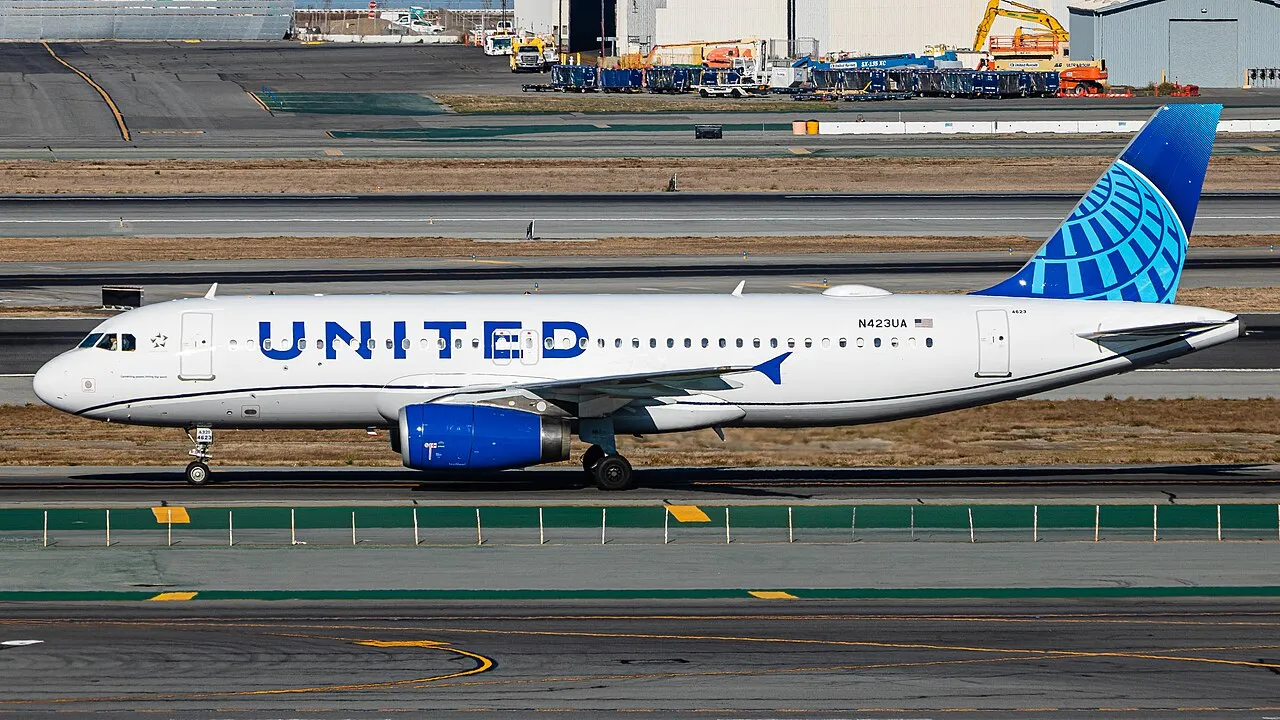
United Airlines is positioning high-speed satellite internet as a cornerstone of its future commercial strategy, banking on SpaceX’s Starlink to attract new flyers and outpace domestic legacy competitors. During the carrier’s most recent quarterly earnings call, executive leadership referenced the satellite internet technology 24 times, signaling a major strategic pivot toward in-flight connectivity as a primary revenue driver. CEO Scott Kirby dedicated a substantial portion of his prepared remarks to the multi-year rollout, characterizing the upgrade not merely as an amenity for business and leisure travelers, but as a crucial economic catalyst for the airline’s upcoming financial cycles.
Kirby explicitly pointed to the technology as a pivotal financial advantage, describing it to investors and analysts as a genuinely differentiating revenue per available seat mile, or RASM, tailwind expected to materialize significantly by 2027. While airline industry analysts generally agree that ubiquitous, high-speed, low-Earth-orbit connectivity will eventually become an expected baseline offering across the commercial aviation sector, United is betting heavily on its accelerated implementation timeline. By securing an exclusive or near-exclusive window among major global U.S. carriers, United aims to capture market share from competitors while passengers wait for rival airlines to match its technological capabilities.
The Strategic Shift Toward Low-Earth Orbit Connectivity
The aviation industry has long struggled with legacy in-flight Wi-Fi systems characterized by sluggish speeds, high latency, erratic reliability, and frustrating pricing structures. Traditional air-to-ground networks and older geostationary satellite systems frequently buckle under the weight of modern digital demands, such as streaming high-definition video, participating in cloud-based virtual meetings, and managing massive cloud file transfers at 35,000 feet.
SpaceX’s Starlink constellation changes this paradigm by utilizing thousands of low-Earth orbit satellites positioned much closer to the Earth’s surface than traditional spacecraft. This physical proximity drastically reduces latency and multiplies bandwidth availability, offering download and upload speeds that rival terrestrial fiber-optic connections. For commercial airlines, adopting this technology addresses a long-standing passenger grievance while opening new pathways for operational efficiency and ancillary revenue.
United leadership recognizes that consumer habits have permanently shifted. Access to reliable, high-speed broadband is no longer viewed as a luxury perk, but rather as an essential utility for modern travelers. By ensuring that customers can seamlessly transition their digital workspaces and entertainment ecosystems directly to the cabin, United is attempting to reshape brand loyalty. As Kirby noted during the financial briefing, the airline anticipates that a substantial volume of new customers will choose United specifically to experience the high-speed connectivity while rival global carriers lag behind in their respective fleet-wide retrofits.
Fleet Integration Progress and Deployment Timeline
United’s aggressive deployment schedule represents one of the most ambitious hardware retrofits in modern commercial aviation history. Currently, the carrier has equipped approximately 44% of its mainline and regional fleet with the necessary Starlink hardware terminals and internal distribution architecture. The airline’s operational roadmap calls for the retrofitting process to continue steadily over the next several quarters, with an ultimate completion target set for the end of 2027.
The logistical challenge of outfitting hundreds of mainline and regional aircraft—ranging from narrowbody Airbus A320 and Boeing 737 families to widebody Boeing 777 and 787 Dreamliner aircraft—requires meticulous planning to minimize aircraft downtime and protect daily schedule integrity. Maintenance operations teams must coordinate installations during scheduled heavy maintenance checks or brief overnight windows at major hub airports.
This phased timeline creates a multi-year window during which United can market the service as a distinct market differentiator. While competitors such as Delta Air Lines and American Airlines offer various iterations of in-flight Wi-Fi—often partnering with providers like Viasat, HughesNet, or Intelsat—none have yet committed to a comprehensive, fleet-wide deployment of low-Earth orbit constellations on the scale and velocity demonstrated by United. Industry observers note that this first-mover advantage could prove decisive in capturing high-yielding corporate accounts and frequent business travelers who prioritize reliable connectivity during cross-country and international journeys.
Mitigating Macroeconomic Pressures Through Technological Advantage
Beyond capturing market share and drawing new passenger demographics, United’s heavy investment in Starlink serves a defensive financial purpose. The global airline industry continually navigates volatile operational landscapes, heavily influenced by fluctuating jet fuel prices, labor negotiations, and macroeconomic uncertainty. During the same earnings call where Starlink dominated the discussion, Kirby emphasized that cutting-edge passenger technology, operational efficiencies, and ancillary revenue enhancements are vital to maintaining healthy operating margins despite soaring jet fuel costs.
Fuel expense remains one of the single most unpredictable and expensive components of an airline’s operating ledger. Because carriers cannot control global crude oil markets or regional refining cracks, executive management teams must focus on controllable variables. By deploying high-value amenities that justify premium ticket pricing or stimulate higher load factors, United aims to expand its revenue base to cushion the impact of fuel price spikes.
Furthermore, the integration of Starlink is expected to unlock internal operational benefits for flight crews and maintenance personnel. High-speed, reliable aircraft connectivity enables real-time transmission of aircraft health data, streamlined crew communications, up-to-the-minute weather routing updates, and enhanced passenger service management tools. These efficiency gains, while harder for the average consumer to quantify, contribute directly to improved on-time performance, reduced maintenance delays, and lower overall operational overhead.
Competitive Pressures and Industry Reactions
United’s bold bet on SpaceX has not gone unnoticed by its primary competitors. The U.S. domestic aviation market is an intensely competitive oligopoly where product parity is typically achieved within a relatively short timeframe. However, the unique nature of satellite partnerships means that matching United’s specific technological capabilities will take considerable time, engineering validation, and capital expenditure for rival firms.
Delta Air Lines has previously made waves by introducing free, fast streaming-capable Wi-Fi powered by T-Mobile across a vast majority of its domestic mainline fleet, utilizing traditional satellite constellations. Meanwhile, American Airlines has taken a more modular approach, offering different connectivity tiers depending on the aircraft type and route structure. Yet, none of these existing setups fully replicate the specific low-Earth-orbit performance profile that Starlink provides, particularly on long-haul international routes where legacy satellite coverage has historically degraded or become unavailable entirely over polar regions and vast oceanic expanses.
Aviation analysts suggest that rival airlines will inevitably be forced to re-evaluate their long-term connectivity contracts. If United’s marketing push successfully lures lucrative business travelers away from competitors, other major network carriers may face intense shareholder pressure to seek out similar low-Earth-orbit agreements, potentially accelerating a broader technological arms race across the global aviation sector. However, breaking existing long-term contracts with legacy satellite providers and securing manufacturing slots for new antenna hardware can introduce significant lead times, leaving a multi-year window wide open for United to capitalize on its strategic advantage.
Consumer Impact and the Evolution of the In-Flight Experience
For the average airline passenger, the proliferation of high-speed satellite internet represents a profound transformation of the travel experience. Historically, boarding a commercial flight meant entering a digital isolation chamber where email access was delayed, streaming video was practically impossible, and urgent professional tasks had to be postponed until landing.
With Starlink achieving scale across United’s fleet, these friction points are systematically eliminated. Passengers can participate in live video conferences, consume high-definition media without buffering delays, play real-time online multiplayer games, and maintain continuous access to cloud-hosted office environments while flying at high altitudes. This shift is particularly impactful for business travelers, who can now treat flight time as fully productive working hours rather than dead time.
Moreover, United’s decision to heavily emphasize this capability in its marketing strategy reflects a broader trend within consumer aviation: the commoditization of basic transportation accompanied by the hyper-personalization of digital amenities. As airlines increasingly compete on the quality of the passenger experience rather than just seat pitch and schedule frequency, high-performance connectivity is rapidly transitioning from a nice-to-have bonus feature into a decisive factor in consumer purchasing decisions.
Financial Outlook and Future Implications
As United Airlines looks toward the horizon of 2027 and 2028, the financial success of its Starlink integration will serve as a fascinating case study for the entire transportation industry. The airline’s leadership has placed a very public, high-stakes bet that technological differentiation can successfully insulate the carrier from macroeconomic headwinds while simultaneously fueling top-line revenue growth.
With nearly half of its fleet already converted and a clear, funded trajectory toward complete fleet integration by the end of 2027, United has moved past the experimental phase of satellite adoption. The primary challenge moving forward will lie in execution—maintaining aggressive retrofitting schedules without disrupting day-to-day flight operations, while effectively marketing the enhanced service to corporate travel managers and independent consumers alike.
If Kirby’s projections hold true, United’s aggressive embrace of low-Earth-orbit connectivity could redefine financial expectations for legacy network carriers, proving that strategic investments in cutting-edge digital infrastructure can yield tangible, long-term competitive advantages in a fiercely contested global marketplace.




 Dwi Wanna

 Anjar Salim

 Lukman Taruna Persada Ramadan

 Budi Mulyono
