
 Cholid Fahmi Thalib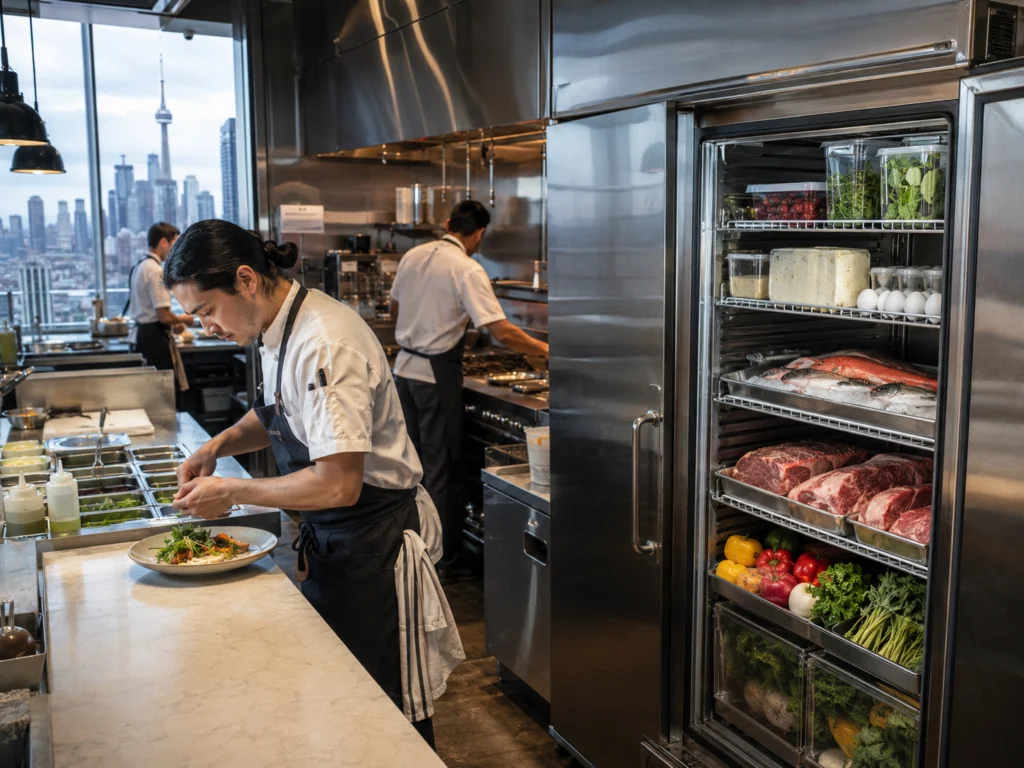
Toronto has cemented its status as one of North America’s most dynamic and culturally diverse culinary destinations, drawing millions of international travelers eager to experience its vibrant food scene. In a single afternoon, a visitor can traverse the bustling stalls of Kensington Market, sample authentic Cantonese delicacies in Chinatown, and conclude the culinary journey with a traditional Portuguese custard tart in Little Portugal. However, the sensory brilliance of these urban dining experiences relies heavily on an unseen infrastructure. Behind every meticulously crafted dish, pristine salad, and flawlessly seared fish is a sophisticated network of commercial refrigeration hardware operating continuously to preserve ingredient integrity from delivery to the final plate.
The Science of Cold Storage and Food Preservation
At the core of any successful culinary operation is meticulous temperature control, which serves as the primary defense against foodborne illness and quality degradation. Public health and food safety regulations dictate strict adherence to temperature management, specifically avoiding the thermal "danger zone" ranging between 40°F and 140°F (4°C to 60°C). Within this temperature window, pathogenic bacteria multiply at exponential rates, posing significant health risks and accelerating spoilage.
Unlike domestic refrigerators, which are designed for intermittent household use and frequently experience internal temperature fluctuations when families access them throughout the day, commercial refrigeration units are engineered for relentless, heavy-duty performance. Walk-in coolers, reach-in freezers, and temperature-controlled prep tables must maintain internal environments at or below 40°F despite frequent door openings during peak service hours. This continuous, unyielding thermal stability prevents cellular breakdown in fresh produce, maintains the structural integrity of dairy products, and inhibits bacterial growth on raw proteins. Consequently, the ingredients utilized in professional kitchens often retain a higher degree of freshness and nutritional value than those stored in standard residential units.
The Critical Role of the Cold Chain in Food Tourism
For culinary travelers, navigating a new city involves placing a high degree of trust in the unseen operations of restaurant kitchens. Food safety and perceived freshness are inextricably linked; a dining establishment that implements rigorous cold storage protocols significantly minimizes the likelihood of serving compromised ingredients.
Industry analysts frequently note that high-turnover establishments—such as busy neighborhood bistros, popular food hall vendors, and bustling market stalls—offer an inherent layer of safety. The rapid rotation of inventory ensures that perishable goods do not linger in storage for extended periods. When combined with precision commercial refrigeration, fast-moving inventory creates a reliable ecosystem where foodborne pathogens are systematically intercepted before reaching the consumer. Travel experts and food safety advocates consistently emphasize that understanding these underlying operational standards allows tourists to make informed, safe choices while exploring unfamiliar culinary landscapes.
Managing the Cold Chain: From Delivery Dock to Service Line
The operational lifecycle of a perishable ingredient depends upon an unbroken cold chain that begins the moment a delivery vehicle arrives at a restaurant’s loading dock. Professional kitchens enforce strict Standard Operating Procedures (SOPs) to ensure that temperature-sensitive items transition seamlessly from refrigerated transport vehicles into internal cold storage within minutes of arrival.
Once inside, staff members systematically categorize, date-label, and organize inventory according to FIFO (First-In, First-Out) principles. Raw proteins are stored on lower shelves to prevent cross-contamination, while produce and dairy occupy designated zones calibrated to their specific humidity and temperature requirements. During active service hours, line cooks rely on specialized prep tables equipped with integrated cold wells or rail refrigeration. These units maintain ingredients at safe temperatures right at the workstation, bridging the gap between deep storage and the cooking apparatus.
Culinary consultants point out that a single point of failure within this chain—such as a refrigeration gasket failing overnight or a compressor drifting upward by a few degrees—can compromise thousands of dollars in inventory and force an emergency closure. Therefore, modern kitchen management treats refrigeration maintenance as a core operational priority rather than an auxiliary utility.
Technological Advancements in Commercial Refrigeration Equipment
The commercial refrigeration sector has undergone significant technological evolution over the past decade, driven by demands for higher energy efficiency, reduced environmental impact, and enhanced reliability. Modern refrigeration units incorporate advanced digital controllers, variable-speed compressors, and eco-friendly refrigerants that comply with increasingly stringent international environmental standards.
Industry manufacturers have responded to the rigorous demands of 24/7 kitchen environments by integrating smart diagnostic systems into their equipment. These systems monitor internal temperatures in real-time, sending automated alerts to kitchen managers or service technicians if temperatures deviate from preset safety thresholds. This proactive approach prevents catastrophic food spoilage before it occurs. Furthermore, contemporary commercial units consume substantially less electricity than legacy equipment from ten to fifteen years ago, offering restaurant operators vital cost savings on utility overhead at a time when profit margins across the hospitality industry remain exceptionally tight.
Economic and Operational Implications for the Hospitality Sector
The reliance on high-performance commercial refrigeration extends far beyond immediate food safety; it directly influences the economic viability and scalability of urban dining establishments. In a competitive market like Toronto, where new restaurants open and close with notable frequency, operational efficiency can dictate long-term survival.
When dining establishments invest in durable, top-tier refrigeration assets, they mitigate the risk of catastrophic equipment failures during peak operational windows, such as Friday and Saturday evening services. A sudden refrigeration failure during a peak service can result in thousands of dollars of immediate inventory loss, disrupted service, and lasting reputational damage. By prioritizing long-term capital investments in reliable cooling technology, restaurant owners protect their revenue streams, reduce food waste—thereby supporting broader corporate and municipal sustainability initiatives—and ensure consistent culinary delivery for every patron.
Applying Commercial Principles to Domestic Kitchens
Home cooks seeking to replicate the freshness and quality of restaurant-prepared meals can adopt several fundamental practices utilized by professional culinary teams. While residential kitchens do not require industrial walk-in coolers, the underlying principles of temperature discipline and inventory management scale down effectively.
Culinary experts recommend the following best practices for domestic refrigeration and food safety:
- Maintain refrigerator internal temperatures at or strictly below 40°F (4°C) by utilizing an independent appliance thermometer.
- Avoid overpacking refrigerator shelves, as unobstructed air circulation is essential for maintaining uniform internal temperatures.
- Store raw meats, poultry, and seafood on the lowest shelves in sealed containers to prevent potential juices from contaminating ready-to-eat items or fresh produce.
- Implement a mental or physical FIFO system, consuming older dairy, produce, and proteins before introducing newly purchased items.
By mirroring these professional habits, home cooks can extend the shelf life of their ingredients, minimize household food waste, and preserve the optimal flavor profiles of fresh produce and proteins.
Frequently Asked Questions
Is Street Food Safe for Travelers in Major Urban Centers?
In many cases, yes. High-traffic street food stalls and busy food markets that experience rapid customer turnover are generally safe because ingredients are purchased, prepared, and sold in short cycles, minimizing the time food spends outside temperature-controlled environments. Travelers should seek out vendors with visible lines of local patrons, clean preparation surfaces, and hot foods served steaming. If food appears to have been left exposed to ambient heat for extended periods, consumers are advised to avoid it.
How Can Consumers Evaluate a Restaurant’s Food Safety Practices?
While patrons cannot typically inspect a professional kitchen’s walk-in cooler, general environmental indicators offer reliable clues. A clean, well-maintained dining room, visible adherence to hygiene standards by front-of-house staff, and a high volume of table turnover generally reflect a disciplined back-of-house operation. Additionally, menu items intended to be served cold should arrive genuinely chilled, while hot dishes should be served thoroughly heated, avoiding lukewarm temperatures that may indicate improper holding practices.
Why Does Restaurant Cuisine Often Taste Superior to Home Cooking?
The superior taste of restaurant dishes is heavily attributed to rigorous supply chain management, high inventory turnover, and precise cold storage. Commercial refrigeration maintains optimal, steady thermal conditions that prevent the degradation of subtle flavors and textures in fresh produce and proteins. Additionally, commercial kitchens procure ingredients in smaller, more frequent batches from specialized distributors, ensuring that raw components arrive on the plate at the peak of freshness.
What Strategies Should Culinary Travelers Prioritize When Planning a Trip?
Travelers should aim to explore diverse culinary neighborhoods, local food markets, and establishments frequented by residents rather than relying solely on heavily promoted tourist attractions. Balancing structured reservations with spontaneous exploration allows visitors to discover authentic neighborhood eateries. Furthermore, consulting local food writers, culinary guides, and residents often yields the most accurate recommendations for discovering high-quality, safe, and memorable dining experiences.




 Budi Mulyono
 Chandra Hamzah
 Gabriela Annisa
 Susilo Edi Turonggo
 Tatiana Tantri Indah Sari