Tatiana Tantri Indah Sari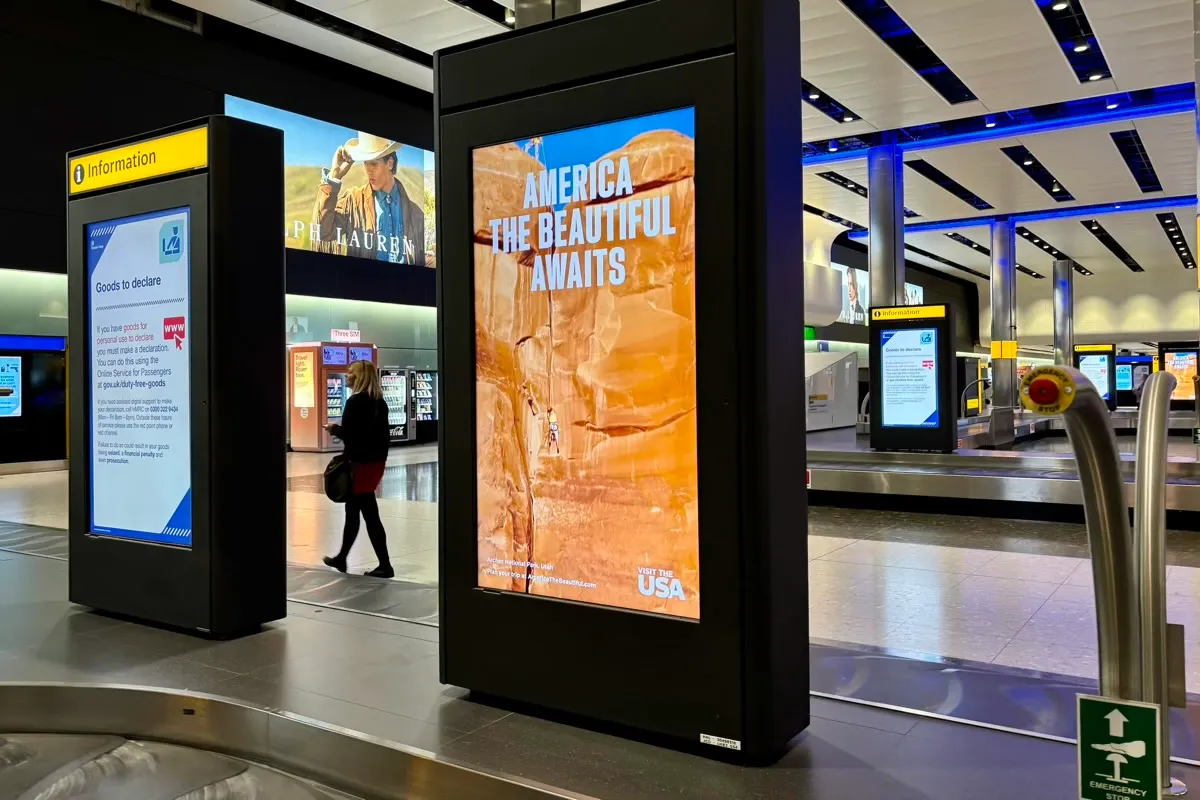
The United States destination marketing organization, Brand USA, is bracing for a profound operational contraction as a critical multi-million-dollar financial cushion approaches exhaustion. The organization, tasked with promoting international inbound tourism to the United States, has spent the past several years navigating the turbulence of the post-coronavirus recovery landscape. However, the systematic expiration of a major one-time federal funding injection—combined with enduring reductions in statutory revenue streams—threatens to constrain its global promotional footprint significantly by the end of the decade.
For the past several years, Brand USA has managed to maintain a robust, nearly fully funded operational budget. This continuity was largely made possible by a $250 million emergency funding allocation enacted in the wake of the pandemic, which served as a bridge while traditional revenue pipelines recovered. As this temporary financial support winds down, leadership at the tourism marketing arm is preparing to face the full impact of legislative funding cuts that stripped as much as $80 million from its baseline annual operating budget.
According to recent financial projections released by the organization, planned expenditures are slated at $158 million for fiscal year 2026, followed by a slight increase to $165 million for fiscal year 2027, which formally commences next month. These figures closely mirror the pre-pandemic annual spending levels documented in historical tax filings, signaling a return to baseline financial parameters. Yet, beneath the surface of these near-term budgets lies a precarious trajectory for the subsequent fiscal cycle, raising acute concerns among travel industry stakeholders, lawmakers, and destination marketing executives alike.
The Genesis and Architecture of Brand USA
Established under the Travel Promotion Act of 2009 and launched officially in 2011, Brand USA operates as a public-private partnership designed to encourage international travelers to visit the United States. Its core mission is to increase international visitation, spend, and market share, thereby generating economic growth, creating American jobs, and enhancing the nation’s image abroad.
Unlike many international destination marketing organizations that rely exclusively on direct national treasury allocations, Brand USA operates under a hybrid funding model. Its revenue derives from a combination of private-sector contributions—often matched through in-kind partnerships and advertising revenue—and a matching federal allocation drawn from fees collected through the Electronic System for Travel Authorization (ESTA) paid by international visitors traveling to the U.S. under the Visa Waiver Program.
This funding architecture has historically created vulnerabilities. Because a significant portion of Brand USA’s budget is tied directly to international travel volume through ESTA fees and private-sector commitments, systemic shocks to global mobility—such as the COVID-19 pandemic—can instantly devastate the organization’s financial foundation.
The Pandemic Shock and the $250 Million Emergency Lifeline
When global travel ground to a near-total halt in early 2020, international visitation to the United States plummeted by more than 75 percent. Consequently, ESTA fee collections collapsed, starving Brand USA of its primary operational revenue. To prevent the collapse of the nation’s tourism marketing infrastructure, federal lawmakers intervened.
In 2022, Congress approved a one-time $250 million emergency funding allocation to prop up Brand USA’s depleted coffers. This financial injection proved critical. It allowed the organization to maintain its overseas marketing presence, sustain foundational relationships with international tour operators and travel trade partners, and launch targeted recovery campaigns in key feeder markets just as global borders reopened.
Without this $250 million buffer, industry analysts note that Brand USA would have been forced to dismantle much of its overseas network, resulting in a prolonged lag in recovery compared to competing global destinations that received sustained government backing throughout the crisis. Countries such as Australia, the United Kingdom, and various European Union member states heavily subsidized their tourism boards during the pandemic, recognizing that destination marketing is a vital catalyst for broader economic stimulation.
The Approaching Fiscal Cliff: 2028 and Beyond
While the emergency funding successfully cushioned the immediate post-pandemic years, its depletion is now intersecting with permanent or semi-permanent statutory funding reductions. Brand USA has systematically drawn down its cash reserves to maintain operational continuity, utilizing approximately $114.1 million to plug ongoing budget deficits.
Current financial modeling indicates that Brand USA expects to conclude September 2027 with remaining cash reserves hovering near $51 million. However, leadership notes that the vast majority of this remaining capital must remain strictly untouched as an emergency liquidity fund to protect the organization against unforeseen global crises, natural disasters, or sudden geopolitical disruptions.
Consequently, fiscal year 2028 represents a formidable fiscal cliff. With fewer dollars flowing in from both diminished federal matching allocations and conservative partner contributions, the organization will face stark strategic choices. Without legislative intervention or a structural overhaul of its funding mechanism, Brand USA may be forced to scale back its promotional campaigns in high-value international markets, reduce its participation in major global travel trade shows, and curtail research and data analytics initiatives that inform U.S. tourism policy.
Broader Economic Implications for the U.S. Travel Economy
The impending contraction of Brand USA’s operating capacity carries significant economic implications for the broader United States travel and hospitality sector. International inbound travel is widely recognized as one of the most lucrative segments of the American economy. Prior to the pandemic, international visitors spent tens of billions of dollars annually in the United States, supporting millions of American jobs in transportation, lodging, food service, retail, and entertainment.
Economists and travel industry trade associations, such as the U.S. Travel Association, have long argued that international visitors spend significantly more per trip than domestic travelers, making them an indispensable driver of trade surplus and regional economic diversification. Every dollar invested in destination marketing historically yields a high return on investment in the form of tax revenues generated at the local, state, and federal levels.
Industry experts warn that as global competition for international travelers intensifies—with nations around the world deploying aggressive, well-funded marketing campaigns to capture recovering consumer demand—any reduction in the United States’ marketing footprint could result in a permanent loss of global market share. Travelers who choose alternative destinations due to a lack of visibility or inspiration regarding the U.S. market represent lost revenue that is exceedingly difficult to recapture.
Official Responses and Stakeholder Perspectives
As the reality of the 2028 fiscal cliff comes into sharper focus, tourism stakeholders and industry advocates are mobilizing to evaluate potential legislative remedies. While formal policy proposals are still in development, trade representatives emphasize the urgent need for Congress to reexamine Brand USA’s statutory funding caps and explore mechanisms to stabilize its long-term revenue streams.
In recent congressional hearings and industry roundtables, travel executives have pointed out the disparity between the funding levels of the United States and those of its international competitors. While nations like Canada, Australia, and various European destinations continue to expand their national tourism budgets, the U.S. model remains structurally constrained by statutory limits on ESTA fee distributions and unpredictable private-sector participation rates.
Proponents of increased federal support argue that destination marketing should be viewed not as a discretionary expense, but as an essential export promotion strategy. Because international tourism generates positive trade balances for the United States, proponents contend that robust federal investment in Brand USA directly bolsters the national economy.
Navigating the Transition Period
In the near term, Brand USA leadership is focused on maximizing the efficiency of its allocated budgets for fiscal years 2026 and 2027. By prioritizing high-yield markets, leveraging digital marketing platforms, and deepening cooperative marketing agreements with state and city-level destination marketing organizations (DMOs), the organization aims to extract maximum value from every available dollar.
Cooperative marketing programs, where Brand USA partners directly with regional U.S. destinations and private travel brands to co-fund international campaigns, have become an increasingly vital strategy. These partnerships allow the organization to stretch its federal and reserve dollars further by pooling resources with entities that have a direct stake in international arrivals.
Nevertheless, regional DMOs note that local budgets cannot fully compensate for the absence of a robust, nationally coordinated global marketing apparatus. Brand USA’s ability to execute large-scale, multi-channel umbrella campaigns across diverse linguistic and cultural markets provides a foundational platform that local organizations rely upon to anchor their own promotional efforts.
Outlook for the Future of U.S. Inbound Tourism
The coming months will likely witness heightened advocacy from the travel and tourism sector as industry leaders engage with federal policymakers to address the structural funding challenges facing Brand USA. With the pandemic-era financial buffer officially running out, the debate over how the United States finances its international tourism promotion has reached a critical juncture.
Whether Congress will consider legislative adjustments to secure a stable, long-term funding mechanism before fiscal year 2028 remains to be seen. In the interim, Brand USA must navigate a complex landscape characterized by tightening budgets, rising global competition, and the imperative to sustain the momentum of international inbound travel recovery. The decisions made in legislative chambers and boardrooms over the next two years will fundamentally shape the competitive standing of the United States in the global tourism marketplace for the remainder of the decade.



 Walid Sujud Trenggono
 Cholid Fahmi Thalib
 Budi Mulyono
 Susilo Edi Turonggo