
 Walid Sujud Trenggono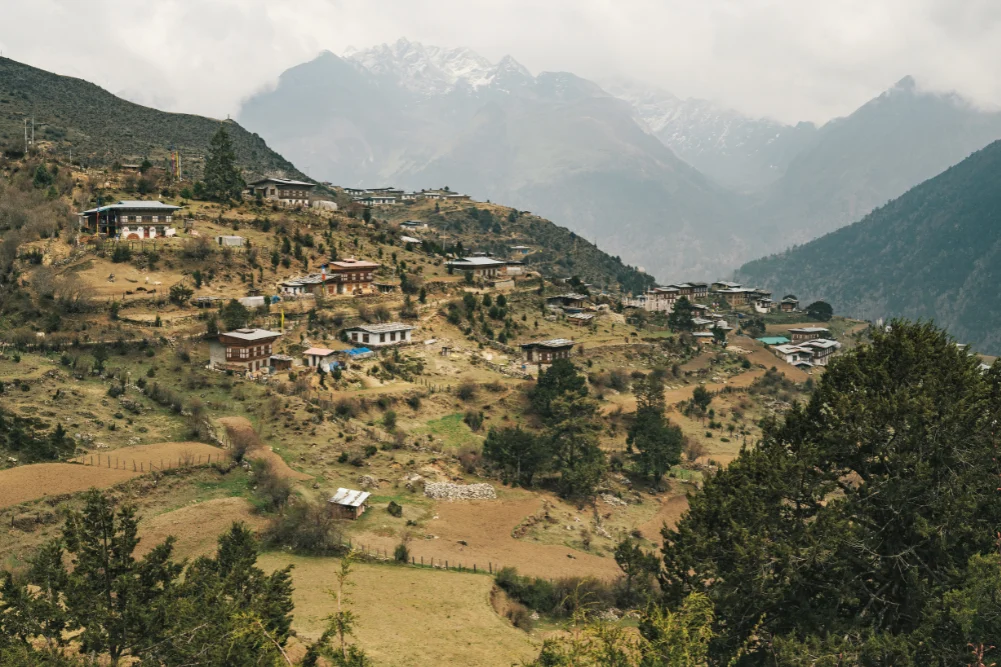
The Kingdom of Bhutan, a landlocked nation nestled between the geopolitical giants of China and India, has long maintained a reputation as one of the world’s most enigmatic and preserved societies. For many modern professionals grappling with the pervasive effects of digital saturation and professional exhaustion—often referred to as "burnout"—this Himalayan kingdom offers more than just a scenic retreat; it provides a systemic alternative to the Western metrics of success. By prioritizing Gross National Happiness (GNH) over Gross Domestic Product (GDP), Bhutan has constructed a societal framework that emphasizes environmental conservation, cultural preservation, and psychological well-being. This report examines the structural components of the Bhutanese model through the lens of a comprehensive three-week immersive journey, evaluating how the country’s unique policies and remote geography facilitate a profound "midlife reset" for international visitors.
The Philosophical Framework: Gross National Happiness (GNH)
At the core of Bhutan’s national identity is the philosophy of Gross National Happiness. Coined in 1972 by the Fourth King, Jigme Singye Wangchuck, GNH is built upon four primary pillars: sustainable and equitable socio-economic development, environmental conservation, preservation and promotion of culture, and good governance. Unlike Western nations that measure progress through financial accumulation, Bhutan’s policy-making process is filtered through the GNH Commission. Every proposed project or law is vetted to ensure it does not compromise the collective well-being of the population or the integrity of the natural environment.
According to the 2022 GNH Index, which utilizes 33 indicators across nine domains, approximately 48.1% of the Bhutanese population is classified as "deeply" or "extensively" happy. This data-driven approach to wellness is not merely theoretical; it manifests in tangible ways, such as the provision of free universal healthcare and education to all citizens. Furthermore, Bhutan remains the world’s first carbon-neutral—and often carbon-negative—country, a feat achieved through a constitutional mandate that requires at least 60% of the land to remain under forest cover in perpetuity. Currently, forests blanket approximately 71% of the nation, acting as a massive carbon sink for the region.
Geographical and Cultural Isolation as a Preservation Strategy
Bhutan’s commitment to its traditions is bolstered by its historical isolation. The country was never colonized, allowing it to develop a distinct cultural identity free from Western imperial influence. Foreign visitors were not permitted to enter the kingdom until 1974, and modern technologies such as television and the internet were only introduced in 1999, making Bhutan one of the last nations on Earth to embrace digital connectivity.
The entry point for most international travelers is Paro International Airport, widely regarded as one of the most challenging runways in the world. Surrounded by 18,000-foot Himalayan peaks, only a limited number of pilots are certified to land there. This physical barrier serves as a metaphor for the country’s broader approach to tourism: "High Value, Low Volume." By implementing a Sustainable Development Fee (SDF) for tourists, the government ensures that tourism remains manageable and that the revenue is reinvested into national infrastructure and social services.
Spiritual Immersion: The Role of Monastic Life
A cornerstone of the Bhutanese experience is the integration of Vajrayana Buddhism into daily life. The Dodedrak Monastery, a 12th-century institution, serves as a primary example of the spiritual infrastructure that defines the kingdom. Reaching such sites often requires significant physical exertion, reflecting the Buddhist emphasis on the merit of the journey. For many visitors, the transition from a high-stress urban environment to the rhythmic, contemplative atmosphere of a monastery provides an immediate physiological shift.
During evening prayers, monks adorned in burgundy robes chant ancient scriptures, a practice that practitioners claim creates a resonant frequency conducive to lowering cortisol levels and slowing the respiratory rate. The use of butter lamps and incense in these ancient stone structures provides a sensory environment that stands in stark contrast to the blue-light stimulation of modern digital life. This spiritual immersion is not treated as a luxury "spa" experience but as a fundamental practice of communal and individual hygiene.
The Remote Frontier: Case Study of Laya Village
To understand the most extreme applications of the Bhutanese lifestyle, one must look toward Laya, one of the most remote inhabited settlements on the planet. Situated at an altitude of 3,800 meters (approximately 12,500 feet), Laya is inaccessible by road. Access requires a multi-day trek through rugged terrain, relying on yaks and ponies for logistics.
The Layap people, an indigenous community of approximately 1,600 residents with Tibetan roots, maintain a lifestyle that has remained largely unchanged for centuries. Living in stone houses beneath sacred peaks such as the "Tiger’s Peak," the community operates on a model of collective labor and radical hospitality. In Laya, the construction of a new home is a village-wide endeavor, predicated on the understanding that kindness is a reciprocal currency.
The biennial Bumkor Festival serves as a critical cultural anchor for the Layap people. During this event, sacred texts are carried in a grand procession through the village to bless the land. The festival emphasizes communal synchronicity, with villagers of all ages participating in traditional dances and songs. For the outside observer, the festival highlights a significant void in Western social structures: the sense of deep, unearned belonging to a community.
Economic Simplicity and Contentment
The economic philosophy of remote villages like Laya challenges the Western "scarcity mindset." When interviewed about the requirements for a happy life, village elders often cite "non-greed" as the primary factor. In a society where the baseline for success is having "enough rice to eat," the psychological pressure of constant upward mobility is significantly mitigated.
This perspective reveals a stark contrast to the "paradox of choice" prevalent in developed economies. While a Western consumer may face hundreds of options for a single product and still feel dissatisfaction, the Bhutanese model suggests that contentment is derived from the appreciation of essential resources. This "radical enoughness" is a key takeaway for those seeking to recover from the exhaustion of modern consumerism.
Holistic Health: Nature as Medicine
In Bhutan, the environment is viewed as a therapeutic agent. The practice of visiting the Gasa hot springs (Gasa Tsachus) illustrates this integration of nature and healthcare. These springs are considered sacred, with legends attributing healing powers to 13th-century saints. Unlike Western luxury spas, these are communal baths where locals and visitors sit shoulder-to-shoulder.
Scientific research into "forest bathing" and the psychological benefits of mountain environments supports the Bhutanese intuition. Prolonged exposure to high-altitude landscapes and old-growth forests has been shown to lower blood pressure and improve overall nervous system regulation. Furthermore, the national speed limit, which rarely exceeds 20-50 km/h even in developed areas, enforces a slower pace of life that prevents the "bullet-train tempo" common in global financial hubs.
The Societal Approach to Mortality
Perhaps the most counterintuitive aspect of Bhutanese culture for Westerners is the daily contemplation of death. Citizens are encouraged to think about mortality five times a day. In Western psychology, frequent thoughts of death are often categorized as morbid or symptomatic of anxiety. However, in the Bhutanese context, this practice is intended to foster a sense of impermanence (Anicca), which in turn encourages individuals to live more virtuously and with greater presence. By acknowledging the inevitability of death, the Bhutanese aim to strip away the trivial stresses of daily life, focusing instead on what is meaningful.
Analysis of Long-term Impact and Implications
The transition back to a high-speed Western environment after an immersion in Bhutan often reveals the "stickiness" of the lessons learned. While the immediate "zen" of the Himalayas may fade, the cognitive shift regarding what constitutes "enough" remains. Six months post-departure, many travelers report that while their external stressors—such as heavy workloads or family obligations—have not disappeared, their internal capacity to manage those stressors has been recalibrated.
The Bhutanese model suggests that the solution to burnout is not a temporary "escape" but a fundamental re-evaluation of one’s relationship with time, community, and consumption. As global rates of anxiety and depression continue to rise, the data coming out of Bhutan’s GNH experiments provides a compelling argument for a more holistic approach to national and individual governance.
In conclusion, the Kingdom of Bhutan stands as a living laboratory for a different kind of modernity—one where progress is measured in the tranquility of its citizens rather than the velocity of its markets. For the individual traveler, it offers a necessary awakening: the realization that the digital "zombie state" is a choice, and that a way back to presence and contentment is possible through the deliberate adoption of a slower, more communal, and nature-centric way of being.



 Anjar Salim
 Chandra Hamzah
 Tatiana Tantri Indah Sari
 Budi Mulyono
 Lukman Taruna Persada Ramadan
