Anjar Salim
In the early weeks of June 2026, a massive long-period south swell, birthed in the turbulent waters of the South Pacific, completed its multi-thousand-mile journey to the coastline of Southern California. While the swell brought significant energy to beaches from San Diego to Santa Barbara, its most dramatic manifestation occurred at a singular geographic anomaly in Newport Beach known as The Wedge. For one week, the break transformed into a 25-foot arena of hydraulic violence, drawing thousands of spectators and a dedicated cadre of elite watermen. Among those documenting the event from the precarious edge of the Newport Harbor jetty was a 60-year-old photographer known to the community and his 50,000 Instagram followers only as Dingo.
A corporate professional by day, Dingo has spent the last six years leading a double life. By maintaining anonymity to protect his standing in the corporate world, he has become the unofficial chronicler of one of the world’s most dangerous surf spots. His recent documentation of the 2026 summer swell provides a rare, high-definition window into the mechanics of the wave and the subculture that thrives in its impact zone.
The Hydrodynamics of a Freak Wave
To understand the significance of Dingo’s recent portfolio, one must understand the unique bathymetry and man-made infrastructure that creates The Wedge. Unlike traditional surf breaks where waves dissipate energy over a gradual slope, The Wedge is the result of a specific interaction with the Newport Harbor West Jetty. When a south or southwest swell hits the rock wall at a specific angle, it creates a "sidewash" or reflected wave. This reflected energy travels back toward the next incoming wave.
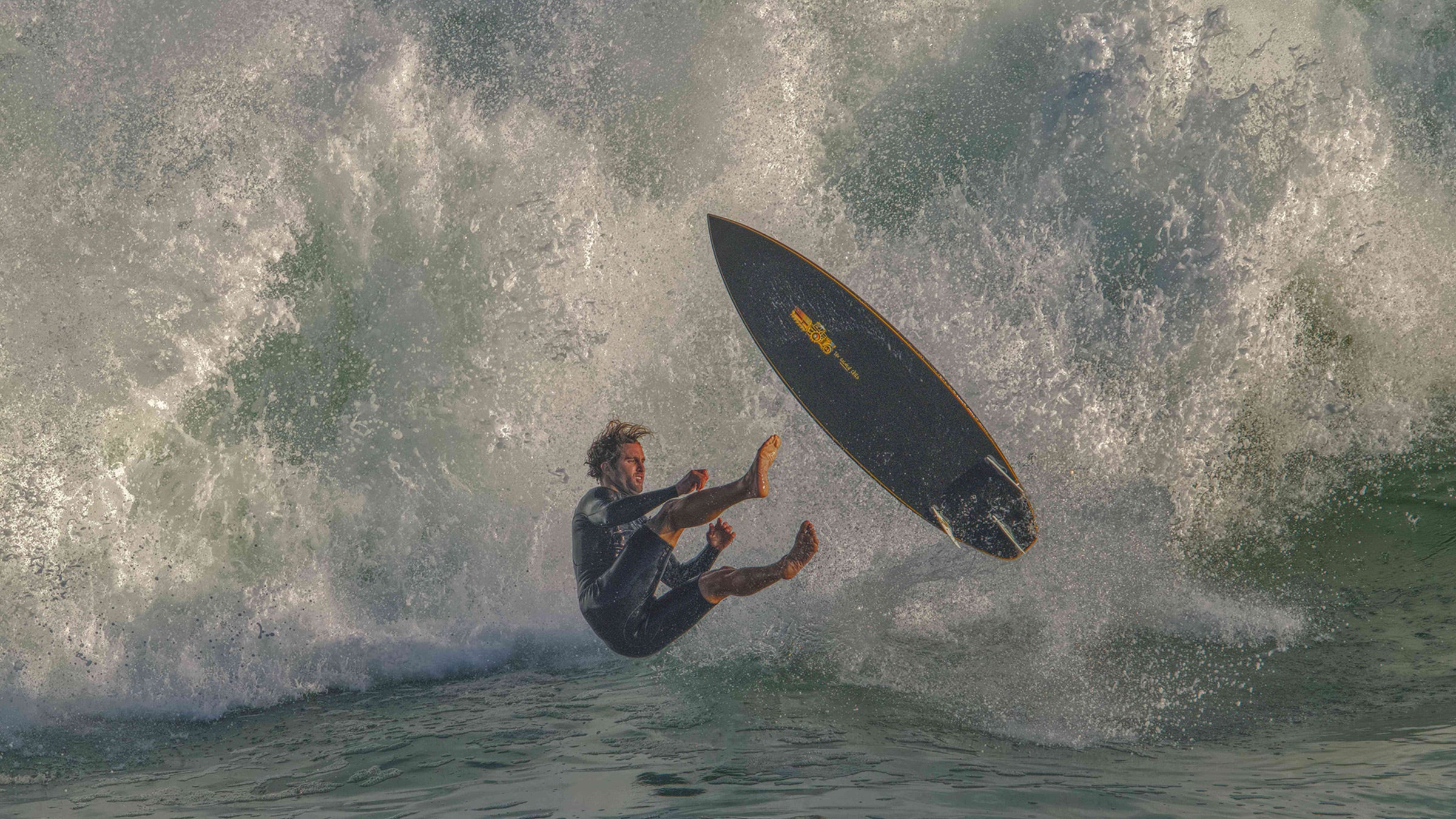
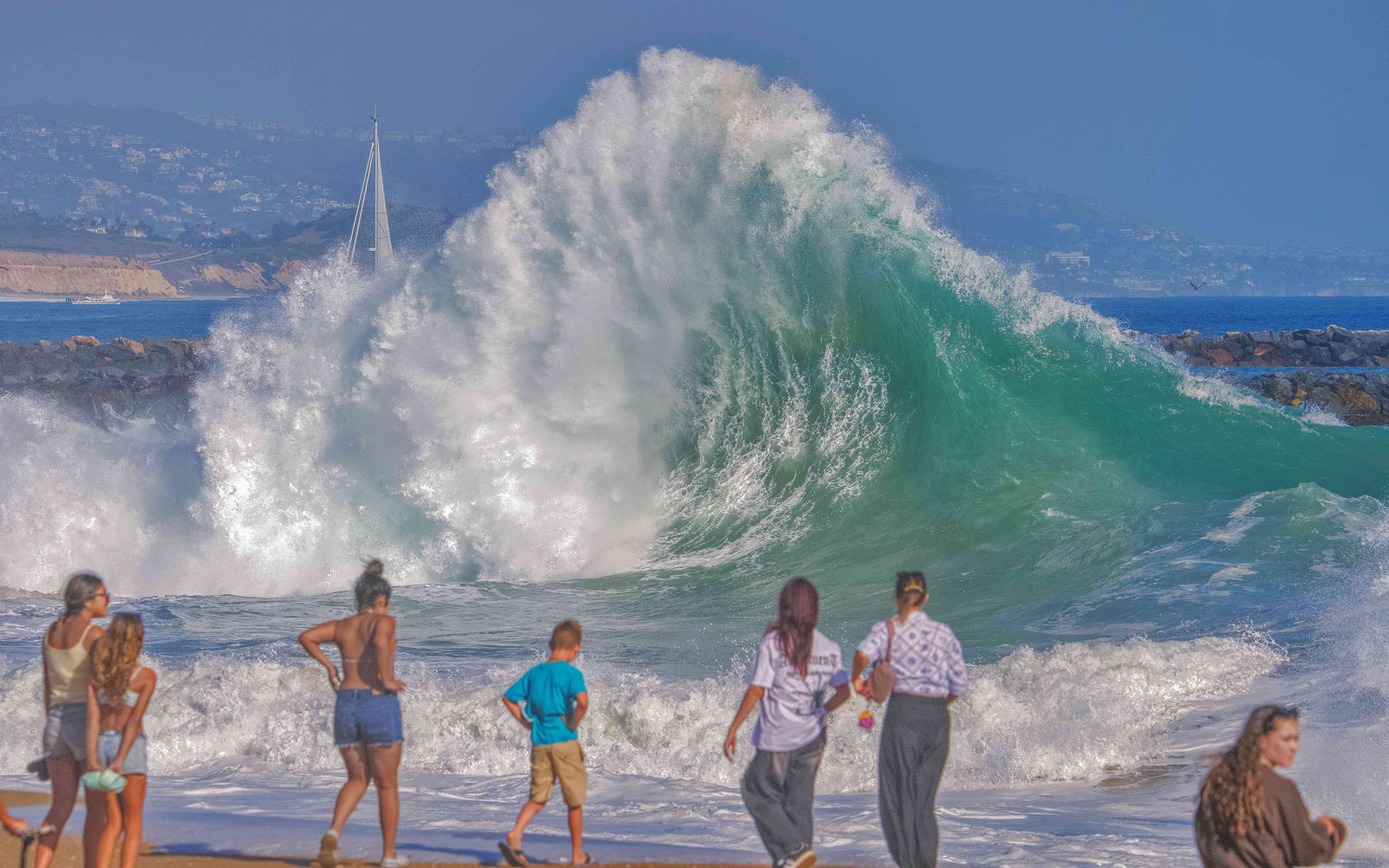
When the two forces collide, they create a constructive interference pattern, effectively doubling the wave’s height and power in a matter of seconds. The result is a massive, "shark fin" shaped peak, often referred to as an A-frame, that breaks in extremely shallow water, often directly onto the sand. The 25-foot faces recorded during this swell represent the upper limits of what the break can handle before the physics of the wave become unsurmountable for even the most experienced athletes.
Chronology of the 2026 Historic Swell
The swell that battered Newport Beach in June was not an isolated local event but the culmination of a massive meteorological system that began three weeks prior near Antarctica. Satellite imagery tracked a deep low-pressure system moving across the South Pacific, generating sea states that first impacted the reef breaks of Tahiti. As the energy moved north, it provided "Code Red" conditions for Hawaii’s south shores and Mexico’s Puerto Escondido before finally reaching the California Bight.
Dingo, monitoring global swell charts and buoy data, anticipated the arrival. "This swell had been moving across the Pacific for a few weeks," Dingo noted. "I saw big waves pop up in Tahiti, Hawaii, and then Mexico. We knew it was shaping up to be one of the better summer swells to reach us." Recognizing the rarity of the event, the photographer utilized vacation time from his corporate role to ensure he was on-site before sunrise every day of the peak energy.
The peak of the swell arrived mid-week, turning the beach into what Dingo describes as a "stadium-like environment." The geography of the Wedge—a narrow stretch of sand flanked by a jetty—allows spectators to stand within yards of the breaking waves. During the height of the June swell, crowds were reported to be ten-deep along the shoreline, creating a high-pressure atmosphere for the riders in the water.
Athletic Feats and High-Stakes Performance
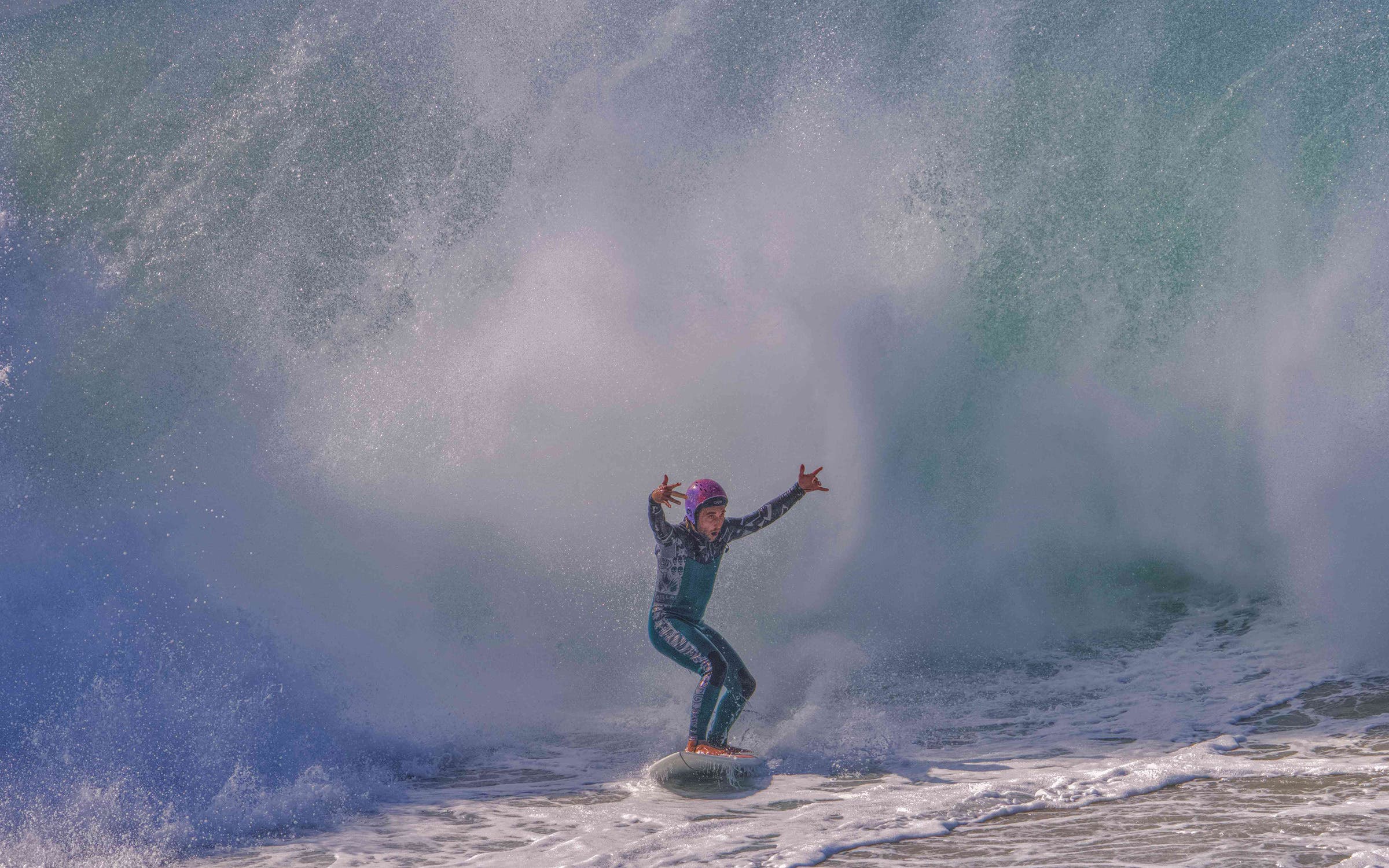
The June swell saw a convergence of various wave-riding disciplines, including surfing, bodyboarding, and bodysurfing. The Wedge is historically a democratic break, though it is famously difficult for traditional surfers due to the steepness of the drop and the unpredictability of the backwash.
Among the standout performances documented by Dingo was that of professional bodyboarder Tanner McDaniel. During one of the largest sets of the week, McDaniel executed a double backflip—a maneuver that involves rotating twice in the air after being launched by the wave’s vertical face. Observers and local historians have suggested the ride may rank among the top five most significant clips in the history of the break.
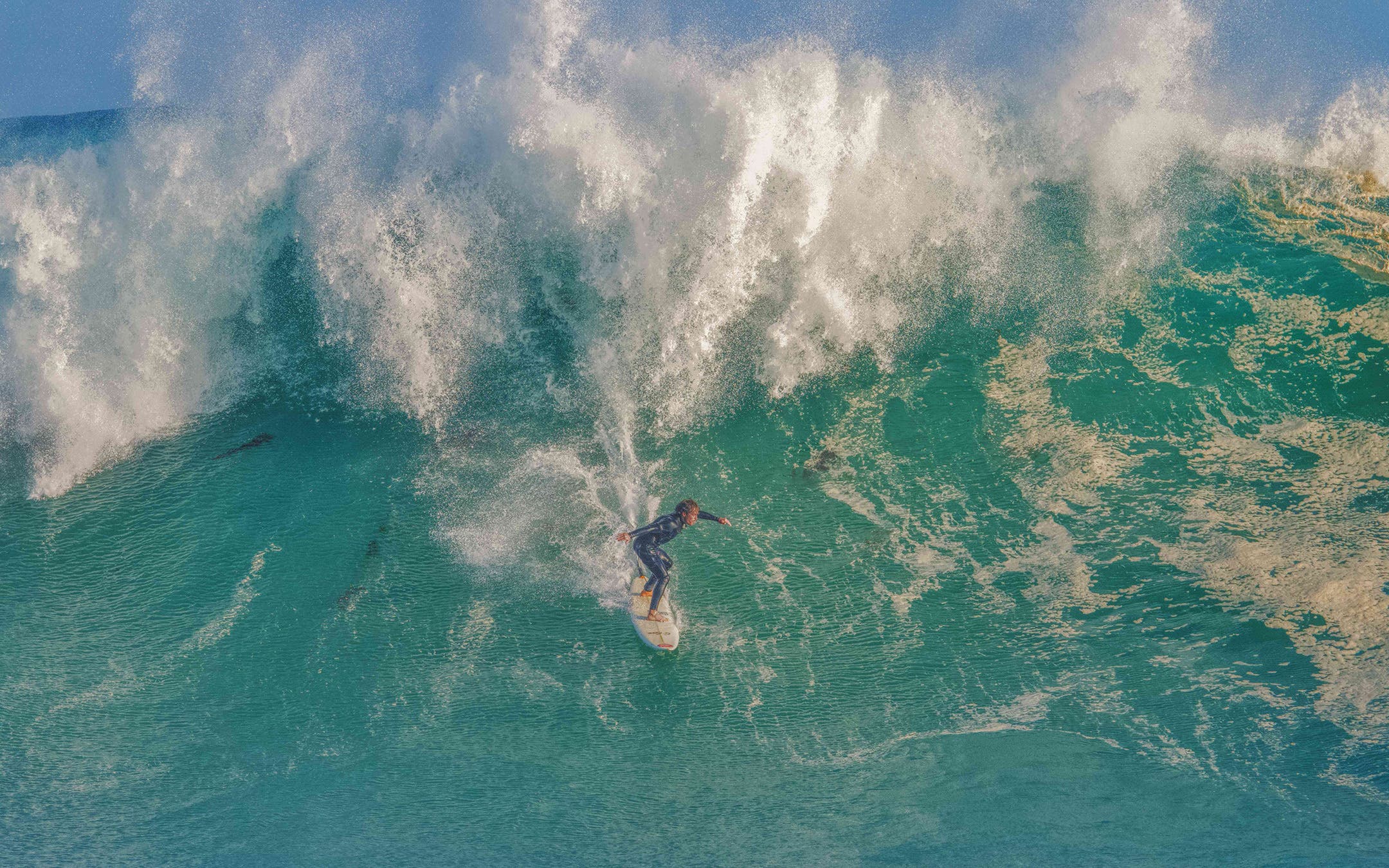
Local big-wave specialist Sage Burke and surfer Dawson Sherman also recorded historic rides, navigating "freight train" sets that broke 30 yards further out than the standard lineup. The sheer volume of water moving during these sets required riders to engage in "dead-drops," where the board leaves the surface of the water entirely during the initial descent into the wave’s bowl.
Risk Management and the Role of Newport Beach Lifeguards
The violence of The Wedge during a 25-foot swell carries inherent risks that extend beyond the athletes to the spectators and the photographers themselves. The Newport Beach Lifeguard Division was on high alert throughout the event, performing multiple rescues of individuals who underestimated the power of the shorebreak or the strength of the rip currents generated by the harbor entrance.
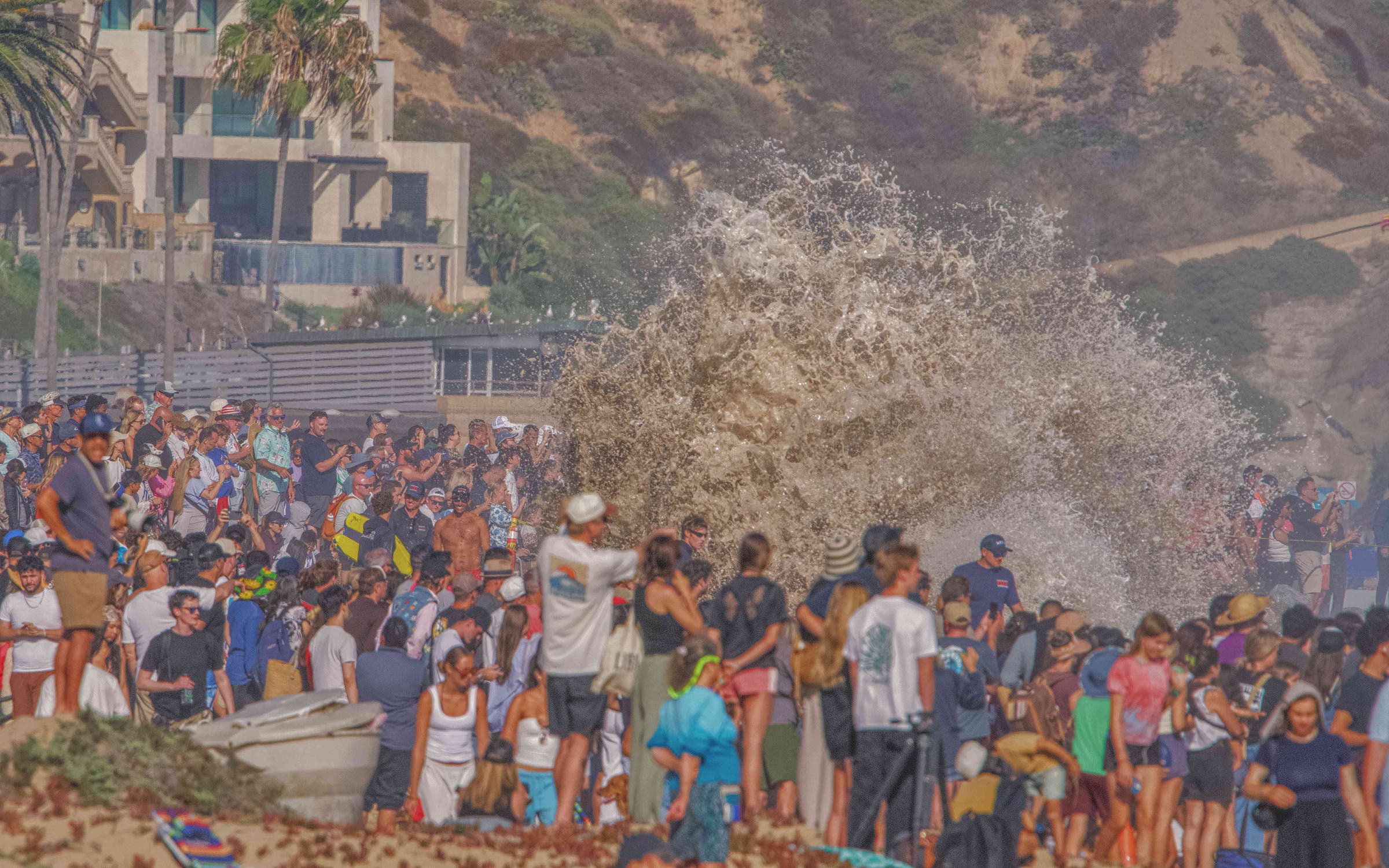
Dingo’s footage captured several of these interventions. "We saw a few people paddle out who had no business being out there," he stated. The danger is not limited to those in the water; the "surge" from a 25-foot wave can sweep across the beach and up the jetty with enough force to drag bystanders into the rocks. Dingo himself documented instances of fellow photographers being struck by rogue waves while attempting to capture the action from the jetty’s edge.
The physical toll of The Wedge is well-documented in Newport Beach history. The break is notorious for causing spinal injuries, broken limbs, and concussions due to the "sand-bottom" nature of the break, which offers no cushion for riders falling from 20-foot heights. During this particular swell, the community reported various injuries, including broken bones, which were often met with immediate assistance from fellow riders.
The Social Hierarchy: The Wedge Pecking Order
Despite the chaotic appearance of the water, The Wedge operates under a strict social hierarchy. This "pecking order" is essential for safety, ensuring that those with the most experience have priority on the most dangerous waves. At the top of this hierarchy are the "Wedge regulars"—individuals who have studied the break for decades—and "old-timers" who have frequented the lineup for 20 to 30 years.
"For the most part, everyone respects the pecking order," Dingo explained. "Because at The Wedge, if you don’t respect the wave and understand the pecking order, you might get hurt."
This social structure also fosters a unique form of community altruism. Because of the high risk of injury, there is an unspoken pact among riders to act as first responders. When an accident occurs, it is typically the surfers and bodyboarders in the immediate vicinity who reach the victim first, stabilizing them until professional lifeguards can navigate the heavy surf to complete the rescue.
The Photographer’s Perspective: A Non-Commercial Mission
In an era of "influencer" culture and the commercialization of extreme sports, Dingo’s approach to surf photography remains an outlier. Despite the high quality of his work and the significant demand for imagery of The Wedge, he refuses to monetize his output. He does not sell prints, nor does he charge athletes for the high-definition video clips he captures.
His motivation is rooted in the preservation of the culture and the joy of the craft. Living only three blocks from the break, his morning routine involves a walk to the shore to assess the conditions, a practice that connects his "corporate geek" persona with his identity as a coastal documentarian. By providing free imagery to the "kids" and local riders, Dingo has earned a level of trust and access that commercial photographers often struggle to achieve.
"I’m not in this to make money," Dingo said. "I give my photographs to the surfers and to the kids when I get good ones. It’s more fun that way."
Broader Implications and Environmental Context
The frequency and intensity of swells like the one seen in June 2026 are subjects of increasing interest for coastal geologists and climatologists. As global weather patterns shift, the Southern California coastline may see an alteration in the traditional "swell windows." The Wedge, as a man-made byproduct of harbor engineering, serves as a canary in the coal mine for how rising sea levels and increased storm intensity might impact coastal infrastructure.
For the residents of Newport Beach, the June swell was a reminder of the power of the Pacific and the enduring draw of The Wedge. It remains one of the few places in the world where the raw energy of the ocean is so accessible to the public, and where the line between a historic athletic achievement and a catastrophic injury is measured in inches.
As the swell finally subsided and the waves returned to their modest summer heights, the crowds dispersed, and Dingo returned to his corporate office. Behind a desk, he remains an anonymous employee, yet his hard drives contain the definitive record of a week when the ocean turned into a monster, and a small community of riders rose to meet it. Through his lens, the violent beauty of The Wedge is preserved, not for profit, but for the history of the beach he calls home.

 Chandra Hamzah
 Gabriela Annisa
 Tatiana Tantri Indah Sari
 Budi Mulyono