
 Cholid Fahmi Thalib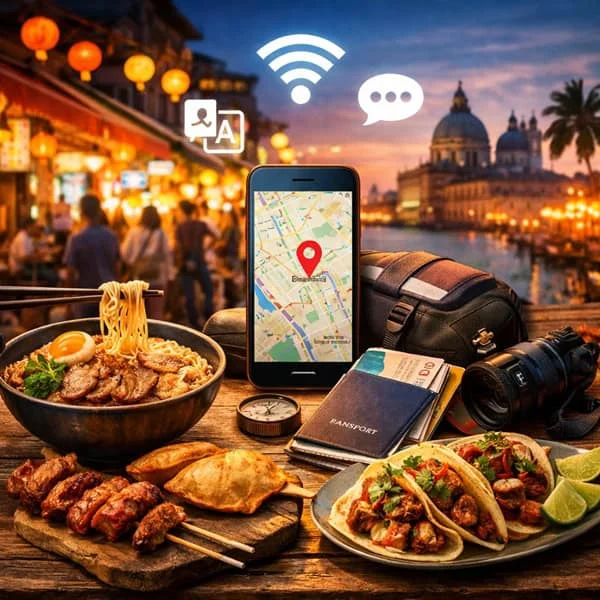
The allure of travel often lies in those serendipitous moments: waking up in an unfamiliar city, savoring a coffee with a distinct local flavor, and stumbling upon a neighborhood whose name you can’t quite pronounce, only to discover the most exquisite meal of your year. While these experiences might seem like pure chance, the reality is far more grounded in thoughtful preparation. This preparation, however, isn’t about rigid itineraries or pre-booked reservations weeks in advance. Instead, it’s about possessing the fundamental tools that enable spontaneity and deep immersion. For the modern "foodie flashpacker" – those who prioritize agile travel and exceptional culinary experiences – staying connected is no longer a luxury but a foundational element, a quiet enabler of presence and exploration.
The essence of flashpacking lies in striking a balance between the unburdened freedom of a backpacker and the pragmatic efficiency of an experienced traveler. It’s about streamlining the logistical hurdles to maximize time spent on the actual experiences, particularly those centered around food. This philosophy elevates the importance of connectivity beyond mere social media updates; it’s about having the capacity to navigate, communicate, and adapt seamlessly in real-time. When the foreground of your travel experience is a steaming bowl of noodles, a vibrant plate of street tacos, or the intoxicating aroma of a neighborhood bakery, having your digital tools function flawlessly allows you to fully inhabit that moment.
The Unique Demands of Culinary Travel
Food-centric travel presents a distinct set of challenges compared to traditional sightseeing. Instead of moving from one predetermined attraction to another, the food traveler’s journey is often a dynamic flux between bustling markets, hidden alleyways, ephemeral pop-up stalls, late-night eateries, and charming cafes discovered serendipitously. These experiences are time-sensitive and location-specific, often requiring a degree of flexibility that can be easily compromised by technological friction.
The cumulative effect of minor connectivity issues can quickly transform potential moments of discovery into sources of frustration. Consider the common scenarios: an inability to pull up a map upon exiting a subway station, a struggle to translate a menu without resorting to awkward pointing, or the difficulty of sharing the location of a newly found gem with a travel companion. Add to this the need to present an allergy card, verify if a seemingly open establishment is indeed operating, or access a reservation QR code amidst unreliable Wi-Fi, and the cumulative stress can detract significantly from the joy of exploration.
A moderate level of connectivity effectively transforms these potential stressors into opportunities for confident improvisation. The key is not to be "always online," but to possess reliable access precisely when it is most critical. This allows for a more fluid and enjoyable experience, where the logistical underpinnings are invisible, allowing the traveler to focus on the sensory delights of their culinary journey.
Connectivity: A Catalyst for Deeper Culinary Engagement
The argument for enhanced connectivity on food-focused trips is compelling. Unlike tours that follow a set path, culinary exploration is inherently more fluid and reactive. The best meals are often found off the beaten path, requiring an ability to navigate unfamiliar streets and adapt to changing circumstances. Reliable data access acts as a crucial facilitator, enabling travelers to pivot their plans with confidence when new opportunities arise.
Furthermore, the nature of local recommendations often relies on nuanced descriptions that are best deciphered with digital assistance. A local might direct you to a place "next to the pharmacy with the green sign," a description that becomes actionable when paired with a mapping application and the ability to quickly verify landmarks. Translation tools, far from being a crutch, empower travelers to be more adventurous with their orders, reducing the anxiety of miscommunication and encouraging the exploration of lesser-known dishes.
The temporal aspect of food is also critical. Many culinary experiences are dictated by specific hours of operation, seasonal availability, or the daily sell-out of popular items. The ability to quickly check opening times, confirm product availability, or ascertain if a dish is in season allows for informed, yet flexible, planning. This is where smart connectivity truly shines, enabling light planning that maximizes opportunities without the rigidity of an over-scheduled itinerary.
The Evolution of Travel Connectivity: The eSIM Advantage
The traditional method of acquiring international mobile data often involved a "SIM card shuffle" at airport kiosks. This process, characterized by fluorescent lighting, bewildering plan options, and the physical swapping of SIM cards, could be time-consuming and prone to error. For travelers prioritizing efficiency and a seamless arrival, this friction point has become increasingly undesirable.
Embedded SIMs, or eSIMs, have emerged as a significant improvement, offering a more streamlined and user-friendly solution. Instead of physically changing a SIM card, travelers can activate a digital data plan directly on their device. This eliminates the need for handling small plastic cards and reduces the potential for compatibility issues. For many, particularly those focused on culinary exploration, eSIMs represent the simplest path to arriving connected, allowing them to bypass the complexities of traditional SIM acquisition and immediately engage with their destination.
Services like SIMOVO offer travel eSIM solutions that aim to simplify this process, enabling travelers to pre-activate data plans and avoid the common hurdles associated with obtaining local SIM cards. The objective is not to encourage excessive screen time but to ensure that essential digital tools are readily available, thus preserving valuable time that would otherwise be spent troubleshooting connectivity issues – time that could be dedicated to discovering new flavors.
How Connectivity Enhances the Culinary Experience
The impact of reliable connectivity on a food trip is multifaceted, fundamentally altering how travelers approach exploration and discovery.
Empowering Exploration Beyond the Obvious
Without reliable navigation, travelers may default to safer, more predictable choices—well-trodden tourist areas or prominently marketed restaurants. While these can offer satisfactory experiences, the truly exceptional culinary finds often lie a few turns away from the most obvious paths. Consistent data access provides the confidence to take those intriguing detours, knowing that orientation is always a few taps away. This allows for deeper immersion into local neighborhoods and the discovery of authentic, often hidden, culinary gems.
Facilitating the Interpretation of Local Guidance
Local recommendations are rarely precise, relying instead on contextual clues, landmarks, and colloquial descriptions. Connectivity allows travelers to quickly triangulate these directions, cross-referencing verbal cues with map data, and even sending a quick message or photo to confirm a location. This ability to rapidly interpret and act on local advice significantly enhances the chances of finding sought-after eateries that might otherwise remain undiscovered.
Accelerating Menu Comprehension and Culinary Learning
Translation applications are not merely about convenience; they are tools that foster bravery in culinary exploration. By reducing the anxiety associated with ordering unfamiliar dishes, travelers are more inclined to experiment with local specialties. Furthermore, connectivity allows for on-the-spot research into specific ingredients, regional dish names, or the composition of a mysterious sauce, transforming a potential half-hour research endeavor into a quick, informative query. This immediate access to information deepens the understanding and appreciation of the food being consumed.
Optimizing Timing for Peak Culinary Experiences
Food is intrinsically linked to timing. The availability of certain dishes, the optimal time to visit a bakery, or the moment a night market truly comes alive are all critical factors for a rewarding culinary experience. The ability to swiftly check operating hours, contact establishments, or confirm seasonal availability enables a more informed and effective approach to planning, ensuring that travelers can capitalize on the best culinary opportunities without feeling constrained by a rigid schedule.
Building a Digital Archive of Culinary Discoveries
Every traveler has experienced the pang of regret when a truly remarkable meal cannot be revisited due to an inability to recall its location. Reliable connectivity provides the means to meticulously document these discoveries. Travelers can:
- Save locations on maps: Pinpointing exact spots for future reference or sharing.
- Take photos of menus or dishes: A visual reminder of what was ordered and enjoyed.
- Note down specific ingredients or preparation methods: Aiding in replication or further research.
- Message the eatery directly: To inquire about opening hours, reservations, or menu items.
This practice transforms a series of enjoyable meals into a personal, repeatable culinary playbook, enriching future trips and providing valuable insights for sharing with others.
A Balanced Approach to Connectivity
A common concern regarding travel connectivity is the fear of becoming overly reliant on devices, detracting from the present experience. However, a balanced approach can mitigate this risk, ensuring technology serves as a tool rather than a distraction.
A practical rhythm might involve:
- Pre-trip Setup: Activating an eSIM and downloading offline maps for key areas.
- Morning Check-in: Briefly reviewing the day’s potential culinary targets, checking hours, and confirming reservations.
- On-the-Go Navigation: Utilizing maps and translation tools as needed during exploration.
- Discovery Capture: Quickly saving interesting finds or sending messages.
- Evening Recap: Briefly reviewing discoveries, perhaps sharing a notable find with a travel companion.
This methodical approach ensures that the phone remains a supportive tool, enhancing the travel experience without dominating it.
Traveling with Confidence, Not More Screen Time
Ultimately, food travel is intended to be an immersive and vibrant experience, one that fosters a sense of genuine discovery. Connectivity does not replace this discovery; rather, it safeguards it by removing logistical barriers. When essential functions like navigation, communication, translation, and access to reservations or payment information are seamlessly managed, travelers are liberated to fully engage with their surroundings.
This freedom allows for the core elements of the foodie flashpacking ethos to flourish:
- Experiencing the authentic pulse of a neighborhood.
- Engaging with local food culture on its own terms.
- Discovering hidden culinary treasures that define a destination.
- Savoring each bite and the story behind it.
By integrating necessary technological support with an appreciation for spontaneity, travelers can cultivate more of those unforgettable "how did we end up here?" moments. These are the meals that linger in memory long after the trip concludes, achieved not through chaotic improvisation, but through a deliberate strategy of ensuring that the foundational elements of travel are handled with intelligent efficiency, allowing the true magic of discovery to unfold.


 Anjar Salim
 Chandra Hamzah
 Tatiana Tantri Indah Sari
 Budi Mulyono

