
 Anjar Salim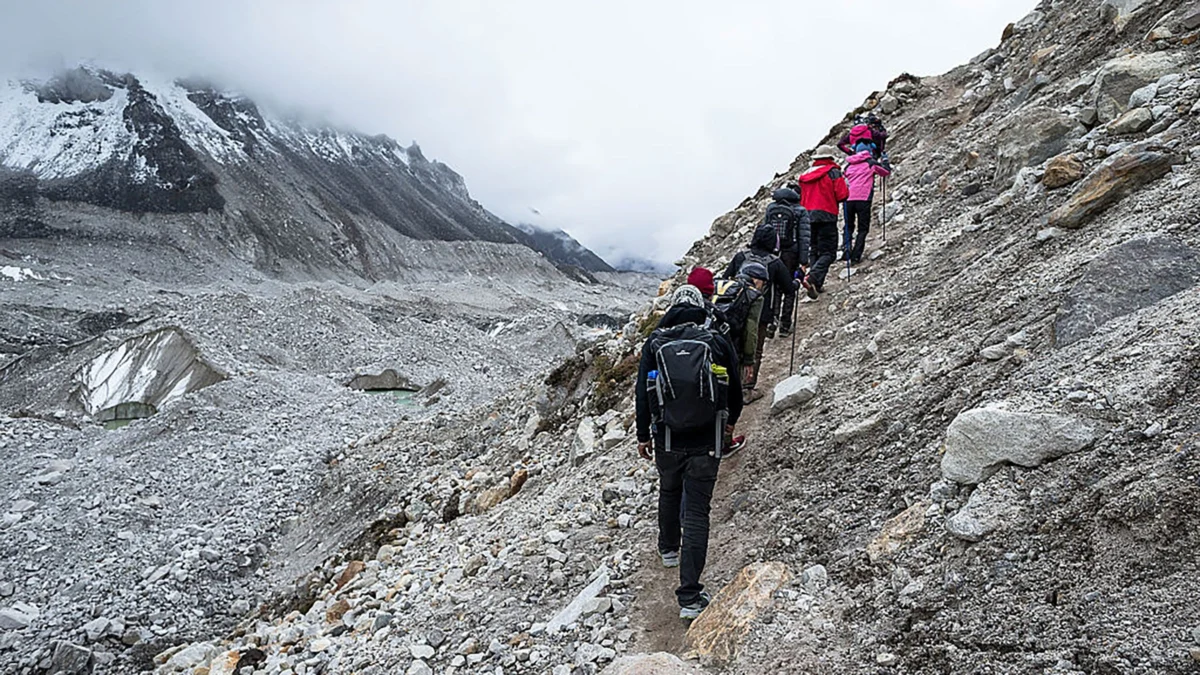
The 2026 mountaineering season on Mount Everest has recorded its first casualty following the sudden death of a veteran high-altitude guide during the critical approach phase to Base Camp. On Sunday, May 3, 2026, Lakpa Dende Sherpa, a 52-year-old mountain worker with over two decades of experience in the Himalayas, died while trekking between the settlement of Gorak Shep and Mount Everest Base Camp (EBC). The incident occurred as Lakpa Dende was returning to the mountain to begin his seasonal duties for Seven Summit Treks, one of the largest expedition outfitters in Nepal.
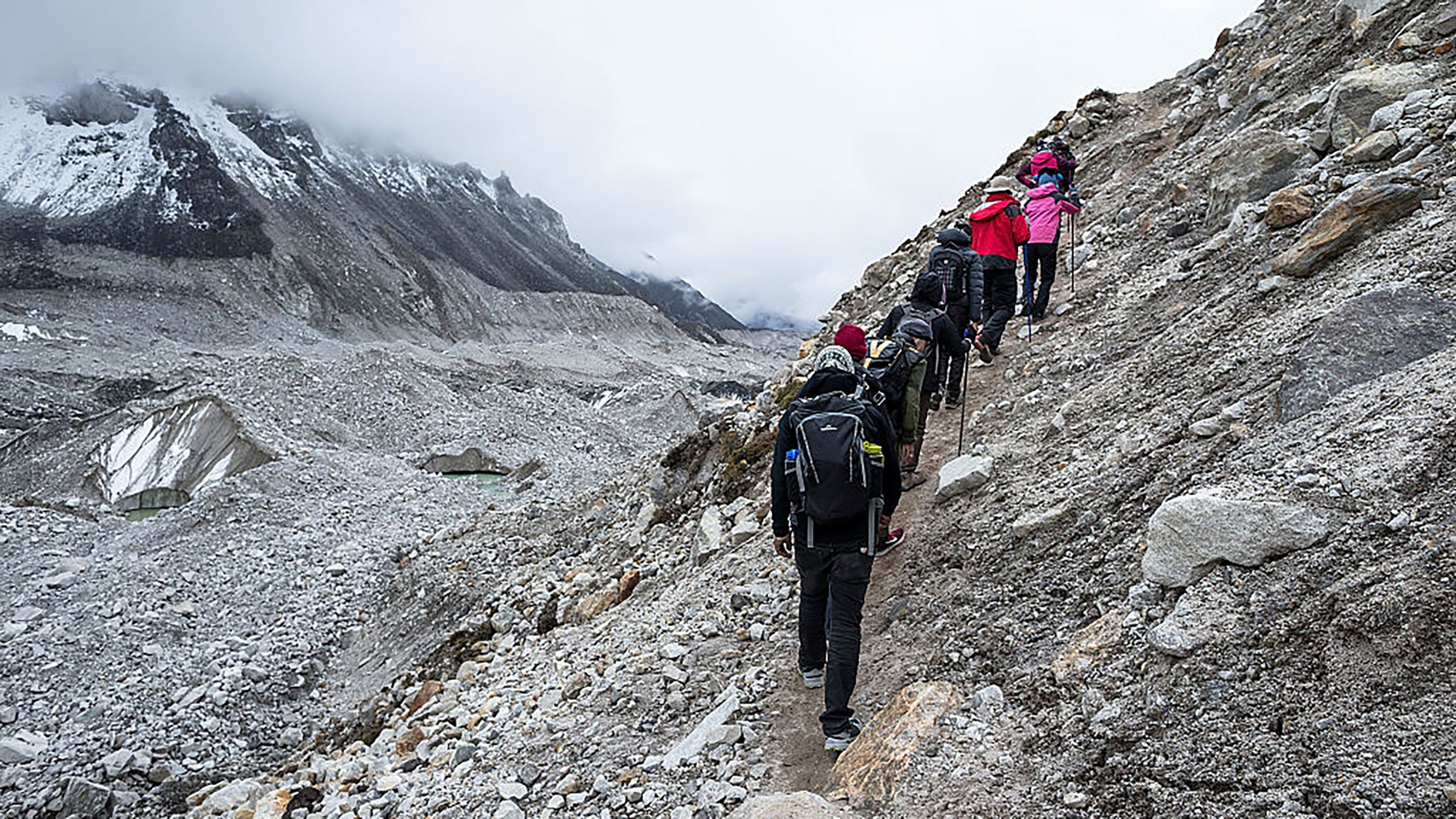
According to reports from the outfitter and local authorities, Lakpa Dende was traversing the roughly two-mile stretch of the Khumbu Glacier that connects Gorak Shep to EBC when he suddenly lost consciousness. Despite the proximity to medical resources at Base Camp, he could not be revived. His death marks a somber beginning to the spring climbing window, a period characterized by intense preparation as hundreds of climbers and support staff establish their presence on the world’s highest peak.
The Circumstances of the Incident and Immediate Response
The trek from Gorak Shep to Base Camp is often considered a routine leg of the journey for seasoned mountain workers, yet it takes place at extreme altitudes that pose significant physiological risks. Gorak Shep sits at approximately 16,942 feet (5,164 meters), while Base Camp is situated at 17,500 feet (5,334 meters). While the elevation gain is relatively modest at 558 feet, the terrain involves navigating unstable glacial moraine and breathing air that contains roughly 50% less oxygen than at sea level.
Witnesses and representatives from Seven Summit Treks indicated that Lakpa Dende appeared to be in standard health before the collapse. Thaneswar Guragai, the Managing Director of Seven Summit Treks, confirmed the loss, describing Lakpa Dende as an integral member of their climbing family who had served the company for more than ten years. Following the collapse, logistical teams coordinated a recovery effort. On the afternoon of Sunday, May 3, his body was evacuated via helicopter from the Khumbu region to Lukla, the gateway town for the Everest region, where further administrative and medical procedures were initiated.
While initial assessments from the outfitter suggest the cause of death was natural—likely linked to a sudden cardiac event or an acute altitude-related complication—the Nepal Police have officially opened an investigation. Such inquiries are standard practice for fatalities occurring in the high-altitude regions of the Solukhumbu District to rule out foul play and to formalize the documentation required for insurance and government records.
A Career Defined by the High Peaks
Lakpa Dende Sherpa was not a novice to the rigors of the Himalayas. His professional resume reflects a lifetime of service in the high-altitude industry, a career that began in 2001. Over the course of 25 years, he participated in at least 30 major expeditions across Nepal’s "eight-thousanders"—the 14 peaks in the world that exceed 8,000 meters.
His technical accomplishments were significant:
- Mount Everest (29,032 ft): He reached the summit in 2017, adding the world’s highest point to his list of achievements.
- Makalu (27,838 ft): Lakpa Dende was a specialist on the world’s fifth-highest mountain, recording seven successful summits of the notoriously difficult peak.
- Manaslu (26,781 ft): He successfully summited the "Mountain of the Spirit" in 2016.
His death underscores the reality that even the most experienced high-altitude workers are not immune to the cumulative physical toll of working in "the death zone" and its surrounding environments. At 52, Lakpa Dende was a senior figure in the Sherpa community, representing a generation of guides who transitioned the industry from early exploratory support to the highly organized commercial infrastructure seen today.
The Economic and Legal Framework of Sherpa Insurance
Under current Nepali law, the families of mountain workers who die during the course of an expedition are entitled to insurance payouts. For Lakpa Dende’s family, this claim amounts to $15,000 USD (approximately 2 million Nepali Rupees). While this mandatory insurance was established to provide a safety net, it remains a point of contention within the mountaineering community.
Critics and labor advocates argue that $15,000 is insufficient for the long-term support of a family, particularly when the deceased was the primary breadwinner. In comparison, the cost for a single foreign climber to attempt Everest in 2026 ranges from $45,000 to over $100,000. The disparity between the revenue generated by the industry and the compensation for the workers who make it possible continues to drive debates regarding the ethics of Himalayan climbing.
Historical Context: Fatalities in the Khumbu
The death of Lakpa Dende Sherpa is the first recorded on Everest in 2026, but it follows a trend of increasing fatalities among support staff. In 2025, the industry mourned two other mountain workers who died in the vicinity of Base Camp. Lha Ngima Sherpa succumbed to complications from altitude sickness, and Ngima Dorje Sherpa passed away following a brain hemorrhage.
The tracking of deaths on Everest is often categorized by location. There is a distinction made by record-keepers between deaths that occur during an "ascent" (above Base Camp) and those that occur during the "approach" or within the camp itself. However, for organizations like Outside and various mountaineering databases, the focus remains on the total human cost. The 2023 season remains the deadliest on record, with 18 fatalities, highlighting a period of increased congestion and volatile weather patterns.
The "natural causes" designation in Lakpa Dende’s case highlights a growing concern for the aging population of experienced Sherpa guides. As the industry grows, many veteran workers continue to perform high-strain labor well into their 50s, raising questions about whether the industry requires more robust health screenings and mandatory retirement or transition programs for senior staff.
Implications for the 2026 Climbing Season
The 2026 season was already under heavy scrutiny due to new regulations introduced by the Nepal Department of Tourism. These include mandates for climbers to use GPS tracking chips and stricter requirements for waste management. The death of a high-profile guide from a major outfitter like Seven Summit Treks adds a layer of somber caution to the current operations.
As of early May, the "Icefall Doctors"—the specialized team of Sherpas who maintain the route through the treacherous Khumbu Icefall—have already established the path to the higher camps. Most commercial teams are currently in the process of "rotations," where climbers move between Base Camp and Camp 1 or 2 to acclimatize. The loss of a guide during this phase can disrupt team morale and logistical planning, as outfitters must reassign roles to ensure the safety of their clients.
Analysis: The Vulnerability of the Backbone
The death of Lakpa Dende Sherpa serves as a stark reminder that the "Base Camp" environment is not a safe haven, but rather a high-altitude outpost where the body is under constant stress. The two-mile trek from Gorak Shep is often the final threshold where underlying health issues are exacerbated by the thinning air.
The mountaineering industry relies almost entirely on the physiological resilience and technical expertise of the Sherpa community. When a veteran of 30 expeditions dies before even beginning the technical climb, it prompts a re-evaluation of the "work-rest" cycles and health monitoring provided to mountain workers. Unlike the clients they guide, Sherpas often spend consecutive months at high altitude, moving heavy loads and setting ropes, which leads to chronic physical exhaustion.
As the investigation by the Nepal Police continues and the 2026 season progresses toward the mid-May summit window, the community’s focus will remain on the safety of those still on the mountain. The legacy of Lakpa Dende Sherpa—a man who stood on the roof of the world and guided dozens to safety over a quarter-century—will be remembered as his colleagues continue the arduous work of the 2026 season. For now, the flags at Everest Base Camp fly at half-mast in honor of a fallen veteran of the high peaks.



 Chandra Hamzah
 Tatiana Tantri Indah Sari
 Budi Mulyono
