
 Budi Mulyono
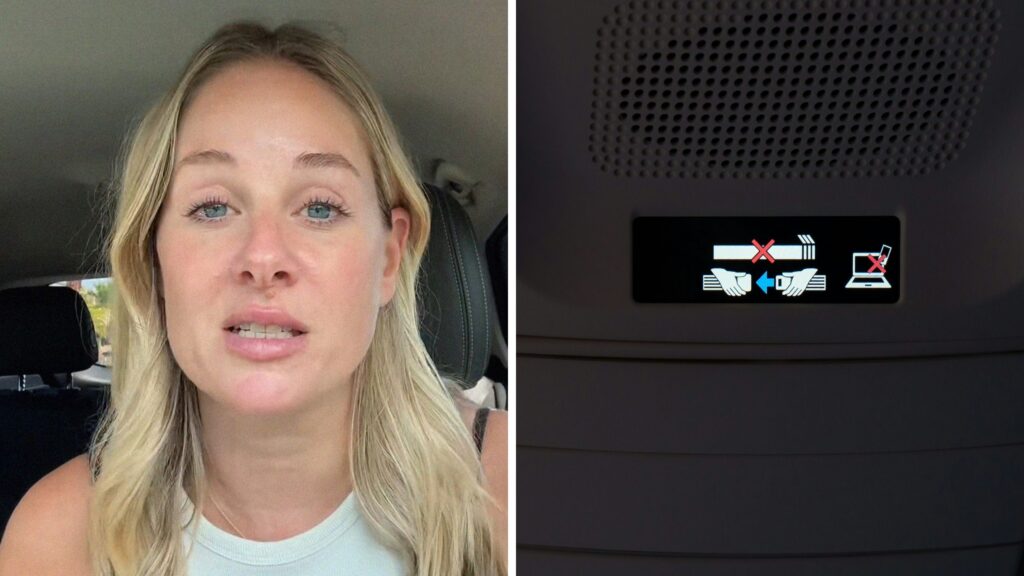
The logistical complexities of modern air travel were recently underscored by an incident involving a Nashville-based traveler whose booking error resulted in a significant financial loss and a multi-hour stranding at an airport. Gracie Fontaine, a content creator on the social media platform TikTok, documented her experience after arriving at an airport for a Spirit Airlines flight, only to discover that her return trip to Nashville had been inadvertently scheduled for a date 30 days in the future. The incident, which has garnered tens of thousands of views, serves as a high-profile example of the "user error" risks inherent in digital booking systems, as well as the steep costs associated with last-minute itinerary corrections in a volatile aviation market.

According to Fontaine’s account, the discrepancy was only realized upon her attempt to use the Spirit Airlines self-check-in kiosk. Facing an immediate need to return home, Fontaine was forced to purchase a replacement ticket for the same day. While she did not disclose the exact figure, she characterized the cost as "a million dollars," a hyperbolic reference to the premium prices typically charged for "day-of" airline tickets. Beyond the financial burden, the error resulted in a five-hour wait at the terminal before her new flight departed. The incident has prompted broader discussions regarding airline cancellation policies, the mechanics of dynamic pricing, and the current precarious state of Spirit Airlines as it navigates reports of potential liquidation.

The Mechanics of Booking Errors and the 24-Hour Rule
For most travelers, a misbooked flight is a costly mistake that can only be mitigated if caught early. The U.S. Department of Transportation (DOT) enforces a "24-hour rule" which stipulates that for any flight booked at least seven days prior to departure, the airline must allow the passenger to cancel the reservation without penalty or change the booking within 24 hours of the initial purchase. This regulation is designed to provide a "cooling off" period for consumers to catch clerical errors, such as the one experienced by Fontaine.

However, once this 24-hour window closes, the financial flexibility of the traveler diminishes significantly, particularly with low-cost carriers (LCCs) and ultra-low-cost carriers (ULCCs). Spirit Airlines, for example, utilizes a tiered fee structure for itinerary changes. For passengers who have not purchased specialized travel insurance or flexible fare bundles, rebooking fees typically range from $59 to $99. These fees are scaled based on how close the request is made to the departure date. If a change is made more than 60 days in advance, Spirit occasionally waives the fee, but for most standard "Value Fares," the cost of an error discovered at the airport is often equivalent to, or greater than, the price of the original ticket.

Dynamic Pricing and the Cost of Last-Minute Travel
The high cost of Fontaine’s replacement ticket is a direct result of the sophisticated algorithms used by the airline industry to manage revenue. Known as dynamic pricing or yield management, these systems adjust ticket prices in real-time based on demand, remaining capacity, and historical booking patterns.

Airlines typically categorize their inventory into "fare buckets." The most affordable seats are sold months in advance to price-sensitive leisure travelers. As the departure date approaches, these lower-priced buckets are exhausted, leaving only the most expensive "full-fare" tickets. Within seven days of a flight, prices often spike dramatically to capitalize on "inelastic demand"—travelers who must fly regardless of cost, such as business professionals or individuals facing personal emergencies. For a traveler like Fontaine, purchasing a ticket just hours before departure meant paying the highest possible market rate, exacerbated by the fact that LCCs like Spirit often operate with high load factors, meaning very few seats were likely available on her desired route.

Comparison of Industry Cancellation Policies
The incident also highlights the disparity between the policies of various US carriers. While Spirit and other budget airlines rely on ancillary fees—including change and cancellation charges—as a core part of their business model, other airlines have moved toward greater flexibility.
- Southwest Airlines: Historically the most flexible major US carrier, Southwest does not charge change or cancellation fees. Passengers only pay the difference in fare. If a flight is canceled, the funds are held as a "flight credit" that does not expire.
- Delta Air Lines and United Airlines: Following the COVID-19 pandemic, these legacy carriers eliminated change fees for most standard economy and premium tickets for travel within the U.S. However, "Basic Economy" fares remain highly restrictive, often allowing no changes or cancellations whatsoever after the initial 24-hour window.
- American Airlines: Similarly, American has removed change fees for most domestic and short-haul international flights but maintains strict "use it or lose it" policies for its lowest-tier tickets.
Spirit Airlines: Financial Turbulence and Liquidation Concerns
The timing of Fontaine’s travel mishap coincides with a period of unprecedented instability for Spirit Airlines. The carrier, which has long been a staple of the budget travel market, is currently facing a severe financial crisis that has led to speculation about its long-term viability.

Recent reports indicate that Spirit is navigating the complexities of bankruptcy and has allegedly approached the federal government for a bailout. These financial pressures have been compounded by the collapse of a proposed $3.8 billion merger with JetBlue Airways, which was blocked by a federal judge on antitrust grounds earlier this year. Without the merger, Spirit has struggled to manage its debt load, which includes significant maturities due in the coming years.
Further complicating matters are rumors of an imminent "wind-down" or liquidation. Sources close to the matter have suggested that the airline could begin the process of liquidating its assets as early as this week if it cannot secure a viable path forward or a government intervention. While a Spirit Airlines spokesperson told The Independent that the company does not "comment on market rumors" and that "operations continue as normal," the uncertainty has caused concern among both employees and travelers.

The Role of Labor and Management
The potential for liquidation has triggered reactions from labor organizations representing the airline’s staff. The union representing Spirit’s flight attendants has been working to reassure its members amid the flurry of news reports. The labor group has emphasized that despite the speculation, the airline is currently operating its scheduled routes. However, they have also acknowledged the pressure the company is under as it attempts to pivot its strategy toward "high-value routes" and peak travel periods in an effort to return to profitability.

Simultaneously, the broader airline industry is watching for signs of consolidation. While American Airlines recently publicly rejected the idea of a merger with United Airlines, the industry remains in a state of flux. The failure of the Spirit-JetBlue merger has left a vacuum in the low-cost sector, and if Spirit were to liquidate, it would significantly reduce the available "ultra-low-cost" capacity in the US market, likely leading to higher fares for consumers across the board.
Consumer Protections and Future Implications
For travelers, the Fontaine incident and the Spirit financial crisis serve as a cautionary tale. Consumer advocates recommend several steps to mitigate the risks associated with booking errors and airline instability:

- Double-Check Itineraries: Always review confirmation emails within the first hour of booking to take advantage of the 24-hour cancellation rule.
- Use Credit Cards: Paying for airfare with a credit card provides "chargeback" protections under the Fair Credit Billing Act. If an airline ceases operations due to liquidation, passengers can often recover their money through their credit card issuer.
- Monitor Airline Health: While individual travelers cannot predict a corporate bankruptcy, staying informed about the financial health of a carrier can help in making decisions about whether to book flights months in advance.
The plight of Spirit Airlines represents a critical moment for the US aviation industry. The carrier’s struggle to find a sustainable business model in a post-merger-block environment highlights the difficulties faced by ultra-low-cost carriers as they compete with larger, more diversified legacy airlines. Whether Spirit successfully restructures or faces liquidation, the outcome will have a lasting impact on competition and pricing in the domestic air travel market. For individuals like Gracie Fontaine, the lesson remains a personal and financial one: in the era of automated booking, a single incorrect click can lead to a "million-dollar" mistake.


 Chandra Hamzah
 Gabriela Annisa
 Tatiana Tantri Indah Sari
 Anjar Salim