
 Budi Mulyono
The hospitality industry has witnessed a significant shift in the definition of luxury, moving away from standardized opulence toward hyper-personalized, nature-integrated experiences. At the forefront of this evolution is the Ritz-Carlton Reserve, a brand that represents the absolute pinnacle of the Marriott International portfolio. Unlike the standard Ritz-Carlton hotels, which often cater to urban business travelers and traditional luxury seekers, the Reserve brand is a collection of rare estates set in some of the most secluded and pristine corners of the world. These properties are designed to offer an intimate connection between the guest and the local environment, characterized by boutique scales—usually fewer than 100 keys—and a service model that prioritizes human connection over traditional corporate protocols. While these properties operate under the Ritz-Carlton umbrella, their relationship with the Marriott Bonvoy loyalty program is unique, offering a distinct set of benefits and redemption opportunities that differ from other premium brands within the group.
The Historical Context and Philosophy of Ritz-Carlton Reserve
The Ritz-Carlton Reserve brand was conceptualized as a response to the growing demand for "experiential luxury." The brand debuted in 2008 with the opening of Phulay Bay in Krabi, Thailand. At its inception, the Reserve was positioned as a "sanctuary," intentionally distanced from the broader Marriott infrastructure to preserve its exclusivity. For over a decade, these properties existed in a state of semi-autonomy; they were managed by Ritz-Carlton but did not participate in the Marriott loyalty programs (then Marriott Rewards and SPG). This meant that even the most loyal travelers could not earn or redeem points at these locations, a strategy designed to maintain a high barrier to entry and a focus on high-net-worth cash-paying guests.

However, as the global travel landscape shifted and the importance of loyalty ecosystems grew, Marriott International made a landmark decision in 2022 to fully integrate Ritz-Carlton Reserve into the Marriott Bonvoy program. This move opened the doors for millions of members to engage with the brand, while simultaneously necessitating a complex set of rules to balance the brand’s elite status with the program’s massive scale. The Reserve philosophy remains centered on three pillars: remote locations, deep cultural immersion, and a "human touch" service model that replaces the traditional concierge with "Sabu" or dedicated host roles.
A Global Footprint: The Current Portfolio and Future Pipeline
As of mid-2024, the Ritz-Carlton Reserve portfolio consists of nine operating properties, with a strategic expansion plan currently underway. The slow growth of the brand is intentional, as each location must meet rigorous criteria for natural beauty and cultural significance.
Current Operating Properties:
- Phulay Bay (Krabi, Thailand): The inaugural property, known for its dramatic limestone karsts and Thai-inspired architecture.
- Dorado Beach (Puerto Rico): A historic estate originally developed by Laurance Rockefeller, emphasizing conservation and oceanfront luxury.
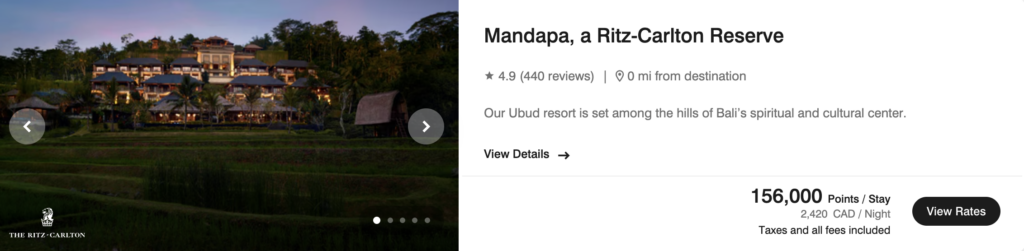
- Mandapa (Ubud, Bali): Situated along the Ayung River, this resort is modeled after a traditional Balinese village, complete with its own rice paddies.
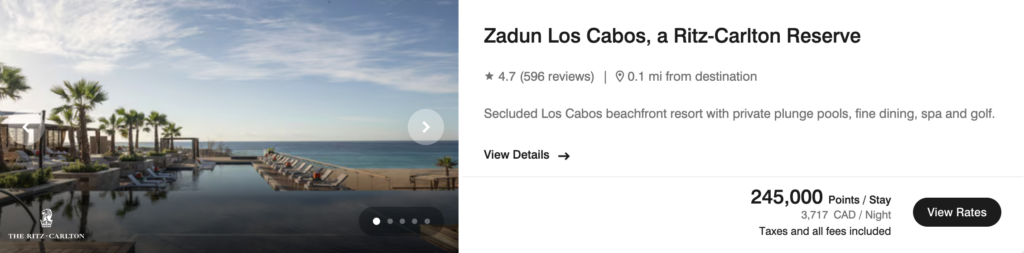
- Zadún (San José del Cabo, Mexico): A desert-meets-sea retreat that highlights the rugged beauty of the Baja California Peninsula.
- Higashiyama (Niseko, Japan): A mountain sanctuary catering to winter sports enthusiasts and those seeking the healing properties of Japanese onsens.
- Rissai Valley (Jiuzhaigou, China): Located near a UNESCO World Heritage site, focusing on Tibetan culture and alpine scenery.
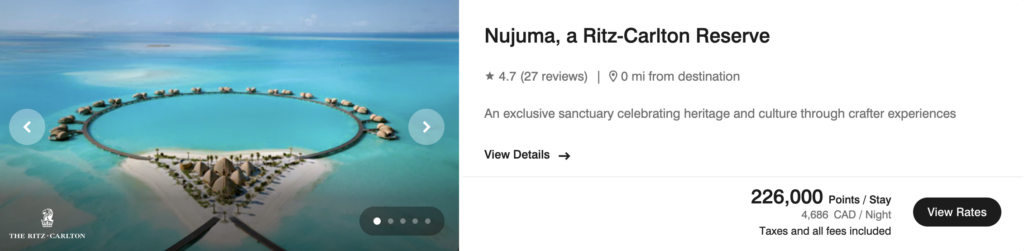
- Nujuma (The Red Sea, Saudi Arabia): One of the newest additions, featuring overwater villas in a regenerative tourism destination.
- Siari (Riviera Nayarit, Mexico): A recently opened enclave that focuses on the biodiversity of the Mexican Pacific coast.
- Caroline Bay (Bermuda): While parts of this development have faced delays, it remains a key component of the brand’s Atlantic strategy.
The Expansion Pipeline:
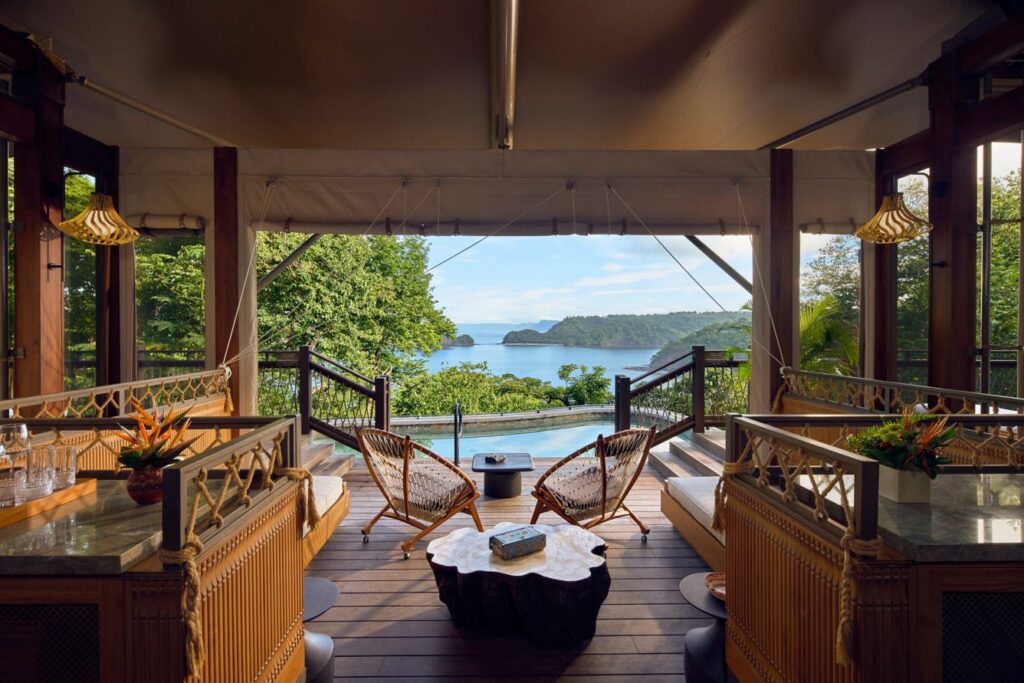
Marriott has signaled a rapid acceleration in the brand’s growth, with several high-profile openings scheduled for the 2025–2027 period. Notable among these is Nekajui on the Peninsula Papagayo in Costa Rica, which is expected to redefine eco-luxury in Central America. Other confirmed projects include expansions in the Bahamas (Eleuthera) and further developments within Saudi Arabia’s ambitious "Vision 2030" tourism projects, including Ummahat and Trojena.
Marriott Bonvoy Integration: Elite Benefits and Limitations
The integration of Ritz-Carlton Reserve into Marriott Bonvoy brought a standardized framework for earning and redeeming, though it retains several "exceptions" that travelers must navigate. Unlike many Marriott brands where elite benefits are uniform, the Reserve brand follows a modified structure similar to that of the standard Ritz-Carlton properties, reflecting the high operational costs and boutique nature of the resorts.
Earning Points and Elite Night Credits
Members earn 10 base points for every U.S. dollar spent on qualifying room rates and charges. Elite status bonuses apply as follows:
- Silver Elite: 10% bonus
- Gold Elite: 25% bonus
- Platinum Elite: 50% bonus
- Titanium and Ambassador Elite: 75% bonus
Furthermore, stays at Reserve properties count toward Elite Night Credits (ENCs), which is essential for members striving for lifetime status or annual tier qualification.
The "No Breakfast" Policy and Other Exclusions
One of the most frequent points of contention among Marriott Bonvoy loyalists is the lack of a complimentary breakfast benefit for Platinum, Titanium, and Ambassador members at Ritz-Carlton and Ritz-Carlton Reserve properties. Industry analysts suggest this policy is maintained to protect the revenue of the on-site culinary programs, which are often the centerpiece of the guest experience. Additionally, Ritz-Carlton Reserve properties do not participate in the "Nightly Upgrade Award" (formerly Suite Night Award) program. Due to the limited inventory of rooms and the high demand for specific villa types, the brand does not guarantee space-available upgrades for elite members, although "preferred room" upgrades are occasionally granted at the hotel’s discretion for Gold members and above.
The Ambassador Elite Advantage
In a move to provide tangible value to its highest-tier members, Marriott introduced a unique $150 USD resort credit per stay for Ambassador Elite members at Ritz-Carlton Reserve properties. This credit can be applied to spa treatments, dining, and other on-property activities, though it excludes the base room rate and taxes. This is currently the only brand in the Marriott portfolio where such a specific monetary credit is a standard elite benefit, highlighting the brand’s desire to cater specifically to its top-tier spenders.
Strategic Redemption: Navigating Dynamic Pricing
The transition to dynamic pricing in the Marriott Bonvoy program has made "sweet spot" redemptions harder to find, but Ritz-Carlton Reserve properties continue to offer some of the highest value-per-point ratios in the travel industry. Because cash rates at these properties frequently exceed $2,000 per night, points redemptions can often yield a value of 1.5 to 2.5 cents per point (CPP), significantly higher than the standard Marriott valuation of approximately 0.7 to 0.8 CPP.
Case Studies in Point Value
- Mandapa, Bali: With cash rates often hovering around $2,400 for a villa, a redemption of 150,000 to 160,000 points represents a value of approximately 1.55 CPP. Given the immersive nature of the property, many travelers view this as an ideal use of points earned through business travel or credit card spend.
- Nujuma, Saudi Arabia: As a flagship property for the Red Sea development, cash rates can soar to $4,600 per night. While the point requirement is high—often exceeding 220,000 points per night—the resulting value of over 2.0 CPP makes it one of the most mathematically sound redemptions in the world.
- Zadún, Los Cabos: This property often fluctuates between 120,000 and 170,000 points. At a cash rate of $1,800, it remains a strong aspirational target for North American travelers looking for luxury within a short flight.
However, the brand is not immune to poor redemption values. The recently opened Siari in Riviera Nayarit has seen initial point requirements that result in a value of less than 0.5 CPP. Analysts suggest this is a common occurrence with new openings as the revenue management systems calibrate to market demand.
Implications for the Ultra-Luxury Travel Market
The continued expansion of Ritz-Carlton Reserve and its integration into a global loyalty program reflects a broader trend in the hospitality sector: the "institutionalization" of ultra-luxury. While brands like Aman once stood alone in the boutique, remote-resort space, they now face stiff competition from major hotel conglomerates that can offer similar levels of exclusivity backed by the power of a global loyalty currency.
For Marriott, the Reserve brand serves as a "halo," elevating the perception of the entire 30-brand portfolio. It provides a destination for the "points rich" traveler, ensuring that high-value customers do not stray to competitors like Four Seasons or Belmond when booking their milestone vacations. For the consumer, the brand offers a rare opportunity to access $3,000-a-night experiences through disciplined points accumulation, though they must be prepared for the "a la carte" nature of the stay, where extras like breakfast and transfers are rarely included.
As the brand moves toward its goal of doubling its footprint over the next decade, the challenge will be maintaining the "intimate and immersive" feel that defines the Reserve name. The success of upcoming projects like Nekajui will be a litmus test for whether the brand can scale without losing the "true human connection" that its marketing promises. For now, Ritz-Carlton Reserve remains the gold standard for aspirational travel within the Marriott Bonvoy ecosystem, offering a unique blend of wilderness and refined service that is increasingly rare in the modern world.




 Anjar Salim
 Chandra Hamzah
 Tatiana Tantri Indah Sari
 Lukman Taruna Persada Ramadan
