
 Budi Mulyono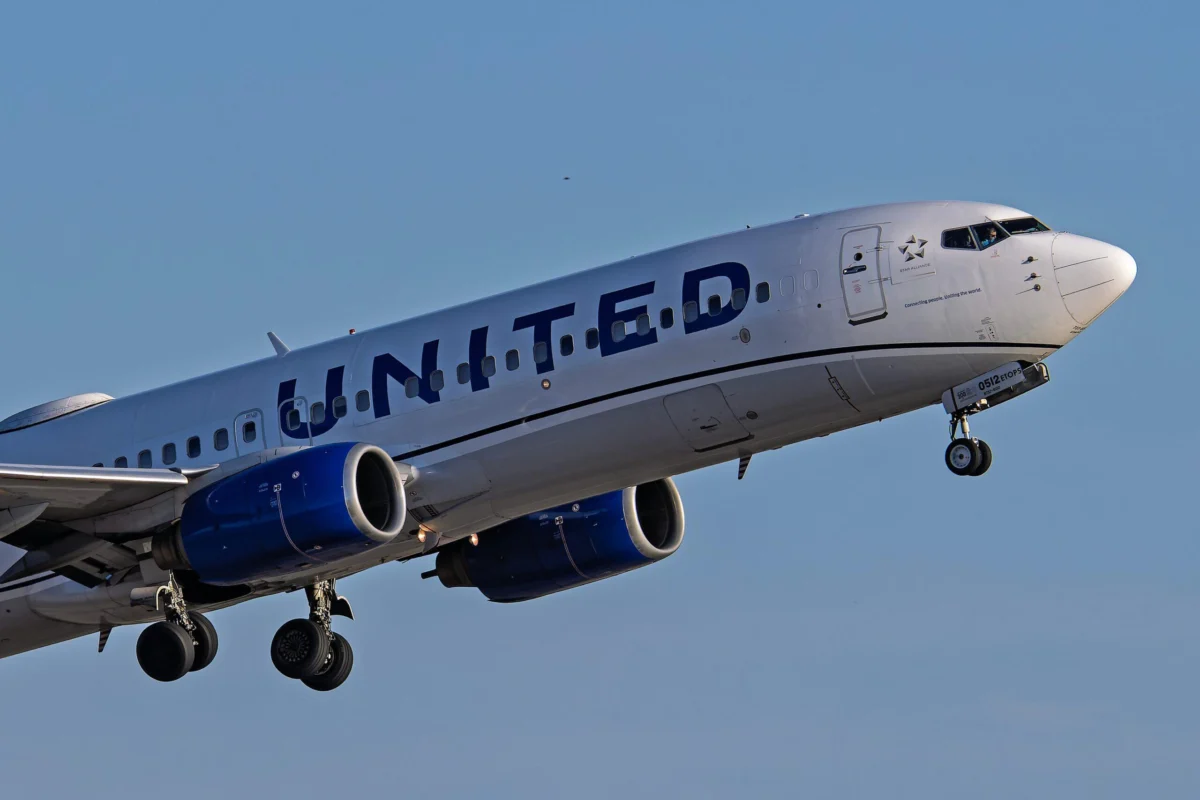
On the evening of May 21, 2026, United Airlines Flight UA1551, a scheduled international service from Newark Liberty International Airport (EWR) to La Aurora International Airport (GUA) in Guatemala City, was forced to execute an emergency diversion to Washington Dulles International Airport (IAD). The decision to divert followed a series of high-altitude disturbances involving an unruly passenger who reportedly attempted to breach an aircraft cabin door while the plane was at its cruising altitude. The situation escalated further when the individual allegedly assaulted a fellow traveler, prompting the flight crew to declare an emergency and seek the nearest suitable airfield for landing.
The aircraft involved, a Boeing 737 MAX-8, was carrying a full complement of passengers and crew on what was intended to be a four-and-a-half-hour southbound flight. According to flight tracking data and communications from the flight deck, the incident began to unfold approximately 40 minutes after the aircraft departed from Newark. At that time, the plane was positioned over the state of Delaware, climbing through 30,000 feet toward its final cruising altitude of 36,000 feet.
Chronology of Flight UA1551
Flight UA1551 departed Newark Liberty International Airport behind schedule, but the initial phase of the flight appeared routine. As the aircraft reached its initial cruise phase over the Mid-Atlantic region, witnesses and crew members reported a sudden disturbance in the cabin. An unidentified male passenger reportedly rose from his seat and made a determined effort to open one of the aircraft’s emergency exit doors.
Despite the physical impossibility of opening a pressurized aircraft door at such altitudes, the action caused immediate alarm among the passengers and cabin crew. When intervened upon by nearby travelers and flight attendants, the suspect allegedly turned his aggression toward a seatmate, resulting in a physical assault.
Flight tracking data provided by FlightRadar24 illustrates the abrupt nature of the diversion. At approximately 40 minutes into the flight, the Boeing 737 MAX-8 deviated from its planned flight path toward Central America, performing a sharp turn toward the west. Air traffic control (ATC) recordings captured the moment the pilots notified controllers of the situation. Despite the chaotic reports coming from the cabin, the flight deck crew remained notably calm, informing ATC that while they had an unruly passenger who had attempted to "open the door and assault a passenger," the situation was being managed by the cabin crew and they required a diversion to Washington Dulles for law enforcement intervention.
The aircraft landed safely at Washington Dulles International Airport a short time later, where it was met by airport police and federal agents. The suspect was removed from the aircraft in custody, and the remaining passengers were deplaned while officials conducted interviews and processed the scene.
Technical Analysis: The Physics of Cabin Doors at Altitude
One of the most distressing aspects of the incident for those on board was the attempt to open the cabin door mid-flight. However, aviation experts and aeronautical engineers emphasize that such an act is physically impossible while an aircraft is pressurized at high altitudes.
Most commercial aircraft, including the Boeing 737 MAX-8, utilize "plug doors." These doors are designed to be slightly larger than the frame they fit into, meaning they must be pulled inward and rotated before they can be pushed outward. When an aircraft is at 30,000 feet, the atmospheric pressure outside is significantly lower than the regulated pressure inside the cabin (which is typically maintained at an equivalent of 6,000 to 8,000 feet above sea level).
This pressure differential creates a force of several tons against the door, effectively sealing it against the frame. At a cruising altitude of 36,000 feet, the pressure acting on the door would require thousands of pounds of force to overcome—far beyond the physical capability of any human being. The only scenario in which an aircraft door could be opened in flight is at very low altitudes where the pressure differential is negligible, or if the aircraft has been intentionally or accidentally depressurized.
Furthermore, many modern aircraft, particularly widebody models, are equipped with "speed locks." These are mechanical or electronic actuators that automatically lock the door handles once the aircraft reaches a specific ground speed or once the wheels leave the tarmac, providing an additional layer of security against unauthorized opening.

Classification of Unruly Passenger Incidents
To standardize the response to in-flight disturbances, the International Civil Aviation Organization (ICAO) and various national aviation authorities utilize a four-level classification system for unruly behavior. This system allows crew members to communicate the severity of a threat to the flight deck and ground control efficiently.
- Level 1: Disruptive Behavior. This includes verbal non-compliance, the use of profane language toward crew members, or failure to follow safety instructions (such as wearing a seatbelt).
- Level 2: Physically Abusive Behavior. This level is reached when a passenger engages in physical contact, such as pushing, grabbing, or assaulting another person, or intentionally damaging aircraft property.
- Level 3: Life-Threatening Behavior. This involves the display or use of a weapon, credible threats of death or serious bodily injury, or attempts to sabotage aircraft systems.
- Level 4: Breach of the Flight Deck. This is the most severe level, involving an attempt to enter the cockpit or take control of the aircraft.
The incident on Flight UA1551 appears to straddle the line between Level 2 and Level 3. While the assault on a passenger clearly constitutes Level 2 behavior, many airline safety protocols dictate that any attempt to tamper with emergency exits or cabin integrity be escalated immediately to Level 3 or even Level 4 in terms of the security response triggered on the ground. The decision by the United Airlines pilots to divert immediately suggests they viewed the threat as a significant risk to the continued safe operation of the flight.
Legal and Regulatory Consequences
The passenger involved in the UA1551 incident faces significant legal jeopardy. Under United States federal law, specifically 49 U.S.C. § 46504, "interference with flight crew members and attendants" is a felony. This statute applies to anyone on an aircraft within the special aircraft jurisdiction of the United States who assaults or intimidates a flight crew member or flight attendant, thereby interfering with the performance of their duties.
Convictions under this statute can carry sentences of up to 20 years in federal prison. If a dangerous weapon is used, the sentence can be extended to life imprisonment. Additionally, the Federal Aviation Administration (FAA) has the authority to levy civil penalties against unruly passengers. Under a "Zero Tolerance" policy enacted in recent years, these fines can reach up to $37,000 per violation. A single incident can result in multiple violations, such as one for the assault, one for the interference with the crew, and another for the attempt to tamper with the aircraft door.
Beyond criminal and civil penalties, airlines often place such individuals on internal "no-fly" lists, effectively banning them from future travel on that carrier. In some cases, information is shared between airlines to prevent the individual from booking travel on partner carriers.
Broader Context: The Rise of In-Flight Disturbances
The diversion of UA1551 is part of a broader, concerning trend in the aviation industry regarding passenger behavior. While the total number of unruly passenger reports has seen fluctuations, the severity of incidents involving physical violence or attempts to interfere with aircraft operations remains a primary concern for labor unions representing flight attendants and pilots.
Industry analysts point to various factors contributing to "air rage," including increased cabin density, the stress of modern travel, and, in some cases, the influence of alcohol or medicinal substances. Organizations such as the Association of Flight Attendants (AFA-CWA) have long advocated for stricter enforcement of federal laws and better training for crew members to de-escalate such situations.
In the case of Flight UA1551, the flight attendants’ ability to manage the passenger until the aircraft reached Dulles highlights the importance of rigorous safety and security training. According to the pilots’ communications, the situation in the cabin was brought "under control" relatively quickly, allowing the flight deck to focus on the technical requirements of an emergency diversion and landing.
Official Responses and Next Steps
United Airlines issued a brief statement following the incident, confirming that the flight diverted to Washington Dulles "due to a disruptive passenger" and emphasizing that "the flight landed safely and was met by local law enforcement." The airline further stated that they are cooperating with the FAA and the Federal Bureau of Investigation (FBI) in their ongoing inquiry into the matter.
For the passengers of UA1551, the diversion resulted in a significant delay. United Airlines worked to re-accommodate the travelers on a subsequent flight to Guatemala City, providing hotel vouchers and meal assistance where necessary. While the physical threat was neutralized upon landing at Dulles, the psychological impact of such an event often lingers for those who witnessed the disturbance.
As the investigation continues, federal prosecutors will determine the specific charges to be filed against the suspect. The incident serves as a stark reminder of the complexities of maintaining safety in the skies and the physical and legal barriers that protect the integrity of commercial aviation. Despite the alarming nature of a passenger attempting to open a door at 30,000 feet, the combination of aeronautical engineering, crew training, and rapid air traffic control coordination ensured that Flight UA1551 ended without further injury or catastrophe.


 Chandra Hamzah
 Gabriela Annisa
 Tatiana Tantri Indah Sari
 Hendra Ismail
 Walid Sujud Trenggono