
 Budi Mulyono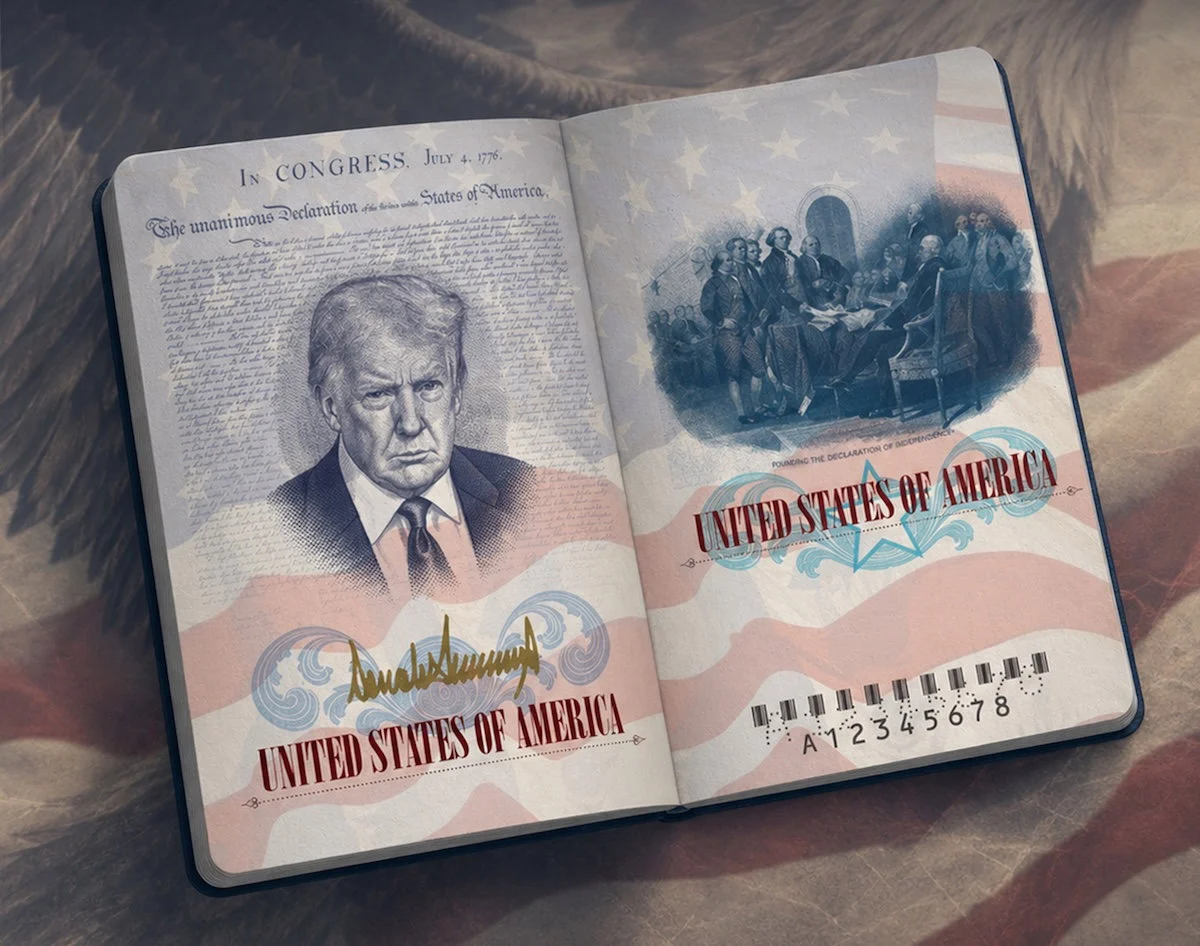
The United States Department of State has officially announced the introduction of a limited-edition passport design to commemorate the upcoming 250th anniversary of the nation’s independence. This new travel document, which marks the first time in American history that a sitting or former president’s likeness has been featured as a central design element within the passport’s internal pages, has sparked significant discussion regarding the intersection of national identity and executive representation. The rollout is currently restricted to a single location and is being marketed as a historical keepsake for the nation’s "Semiquincentennial" celebrations.
The redesign includes several striking departures from the standard "Next Generation Passport" (NGP) currently issued to the majority of American citizens. Most notably, the inside front cover features a portrait of President Donald Trump. This image is framed by the preamble of the Declaration of Independence and an artistic rendering of the American flag. Accompanying the portrait is the President’s signature, rendered in gold ink. Subsequent pages continue the historical theme, featuring a depiction of the Founding Fathers during the signing of the Declaration of Independence in 1776, intended to bridge the gap between the nation’s origins and its current administration.
Technical Specifications and Exterior Modifications
The exterior of the limited-edition passport has also undergone visible alterations. The words "United States of America" are embossed in a larger, more prominent typeface at the top of the front cover, shifting the visual balance of the document. The back cover introduces a unique commemorative emblem: a reproduction of the 13-star flag from 1777, with the number "250" centered within the circle of stars. This design choice is a direct nod to the 250 years of American sovereignty that will be officially celebrated on July 4, 2026.
Despite these aesthetic changes, the State Department has confirmed that the document maintains all standard security features of the Next Generation Passport. This includes the polycarbonate data page, laser-engraved personalization, and multi-layered images that are designed to prevent counterfeiting. The biometric chip, embedded in the back cover, remains the primary source of identity verification for international border crossings, ensuring that the commemorative edition meets all International Civil Aviation Organization (ICAO) standards.
Distribution and Availability at the Washington Passport Agency
Currently, the distribution of this limited-edition passport is highly centralized. The State Department has indicated that the design is only available to individuals who apply for or renew their passports in person at the Washington Passport Agency in Washington, D.C. This agency typically handles urgent travel requests and official government business, making it a high-traffic hub for diplomatic and expedited processing.
A significant point of contention for some travelers is the mandatory nature of the issuance at this location. Officials have stated that as long as the limited-edition stock remains available, it will be the default document issued to all successful applicants at the Washington Passport Agency. Applicants at this specific site do not have the option to request the standard NGP design. Travelers who wish to avoid the commemorative design are advised to utilize the online renewal system or visit one of the other 25 passport agencies or thousands of passport acceptance facilities (such as post offices and libraries) across the country, where the standard design continues to be the exclusive offering.
Historical Context and Precedent
The inclusion of a specific political figure on a U.S. passport is a departure from over two centuries of tradition. Historically, the U.S. passport has focused on non-partisan symbols of American democracy and geography. The 2007 redesign, for example, featured images of the Liberty Bell, Mount Rushmore, and the transcontinental railroad, accompanied by quotes from various historical figures including George Washington, Abraham Lincoln, and Martin Luther King Jr. However, these figures were long deceased, and their inclusion was intended to represent broad historical eras rather than a contemporary administration.
The first American passports were issued during the Revolutionary War, often as single-sheet documents. It was not until the 20th century that the passport took its modern booklet form. Throughout several redesigns—from the green covers of the 1970s to the current blue covers—the focus has remained on the "Great Seal of the United States" and the collective identity of the American people. Critics of the new design argue that the passport should remain a neutral document of state, while supporters view it as a bold celebration of current leadership during a milestone anniversary.
Official Responses and Political Discourse
The announcement has elicited a range of reactions from political analysts, lawmakers, and the public. In response to criticism regarding the "unprecedented" nature of the design, the official White House account on the social media platform X (formerly Twitter) defended the move by drawing comparisons to previous commemorative items. Specifically, the administration pointed to a commemorative MetroCard issued for President Barack Obama’s first inauguration in January 2009. The administration argued that utilizing state-adjacent platforms for commemorative purposes is a longstanding tradition, though critics noted the difference between a local transit card and a federal identity document used for international travel.
Further fueling the debate was a separate post from the White House X account referencing "two kings" following a meeting between President Trump and King Charles III. This rhetoric has intensified the discussion over the symbolic direction of the executive branch. Within the State Department, the official stance remains that the passport is a "limited-edition commemorative product" designed to honor the 250th anniversary of the nation, with the current President serving as the representative of the executive office during this period.
The U.S. Semiquincentennial (1776–2026)
The rollout of the passport is part of a broader federal initiative to prepare for the United States Semiquincentennial. In 2016, Congress passed the United States Semiquincentennial Commission Act, which established a non-partisan commission to plan the 250th-anniversary celebrations. The commission’s mandate includes promoting "the ideas and history of the American Revolution" and "the significance of the Declaration of Independence."
While many of the commission’s planned activities involve educational programs, museum exhibits, and national monuments, the State Department’s decision to alter a primary identity document is one of the more visible and permanent components of the celebration. The 1777 flag featured on the back cover of the passport is particularly symbolic of this era. Often referred to as the "Betsy Ross" flag, the 13-star design represents the original colonies that declared independence from Great Britain. By centering "250" within those stars, the design seeks to create a direct visual link between the revolutionary past and the present day.
Broader Implications for International Travel
The introduction of a politically centered passport design carries potential implications for American travelers abroad. Passports are not merely internal IDs; they are requests from one sovereign state to another for the safe passage and protection of the bearer. Diplomatic experts have raised questions about how the new design might be perceived in countries with varying diplomatic relations with the United States.
In some international contexts, the display of a specific political leader’s image on a travel document is associated with personalized regimes or constitutional monarchies. While the biometric data remains the legal basis for entry, the visual branding of the document is a form of "soft power" projection. For some travelers, the commemorative passport may be seen as a collector’s item of significant value. For others, particularly those traveling to regions where the current administration’s policies are a subject of intense local debate, the document could potentially attract unwanted attention or scrutiny at border checkpoints.
Timeline and Future Outlook
The State Department has not provided a specific end date for the issuance of the limited-edition passport, stating only that it will be available "until supplies run out." Given the high demand for passports and the limited nature of this run, it is expected that the stock at the Washington Passport Agency will be depleted well before the actual 250th-anniversary date in July 2026.
As the nation approaches its 250th year, more commemorative items and policy changes are expected from various federal agencies. The debate over the Trump-centric passport design highlights a larger national conversation about how the United States chooses to represent its history and its leadership on the world stage. Whether this becomes a one-time anomaly or sets a new precedent for future commemorative presidencies remains to be seen. For now, the "250th Anniversary Edition" stands as a unique, albeit polarizing, chapter in the history of American travel documentation.




 Anjar Salim
 Chandra Hamzah
 Tatiana Tantri Indah Sari

