
 Budi Mulyono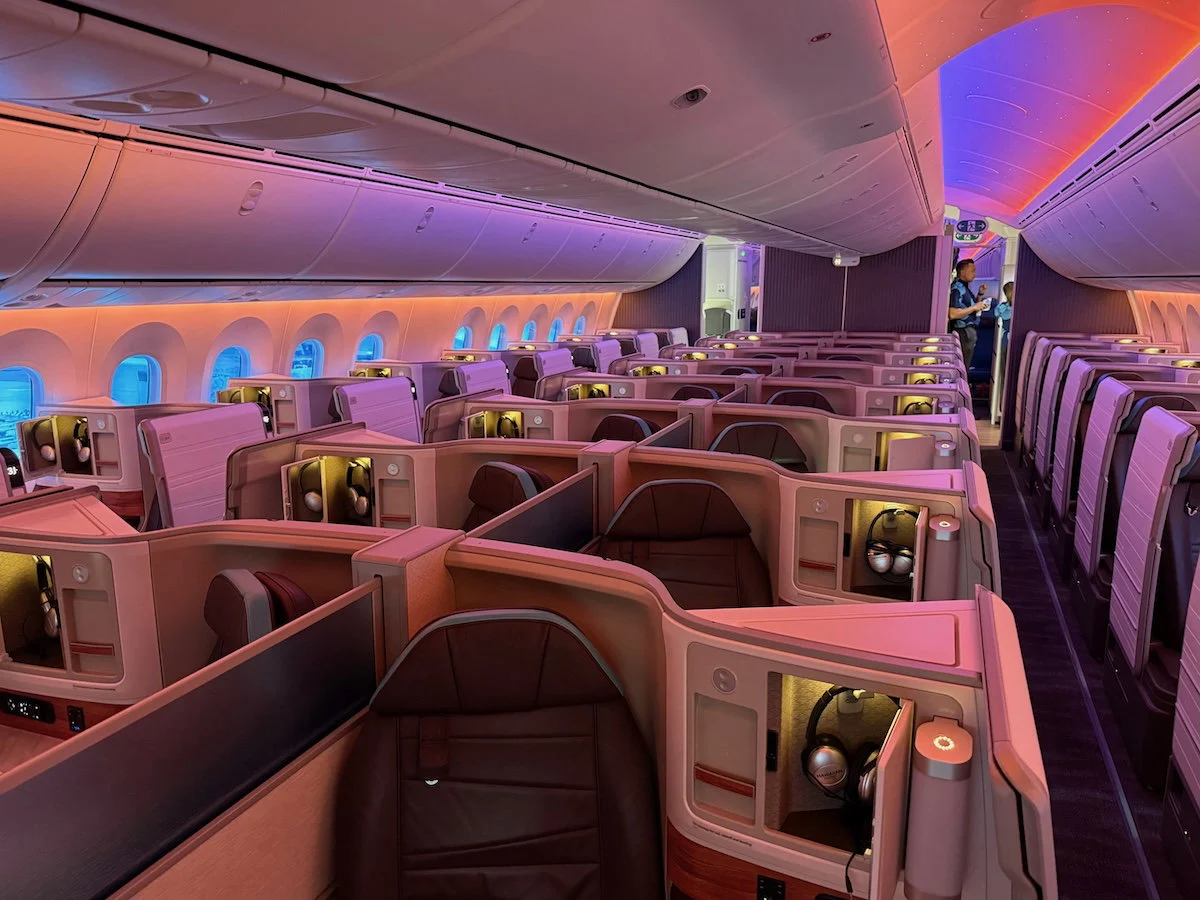
The aviation industry witnessed a significant shift in loyalty program dynamics in late April 2026 as Alaska Air Group officially implemented a groundbreaking benefit for its highest-tier frequent flyers. Under the newly integrated Atmos Rewards program, which serves both Alaska Airlines and Hawaiian Airlines, Titanium members are now eligible for complimentary, day-of-departure upgrades into business class on all global flights. This development marks a departure from standard North American carrier practices, as it eliminates the requirement for miles or upgrade certificates for transoceanic premium cabin access on a space-available basis.
The rollout follows the August 2024 launch of Atmos Rewards, a unified loyalty structure created following the strategic merger and integration of Alaska Airlines and Hawaiian Airlines. By offering "battlefield" upgrades to destinations as far-reaching as London Heathrow (LHR), Seoul Incheon (ICN), and Tokyo Narita (NRT), Alaska Air Group has positioned itself as a disruptor in the premium loyalty space, challenging the traditional upgrade hierarchies of larger legacy competitors.
The Evolution of Atmos Rewards: A Strategic Timeline
The journey toward this unified loyalty experience began shortly after the regulatory approval of the Alaska-Hawaiian merger. The timeline of the program’s development reflects a phased approach to integration, designed to stabilize operations before introducing high-value incentives.
- August 2024: Alaska Air Group officially announces Atmos Rewards, replacing the former Alaska Mileage Plan and HawaiianMiles. The rebranding introduced four distinct elite tiers: Silver, Gold, Platinum, and Titanium.
- January 2025: The group begins aligning earning structures, allowing members to accrue "Atmos Status Points" across both carriers through flight activity and co-branded credit card expenditures.
- Late 2025: Alaska Airlines begins operating its first long-haul routes under its own flight numbers using a fleet of Boeing 787-9 Dreamliners, previously part of the Hawaiian Airlines order book but rebranded for the unified group.
- April 2026: The final phase of the elite benefit rollout commences, activating global complimentary upgrades for Titanium members and expanding the utility of Milestone Perk upgrade certificates.
This chronological progression highlights the group’s intent to leverage Hawaiian Airlines’ wide-body fleet and international route network to enhance the value proposition for Alaska’s historically domestic-focused high-value customers.
Technical Specifications of the Titanium Upgrade Benefit
The new global upgrade policy is specifically reserved for Atmos Rewards Titanium members, the program’s top-tier status. This status requires the accumulation of 135,000 Atmos Rewards status points within a single calendar year. Unlike previous iterations of loyalty programs where status was primarily earned through "butt-in-seat" miles, Atmos Rewards allows for a more diversified path to elite status. Points can be earned through a combination of qualifying flights, spend on the Atmos Rewards Visa Signature cards, and even award travel—a move that mirrors broader industry trends toward revenue-based and engagement-based loyalty.

The mechanics of the new upgrade benefit are distinct. On the day of departure, if seats remain in the business class cabin, Titanium members and one companion traveling on the same reservation are automatically added to a priority standby list. If seats are available after all confirmed upgrades (those using certificates) have cleared, the Titanium member is moved to the premium cabin at no additional cost.
Industry analysts note that while the perk is highly valuable, it carries inherent risks for the traveler. Unlike "confirmed" upgrades, these are processed at the gate—often referred to as "battlefield upgrades." For long-haul flights exceeding 10 or 12 hours, travelers may face the uncertainty of not knowing their final cabin assignment until minutes before boarding.
Expanding the Utility of Milestone Perk Upgrade Certificates
Parallel to the complimentary Titanium upgrades, Alaska Air Group has also revamped its "Milestone Perks" system. This program rewards members as they pass specific point thresholds (e.g., 50,000, 75,000, and 100,000 points) with a choice of benefits, including one-way upgrade certificates.
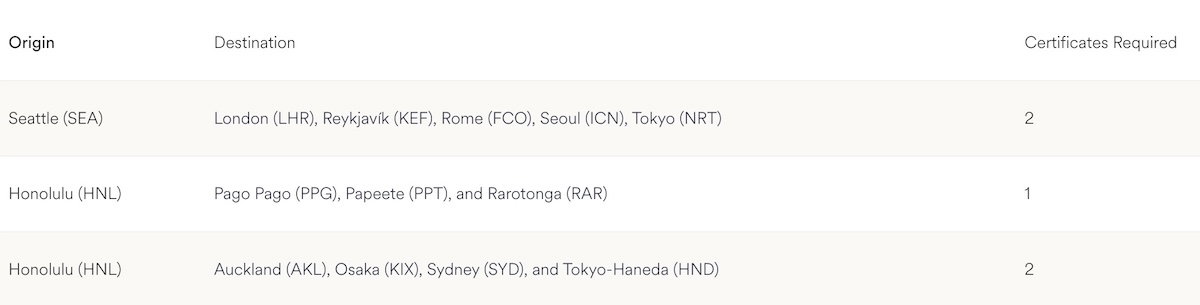
Historically, these certificates were limited to Alaska’s network within the Americas. However, the April 2026 update permits their use on all global routes operated by both Alaska and Hawaiian. The application of these certificates follows a tiered requirement system based on the length and nature of the flight:
- Short-Haul and Regional: One certificate is required for most flights within North America and to Mexico or Central America.
- Long-Haul Global: Two certificates are generally required for transoceanic flights to Europe, Asia, and Oceania, particularly when upgrading from economy to business class.
- Fare Class Restrictions: To use a certificate in advance, the flight must have specific upgrade inventory (often designated as "U" or "A" class) available.
The process for applying these certificates currently remains manual. Members are required to contact the Atmos Rewards elite desk to verify inventory and apply the certificates to their reservation. Despite the administrative complexity, these certificates offer a significant advantage over the complimentary Titanium perk: they allow for confirmation in advance of the departure date, providing certainty for international travelers.
Comparative Analysis: Atmos Rewards vs. The "Big Three"
The introduction of complimentary global upgrades places Atmos Rewards in a unique position relative to the "Big Three" US carriers—Delta Air Lines, United Airlines, and American Airlines.

| Feature | Atmos Rewards (Titanium) | Delta (Diamond) | United (1K/Global Services) | American (Exec. Platinum) |
|---|---|---|---|---|
| Complimentary Long-Haul Upgrades | Yes (Day of Departure) | No | No | No |
| Upgrade Currency | N/A (Automatic) | Choice Benefits (GUCs) | PlusPoints | Systemwide Upgrades (SWUs) |
| Companion Eligibility | Yes (One) | No (Requires additional cert) | No (Requires additional points) | No (Requires additional SWU) |
| Status Requirement | 135,000 Points | $28,000 MQDs | 24,000 PQP or 18k + 54 PQF | 200,000 Loyalty Points |
By offering complimentary upgrades on international routes, Alaska Air Group is effectively lowering the barrier to the premium cabin for its most loyal customers. While Delta, United, and American require the expenditure of limited instruments (Global Upgrades or PlusPoints) for any transoceanic upgrade, Atmos Rewards treats a flight to London or Tokyo with the same upgrade logic as a flight from Seattle to San Francisco, provided the traveler holds Titanium status.
Operational Challenges and IT Limitations
Despite the rollout’s success, Alaska Air Group has acknowledged certain technical hurdles. A notable quirk in the current system involves the visibility of the upgrade waitlist. According to official Atmos Rewards documentation, all status holders—including Silver, Gold, and Platinum members—currently appear on the waitlist for flights to Asia, Europe, and Oceania. However, only Titanium members are actually eligible for the complimentary upgrade on these specific routes.
This transparency issue has been attributed to "legacy system integration" between the Alaska and Hawaiian back-end platforms. Management has indicated that while the system displays all elite members, the automated clearing logic is programmed to bypass non-Titanium members for global complimentary upgrades, unless they have applied a Milestone Perk certificate.
Economic Implications and Market Strategy
The decision to offer such a generous perk is seen as a calculated move to retain high-value corporate travelers and "free agents" who might otherwise gravitate toward larger global alliances. As a member of the Oneworld alliance, Alaska Airlines already offers connectivity through partners like British Airways and Qatar Airways. However, by incentivizing travel on its own "metal" (and that of Hawaiian), Alaska Air Group keeps a higher percentage of the revenue in-house.
Furthermore, the 135,000-point threshold for Titanium status serves as a powerful driver for the group’s financial services division. With a significant portion of status points earnable via credit card spend, the program encourages year-round engagement with the Atmos Rewards brand, even when members are not flying.
"The goal is to create a loyalty ecosystem that feels rewarding at every touchpoint," a spokesperson for Alaska Air Group noted in a recent investor briefing. "By removing the friction and the ‘cost’ of upgrades for our most dedicated flyers, we are fostering a level of brand advocacy that is rare in the current consolidated market."
Broader Impact on the Aviation Industry
The Atmos Rewards update is likely to trigger a response from competitors, particularly those operating out of West Coast hubs like Los Angeles (LAX) and San Francisco (SFO). As Alaska and Hawaiian further integrate their networks, the ability to fly from the US mainland to Asia or Europe with the possibility of a free upgrade becomes a compelling reason for West Coast travelers to shift their loyalty.
However, the sustainability of this perk will depend on "load factors"—the percentage of seats filled by paying passengers. As the global economy remains volatile, airlines must balance the desire to reward loyalists with the need to monetize every available premium seat. If business class cabins on routes like Honolulu to Tokyo or Seattle to London consistently sell out, the "complimentary upgrade" may become a rare occurrence, potentially leading to member frustration.
For now, the Atmos Rewards Titanium global upgrade stands as a bold experiment in loyalty. It challenges the industry’s trend toward devaluations and restrictive upgrade policies, offering a glimpse into a more integrated and customer-centric future for the Alaska Air Group. As the 2026 travel season progresses, the industry will be watching closely to see if this "battlefield upgrade" model becomes a new gold standard or remains a unique outlier in the American sky.




 Anjar Salim
 Chandra Hamzah
 Tatiana Tantri Indah Sari
 Lukman Taruna Persada Ramadan