
 Budi Mulyono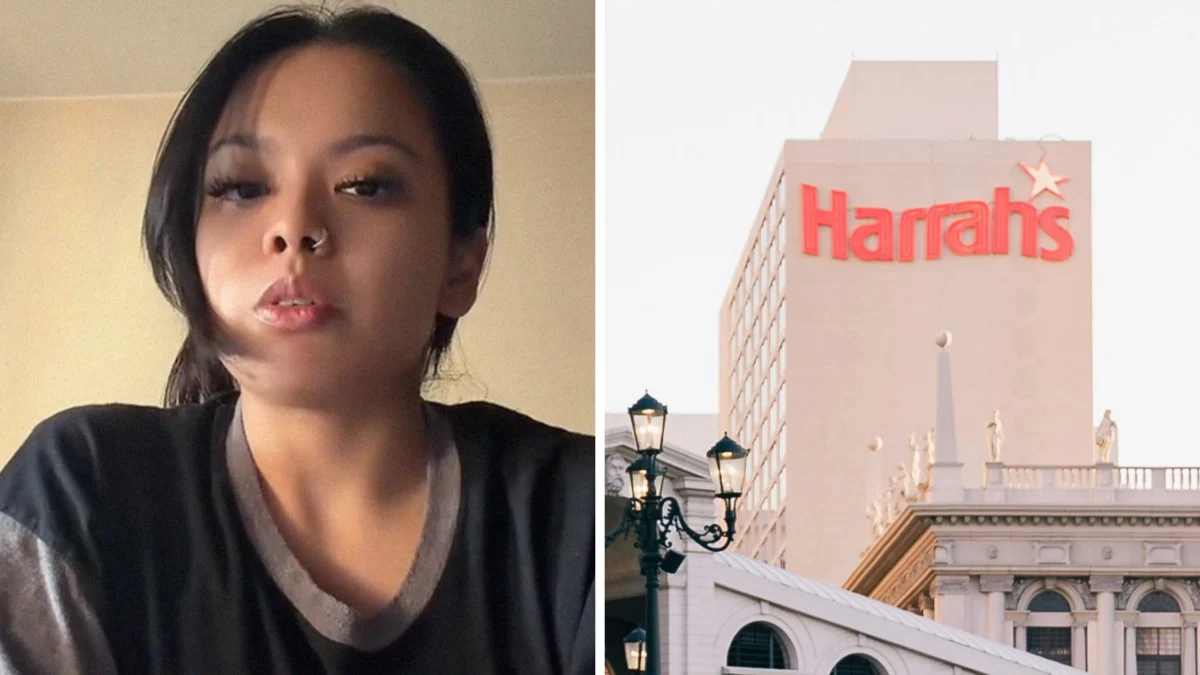
A weekend getaway intended to celebrate a birthday at one of Atlantic City’s most prominent casino resorts has instead become a viral cautionary tale regarding hotel hygiene and service recovery. A New York traveler, identified as Mari on social media, shared a detailed account of her stay at Harrah’s Resort Atlantic City, alleging that her "newly renovated" room in the Waterfront Tower was plagued by unsanitary conditions, including a significant urine stain on a bed and the presence of a previous guest’s belongings. The incident, which occurred during a high-demand festival weekend, has sparked a broader conversation about the standards of the Atlantic City hospitality industry and the adequacy of corporate responses to serious cleanliness failures.
The guest, who documented her experience on TikTok under the handle @mariiiiiii.w, reported that she and her party paid over $700 for a double queen room in the Waterfront Tower. According to the traveler, the issues were not immediately apparent upon arrival late in the evening. It was only after retiring for the night that the severity of the situation became clear. A member of her party discovered a large, odorous stain on one of the beds that appeared to have soaked through the linens into the mattress itself. Upon further inspection, the guest alleged the presence of a "weird streak stain" on the bathroom floor and discovered that the room’s drawers still contained items left behind by a previous occupant, suggesting a fundamental breakdown in the housekeeping department’s turnover protocol.
A Chronology of Service Failure and Response
The timeline of the incident illustrates a sequence of events that the guest describes as a failure of both operational standards and management intervention. After arriving and checking in late, the party went directly to sleep, only to be awakened by the discovery of the stained mattress. At this juncture, the guest sought assistance from the front desk. While she described the initial desk staff as "lovely" and professional, the subsequent resolution process proved frustrating.
A clerk reportedly promised that a housekeeping supervisor would be dispatched to the room to inspect the conditions and speak with the guests. Mari and her party returned to their room to wait, a period that reportedly lasted nearly two hours. Despite the assurance of a supervisor’s arrival, no such official appeared. With dinner reservations approaching and no resolution in sight, the party returned to the lobby to escalate the matter.
At the front desk for a second time, the guest spoke with the hotel’s manager of operations. The manager issued an apology but informed the party that a room change was impossible because the resort was entirely sold out for the weekend. As a gesture of service recovery, the manager offered a $100 credit for dining and drinks. Given that the stay cost more than $700, Mari characterized the compensation as "barely even a fraction" of their expenditure. While the room was eventually cleaned later that night, the guest expressed that the experience had permanently tarnished her view of the property.
The Context of the Waterfront Tower and Harrah’s Renovations
The setting of the dispute, the Waterfront Tower, holds a significant place in the Harrah’s Resort portfolio. Opened in 2008, it remains the tallest and most modern of the resort’s towers, designed to offer a premium experience with expansive bay views. Caesars Entertainment, the parent company of Harrah’s, has heavily marketed the tower’s "newly remodeled guestrooms" as part of a broader capital improvement plan for its Atlantic City properties.
This plan included a $56 million renovation of the Coastal Tower completed in 2019, aimed at keeping the resort competitive against newer entrants in the market. The discrepancy between the marketed "luxury" experience and the reported reality of unsanitary conditions highlights a growing tension in the hospitality sector: the gap between capital investment in aesthetics and the operational investment in staffing and maintenance.
Impact of Large-Scale Events on Hotel Operations
The timing of the incident coincided with the "Beach Road Trip" (BRT) Caribbean music festival, a major event that draws thousands of visitors to Atlantic City. During such high-occupancy weekends, the city’s major casino hotels—including Harrah’s, Borgata, and Ocean Casino Resort—typically reach 100% capacity.

Industry analysts note that "block pricing" and "tightened availability" are standard during these windows. However, these peaks also place immense pressure on housekeeping and front-of-house staff. In the comments section of the viral video, industry observers and former employees pointed to the grueling pace of room turnovers during festival weekends. One commenter, identifying as a frequent visitor for basketball tournaments, questioned whether the large-scale properties possess the necessary staffing levels to maintain hygiene standards during rapid turnovers. The "sold-out" status of the hotel also removes the most effective tool in a manager’s service recovery kit: the room upgrade or relocation.
Comparative Market Analysis and Public Sentiment
The viral nature of the complaint, which garnered over 93,000 views before the original video was removed, allowed for a public comparison of Atlantic City’s major players. A recurring theme in the feedback from other travelers was the perceived superiority of Harrah’s competitors. The phrase "Ocean would never" became a refrain among commenters, referring to the Ocean Casino Resort, which, along with the Borgata and Hard Rock Hotel & Casino, is often cited as the current standard-bearer for luxury in the city.
This public sentiment reflects a shift in the Atlantic City market. For decades, Harrah’s was a dominant force in the Marina District. However, as newer properties have opened or undergone massive rebranding, legacy properties face increasing pressure to justify premium pricing. When a guest pays $700 for a room that fails to meet basic sanitary requirements, the damage to the brand’s "loyalty" value—specifically within the Caesars Rewards program—can be substantial.
Regulatory Avenues and Consumer Rights
For guests who find themselves in similar situations, the state of New Jersey provides several avenues for recourse beyond the hotel’s internal management. The New Jersey Division of Consumer Affairs oversees complaints related to the Consumer Fraud Act, which can apply to instances where a service (such as a clean, habitable hotel room) is paid for but not delivered as advertised.
Furthermore, consumer advocacy experts often recommend the use of credit card chargebacks under the Fair Credit Billing Act if a merchant fails to provide the service agreed upon. In cases involving biohazards or significant unsanitary conditions, guests may also contact local health departments to report violations of lodging standards. Mari indicated that she has attempted to escalate the matter to Caesars Rewards corporate offices via email but had not received a response as of her last update.
Broader Implications for the Hospitality Industry
The incident at Harrah’s serves as a case study in the "Service Recovery Paradox"—a theory in business management suggesting that a customer can actually become more loyal to a brand after a failure, provided the recovery is handled exceptionally well. In this instance, the failure to send a supervisor and the offer of a relatively small credit appear to have had the opposite effect, driving the guest to social media to seek a public resolution.
As the hospitality industry continues to navigate post-pandemic staffing challenges and fluctuating travel demand, the importance of "back-of-house" excellence cannot be overstated. Cleanliness remains the primary driver of guest satisfaction and the leading cause of negative reviews. For a property like Harrah’s, which relies heavily on its reputation within a massive loyalty ecosystem, a single viral video detailing a "urine-soaked" mattress can offset millions of dollars in marketing and renovation efforts.
In a statement to the original reporting outlet, Caesars Entertainment had not yet provided a formal comment regarding the specific allegations. The guest, meanwhile, has stated she does not feel comfortable returning to the property, emphasizing that no amount of dining credit can compensate for the feeling of being "neglected" during a milestone celebration. As Atlantic City prepares for another busy summer season, the incident serves as a reminder to travelers to inspect their accommodations upon arrival and to properties that in the age of social media, operational oversights can quickly become public relations crises.



 Anjar Salim
 Chandra Hamzah
 Tatiana Tantri Indah Sari
 Lukman Taruna Persada Ramadan
