
 Budi Mulyono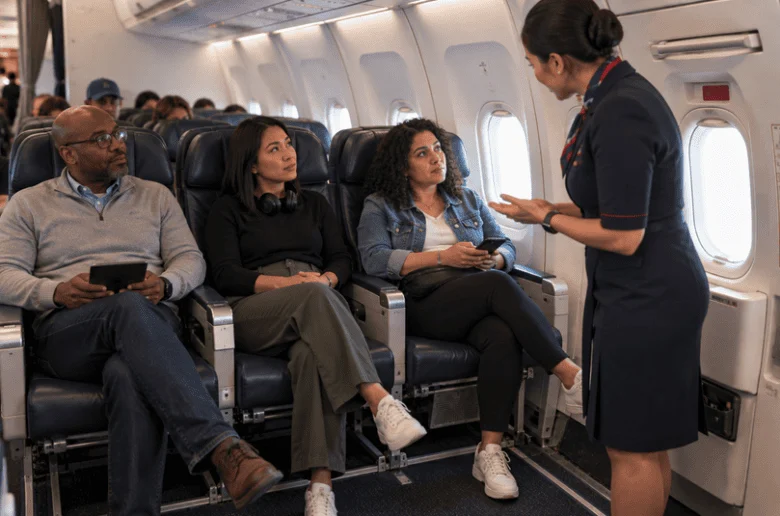
For many commercial airline passengers, securing an exit-row seat is considered the holy grail of economy travel. Offering an abundance of legroom, enhanced personal space, and the peace of mind that no passenger in front will aggressively recline into one’s lap, these rows are routinely marketed as premium upgrades. Airlines have long recognized the high demand for these seats, frequently attaching an additional fee to secure them during the booking process. However, occupying an exit row is not merely a transaction for physical comfort; it represents a binding agreement to perform a critical safety function in the event of an aviation emergency. While most travelers are familiar with the standard regulatory requirements mandated by aviation authorities—such as age minimums, language proficiency, and physical mobility—fewer are aware of the nuanced, lesser-known restrictions that can result in immediate disqualification. Among these, the prohibition of seatbelt extenders in exit rows has sparked considerable debate regarding passenger rights, safety protocols, and the intersection of physical accommodation and regulatory compliance.
The Regulatory Framework and Standard Requirements
To understand the complexity of exit-row seating, one must examine the stringent guidelines established by aviation regulatory bodies, such as the Federal Aviation Administration (FAA) in the United States and international counterparts globally. These rules are explicitly designed to ensure that individuals seated next to emergency exits are fully capable of executing safety-critical tasks if an evacuation becomes necessary.
Under standard regulations, passengers seated in exit rows must be at least 15 years of age and possess the physical strength, mobility, and dexterity in both arms, hands, and legs to open heavy emergency hatches or doors—which can weigh upwards of 40 pounds—and deploy evacuation slides. Furthermore, occupants must be able to read and understand instructions printed on emergency exit cards or provided via placards, comprehend oral commands given by flight crew members, and verbally relay information to fellow passengers.
Because these responsibilities are paramount to cabin safety, airlines require passengers to affirmatively acknowledge these criteria during the ticket-purchasing process. Passengers typically click a digital checkbox or verbally confirm to a ticketing agent that they meet every stipulated requirement before the reservation for an exit-row seat is finalized.
The Seatbelt Extender Controversy: A Passenger’s Experience
Despite clear pre-flight agreements, real-world misunderstandings frequently occur between passengers and cabin crew regarding nuanced safety policies. A prominent example of this disconnect involves the use of seatbelt extenders in exit rows, an issue brought to light by an anonymous traveler’s experience on an international flight operated by Iberia from Europe to the New York metropolitan area.
According to the passenger’s account, she had paid an additional fee to secure an exit-row seat for the long-haul journey. Seeking added comfort for the extended flight, she requested and was initially provided a standard seatbelt extender by a flight attendant. Shortly thereafter, however, another crew member approached her and stated that company policy prohibited the use of seatbelt extenders in exit rows. The passenger was informed that because she required the extender, she could not legally occupy the seat.
Feeling humiliated and suspecting weight-based discrimination, the passenger initially resisted, noting that she had paid a premium for the seat and intended to remain in it. However, facing pressure from the crew, she ultimately returned the extender and elected to use the standard, unextended seatbelt for the duration of the flight. While the physical discomfort of a tighter belt remained, the immediate regulatory hurdle was cleared, prompting questions regarding the true rationale behind the policy.
Unraveling the Safety Rationale Behind Extender Restrictions
Initial reactions to such incidents often center on allegations of passenger shaming or assumptions that larger individuals are automatically deemed incapable of performing emergency duties. However, comprehensive investigations into airline safety manuals and carrier-specific regulations reveal a technical, risk-mitigation rationale that extends far beyond body size.
Airlines restrict the use of seatbelt extenders in exit rows primarily due to evacuation logistics and cabin safety hazards. In the critical, high-stress environment of an emergency evacuation, every second counts. Aviation safety experts note that the additional length introduced by a seatbelt extender can create a tangible tripping or entanglement hazard. If an evacuation is ordered, passengers must rapidly exit their rows and move toward the aisle or the emergency hatch. An extended belt strap, particularly if it drops to the floor or catches on clothing or carry-on items, poses a significant risk of tripping evacuating passengers or blocking the narrow exit path.

Consequently, the restriction is not a judgment on an individual’s physical strength or competence to open a door, but rather a mechanical precaution aimed at maintaining a clear, unobstructed egress corridor. When the passenger in the Iberia incident fastened the standard belt without the extender, she satisfied the literal configuration requirement of the seat, thereby complying with the operational parameters of the exit row—even if the compromise resulted in personal discomfort.
The Problem with Pre-Purchase Compliance and Dynamic Passenger Status
The incident highlights a broader structural challenge within the airline industry regarding how exit-row qualifications are communicated and monitored. When passengers book flights months in advance, their personal circumstances can change significantly. Weight fluctuations, pregnancy, unexpected injuries, or the onset of medical conditions affecting mobility can all alter a traveler’s eligibility long after the initial ticket purchase and seat selection have been completed.
Moreover, the digital ticketing interface often buries nuanced restrictions within lengthy terms and conditions. When booking a flight, travelers are confronted with a wall of text containing standard disclosures alongside specific operational caveats. Because the first several requirements—such as age and language proficiency—are heavily emphasized and universally recognized, passengers frequently skim the remainder of the agreement.
Industry analysts point out that airlines face a difficult logistical balance. If carriers were required to manually screen and physically assess every passenger who selects an exit-row seat at the gate, the boarding process would slow down considerably. Instead, the burden is placed primarily on the passenger at the time of booking, supplemented by final visual verifications conducted by flight attendants during boarding.
Airlines’ Current Policies and Comparative Disparities
A review of policies across major domestic and international carriers reveals varying degrees of clarity regarding seatbelt extenders and physical accommodations in emergency exit rows. While regulatory bodies establish baseline safety standards, individual airlines retain the autonomy to enforce stricter operational procedures.
For instance, major carriers such as Delta Air Lines, United Airlines, and American Airlines explicitly state their exit-row criteria during the online seat-selection phase. However, explicit mentions of seatbelt extenders are rarely highlighted in the primary pop-up windows, often requiring passengers to navigate deeper into the airline’s contract of carriage or specialized baggage and seating policy pages.
This lack of prominent visibility contributes to passenger friction. When a traveler arrives at their seat believing they have fully complied with all stated rules, being asked to relocate or alter their setup by a flight attendant can feel abrupt and arbitrary. Crew members, tasked with ensuring absolute compliance with federal safety mandates under immense time pressure, have little room for negotiation once the boarding door is closed.
Broader Implications for Travelers and the Aviation Industry
The ongoing debate surrounding exit-row qualifications and seating restrictions underscores a wider conversation within modern commercial aviation regarding inclusivity, clear communication, and passenger rights. As airlines continue to unbundle their pricing structures—charging separately for seat selection, bag checks, and premium legroom—ancillary revenue streams have become vital to carrier profitability. When a passenger pays an explicit fee for an exit-row upgrade only to be denied the seat due to a technicality discovered upon boarding, customer dissatisfaction naturally ensues.
Consumer advocacy groups suggest that airlines could mitigate these conflicts by modernizing their digital booking platforms. Implementing interactive prompts that explicitly highlight mechanical restrictions—such as the prohibition of extenders or infant life vests in specific rows—at the exact moment of seat selection could dramatically reduce misunderstandings. Additionally, providing transparent guidance on how passengers can request refunds or alternative seating options if they are deemed ineligible at the gate would enhance consumer trust.
For travelers, the overarching lesson remains clear. The allure of extra legroom must be weighed against the responsibilities and strict parameters governing emergency exit rows. As aviation regulations remain unyielding in the interest of collective cabin safety, passengers are well-advised to review the entirety of carrier policies before purchasing premium seating upgrades, ensuring that their physical accommodations fully align with the operational demands of the row they intend to occupy.


 Lukman Taruna Persada Ramadan
 Tatiana Tantri Indah Sari
 Anjar Salim
 Chandra Hamzah
 Gabriela Annisa