
 Budi Mulyono
Domestic travel within the United States remains a cornerstone of the national economy and a defining characteristic of American cultural identity, yet recent data suggests a significant disparity between the perception of American mobility and the statistical reality of state-to-state visitation. While viral social media content often claims that the average American has visited fewer than ten states, formal research provides a more nuanced, albeit still modest, figure. According to longitudinal data and industry surveys, the average American has visited approximately 12 states, a number that reflects a complex interplay of socioeconomic factors, geographic scale, and evolving travel preferences.
The Discrepancy Between Social Media Sentiment and Empirical Data
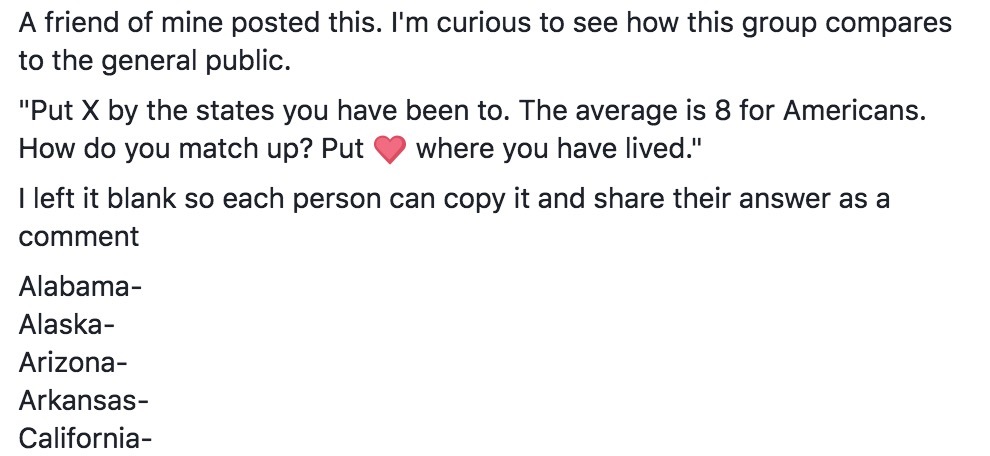
The discourse surrounding domestic travel frequency often begins in digital spaces, where anecdotal evidence and viral "check-lists" frequently underestimate the mobility of the average citizen. A recurring claim circulating on platforms such as Facebook suggests that the average American has visited only eight states. However, research conducted by Livability and Ipsos in 2016—one of the most comprehensive surveys on the topic—indicates that the actual figure is closer to 12.
This discrepancy highlights a broader trend in how Americans perceive their own travel habits versus the aggregate reality. While 12 states represent nearly a quarter of the Union, it also underscores a significant portion of the population that remains largely regional in its movements. The Livability/Ipsos study surveyed over 2,000 adults across the country, revealing that while some "extreme travelers" have crossed all 50 state lines, a substantial minority has never left their home state or has only ventured into immediate neighboring territories.
Identifying the Most Visited States: Hubs of American Tourism
The data identifies a clear hierarchy in domestic destinations, driven largely by climate, economic opportunities, and iconic landmarks. The five most visited states in the country are Florida, California, New York, Georgia, and Nevada. The popularity of these specific regions can be attributed to several structural and cultural factors:
- Florida and California: These states serve as the primary anchors for the American tourism industry, driven by massive investments in theme parks (Disney and Universal), extensive coastline, and favorable year-round weather. They are "destination states" that attract visitors from every other region of the country.
- New York: As the nation’s financial and cultural capital, New York City acts as a singular magnet for both domestic and international travelers. The state’s high visitation rate is largely bolstered by the density of attractions within the five boroughs.
- Georgia: The high ranking of Georgia is often attributed to the Hartsfield-Jackson Atlanta International Airport, which has long held the title of the world’s busiest airport. As a primary hub for Delta Air Lines, Georgia sees an enormous influx of "incidental" visitors—travelers who may stay for a short duration or use the state as a gateway to the American South.
- Nevada: Las Vegas remains one of the most visited cities globally, drawing millions of domestic travelers annually for conventions, entertainment, and gaming.
Socioeconomic Barriers and the Geography of Immobility
While the average of 12 states suggests a degree of mobility, it is essential to analyze the factors that prevent higher numbers. The United States is a vast geographic entity; traveling from New York to California is equivalent to crossing multiple international borders in Europe. Consequently, the cost and time associated with cross-country travel are prohibitive for many.

Research from the U.S. Travel Association and Pew Research Center indicates that income level is the primary predictor of state-to-state mobility. Households with higher discretionary income are significantly more likely to participate in air travel and long-distance road trips. Conversely, for lower-income families, travel is often restricted to "staycations" or visiting family in adjacent states.
Furthermore, the "12-state average" is heavily influenced by age. Older Americans, particularly those in the "Baby Boomer" generation, have had more decades to accumulate travel experiences. Many retirees prioritize domestic "bucket list" trips, such as visiting National Parks or completing the historic Route 66. In contrast, younger generations, such as Gen Z, report a high desire to travel but are often constrained by student debt and a more precarious job market, leading to a lower current state-count that is expected to rise over time.
A Chronology of American Travel Habits
The history of domestic travel in the U.S. has undergone several distinct phases that have shaped current statistics:
- The Post-War Boom (1945–1960): The expansion of the middle class and the rise of car culture led to the "Great American Road Trip." The Federal Aid Highway Act of 1956, which created the Interstate Highway System, made it possible for families to travel between states with unprecedented ease.
- The Deregulation Era (1978–1990s): The Airline Deregulation Act of 1978 lowered the cost of air travel, making "destination states" like Florida and Hawaii accessible to a broader segment of the population.
- The Digital Revolution (2000s–Present): The rise of online booking platforms and social media has changed how Americans discover destinations. However, it has also created a "filter bubble" where travelers tend to flock to the same highly photographed locations, reinforcing the popularity of the top five states mentioned previously.
- The Post-Pandemic Shift (2021–2024): The COVID-19 pandemic temporarily halted international travel, leading to a massive resurgence in domestic tourism. "Revenge travel" saw record numbers of Americans visiting National Parks and rural states, potentially nudging the national average of visited states upward as people sought outdoor socially distanced options.
The Pursuit of the "50 State Club" and County-Level Exploration
For a dedicated subset of the population, visiting 12 states is merely a starting point. The "50 State Club" represents a community of travelers whose goal is to set foot in every state in the Union. This pursuit often requires intentional planning, particularly for remote states like Alaska and Hawaii.
Recent trends indicate that some travelers are moving beyond state lines to an even more granular level of exploration: "county counting." There are 3,143 counties (and county equivalents) in the United States. For enthusiasts of this hobby, the goal is to document passage through every administrative district. This level of travel requires a deep dive into the "Flyover States"—the Midwestern and Great Plains regions that are often bypassed by traditional tourists.
Case studies of extreme domestic travelers show that reaching the 50-state milestone often takes decades. For many, Hawaii is the final state visited due to the flight costs and distance from the mainland. The data suggests that families who prioritize domestic travel can far exceed the national average, with some well-traveled households averaging between 30 and 40 states per person.
Economic Implications of Domestic State Visitation
The frequency of state-to-state travel has profound implications for the U.S. economy. According to the U.S. Travel Association, domestic travel spending accounts for over $1 trillion in economic output. When Americans travel to different states, they support a wide range of industries, including hospitality, transportation, and local retail.
States that are lower on the visitation list often struggle to capture this economic revenue. This has led to aggressive marketing campaigns by state tourism boards in places like Oklahoma, Nebraska, and West Virginia, aiming to position themselves as unique, affordable alternatives to the overcrowded hubs of Florida or California. The "12-state average" represents a significant opportunity for growth; if the average American increased their lifetime state count by just two or three states, it could result in billions of dollars in additional domestic revenue.
Cultural Cohesion and the Impact of Travel
Beyond economics, the statistics of domestic travel reflect the level of cultural exchange within the country. Sociologists argue that visiting different regions of the U.S. helps to mitigate political and cultural polarization. Exposure to different regional dialects, cuisines, and local traditions fosters a sense of national unity.
When the average American stays within a 12-state radius—often centered around their own region—they may have limited exposure to the diverse realities of life in other parts of the country. For example, a resident of the Northeast who has only visited neighboring New England states and Florida may have a vastly different perspective on American life than someone who has spent time in the Pacific Northwest, the Deep South, and the Rust Belt.
Conclusion: The Future of the American Journey
As we move further into the 2020s, several factors will likely influence whether the average number of states visited by Americans increases. The rise of remote work has enabled "digital nomads" to live and work from various states, potentially increasing their state counts rapidly. Conversely, rising inflation and the cost of fuel may serve as a deterrent to the traditional long-distance road trip.
While the "eight states" claim found on social media may be a statistical myth, the confirmed average of 12 states highlights a nation that is mobile but still deeply rooted in regionalism. Whether through the pursuit of the "50 State Club" or simple weekend getaways to neighboring capitals, the act of crossing state lines remains a vital part of the American experience, reflecting the ongoing desire to explore the vast and varied landscape of the United States.




 Anjar Salim
 Chandra Hamzah
 Tatiana Tantri Indah Sari
 Lukman Taruna Persada Ramadan
