
 Anjar Salim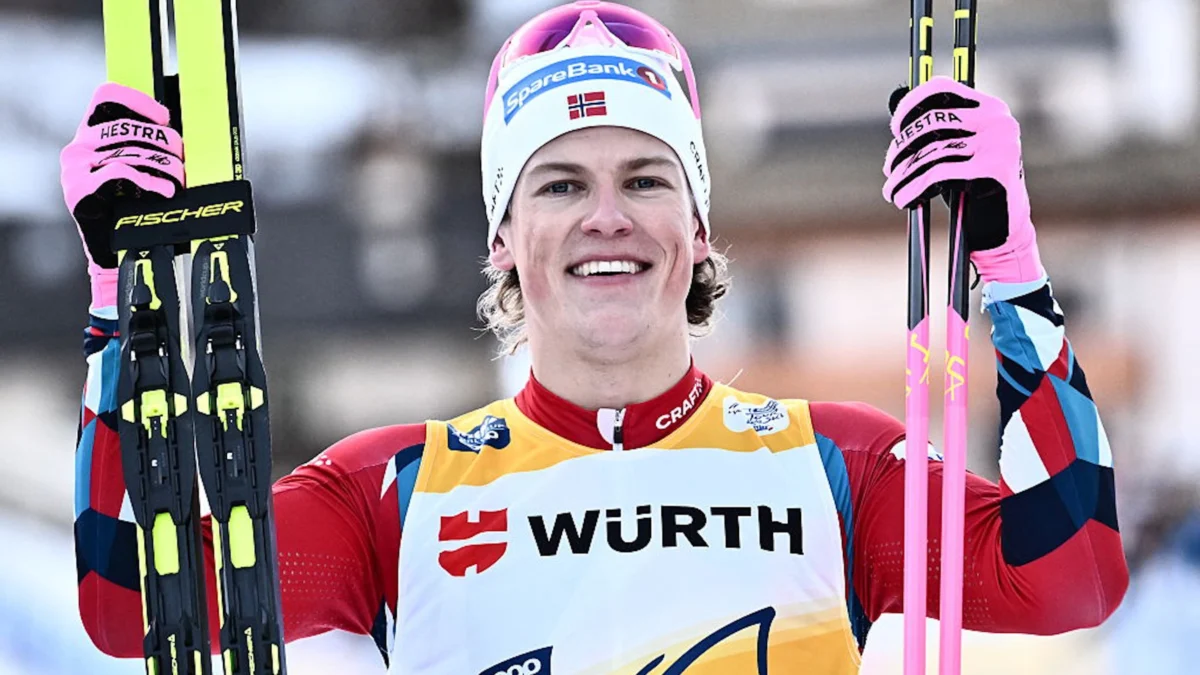
The global dominance of Norwegian endurance athletes has long been a subject of intense scrutiny within the sports science community. For years, the conversation has centered predominantly on the "Norwegian Method" of endurance—a system characterized by rigorous lactate testing, high-volume threshold training, and meticulous attention to physiological data. However, a new study published in the Journal of Strength and Conditioning Research suggests that the secret to Norway’s unprecedented success in sports ranging from triathlon to cross-country skiing may lie in how these athletes integrate strength and speed training into their endurance-heavy schedules. Led by Thomas Haugen of Kristiania University College in Oslo, a team of researchers has provided a rare look into the auxiliary training protocols that support the world’s most elite cardiovascular engines.
While the "double threshold" sessions popularized by runners like Jakob Ingebrigtsen have become the hallmark of Norwegian training, the Haugen study shifts the focus toward the neuromuscular foundations of performance. By interviewing 12 elite Norwegian coaches who collectively oversee athletes with over 400 international championship medals, the research clarifies that strength and speed work are not merely "add-ons" but are essential components of a holistic system designed to maximize movement economy and prevent injury without compromising the primary endurance load.
A Framework for Integration: The Four Pillars of Norwegian Strength
The coaches interviewed for the study identified four primary objectives for incorporating non-endurance work into an athlete’s program. First and foremost is the improvement of work economy. In endurance sports, economy refers to the amount of oxygen required to maintain a specific speed or power output. By increasing muscular strength and stiffness in the tendons, athletes can return more energy with every stride or stroke, effectively making them more "efficient" at sub-maximal intensities.
The second objective is the development of "finishing speed." Even in long-distance events like the marathon or the 50-kilometer cross-country ski race, the outcome is frequently decided by a sprint in the final few hundred meters. The Norwegian approach emphasizes maintaining the neuromuscular capacity for high-velocity output even when the body is fatigued. Third, strength training serves as a primary tool for injury prevention. The high repetitive load of endurance sports places immense stress on joints and soft tissues; a robust musculoskeletal system acts as a protective shield. Finally, the coaches noted that strength work helps maintain lean muscle mass during periods of high-volume endurance training, which can otherwise lead to a catabolic state where the body begins to break down muscle tissue for energy.
Chronology of the Norwegian Rise and Methodological Evolution
The current prominence of Norwegian endurance sports did not happen overnight but is the result of a multi-decade evolution in training philosophy. In the 1990s and early 2000s, Norwegian athletes were already known for high-volume training, but the refinement of "controlled intensity" began to take shape through the influence of figures like former runner Marius Bakken and the coaching staff at the Norwegian Olympic Training Center (Olympiatoppen).
By the mid-2010s, the "Norwegian Method" had matured into a system that prioritized physiological precision over "training by feel." The 2020 Tokyo Olympics served as a global coming-out party for this methodology, with Kristian Blummenfelt winning gold in the triathlon and Jakob Ingebrigtsen taking the 1,500-meter title. More recently, at the 2026 Winter Olympics and various world championships, the dominance has extended to cross-country skiing, where Johannes Høsflot Klæbo has redefined the sport with explosive uphill sprints that resemble track cycling power more than traditional skiing.
The Haugen study, published in June 2026, represents the latest effort to document these practices as they reach their peak. It highlights a shift away from the "more is better" philosophy of the past toward a "smarter is better" approach, where every lift in the weight room is calculated to support—rather than hinder—the next day’s interval session.
Quantitative Data and Sports-Specific Variations
The research reveals a significant variance in how different endurance disciplines allocate time to strength and speed training. The annual hourly investment reflects the specific mechanical demands of each sport:
- Rowing: Reported the highest volume of strength training, with athletes logging up to 200 hours per year. This is attributed to the high-force requirements of each stroke against water resistance.
- Cross-Country Skiing and Biathlon: Athletes in these disciplines typically engage in 75 to 150 hours of strength and speed work annually, focusing heavily on upper body and core stability.
- Running and Cycling: These athletes tend to fall in the range of 50 to 100 hours per year. For runners, the focus is on lower-limb stiffness and plyometric ability, while cyclists prioritize peak power output and force production on the pedals.
- Triathlon: Despite their massive total training volume, triathletes often log fewer than 50 hours of dedicated strength training per year, largely because the three disciplines themselves provide a varied stimulus that covers some of the same neuromuscular ground.
The study found that a typical strength session for these athletes involves four to eight exercises, performed for two to four sets of five to ten repetitions. For speed training, the focus is on maximum velocity or "explosive" movements, such as hill sprints or short intervals (60 to 100 meters) at 95% to 100% of maximum speed, with full recovery between repetitions to ensure the quality of the movement.
The "No Interference" Principle and Scheduling Logic
Perhaps the most critical insight from the Norwegian coaches is the prioritization of endurance over strength. The "interference effect"—a phenomenon where the body’s adaptations to strength training blunt the adaptations to endurance training—is a constant concern. To mitigate this, Norwegian athletes typically schedule their strength sessions immediately after their hardest endurance workouts.
By placing a heavy weight session on a "hard" day, the athlete ensures that their "easy" days remain truly easy, allowing for full recovery. If an athlete were to perform a heavy squat session on an easy recovery day, the resulting muscle soreness and metabolic fatigue would compromise the quality of the following day’s high-intensity endurance intervals. This "polarization" of stress ensures that the athlete is never in a state of chronic, middle-tier fatigue that prevents peak performance.
Practical Application: The Elite Runner’s Protocol
The Haugen paper provides specific examples of how these theories are put into practice. For a long-distance runner, a standard strength session might include:
- Primary Movements: Back squats or half-squats (heavy load, low rep), step-ups, and calf raises (both seated and standing to target different muscle groups).
- Secondary Movements: Hamstring curls or Nordic curls and core stabilization exercises.
- Speed Component: 4 to 6 repetitions of 60 to 80 meters on a slight incline, focusing on "snappy" ground contact and upright posture.
This routine is not designed to build massive muscle bulk (hypertrophy) but to improve "neural drive"—the efficiency with which the brain communicates with the muscles to produce force quickly.
Global Implications and Official Responses
The "Norwegianization" of global endurance training is already underway. Athletes from other nations are increasingly adopting these protocols as they see the consistent results coming out of Oslo and Bergen. Frederik Ruppert, the German steeplechase record holder and the first European to break the 8-minute barrier in the event, recently noted that the shift in his training toward the Norwegian model—specifically the balance of intensity and the inclusion of targeted speed work—was the catalyst for his breakthrough.
"There has been a change in the training approach for everybody here," Ruppert stated in a recent interview. "The key is getting in the workouts without overdoing them. We are seeing a general rise in performance across Europe because we are finally understanding the science of the Norwegian system."
Sports scientists and governing bodies are also taking note. The implications of this research suggest that traditional "off-season" strength blocks may be less effective than year-round, low-volume maintenance. By keeping the neuromuscular system "primed" with weekly speed and strength sessions, athletes avoid the loss of power that often occurs during the competitive season.
Fact-Based Analysis of the Systemic Impact
The findings of the Haugen study underscore a broader trend in elite performance: the blurring of lines between "pure" endurance and "power" sports. As endurance athletes become faster and more muscularly efficient, the physiological profiles of a marathoner and a middle-distance runner are beginning to overlap in terms of neuromuscular capability.
The success of the Norwegian approach suggests that the next frontier in endurance sports is not necessarily more aerobic volume—many athletes are already at the limit of human capacity in that regard—but rather the optimization of the "chassis" that carries the engine. By treating the body as a high-performance machine where the tires (feet/legs), the frame (musculoskeletal system), and the fuel system (aerobic capacity) must all be upgraded in tandem, Norway has created a blueprint for the modern athlete.
As the 2028 Olympic cycle approaches, the data provided by Haugen and his colleagues will likely serve as a foundational text for coaches worldwide. The "Norwegian Method" is no longer just about lactate meters and heart rate zones; it is about the sophisticated integration of strength, speed, and stamina into a singular, cohesive pursuit of excellence.




 Budi Mulyono
 Chandra Hamzah
 Tatiana Tantri Indah Sari

 Lukman Taruna Persada Ramadan