
 Budi Mulyono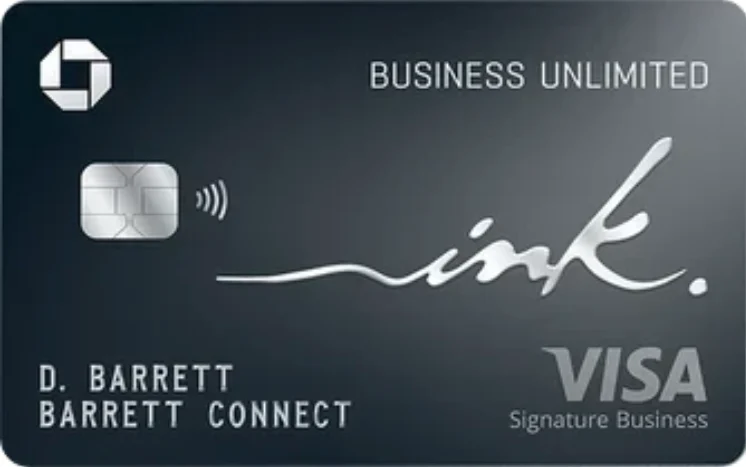
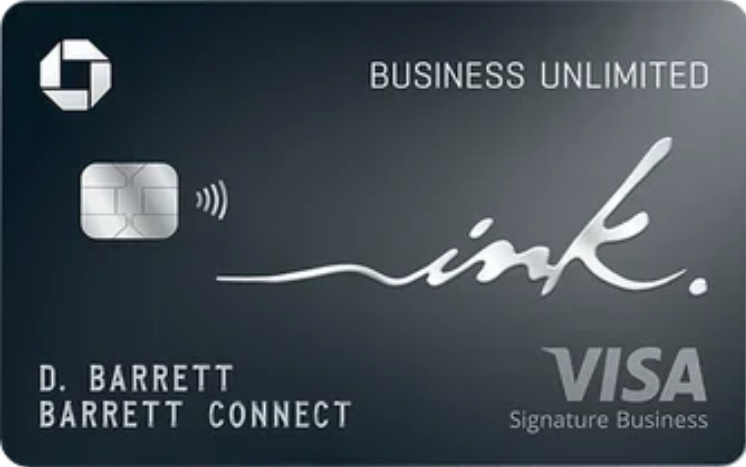
The landscape of business credit cards has evolved significantly as financial institutions compete to capture the spending power of entrepreneurs, freelancers, and small business owners. Among the most competitive offerings in the zero-annual-fee category is the Chase Ink Business Unlimited® Credit Card, a financial product that has drawn attention for combining a substantial introductory cash-back bonus with versatile redemption options. As modern independent workers increasingly seek efficient ways to manage overhead expenses while accumulating travel and monetary rewards, understanding the mechanics, benefits, and strategic implications of such cards has become essential for sound corporate financial management.
Main Facts and Core Product Offerings
The Chase Ink Business Unlimited Card is structured to appeal to both large enterprises and sole proprietors who require a straightforward, flat-rate rewards card without the burden of recurring annual fees. The defining feature of the current promotional structure is an introductory welcome offer: cardholders can earn a $1,000 bonus cash-back reward after meeting a minimum spending requirement of $8,000 on eligible purchases within the first four months of account opening.
Unlike many competing business cards that feature tiered reward structures requiring tracking of specific spending categories like office supplies, telecommunications, or advertising, the Ink Business Unlimited operates on a flat-rate model. Cardholders earn an unlimited 1.5% cash back on every dollar spent on all business-related purchases. This consistency eliminates the administrative friction often associated with optimizing category-specific reward programs.
Furthermore, the card carries a $0 annual fee, allowing businesses to retain the product indefinitely as part of their credit portfolio without needing to calculate an annual return on investment to justify a fee. Additional features include primary auto rental collision damage waiver coverage when renting for business purposes, roadside dispatch, and travel and emergency assistance services.
Background Context and Evolution of Business Credit
To understand the strategic positioning of the Chase Ink Business Unlimited, one must examine the broader evolution of the small business economy and the credit card industry. Over the past decade, the rise of the gig economy, remote work, and digital entrepreneurship has vastly expanded the definition of what constitutes a business. Millions of individuals now operate side hustles, freelance consultancies, or e-commerce ventures from their homes. Financial institutions recognized this demographic shift and began tailoring products that accommodate non-traditional business models.
Chase introduced the Ink card family to capture this growing market segment, differentiating its products by integrating cash-back earnings with the proprietary Chase Ultimate Rewards ecosystem. Historically, cash-back cards and travel rewards cards existed in separate spheres. However, Chase pioneered a model where cash-back earned through business spending could be converted directly into flexible travel points if the cardholder also maintained a qualifying premium consumer or business card, such as the Chase Sapphire Preferred® Card, Chase Sapphire Reserve®, or the Ink Business Preferred® Credit Card. This functionality bridges the gap between simple liquidity (cash back) and high-value aspirational travel redemption (airline miles and hotel points).
Chronology and Application Parameters
Applying for and integrating the Chase Ink Business Unlimited into a corporate financial strategy involves navigating specific institutional guidelines established by JPMorgan Chase.
The application process typically requires basic information regarding the business entity, including its legal structure (such as sole proprietorship, LLC, or corporation), estimated annual revenue, and Employer Identification Number (EIN) or Social Security Number for sole proprietors. Crucially, financial advisors emphasize that sole proprietorships—ranging from freelance writers and rideshare drivers to landlords and independent contractors—frequently qualify for business credit cards even without a formal corporate filing or employees.
Prospective applicants must also contend with Chase’s well-documented 5/24 rule. Under this internal policy, Chase will generally automatically deny any credit card application if the applicant has opened five or more personal credit cards from any issuer within the previous 24 months. Because business credit cards issued by Chase—including the Ink Business Unlimited—typically do not report to personal credit bureaus under standard circumstances, obtaining a business card does not add to an individual’s 5/24 count. However, an applicant must remain under the 5/24 threshold based on their personal card history to be approved in the first place.
Following approval, the chronological timeline dictates that the cardholder has exactly 120 days (four months) from the account opening date to accumulate the $8,000 in qualifying purchases required to trigger the $1,000 bonus. Once achieved, the bonus rewards typically post to the account within one to two billing cycles.
Supporting Data and Financial Analysis
A quantitative evaluation of the Chase Ink Business Unlimited reveals distinct advantages for businesses capable of meeting the introductory spending threshold. The $8,000 expenditure requirement over four months averages out to approximately $2,000 per month. For many small-to-medium enterprises, routine expenses—such as inventory purchases, digital advertising, software subscriptions, shipping, and travel—easily eclipse this monthly figure.
When factoring in both the introductory bonus and the baseline 1.5% earning rate, the financial return can be substantial. Spending exactly $8,000 to meet the bonus requirement yields $120 in standard cash back (at 1.5%), which, when combined with the $1,000 bonus, results in a total return of $1,120 on $8,000 of spend. This represents an effective return rate of 14% on the initial outlay, an exceptionally high yield for a non-fee financial product.
The financial implications multiply exponentially when the cash-back rewards are transferred into the Chase Ultimate Rewards ecosystem. Cash-back earned on the Ink Business Unlimited is technically issued in the form of points (where 1 cent equals 1 point). If a cardholder holds the Ink Business Unlimited in isolation, these points can be redeemed as a statement credit or direct deposit at a value of 1 cent per point.
However, if the user pairs the Ink Business Unlimited with a premium travel card like the Chase Sapphire Reserve, the point valuation shifts. Points transferred to the Sapphire Reserve can be redeemed through the Chase Travel portal at a rate of 1.5 cents per point, or transferred directly to over a dozen airline and hotel loyalty programs—such as United Airlines, World of Hyatt, and Southwest Airlines—where expert travelers frequently extract values exceeding 2 cents per point. Consequently, the initial $1,000 cash bonus can theoretically translate into travel bookings worth significantly more when strategically deployed.
Risk Management and Insurance Protections
Beyond rewards and point valuations, corporate credit card selection frequently hinges on risk mitigation features. The inclusion of primary auto rental collision damage waiver (CDW) coverage on the Chase Ink Business Unlimited represents a tangible cost-saving mechanism for businesses that require frequent travel.
Standard personal auto insurance policies or secondary credit card coverages require the policyholder to file a claim with their primary insurer first, leaving the insured responsible for deductibles and potential premium increases. Primary rental coverage, by contrast, allows the cardholder to bypass their personal insurance entirely for collision or theft damage to the rental vehicle, provided the rental is for business purposes and the entire transaction is charged to the card. Industry estimates suggest that declining optional rental agency collision damage waivers in favor of primary credit card coverage can save businesses between $15 and $30 per rental day, shielding corporate balance sheets from unexpected liabilities resulting from transit accidents.
Broader Impact and Market Implications
The sustained popularity of the Chase Ink Business Unlimited highlights shifts in how small businesses manage liquidity and working capital. In an economic environment marked by fluctuating interest rates and inflationary pressures on operational overhead, businesses continuously search for ways to extract maximum value from necessary expenditures.
By offering a high flat-rate return coupled with zero annual fees, Chase has set a benchmark that forces competing financial institutions to enhance their own small-business portfolios. The strategy underscores the growing convergence between commercial banking and consumer rewards optimization, proving that small business owners no longer need to sacrifice simplicity for high-yield returns. As financial ecosystems continue to integrate cash-back flexibility with airline and hotel transfer partnerships, cards like the Ink Business Unlimited remain central fixtures in the modern corporate wallet.




 Anjar Salim
 Chandra Hamzah
 Tatiana Tantri Indah Sari
 Lukman Taruna Persada Ramadan
