Gabriela Annisa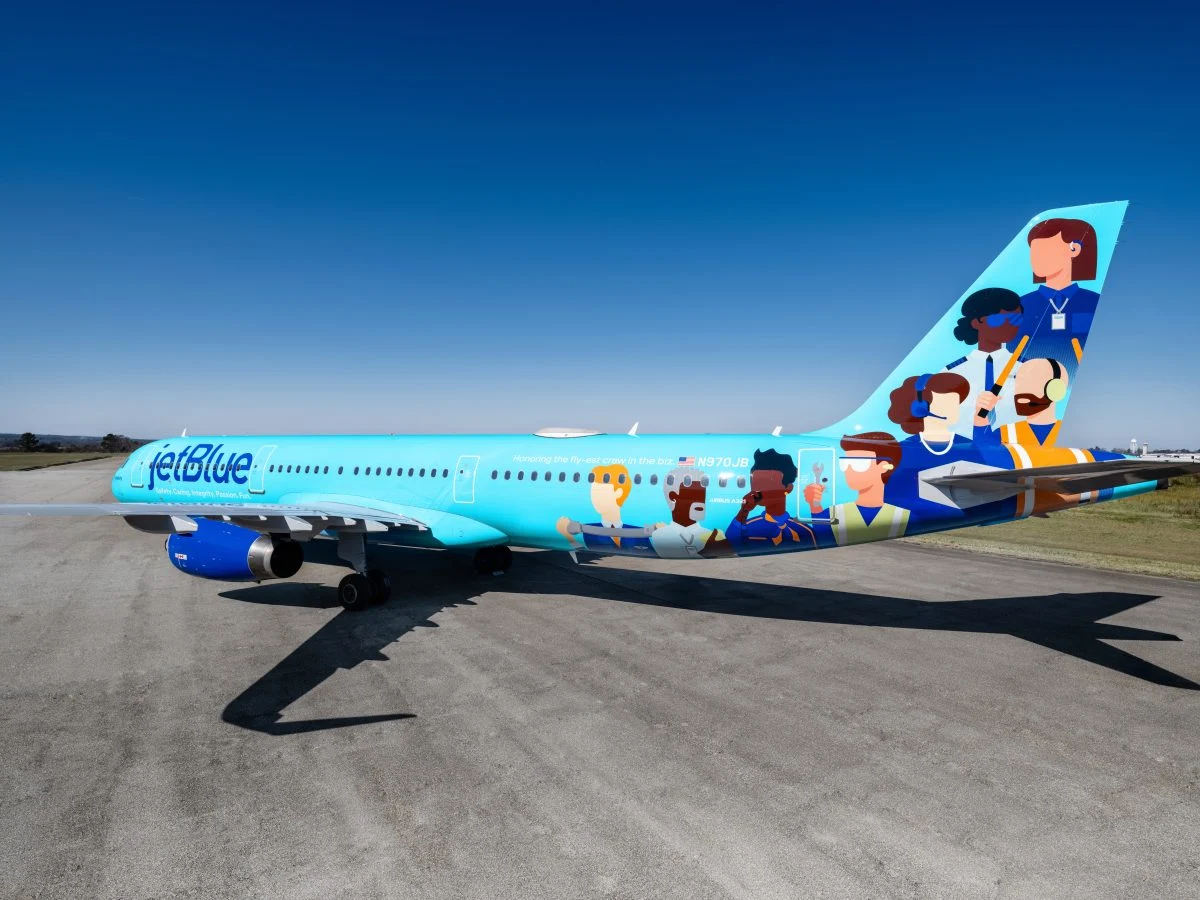
The global aviation industry currently finds itself in a precarious financial paradox: despite record-breaking passenger demand and robust top-line revenue growth, the underlying profitability of many major carriers remains under siege. In the latest installment of the Airline Weekly Lounge, hosts Gordon Smith and Jay Shabat delve into this disconnect, exploring why unprecedented consumer appetite for air travel is failing to translate into the margins investors once expected. Central to this discussion is the fiscal outlook provided by JetBlue Airways, which serves as a bellwether for the broader challenges currently facing the low-cost carrier segment and the wider industry.
The Revenue-Cost Imbalance
For the past three years, the airline industry has been defined by a "post-pandemic recovery" narrative. Load factors have consistently returned to pre-2019 levels, and in many regions, average ticket prices have surged to historical highs. However, the anticipated windfall from these revenues has been largely absorbed by a trifecta of escalating operational costs: labor, maintenance, and fuel.
Labor costs have arguably seen the most significant structural shift. Following the mass attrition of staff during the early stages of the COVID-19 pandemic, airlines were forced into a competitive hiring cycle. Pilot unions, flight attendant guilds, and ground staff associations have successfully negotiated record-breaking wage increases to account for both inflation and the scarcity of skilled aviation professionals. These labor contracts, while necessary to stabilize operations, have locked in higher fixed costs that are difficult to mitigate through traditional operational efficiencies.
Furthermore, the supply chain crisis in the aerospace sector—specifically regarding engine maintenance and spare parts availability—has kept a large percentage of the global fleet grounded. When an aircraft is parked, it generates zero revenue while still incurring capital and overhead costs. This inefficiency acts as a drag on the industry’s overall return on invested capital (ROIC).
JetBlue’s Strategic Outlook as an Industry Proxy
JetBlue Airways has recently provided a sobering assessment of the current environment. The carrier, which has been undergoing a significant strategic pivot following the dissolution of its Northeast Alliance with American Airlines and the failed merger with Spirit Airlines, is now navigating a period of internal restructuring.
JetBlue’s recent guidance highlights several systemic pressures:
- Competitive Capacity: The saturation of domestic markets, particularly in the U.S. Northeast, has forced carriers to compete heavily on price to maintain market share, putting downward pressure on yields.
- Operational Constraints: The grounding of Airbus A320neo aircraft due to Pratt & Whitney geared turbofan engine inspections has disproportionately affected JetBlue’s fleet availability, forcing the airline to adjust its network footprint.
- Ancillary Revenue Sensitivity: While airlines have become experts at unbundling services, there is evidence that consumer tolerance for high ancillary fees is reaching an inflection point, particularly as household budgets tighten under inflationary pressure.
By analyzing JetBlue’s outlook, industry analysts can infer broader trends. If a mid-sized, efficiency-focused carrier is struggling to cover costs, the implication is that larger network carriers may only be maintaining profitability through their diversified revenue streams—such as premium seating classes and co-branded credit card programs—rather than through their core flying operations.
Chronology of the Post-Pandemic Financial Cycle
To understand the current impasse, one must look at the trajectory of the airline sector since 2020:
- 2020–2021 (The Survival Phase): The industry was characterized by massive government intervention, debt accumulation, and survival-mode cost-cutting.
- 2022 (The Rebound Phase): "Revenge travel" drove demand far ahead of capacity. Airlines struggled to scale up operations, leading to widespread cancellations and operational meltdowns.
- 2023 (The Price Power Phase): Airlines successfully pushed through high ticket prices, resulting in record revenues. However, the first signs of labor-induced margin compression appeared.
- 2024 (The Normalization/Margin Squeeze Phase): The current period, where demand has plateaued or stabilized, but costs have structurally reset at a much higher level.
The Skift Travel 200 (ST200) Performance Data
The Skift Travel 200 serves as a critical barometer for the sector. As of the current fiscal year-to-date performance, the airlines sector within the ST200 has shown significant volatility. While some legacy carriers have seen stock prices supported by strong corporate travel recovery, the broader index reflects a cooling of investor sentiment regarding pure-play low-cost carriers.
The ST200, which tracks nearly 200 travel companies with a combined market capitalization exceeding $1 trillion, reveals a stark divergence. Cruise lines and international hotel brands have shown greater resilience in their operating margins compared to airlines. The primary reason for this discrepancy is the "operating leverage" of airlines; they are asset-heavy and highly sensitive to fuel price fluctuations and sudden shifts in labor costs. When demand shifts even slightly, the fixed cost base of an airline makes it difficult to pivot without eroding shareholder value.
Stakeholder Reactions and Industry Sentiment
Industry trade groups and labor organizations present conflicting perspectives on the current climate. Airlines for America (A4A) has repeatedly pointed to the "capacity constraints" of the National Airspace System and the shortage of Air Traffic Controllers as a primary driver of inefficiency, which in turn inflates the cost of operations. They argue that if the government does not modernize infrastructure, the industry will continue to face "forced inefficiency" costs.
Conversely, labor unions argue that the current cost structures are simply a market correction. After decades of suppressed wage growth, employees are now demanding a greater share of the industry’s revenue. They contend that the "record revenues" cited by leadership are a testament to the productivity of the workforce and that these costs should be viewed as long-term investments in staff retention rather than short-term liabilities.
Broader Implications and Strategic Shifts
The fundamental shift occurring in 2024 is the transition from a "growth-at-all-costs" mindset to one of "disciplined capacity management." Major carriers are moving away from aggressive route expansion in favor of protecting margins on high-yield routes. This strategic pivot has several key implications:
- Reduced Connectivity for Secondary Markets: As carriers focus on their most profitable hubs, smaller regional airports may see a permanent reduction in flight frequencies, leading to a "hub-and-spoke" consolidation that limits travel options for regional passengers.
- Premiumization of the Cabin: To combat rising costs, airlines are increasingly prioritizing premium-class real estate on aircraft. By reducing the number of economy seats to make room for "premium economy" or "business class" suites, airlines can extract higher revenue per square foot of cabin space.
- The Credit Card Ecosystem: The reliance on co-branded loyalty programs has become an existential necessity. For many airlines, the profits generated from the sale of frequent-flyer miles to credit card issuers often dwarf the profits generated from the actual operation of flights. This financial engineering is what allows airlines to weather periods of operational losses.
Conclusion: The Road Ahead
The aviation industry is at a crossroads. The record revenues of the post-pandemic era have proven that the human desire to travel is resilient, but the economic model of the airline industry remains fragile. Investors are no longer satisfied with top-line growth; they are demanding proof that airlines can navigate a high-cost environment without sacrificing their balance sheets.
As JetBlue and its peers navigate the remainder of the fiscal year, the industry’s success will depend on its ability to decouple cost growth from revenue growth. This will likely involve a combination of further fleet modernization, increased automation in ground operations, and a shift in consumer behavior toward premium services that can sustain higher price points. The "Airline Weekly Lounge" analysis underscores that while the skies are busy, the path to sustained, profitable growth remains turbulent and highly dependent on disciplined financial management in an era of structural cost elevation.


 Chandra Hamzah
 Tatiana Tantri Indah Sari
 Budi Mulyono
 Anjar Salim