
 Anjar Salim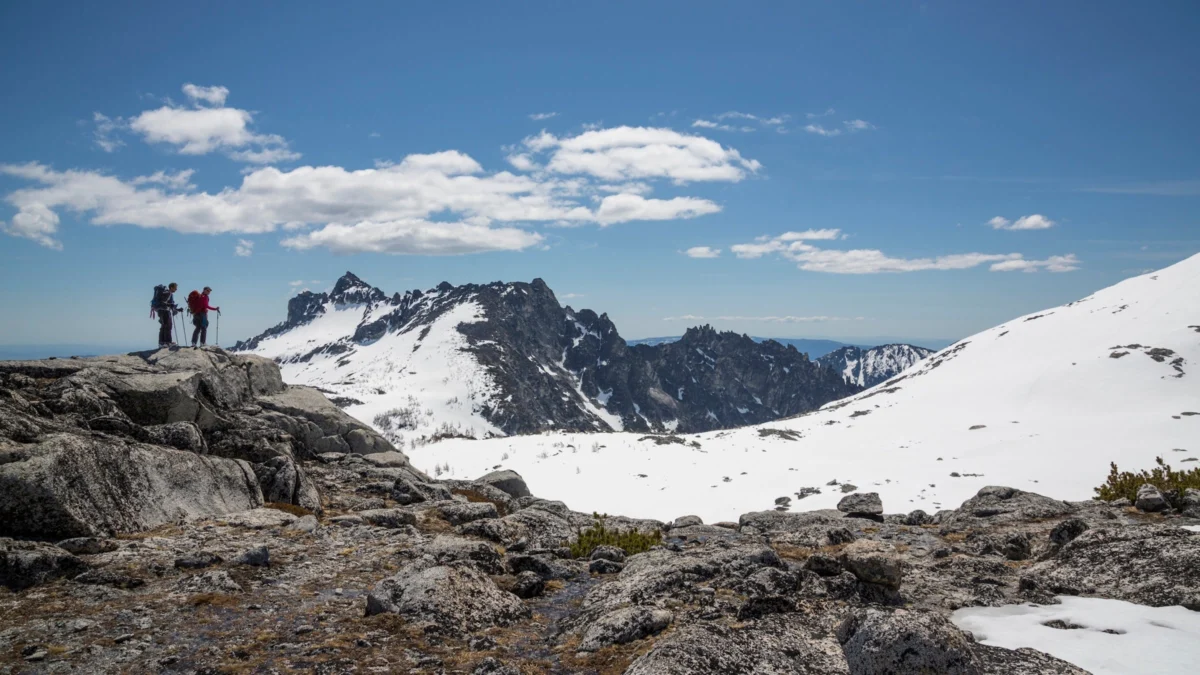
An unseasonal and violent high-alpine snowstorm struck Washington state’s rugged Cascade Mountain Range on September 13, resulting in the death of 45-year-old Oklahoma resident Sybil Claborn. Claborn was attempting a demanding thru-hike of the renowned Enchantments region alongside her husband when rapidly deteriorating weather conditions trapped the couple at an elevation ranging between 7,000 and 8,000 feet. According to reports from the Chelan County Sheriff’s Office (CCSO), several feet of heavy, blowing snow rapidly accumulated, burying the pair and plunging them into life-threatening hypothermia. While rescue personnel eventually reached the high-altitude site, Claborn succumbed to the extreme cold before ground teams could intervene.
The incident has reignited urgent safety conversations among outdoor recreation authorities regarding the deceptive nature of day-hiking high-alpine environments, where early autumn weather can shift from manageable to lethal in a matter of hours. As search and rescue organizations face an increasing volume of calls related to unprepared or improperly equipped mountaineers, the tragedy serves as a grim reminder of the unforgiving realities of the Pacific Northwest backcountry.
The Anatomy of a High-Alpine Disaster
The Enchantments traverse is widely celebrated for its breathtaking vistas, crystal-clear turquoise alpine lakes, and resident mountain goat populations. However, the Washington Trails Association (WTA) officially categorizes the 18-mile one-way trail as "hard." The route demands an intense 4,500 feet of elevation gain, topping out at a high point of 7,800 feet. The couple was traversing the delicate and exposed "core zone," a high plateau featuring a cluster of tarns and jagged peaks that forms the geographical centerpiece of the trek.
Because camping in the core zone is strictly regulated and requires securing a notoriously competitive overnight permit through a lottery system, many hikers attempt the entire 18-mile distance in a single push to bypass the restriction. While this "day-hiking" approach is physically grueling, it also carries a hidden tactical vulnerability: traveling light often means omitting essential emergency, bivouac, and cold-weather gear.
Chief Ryan Moody of the CCSO noted in a statement to outdoor media that the couple was located roughly eight to ten miles from either trailhead when the storm struck. Crucially, Chief Moody confirmed that both hikers’ clothing was thoroughly soaked through and that they lacked overnight gear capable of sustaining them against sub-freezing temperatures and heavy precipitation. When combined with wet clothing, high-altitude winds, and plunging temperatures, the lack of thermal protection set the stage for rapid-onset hypothermia.
Chronology of a Desperate Rescue Operation
The rescue effort executed by local emergency services and military aviation units stands as a testament to the extreme hazards faced by first responders in high-alpine environments during severe weather. Below is the detailed timeline of the events of September 13 and 14, as documented by the Chelan County Sheriff’s Office:
- September 13, 5:30 P.M.: The male hiker places the initial emergency SOS call via satellite communication, reporting that his wife is completely immobilized and that he is physically incapable of carrying her out of the remote terrain.
- 5:50 P.M.: A follow-up call confirms that the couple is buried beneath one to two feet of fresh, heavy snow. The husband has attempted to shelter his wife using an emergency Mylar blanket.
- 6:50 P.M.: CCSO formally requests a hoist-capable rescue helicopter, pending any potential brief windows of improved weather visibility.
- 8:00 P.M. to 10:50 P.M.: Army aviation pilots stationed in Yakima, Washington—approximately 100 miles away—make multiple determined attempts to launch and navigate toward the coordinates. Zero-visibility blizzard conditions and high winds force the aircraft to turn back repeatedly.
- September 14, 3:30 A.M.: Realizing that air support is entirely grounded, ground crews from Chelan County Mountain Rescue (CCMR) complete a grueling nocturnal ascent on foot, reaching the victims’ location. They discover that Sybil Claborn has passed away, while her husband is suffering from severe, advanced hypothermia. Responders immediately deploy a specialized warming tent to stabilize the surviving hiker.
- 9:00 A.M.: Weather conditions clear sufficiently for a rescue helicopter to safely approach. The surviving husband and two CCMR ground team members are airlifted to the Leavenworth Fish Hatchery, where an awaiting ambulance transports the survivor to Cascade Medical Center for specialized medical care.
- 10:00 A.M.: A dedicated recovery flight is dispatched by the sheriff’s office to retrieve Claborn’s remains, transferring them into the custody of the Chelan County Coroner’s Office for formal examination and investigation into the precise medical cause of death.
Official Responses and the Challenge of Alpine Variability
The inherent danger of the Cascades during the transitional shoulder seasons cannot be overstated. While historic snowfall accumulations in the Enchantments typically do not occur until late November, September introduces a volatile meteorological period characterized by erratic weather patterns.
The Washington Trails Association has repeatedly cautioned the outdoor community regarding the deceptive nature of early autumn in the high country. "Conditions can vary greatly this time of year," the WTA stated in an advisory published on its official network. "It is not uncommon for 30-plus degree temperature swings to occur in a single day." A hiker stepping out under clear morning skies can easily find themselves enveloped in freezing rain, sleet, or whiteout blizzard conditions by mid-afternoon.
In this incident, the inability of aerial assets to reach the victims underscored the absolute reliance on ground-based volunteers. Chelan County Mountain Rescue volunteers routinely risk their own safety in treacherous terrain, navigating vertical cliffs, darkness, and blinding snowstorms to reach stranded recreationists. Without their nocturnal trek, emergency officials noted, the surviving husband likely would have perished from hypothermia as well.
Broader Implications for Backcountry Safety and the "Fast and Light" Culture
Sybil Claborn’s death highlights a growing cultural trend within modern mountaineering and long-distance hiking: the glorification of "fast and light" travel. Spurred by social media exposure and the desire to conquer iconic routes without the logistical burden of heavy packs, a rising demographic of outdoor enthusiasts attempts ambitious alpine traverses as single-day pushes.
While experienced mountaineers with comprehensive risk-management training, highly technical gear, and advanced navigation skills can safely execute rapid traverses under favorable forecasts, recreational day-hikers frequently underestimate the margin of error in alpine terrain. When a fast-moving storm drops temperatures drastically and soaks clothing, the human body loses core temperature at an exponential rate. Without a tent, sleeping pad, or proper insulation, hypothermia can induce apathy, confusion, and unconsciousness within minutes or hours.
Search and rescue (SAR) teams across the Pacific Northwest and the Rocky Mountains have reported a steady uptick in rescue expenditures and operational strain driven by day-hikers caught off-guard by autumnal weather shifts. Industry advocates and safety organizations are increasingly calling for mandatory educational initiatives emphasizing that day-hike status does not exempt a mountaineer from carrying emergency bivy sacks, extra layers of synthetic or wool insulation, reliable ignition sources, and independent communication devices.
As the investigation into the tragedy continues, the Chelan County Sheriff’s Office emphasizes that anyone planning excursions into high-elevation environments during September and October must monitor forecasts continuously, remain flexible enough to turn around at the first sign of deteriorating weather, and always pack redundant gear capable of sustaining life overnight in sub-freezing, snow-laden wilderness.


 Dwi Wanna
 Chandra Hamzah
 Tatiana Tantri Indah Sari
 Walid Sujud Trenggono
 Cholid Fahmi Thalib