
 Walid Sujud Trenggono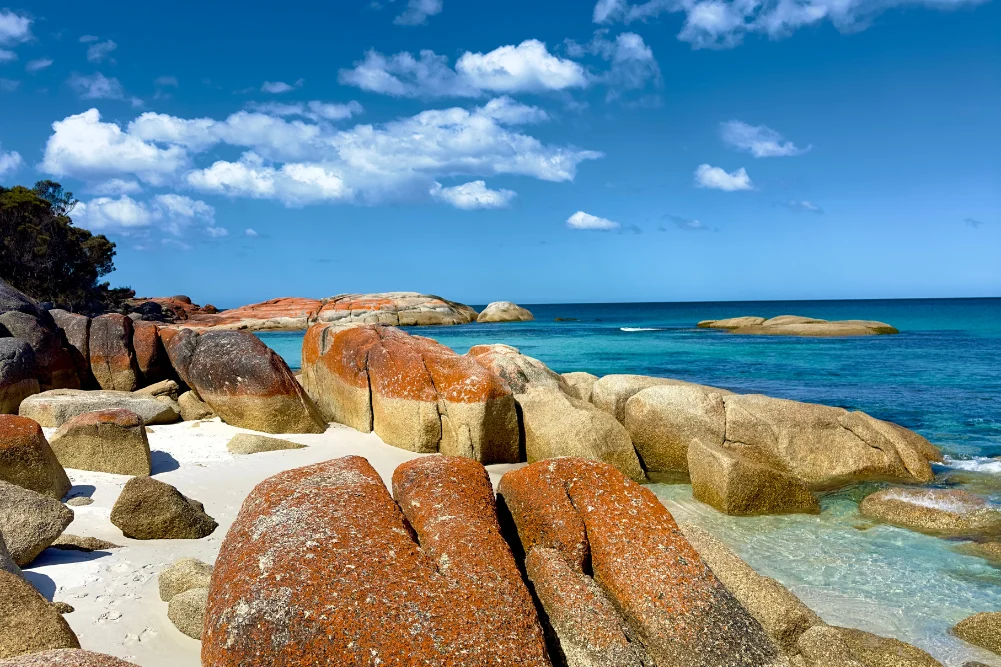
Tasmania continues to solidify its reputation as a premier global destination for wilderness trekking, offering diverse landscapes that seamlessly blend rugged coastal environments with rich ecological and cultural histories. Among the island’s most celebrated natural assets is the Bay of Fires, known locally as Larapuna, a breathtaking coastal stretch on Australia’s north-east coast recently recognized as one of the country’s top beach destinations. Recently, small-group adventure operator Intrepid Travel hosted a cohort of travelers on a specialized three-day guided expedition along this iconic coastline, highlighting a growing tourism model that pairs immersive outdoor exploration with creature comforts.
The multi-day excursion offers a strategic balance between physical challenge and logistical ease, catering to travelers seeking remote wilderness exposure without the burdens of self-supported gear carriage or backcountry camping. Designed with a progressive itinerary that builds in physical intensity, the tour provides a comprehensive exploration of the region’s diverse ecosystems, geological formations, and historical narratives.
Main Facts and Expedition Overview
The journey commenced in Launceston, Tasmania’s northern hub, drawing a diverse demographic of participants. Among the group were individuals undertaking physical conditioning for international expeditions, such as the 96-kilometer Kokoda Track in Papua New Guinea, as well as seasoned international trampers and casual nature enthusiasts. The deployment of professional guides Lauren and Scott ensured comprehensive safety management, ecological interpretation, and logistical coordination throughout the route.
Base camp was established in St Helens, Tasmania’s largest north-eastern coastal town and a recognized hub for game fishing, commercial aquaculture, and regional tourism. From this central location, the expedition deployed daily into distinct conservation areas and national parks, undertaking hikes ranging from coastal dune walks to forest tracks.
Chronology of the Itinerary
The expedition was structured across three distinct phases, deliberately paced to condition participants gradually while maximizing exposure to the region’s varying topography.
Day One: The Humbug Point Conservation Area
The inaugural day of walking utilized the Skeleton Bay Track, guiding participants toward Dora Point within the Humbug Point Conservation Area. This initial leg served as an introduction to Tasmania’s notoriously dynamic weather patterns, characterized by rapid shifts between intermittent rainfall—colloquially described by guides as "wet air" or "sneaky rain"—and coastal sunshine.
The route traversed coastal heath transitioning into dense temperate rainforests featuring flowering paperbarks, banksia, tea trees, eucalyptus gums, and native pines. A defining feature of the day was the visual impact of the region’s signature geological formations: gigantic granite boulders crusted with striking burnt-orange lichen. These geological markers trace their historical nomenclature to 1773, when British navigator Captain Tobias Furneaux, aboard the HMS Adventure, observed fires lit along the shore by the Indigenous Palawa people. Today, these lichen-covered stones serve as a visual hallmark of the coastline, contrasting sharply with the white quartz sand and turquoise waters of the Tasman Sea.
Day Two: Eddystone Point and Coastal Dune Systems
The second day marked the physical peak of the itinerary, featuring a demanding 12-kilometer route that generated an average of 25,000 steps per participant. The day began with a transit inland to Eddystone Point Lighthouse, a 35-meter-high pink granite pillar constructed in 1889 to mitigate the significant maritime hazards presented by the jagged coastline.
Operating under strong wind gusts reaching up to 68 kilometers per hour, the group completed a six-kilometer traverse along Eddystone Beach. The shoreline environment provided extensive wildlife observations, including Pacific gulls, sandpipers, and pied oystercatchers, alongside complex intertidal formations such as strandlines of Neptune’s necklace seaweed and extensive shell coves composed of accumulated marine mollusks.
The return leg shifted away from the coast onto historical fire trails, exposing participants to dry inland conditions and dense native scrubland before returning to the support vehicle. Following the physical exertion of the day, the itinerary transitioned to St Helens for evening accommodations at recently revitalized properties overlooking Georges Bay.
Day Three: Mount William National Park and Inland Transitions
The final walking phase took place within Mount William National Park at Stumpy’s Bay. Known for its high concentration of native marsupials—particularly the Bare-nosed Wombat, which populates the region in numbers surpassing the island’s human demographic—the six-kilometer loop provided participants with opportunities to observe local fauna and track regional wildlife.
The expedition concluded with infrastructural stops highlighting the region’s industrial history and post-industrial tourism transition. This included a visit to the Little Blue Lake, an artificial water body whose vivid, opaque turquoise coloration is the result of suspended white clay particles and mineral leachate originating from 19th- and 20th-century tin mining operations. The tour terminated with a final stop in the town of Derby, a former global epicentre for tin mining that has successfully reinvented itself as an international mountain-biking destination.
Supporting Data and Ecological Context
The Bay of Fires region represents a fragile and highly managed ecological zone requiring rigorous conservation frameworks. Tasmania’s Department of Natural Resources and Environment oversees these coastal reserves to balance high-volume nature-based tourism with habitat protection for endemic species.
Wildlife populations along the north-east coast remain robust. Regional ecological surveys estimate Tasmania’s wombat population at nearly one million individuals, outnumbering the human resident population by a margin of approximately two to one. However, interactions with these marsupials remain carefully managed through distance and observation guidelines to prevent habituation. Similarly, populations of monotremes, such as the Tasmanian echidna, thrive in the understorey environments; regional variants are frequently noted by researchers for possessing thicker, darker fur adaptations compared to their mainland Australian counterparts.
The economic impact of tourism in municipalities such as Break O’Day—encompassing St Helens and surrounding coastal settlements—relies heavily on the diversification of traditional industries. While commercial fishing, particularly for southern rock lobster (Jasus edwardsii) and Pacific oysters (Crassostrea gigas), remains foundational to the local economy, high-end guided eco-tourism has emerged as a significant economic driver. Data from regional tourism bodies indicates that structured walking tours contribute substantially to off-season visitation, supporting local hospitality, accommodation, and retail sectors.
Official Responses and Participant Perspectives
Feedback gathered from participants across diverse age brackets and backgrounds underscores the efficacy of the supported-trek model.
Betsy, a 75-year-old experienced tramper participating from New Zealand, noted the psychological benefits of structured group travel. "My nature is to be in my solitude," she reflected at the conclusion of the tour. "But I like it now, being 75, not having the responsibility of thinking where I’m going next or what I’m going to eat. This hike has been absolutely gorgeous. We’ve had rain, sunshine, wind, sand in our faces, all the coastal elements. It’s so good for the body and the mind."
Similarly, participants Ryan and Tam, utilizing the trek as intensive physical preparation for international mountaineering objectives, logged over 40 kilometers of cumulative walking across varied terrain over the three-day period, validating the route’s utility as a high-yield endurance training ground.
Guides and local operators emphasize the educational component of the journeys, integrating regional history—such as the accounts of early colonial penal settlements on Sarah Island and figures like convict escapee William Swallow—into the daily briefings to foster a deeper understanding of Tasmania’s complex historical footprint.
Broader Impact and Implications for Eco-Tourism
The success of structured coastal walks along the Bay of Fires points to broader trends in the Australian travel sector, where consumer demand increasingly favors low-impact, high-comfort wilderness experiences. By outsourcing logistical complexities—such as backcountry meal preparation, equipment transport, and route navigation—to professional operators, travelers with varying physical conditioning levels are able to access remote environments safely.
At the same time, regional authorities face the ongoing challenge of mitigating anthropogenic pressures on delicate coastal ecosystems. The accumulation of visitors along fragile quartz beaches and lichen-encrusted headlands necessitates strict adherence to "Leave No Trace" principles, path maintenance, and visitor cap regulations.
As tourism continues to anchor the economic revitalization of former industrial towns like St Helens and Derby, the integration of conservation science with commercial tour operations remains vital. The Bay of Fires stands as a case study in how remote landscapes can be leveraged for sustainable economic development while maintaining the ecological integrity that draws travelers to Australia’s southernmost state in the first place.



 Cholid Fahmi Thalib
 Diana Nuri Rohmawati
 Budi Mulyono
 Lukman Taruna Persada Ramadan
 Anjar Salim