
 Budi Mulyono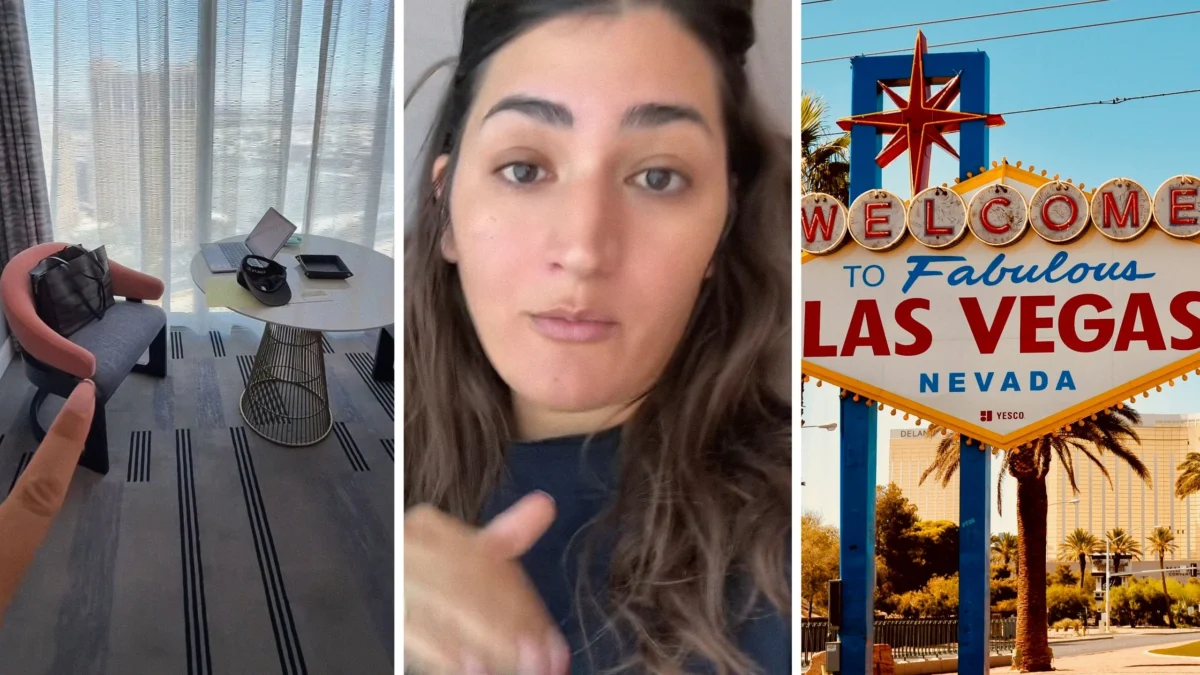
The expectation of privacy and security is foundational to the hospitality industry, yet that sense of safety was recently brought into question at one of the Strip’s premier properties. A traveler named Ximena, known online by her handle @ximenagoingplaces, took to TikTok to recount a distressing incident during her stay at the iconic Fontainebleau Las Vegas. According to her account, an unknown individual opened her hotel room door and peered inside while she was alone in the suite, an event she described as an unauthorized break-in.
While accidental intrusions caused by front-desk errors do occasionally occur in the hospitality sector, the specific circumstances surrounding this encounter have sparked broader discussions regarding guest safety protocols, electronic lock vulnerabilities, and overall property security in high-traffic resort destinations like Las Vegas.
Chronology of the Incident at Fontainebleau Las Vegas
The sequence of events began during what was intended to be a standard luxury getaway for Ximena and her mother at the high-profile Fontainebleau Las Vegas resort. According to the traveler’s social media disclosures, the incident unfolded on an afternoon when her mother was away from the suite attending a fitness class. Ximena was seated at a desk inside the room when the door unexpectedly opened.
Rather than the standard behavior of a hotel guest who might mistakenly enter the wrong room—typically characterized by swinging the door completely open or carrying luggage—the individual reportedly just poked their head through the partially opened entryway. Ximena noted that the manner of entry did not suggest a simple mistake by someone who had been incorrectly assigned the room key.
Immediately following the encounter, Ximena contacted hotel management to report the security breach. Resort staff responded by relocating Ximena and her mother to a different suite and applied a $100 resort credit to their account as compensation for the disturbance. While management addressed the immediate housing concern, the psychological impact of the incident prompted the guest to document her experience online, where the video quickly gained traction and reignited public interest in hotel room safety standards.
The Broader Reality of Accidental and Malicious Hotel Intrusions
Incidents involving unauthorized individuals gaining entry to hotel rooms, while statistically rare, are not entirely unprecedented within the global hospitality industry. Mistakes at the front desk—such as issuing duplicate keys to guests with similar names or misreading room numbers—occasionally happen. However, security experts differentiate between administrative errors and intentional security breaches.
For instance, previous high-profile cases have highlighted situations where individuals manipulated front desk staff to obtain unauthorized room keys. In 2025, a reported incident at a Marriott property involved a man who successfully acquired a room key by falsely claiming to be a guest’s husband, demonstrating that human error or social engineering can sometimes bypass standard verification procedures.
Beyond human error, technological vulnerabilities have historically posed significant risks to hotel guests. In 2024, cybersecurity researchers revealed critical flaws in Saflok electronic RFID locks, which were utilized by tens of thousands of hotels and residential properties worldwide. The security flaw allowed researchers to clone key cards and gain unrestricted access to guest rooms. Although discovered by ethical hackers rather than criminal elements, such vulnerabilities underscore the challenges properties face in maintaining absolute physical security.
Furthermore, historical events demonstrate that bad actors have occasionally exploited lock mechanisms to commit thefts. A notable string of burglaries in 2012 at a Houston hotel chain involved a perpetrator who utilized vulnerabilities in electronic door locks to target guest rooms, prompting widespread reviews of lock system integrity across major hotel brands.
Property Safety Record and Guest Sentiment
The Fontainebleau Las Vegas, a massive luxury resort that opened to significant fanfare, has largely maintained positive reviews across major travel platforms. On Tripadvisor, the property commands a solid 4.2 out of 5-star rating based on more than 2,000 guest reviews, with the vast majority of visitors reporting pleasant stays, exceptional amenities, and attentive service.
However, public records and consumer feedback platforms also reveal isolated reports of security concerns. Complaints filed with the Better Business Bureau (BBB) and reviews left on platforms like Yelp include allegations of missing personal property and theft. For instance, a reviewer detailing a 2025 stay alleged that high-end designer merchandise was stolen from their room, expressing frustration regarding the subsequent security investigation and follow-up communication from resort management.
In response to such complaints, the property’s management has consistently emphasized its commitment to thorough investigations, frequently advising affected guests to file formal police reports while reiterating that security teams follow standardized due diligence procedures when addressing missing item claims. Representatives from the Fontainebleau Las Vegas were reached for comment regarding the recent incident reported by Ximena, though an official public statement had not been released at the time of reporting.
Implications for Modern Hospitality Security
The viral nature of Ximena’s account highlights a shifting paradigm in how hotel security breaches are communicated and managed. In the era of social media, individual traveler grievances can rapidly amplify, placing immediate public relations pressure on major hospitality brands to address vulnerabilities transparently.
For hoteliers, the incident serves as a reminder of the critical importance of rigorous front-desk verification protocols, advanced and regularly updated electronic lock systems, and responsive guest relations. As travelers become increasingly conscious of personal security—especially when staying alone—properties must continually evaluate and reinforce their internal controls to ensure that the fundamental promise of a safe, private sanctuary remains unbroken.




 Anjar Salim
 Dwi Wanna
 Chandra Hamzah
 Gabriela Annisa
 Tatiana Tantri Indah Sari
 Walid Sujud Trenggono