
 Tatiana Tantri Indah Sari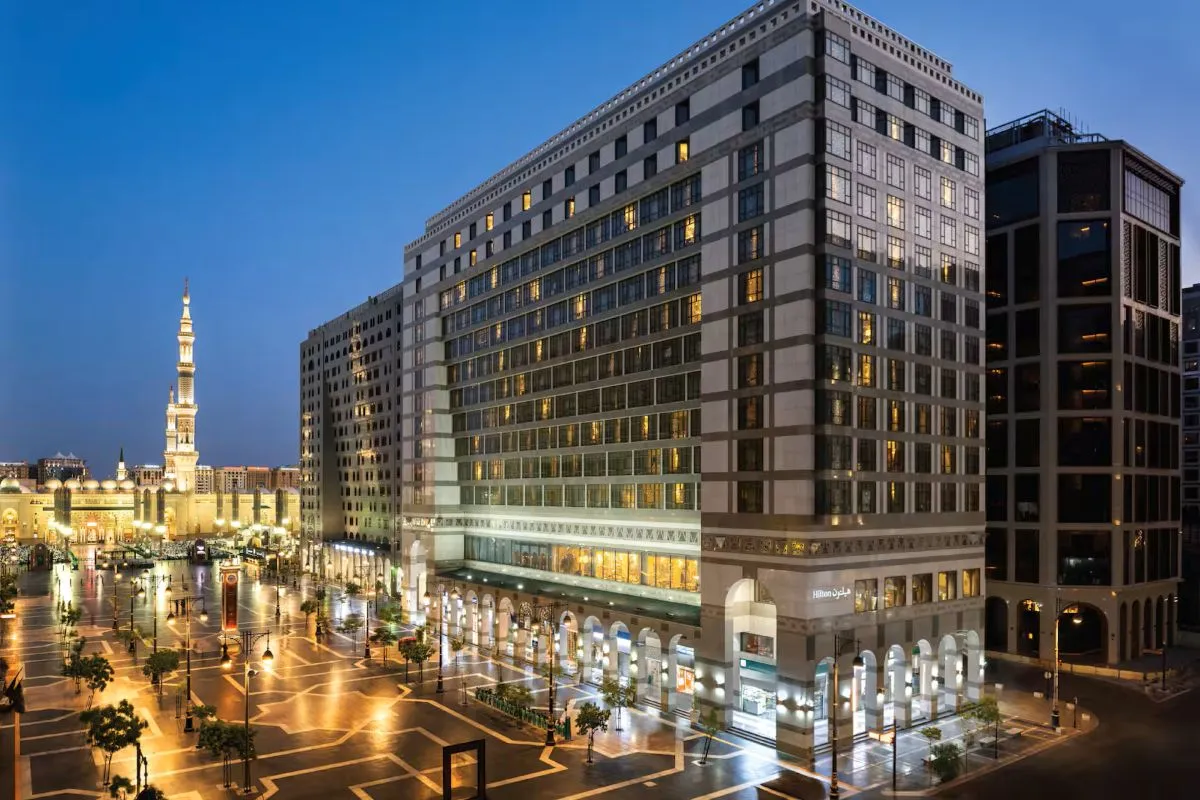
Following years of aggressive expansion within the luxury and upper-upscale segments in Saudi Arabia, global hospitality giant Hilton is shifting its strategic focus toward the Kingdom’s burgeoning mid-market and franchise sectors. According to senior leadership, the primary phase of establishing high-end international flagships across major metropolitan centers and emerging tourism hubs is largely complete. The next growth frontier for the American multinational hospitality company will concentrate on addressing the domestic and regional demand for accessible, reliable, and internationally standardized mid-scale accommodations.
The pivot underscores a broader evolution within Saudi Arabia’s rapidly transforming travel and tourism economy, which has transitioned from an ambitious blueprint under Vision 2030 into an active operational landscape marked by massive infrastructural investments, giga-projects, and an influx of both international leisure tourists and domestic travelers.
The Evolution of the Saudi Hospitality Landscape
For much of the past decade, international hotel operators entering Saudi Arabia prioritized ultra-luxury, luxury, and upper-upscale brands. Driven by government-backed mega-developments such as NEOM, the Red Sea Project, Diriyah Gate, and AlUla, global hoteliers rushed to secure prime real estate with iconic flagships. Brands synonymous with high-end opulence—ranging from Waldorf Astoria and Conrad to Ritz-Carlton, St. Regis, and Rosewood—became the standard bearers of the Kingdom’s hospitality renaissance.
Hilton was no exception to this trend. Over the years, the corporation established a formidable footprint in the region, introducing multiple high-end properties and lifestyle brands into key financial and cultural hubs such as Riyadh, Jeddah, and Makkah.
However, Simon Vincent, Hilton’s president for Europe, Middle East, and Africa (EMEA), noted that the upper tier of the market has reached a point of saturation in terms of immediate strategic necessity.
"We’ve got Conrads, Waldorfs, Hiltons, Curios, and DoubleTrees coming out of our ears over there," Vincent stated in an interview with travel industry publication Skift, highlighting the density of the company’s luxury and upper-upscale pipeline in the region. "But it’s the mid-market we want to build out, and that’s how, very often, markets evolve."
This realization marks a critical juncture for the hospitality sector in Saudi Arabia. As the country opens its doors wider to international visitors through streamlined e-visa systems and aggressive global marketing campaigns, the demographic profile of the average traveler is diversifying. While luxury travelers remain a vital target segment, the sustained, long-term growth of the tourism economy relies heavily on domestic tourism, corporate regional travel, mid-income families, and budget-conscious international visitors.
Historical Precedents: The Turkey Playbook
To understand Hilton’s current tactical shift in Saudi Arabia, company executives frequently point to historical precedents in other high-potential emerging markets. Vincent drew a direct parallel to Hilton’s decades-long expansion strategy in Turkey, a market where the company has cultivated a deep and diversified presence since the mid-20th century.
Hilton’s history in Turkey began with a single, landmark property: the iconic Hilton Istanbul Bosphorus, which opened its doors in 1955 as a symbol of modern international hospitality in the country. For many years, the brand was primarily associated with high-end, full-service luxury in major metropolitan centers. However, as the Turkish economy developed and regional infrastructure improved, Hilton pivoted toward secondary and tertiary cities.
Today, Hilton boasts a portfolio of more than 100 hotels across Turkey. Crucially, this massive footprint was not built by proliferating more ultra-luxury Conrad properties, but rather through the strategic deployment of mid-market and focused-service brands. Hilton Garden Inns populated provincial towns, while Hampton by Hilton hotels established a reliable presence in secondary industrial and commercial cities.
"They are the best hotels in most of those towns and cities," Vincent noted regarding the Turkish expansion model. "It might be a mid-market hotel, but it’s an international-standard mid-market hotel that changes the local hospitality ecosystem."
Applying this playbook to Saudi Arabia means taking proven, scalable brands like Hampton by Hilton, Hilton Garden Inn, and potentially emerging focused-service concepts deep into the Kingdom’s provincial capitals, industrial zones, and secondary transit hubs. These regions are experiencing rapid economic activity driven by decentralization policies, domestic business travel, and religious tourism that extends beyond the traditional pilgrimage centers of Makkah and Madinah.
Market Data and Economic Drivers Behind the Shift
The pivot toward the mid-market is supported by compelling macroeconomic data regarding Saudi Arabia’s tourism ambitions and demographic realities. Under the National Tourism Strategy, Saudi Arabia has set a target of attracting 150 million visitors annually by 2030, contributing roughly 10% to the national Gross Domestic Product (GDP).
Achieving these monumental targets requires massive capacity expansion that luxury hotels alone cannot absorb. While luxury resorts and urban flagships command high average daily rates (ADR), they cater to a relatively narrow segment of the global traveling population. In contrast, mid-market and economy hotels capture high-frequency domestic travelers, regional business consultants, transit passengers, and budget-conscious families.
According to recent hospitality data from firms such as STR and Knight Frank, the supply-demand dynamics in Saudi Arabia heavily favor diversification. While Riyadh and Jeddah continue to absorb thousands of new high-end keys, secondary cities such as Dammam, Khobar, Tabuk, Abha, and Khamis Mushait remain underserved by globally branded mid-scale inventory.
Furthermore, the rise of domestic tourism—accelerated by the Saudi Seasons entertainment initiatives and domestic travel campaigns—has created unprecedented demand for reliable, internationally branded accommodations outside the primary tourist corridors. Saudi citizens and resident expatriates increasingly seek predictable, high-quality, mid-tier hospitality experiences when exploring different regions of the Kingdom.
The Franchise Model as an Accelerator
Beyond brand selection, Hilton’s strategy for the next wave of expansion in Saudi Arabia relies heavily on the franchise business model. Historically, many international hotel operators in the Middle East favored management contracts, wherein the brand company operates the hotel on behalf of the owner to ensure strict adherence to global operational standards.
However, as the Saudi market matures and local real estate developers, institutional investors, and family offices become increasingly sophisticated, the appetite for franchise agreements has surged. Franchising allows local owners to license a proven global brand name and utilize its central reservation systems, loyalty programs (such as Hilton Honors), and operational frameworks while retaining direct day-to-day management control or partnering with third-party operating companies.
For Hilton, shifting toward a franchise-heavy growth model in the mid-market offers significant scalability advantages. It minimizes capital expenditure for the parent company while accelerating the pace of property openings. In secondary and tertiary cities across Saudi Arabia, local developers who possess deep market knowledge and land assets are eager to partner with international brands that can instantly instill consumer trust and drive occupancy through global distribution networks.
Industry analysts note that franchising also aligns with the broader goals of Saudi Vision 2030, which seeks to empower the private sector, foster local entrepreneurial capability, and encourage decentralized economic development. By lowering the barriers to entry for regional developers through focused-service franchise options, global hotel groups can penetrate markets that might not justify the high development costs of a full-service luxury hotel.
Broader Implications for the Regional Hospitality Sector
Hilton’s strategic recalibration in Saudi Arabia is expected to serve as a bellwether for other major international hotel operators, including Marriott International, IHG Hotels & Resorts, Accor, and Hyatt. For years, the race to announce headline-grabbing luxury partnerships dominated industry news cycles. Now, the competitive battleground is shifting toward volume, operational efficiency, and geographic ubiquity.
This maturation of the market brings several notable implications:
1. Enhanced Standards in Secondary Markets
The influx of international mid-market brands into provincial and secondary Saudi cities will raise the baseline standards of local hospitality. Independent, unbranded motels and older regional hotels will face increased pressure to upgrade their facilities, digital infrastructure, and service standards to compete with globally backed competitors like Hampton by Hilton and Hilton Garden Inn.
2. Deepening the Labor Pool and Localization (Saudization)
Expanding into the mid-market outside major metropolitan areas will accelerate the implementation of the Kingdom’s Saudization (Nitaqat) policies. Focused-service hotels, with leaner operating structures and standardized processes, offer scalable training grounds for local talent entering the hospitality workforce. This decentralizes job creation away from primary hubs like Riyadh and Jeddah, bringing professional hospitality careers directly to provincial communities.
3. Strengthening Loyalty Ecosystems
By capturing travelers at the mid-market level, hotel groups can build long-term brand loyalty early in a consumer’s travel lifecycle. A domestic traveler who becomes accustomed to a Hilton-branded mid-scale hotel during a regional road trip or business meeting is statistically more likely to select a Hilton luxury or lifestyle brand when booking international travel or milestone vacations.
4. Mitigating Over-Reliance on Luxury Cyclicality
Luxury hospitality assets are historically more sensitive to economic downturns, geopolitical shifts, and fluctuations in high-net-worth discretionary spending. By diversifying portfolios to include a robust base of mid-market and economy inventory, hospitality operators create a resilient earnings buffer capable of withstanding broader economic cycles.
Looking Ahead: The Next Decade of Development
As Saudi Arabia continues its unprecedented infrastructural transformation, the Kingdom’s hospitality sector is entering a more mature, balanced phase of its development lifecycle. The glittering skyline of luxury flagships will remain a testament to the nation’s ambitious vision, but the beating heart of day-to-day commerce and tourism will increasingly rely on the accessible, dependable foundation of mid-market hospitality.
For Hilton and its competitors, the challenge ahead lies in executing this expansion efficiently, selecting the right local franchise partners, and ensuring that the promise of international service standards is delivered consistently—whether in the heart of Riyadh or a developing provincial hub. As Simon Vincent and other industry leaders have observed, true market maturity is not measured solely by the height of luxury, but by the breadth and depth of a nation’s hospitality network.



 Walid Sujud Trenggono
 Cholid Fahmi Thalib
 Budi Mulyono
 Lukman Taruna Persada Ramadan
 Anjar Salim