
 Tatiana Tantri Indah Sari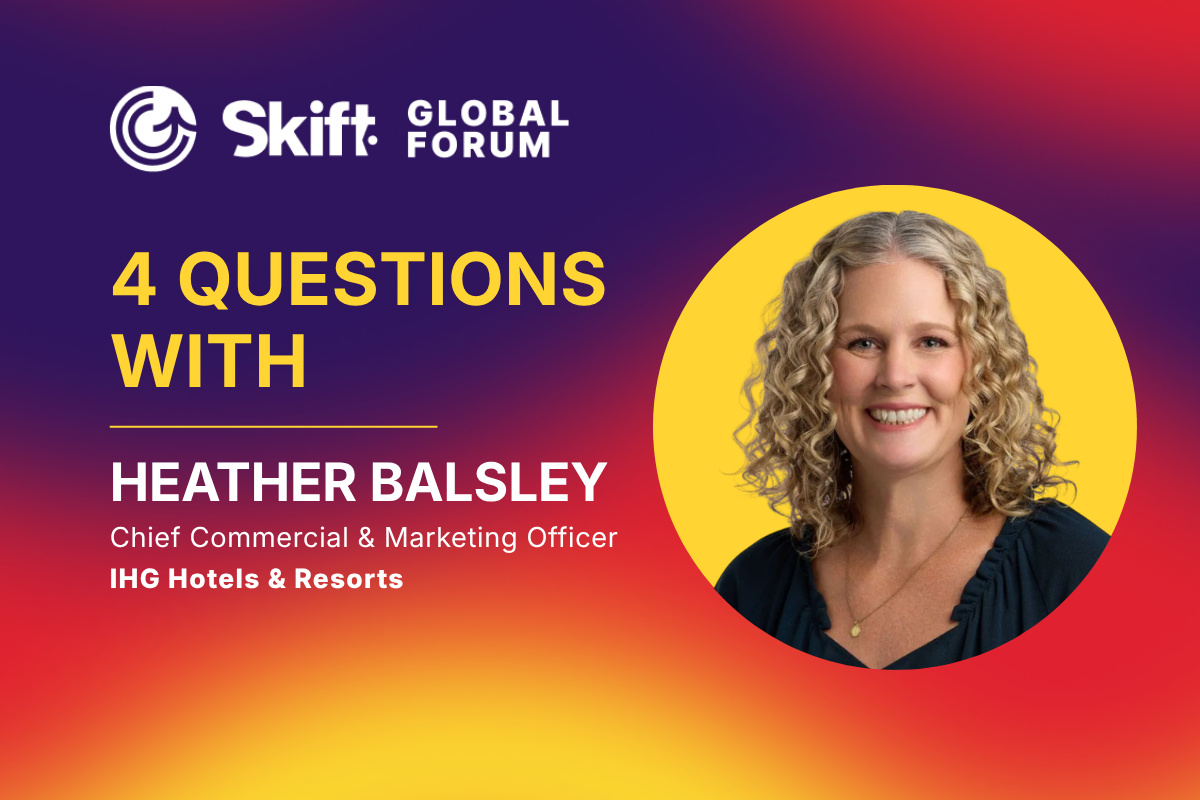
The rapid ascent of generative artificial intelligence is fundamentally altering how consumers discover, evaluate, and book travel accommodations, forcing major hospitality brands to rethink their foundational digital architectures. As artificial intelligence models increasingly serve as the initial gatekeepers for trip planning, hospitality companies are rushing to adapt their digital footprints to ensure they remain visible to machine-learning algorithms. At the forefront of this technological pivot is IHG Hotels and Resorts, which is executing a comprehensive content and digital infrastructure overhaul to make its expansive portfolio of properties fully legible to AI models.
Heather Balsley, IHG’s Chief Commercial and Marketing Officer, is spearheading this dual strategy. Her approach balances the technical necessity of feeding AI algorithms with structured, high-context data while maintaining the conviction that automated search assistants can never usurp the direct, long-term relationship a brand builds with its guests. Balsley is scheduled to unpack these strategic imperatives at the upcoming Skift Global Forum, taking place from September 22 to 24 in New York City, where industry leaders will address the seismic shifts reshaping global travel.
The Evolution of Travel Discovery: From Traditional Search to AI-Driven Exploration
For decades, the digital customer journey for travel remained relatively stable. Consumers relied on a fragmented ecosystem of search engines, Online Travel Agencies (OTAs), review sites, and brand-direct websites to piece together itineraries. This process often required significant manual effort, involving dozens of browser tabs and cross-referencing information across multiple platforms.
The integration of large language models and generative AI into everyday search tools has compressed this convoluted journey into a conversational interface. Today, a traveler can input complex, highly nuanced queries into an AI assistant, such as: "Find me a boutique hotel in downtown Chicago with sustainable practices, a quiet workspace, and pet-friendly amenities for a business trip next Tuesday."
When an AI assistant processes such a specific prompt, it does not browse the internet in real-time the way a human does. Instead, it extracts answers from structured content, semantic data feeds, and proprietary databases it has been trained on or can access via Application Programming Interfaces (APIs). If a hotel’s digital profile consists only of sparse descriptions and generic amenity checklists, the AI model cannot effectively evaluate its suitability for the user’s specific context. Consequently, the property is bypassed in favor of competitors whose digital content is rich, deeply structured, and easily parsed by machine-learning models.
IHG’s Content Overhaul: Building the Infrastructure for Machine Readability
Recognizing that visibility in the age of AI depends entirely on data legibility, IHG has invested heavily in modernizing its underlying technology. Later this year, the hospitality giant is set to roll out a brand-new proprietary platform designed to fundamentally transform how hotel content is structured, managed, and distributed across the digital ecosystem.
This upcoming platform serves a dual purpose. First, it streamlines the internal workflows for individual hotel operators, making it easier for properties to upload, update, and promote their unique offerings. Second, and more importantly, it optimizes the digital signals emitted by each property, ensuring that structured metadata is fed directly into major search channels, social platforms, and emerging AI tools at the optimal moment.
Unlike legacy systems that relied on static text fields, the new architecture captures granular details about a hotel’s physical spaces, local neighborhood partnerships, operational nuances, and hyper-local experiences. By transforming qualitative hotel features into structured, machine-readable data points, IHG is ensuring that its properties can be accurately matched with the precise parameters set by AI-driven consumers. According to Balsley, this flexibility in content creation and delivery is critical for maintaining a competitive edge as consumer expectations regarding speed, personalization, and relevance continue to accelerate.
The Broader Industry Context: Navigating Fragmentation and Channel Shift
IHG’s digital transformation does not occur in a vacuum. The global hospitality sector is navigating an unprecedented convergence of technological disruption, shifting consumer demographics, and economic volatility. Industry data indicates that mobile-first bookings continue to surge, with a growing percentage of travelers completing the entire cycle from inspiration to transaction within a single mobile environment.
At the same time, the competitive landscape is more crowded than ever. Major hospitality groups, independent properties, and alternative accommodation platforms are all vying for algorithmic dominance. Companies like Booking Holdings and Expedia Group are similarly investing billions of dollars into proprietary AI assistants, machine learning-driven personalization engines, and conversational trip-planning tools to capture consumer intent early in the booking funnel.
Historically, the travel industry has weathered major channel shifts before. The emergence of OTAs in the late 1990s and 2000s fundamentally disrupted hotel distribution models, forcing brands to balance commission costs with direct-booking strategies. The subsequent explosion of mobile apps and super apps—particularly in Asian markets like China—created further fragmentation in how travelers discovered and engaged with hospitality brands. In each instance, industry experts predicted the marginalization of traditional hotel brands. Yet, major hotel groups adapted by strengthening their proprietary loyalty programs, enhancing their direct digital infrastructure, and emphasizing the trust and consistency associated with recognizable brands.
Balsley draws a direct parallel between those historical shifts and the current rise of artificial intelligence. While acknowledging that AI assistants and discovery platforms will inevitably capture a larger share of top-of-funnel inspiration, she maintains that these channels represent a new front door rather than the entirety of the customer relationship.
The Strategic Test: Balancing Technological Innovation with Fundamental Value
As the pace of technological change accelerates, executive leadership teams face a constant barrage of new software solutions, platform integrations, and marketing fads. To prevent strategic drift, Balsley relies on a straightforward, rigorous evaluation framework when deciding where to allocate capital and operational resources.
Her guiding principle is rooted in a fundamental two-part test: Does the proposed initiative create a demonstrably better experience for the guest while simultaneously delivering tangible commercial value for property owners?
In Balsley’s view, technological tools should never be adopted for their own sake. If a new capability—whether it is an AI-powered concierge, an advanced content management system, or a streamlined mobile check-in process—successfully reduces friction, enhances decision-making confidence, reinforces loyalty program stickiness, or improves a hotel’s bottom-line performance, it merits investment. If an innovation fails to meet these foundational criteria, it is categorized as an expensive distraction.
This pragmatic approach ensures that IHG’s digital investments remain anchored in commercial reality. Property owners, who bear the capital costs of many brand-mandated technology upgrades, demand clear evidence of return on investment. By tying technological adoption directly to guest satisfaction and hotel performance metrics, IHG aims to maintain alignment across its vast franchise network.
The Limits of Automation: Why the Channel Will Never Own the Guest
Perhaps the most critical philosophical stance articulated by IHG leadership is the distinction between discovery channels and customer relationships. While artificial intelligence tools are rapidly becoming indispensable for trip inspiration and itinerary generation, Balsley strongly argues that the channel that surfaces a hotel can never truly own the guest.
In the digital economy, there is a persistent temptation to conflate visibility with loyalty. Companies often panic that if an AI assistant or a third-party platform controls the initial point of contact, the brand itself will be reduced to a commodity supplier, losing its direct connection to the consumer.
However, IHG’s leadership contends that long-term brand equity is forged during the stay itself and reinforced through post-stay engagement, consistent service delivery, and personalized loyalty rewards. While an AI model can efficiently filter properties based on explicit criteria, it cannot replicate the emotional connection, institutional memory, and personalized recognition built through a robust loyalty ecosystem like IHG One Rewards.
Consequently, IHG’s strategy is bifurcated but complementary. On one hand, the company is aggressively optimizing its content for machine readability, ensuring maximum visibility across every AI model, search engine, and aggregator platform where modern travelers begin their search. On the other hand, it is doubling down on the proprietary elements that convert transient searchers into loyal, repeat customers: seamless digital touchpoints, tailored personalization, and consistent on-property experiences.
Implications for the Future of Hospitality
The strategic decisions currently being implemented by IHG offer a clear preview of where the broader hospitality industry is heading over the next decade. As generative AI matures from a technological novelty into the default interface for digital commerce, hotels that fail to restructure their content architecture risk digital invisibility.
At the same time, the battleground of the future will not be fought solely at the top of the funnel where recommendations are generated. The ultimate winners in the hospitality sector will be those legacy brands that successfully leverage AI to reduce operational friction and enhance content visibility, while simultaneously utilizing direct-to-consumer ecosystems to foster enduring brand loyalty.
As industry executives gather at the Skift Global Forum in New York City, discussions will undoubtedly center on how travel brands can navigate the delicate balance between algorithmic dependency and direct brand ownership. For IHG, the path forward is clear: make the hotels legible to the machines, deliver unmatched value to the owners, and ensure that the human connection with the guest remains unshakeable.




 Walid Sujud Trenggono
 Cholid Fahmi Thalib
 Diana Nuri Rohmawati
 Budi Mulyono
 Lukman Taruna Persada Ramadan