
 Tatiana Tantri Indah Sari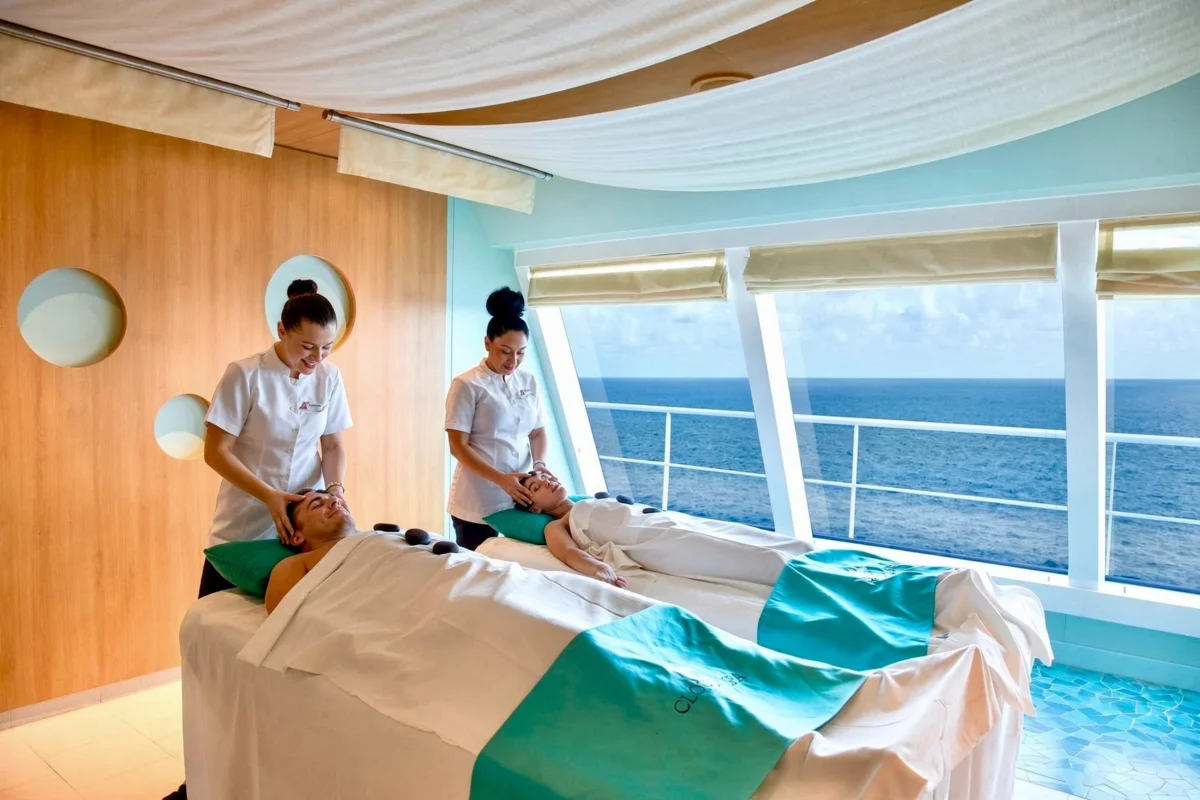
The global tourism and hospitality industry is home to a select few hidden giants—multimillion- and multibillion-dollar enterprises that power the infrastructure of travel without ever capturing mainstream consumer recognition. Among the most striking examples of this phenomenon is OneSpaWorld, a maritime wellness operator poised to cross the milestone of $1 billion in annual revenue. While millions of vacationers frequent the luxury spas, fitness centers, and aesthetic clinics nestled inside modern mega-ships, very few could name the corporation responsible for delivering those services.
Operating behind the scenes of more than 200 cruise vessels, OneSpaWorld manages health, wellness, and beauty operations across nearly every major cruise line globally. Its vast network encompasses fleets belonging to industry titans such as Carnival Corporation, Royal Caribbean Group, Norwegian Cruise Line Holdings, Princess Cruises, Celebrity Cruises, Disney Cruise Line, and Virgin Voyages. Holding an estimated market share exceeding 90 percent in the outsourced maritime spa sector, the company stands approximately 17 times larger than its nearest competitor, positioning itself as an indispensable economic engine within the broader cruise ecosystem.
The scale of its operations is vast. Annually, more than 28 million passengers sail aboard the vessels serviced by the company. Financial metrics underscore its robust market position: during the previous fiscal year, OneSpaWorld generated $961 million in revenue alongside $123 million in adjusted EBITDA (earnings before interest, taxes, depreciation, and amortization). Current corporate projections indicate that the enterprise will comfortably surpass the $1-billion threshold, offering an illuminating window into how financial value is generated, distributed, and retained within the contemporary cruise economy.
The Architecture of Cruise Economics and Vendor Dominance
To understand OneSpaWorld’s trajectory is to understand a fundamental reality of the modern leisure travel sector: controlling the customer relationship yields significantly higher financial returns than merely owning or operating the underlying physical asset. Cruise lines invest billions of dollars in naval architecture, propulsion systems, entertainment complexes, and stateroom design to attract passengers. However, once guests are onboard, a substantial portion of the ancillary revenue is captured through specialized concessionaires and strategic outsourcing partners.
Maritime operators have long recognized that managing specialized, labor-intensive sectors like spa operations, fine dining, and high-end retail requires distinct expertise. By outsourcing these services to established specialists, cruise lines mitigate operational risks, control labor costs, and guarantee a standardized luxury experience across entire fleets. For OneSpaWorld, this business model creates a high barrier to entry. Managing thousands of floating wellness professionals, navigating international maritime labor laws, coordinating global supply chains of specialized cosmetic products, and integrating seamlessly with diverse shipboard management systems requires a level of operational maturity that virtually no competitor can match.
Furthermore, the company’s business model capitalizes on the psychological mindset of vacationers. Consumers at sea are often insulated from standard price comparisons, more willing to indulge in discretionary wellness spending, and receptive to upselling strategies executed by highly trained onboard practitioners. This dynamic ensures high revenue-per-passenger metrics that consistently contribute to the top and bottom lines.
Historical Evolution and Strategic Growth Chronology
The rise of OneSpaWorld to its current preeminence is the result of decades of strategic consolidation, corporate restructuring, and targeted expansion alongside the growth of modern cruising.
The roots of the enterprise trace back to Steiner Leisure Limited, a pioneering maritime spa operator founded decades ago that gradually established a near-monopoly on cruise ship wellness. Over the years, Steiner expanded its portfolio to include land-based resort spas, post-secondary beauty and wellness educational academies, and proprietary product lines.
A pivotal turning point occurred in November 2018, when Steiner Leisure’s maritime division was acquired by Haymaker Acquisition Corp., a publicly traded special purpose acquisition company (SPAC). This transaction led to the formation of OneSpaWorld Holdings Limited as a standalone, publicly traded entity listed on the NASDAQ exchange under the ticker symbol OSW. The transition to a pure-play, publicly traded maritime wellness provider allowed the company to marshal institutional capital, optimize its balance sheet, and focus entirely on expanding its footprint across the rapidly growing global cruise fleet.
Following its public debut, the company faced an unprecedented crisis with the onset of the COVID-19 pandemic in early 2020. The temporary suspension of global cruise operations halted revenue generation entirely, forcing management to implement severe cost-containment measures, secure emergency liquidity, and negotiate collaboratively with cruise line partners to weather the operational hiatus.
As global cruising resumed in 2021 and 2022, OneSpaWorld experienced a rapid rebound. The pent-up demand for leisure travel translated into exceptionally strong onboard spending. Passengers returning to sea prioritized health, wellness, and self-care, accelerating the company’s revenue recovery. Between 2022 and 2024, the enterprise systematically expanded its shipboard footprint, adding new vessels to its portfolio as major cruise lines took delivery of next-generation ships designed with larger, more sophisticated wellness complexes.
Financial Performance and Operational Metrics
An analysis of OneSpaWorld’s financial reports reveals a business model characterized by high asset turnover, scalable labor utilization, and strong cash flow conversion. Unlike traditional hospitality brands that must finance the construction of hotels or resorts, OneSpaWorld operates within spaces leased or contracted from cruise lines. This asset-light approach shields the company from the heavy capital expenditures associated with real estate acquisition and ship construction, while still granting access to high-net-worth consumer demographics.
The company derives its revenue from multiple streams aboard each vessel:
- Core Spa and Salon Services: Massages, facials, acupuncture, body treatments, hair styling, and nail care delivered by certified international professionals.
- Fitness Center Operations: Specialized personal training sessions, yoga and pilates classes, and nutritional consultations.
- Retail Sales: High-end skincare products, cosmetics, and wellness merchandise marketed directly to spa and salon clientele.
- Medispa Treatments: Advanced aesthetic services, including non-surgical skin rejuvenation and specialized dermatological treatments, which have become increasingly popular among affluent cruisers.
Management’s disciplined focus on staff recruitment and retention is a core component of this financial success. OneSpaWorld maintains training academies and international recruiting pipelines to source licensed massage therapists, aestheticians, and fitness professionals from around the world. By maintaining a continuous supply of skilled labor, the company ensures high service standards across all partner fleets, directly influencing guest satisfaction scores for the host cruise lines.
Industry Perspectives and Stakeholder Reactions
While cruise executives typically focus public communications on ship innovations, itinerary offerings, and environmental sustainability initiatives, industry analysts frequently highlight the critical role played by onboard concessionaires in driving profitability.
Financial analysts tracking the leisure sector note that outsourcing models like OneSpaWorld’s provide cruise lines with predictable, high-margin revenue streams through royalty payments and revenue-sharing agreements, all without the administrative burden of direct staff management. In recent investor briefings, equity researchers have praised OneSpaWorld’s pricing power, noting that consumers demonstrate high price inelasticity for luxury wellness services while on vacation.
Representatives for major cruise lines have frequently emphasized the importance of curated onboard experiences in driving high customer satisfaction and repeat booking rates. Modern cruise ships are increasingly designed as floating resorts where wellness infrastructure occupies prime real estate with panoramic ocean views. The integration of high-end spas enhances the perceived value of the cruise vacation, encouraging passengers to book higher-category staterooms and suites.
Broader Implications for the Global Travel Economy
The impending milestone of $1 billion in annual revenue holds broader implications for the travel and tourism industry. It highlights a structural evolution in how specialized services are delivered within large-scale leisure ecosystems.
As global cruise capacity continues to expand—with numerous new vessels scheduled for delivery through the remainder of the decade—the demand for outsourced, premium onboard experiences is projected to grow proportionally. OneSpaWorld’s dominant market position suggests that specialized B2B2C (business-to-business-to-consumer) operators that effectively control specific consumer touchpoints can capture outsized economic value compared to traditional asset owners.
Furthermore, the company’s success underscores the ongoing evolution of traveler preferences toward health, longevity, and holistic wellness. Even while traveling, modern consumers increasingly view wellness not as a luxury add-on, but as an essential component of lifestyle maintenance. By embedding itself deeply into the physical infrastructure of the global cruise fleet, OneSpaWorld has transformed a niche maritime service into a resilient, highly profitable multibillion-dollar enterprise that quietly underpins a major sector of international tourism.



 Anjar Salim
 Dwi Wanna
 Chandra Hamzah
 Gabriela Annisa
 Walid Sujud Trenggono