
 Gabriela Annisa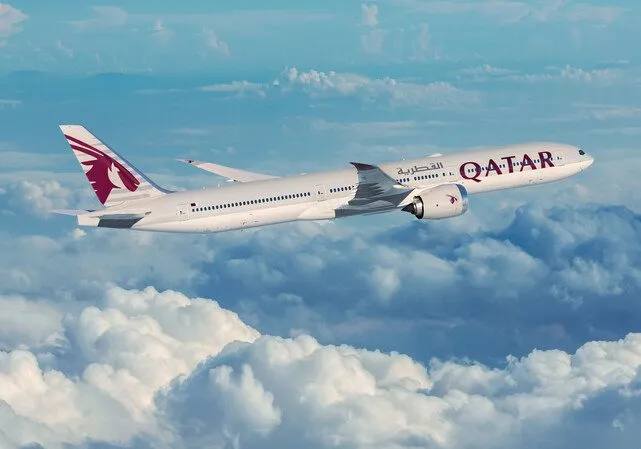
The aviation landscape in the Middle East is currently undergoing a period of significant strategic refinement, characterized by high-profile leadership transitions at Qatar Airways and robust financial reporting from regional low-cost carriers such as Jazeera Airways. As the global travel industry converges on New York City for the upcoming Skift Global Forum, the spotlight turns to the executive priorities of Qatar Airways’ CEO, Hamad Ali Al-Khater, and the broader economic implications of the operational success seen within the Gulf aviation sector. These developments arrive at a critical juncture for the industry, as airlines navigate fluctuating fuel costs, supply chain constraints, and shifting passenger demand patterns in the post-pandemic era.
Strategic Transitions at Qatar Airways
Qatar Airways, long recognized as a cornerstone of the Gulf’s aviation dominance, is currently navigating a pivotal leadership transition. CEO Hamad Ali Al-Khater is set to provide key insights into the carrier’s future at the Skift Global Forum, an appearance that is highly anticipated by market analysts and industry stakeholders. The airline has recently focused on enhancing its fleet efficiency and expanding its global connectivity, even as it manages the complexities of global geopolitical shifts.
The appointment of Al-Khater signals a continuation of the carrier’s aggressive expansionist strategy, which has historically prioritized premium service standards and an expansive, hub-and-spoke network centered at Hamad International Airport in Doha. For observers, the primary question remains how the airline intends to reconcile its legacy of luxury-focused growth with the increasing industry-wide pressure to adopt more sustainable, fuel-efficient operations.
The Skift Global Forum serves as a bellwether for the aviation sector, providing a platform for executives to address how they intend to capture the growing demand for long-haul travel between Asia, Europe, and the Americas. Qatar Airways’ presence at this event is expected to clarify its roadmap for the next decade, particularly regarding its partnerships and the integration of next-generation aircraft into its fleet.
Jazeera Airways and the Low-Cost Carrier Boom
While Qatar Airways maintains its dominance in the premium sector, the second quarter of the current fiscal year has highlighted the surprising agility and profitability of Kuwait’s Jazeera Airways. The airline has successfully captured a significant share of the regional market by positioning itself as an affordable alternative for both business and leisure travelers.
Financial reports for Q2 demonstrate a notable rebound, driven by increased capacity and a rigorous approach to cost management. Jazeera Airways’ success reflects a broader trend in the Middle East: the emergence of low-cost carriers that are no longer merely regional shuttles, but sophisticated operators capable of challenging legacy carriers on shorter routes. This competitive pressure has forced traditional airlines in the region to rethink their pricing structures and, in some cases, explore new service tiers to prevent market share erosion.
The profitability of Jazeera Airways is particularly noteworthy given the inflationary environment. By maintaining a lean operational structure and focusing on high-frequency routes within the Middle East and Central Asia, the airline has insulated itself from some of the volatility that has affected larger, more asset-heavy international carriers.
Chronology of Middle Eastern Aviation Growth
To understand the current state of the industry, one must look at the last two decades of development in the Gulf.
- 2004–2006: The rapid expansion of regional hubs, including Doha and Dubai, begins in earnest, with airlines placing record-breaking orders for wide-body aircraft.
- 2010–2015: The "Golden Era" of Gulf carriers, marked by massive network expansion into secondary cities in Europe and the United States.
- 2020: The global pandemic forces an unprecedented grounding of fleets, leading to a complete re-evaluation of business models.
- 2022–2023: A rapid recovery in passenger numbers leads to a surge in demand, revealing critical supply chain bottlenecks in aircraft production and maintenance.
- 2024: The current phase, characterized by a focus on "smart growth," profitability, and the integration of digital technologies to enhance customer experience and operational efficiency.
Supporting Data and Market Performance
The performance of these airlines is captured within the broader Skift Travel 200 (ST200) index, which tracks the financial health of nearly 200 travel companies with a combined market capitalization exceeding one trillion dollars. The ST200 data suggests that while the broader aviation sector faces headwinds—including rising interest rates and geopolitical uncertainty—Middle Eastern carriers have demonstrated superior resilience compared to their North American and European counterparts.
Data indicates that the year-to-date performance of the airline sector within the ST200 is heavily influenced by the ability of carriers to manage load factors. Airlines that have successfully balanced capacity with the return of business travel have seen the strongest stock performance. For Qatar Airways, a private entity, the focus is less on quarterly stock fluctuations and more on long-term enterprise value and the strengthening of the Qatari brand globally. In contrast, for publicly traded entities like Jazeera Airways, the market has rewarded their clear path to profitability and prudent capital allocation.
The Broader Impact on Global Aviation
The rise of the Gulf’s aviation sector has profound implications for global hubs. Traditional carriers in Europe, such as Lufthansa and Air France-KLM, have long viewed the expansion of Qatar Airways and its peers with a mixture of competition and collaboration. The shift toward more sustainable aviation fuels (SAF) and the implementation of more rigorous environmental, social, and governance (ESG) standards will likely be the next major battleground for these airlines.
Furthermore, the integration of artificial intelligence and advanced data analytics is becoming a differentiator. Airlines that can effectively utilize passenger data to personalize offerings—while maintaining compliance with evolving data privacy regulations—are likely to see a significant uplift in ancillary revenue. The Skift Global Forum will likely highlight these technological advancements as the next frontier for the aviation industry.
Official Perspectives and Industry Reaction
While official statements from Qatar Airways remain focused on service excellence and network stability, analysts suggest that the carrier is positioning itself to be a primary beneficiary of the global shift in travel corridors. The airline’s strategic investments in other carriers—often referred to as a "hub-and-spoke of partnerships"—have allowed it to extend its reach far beyond the capacity of its own fleet.
For Jazeera Airways, the management’s focus remains on maintaining high margins through efficiency. Industry experts note that the success of the Kuwaiti carrier serves as a model for emerging markets, demonstrating that a focused, low-cost strategy can thrive even in regions dominated by well-funded, state-backed legacy competitors.
Future Implications and Conclusions
As the aviation industry moves through the remainder of the year, the themes of efficiency, profitability, and strategic agility will remain paramount. The upcoming discussion at the Skift Global Forum, featuring leadership from Qatar Airways, will provide a vital window into the thinking of one of the world’s most influential airline groups.
The aviation sector in the Middle East is no longer in a phase of unchecked growth; it has entered a phase of maturity. The challenge for airlines like Qatar Airways will be to balance the high expectations of their luxury brand with the realities of an industry that is becoming increasingly cost-sensitive and environmentally conscious. Simultaneously, low-cost carriers like Jazeera Airways must navigate the challenges of scaling their operations without compromising the lean structure that has fueled their recent success.
In summary, the regional aviation landscape is a microcosm of the global travel industry: it is a high-stakes environment where leadership, operational precision, and a clear vision for the future are the primary drivers of success. As stakeholders gather in New York, the insights shared by industry leaders will likely shape the strategic priorities of aviation boards for years to come. The resilience of the sector, as reflected in the ST200, underscores the enduring necessity of air travel in a connected global economy, despite the manifold challenges that periodically test its resolve.




 Anjar Salim
 Dwi Wanna
 Chandra Hamzah
 Susilo Edi Turonggo
 Tatiana Tantri Indah Sari