
 Budi Mulyono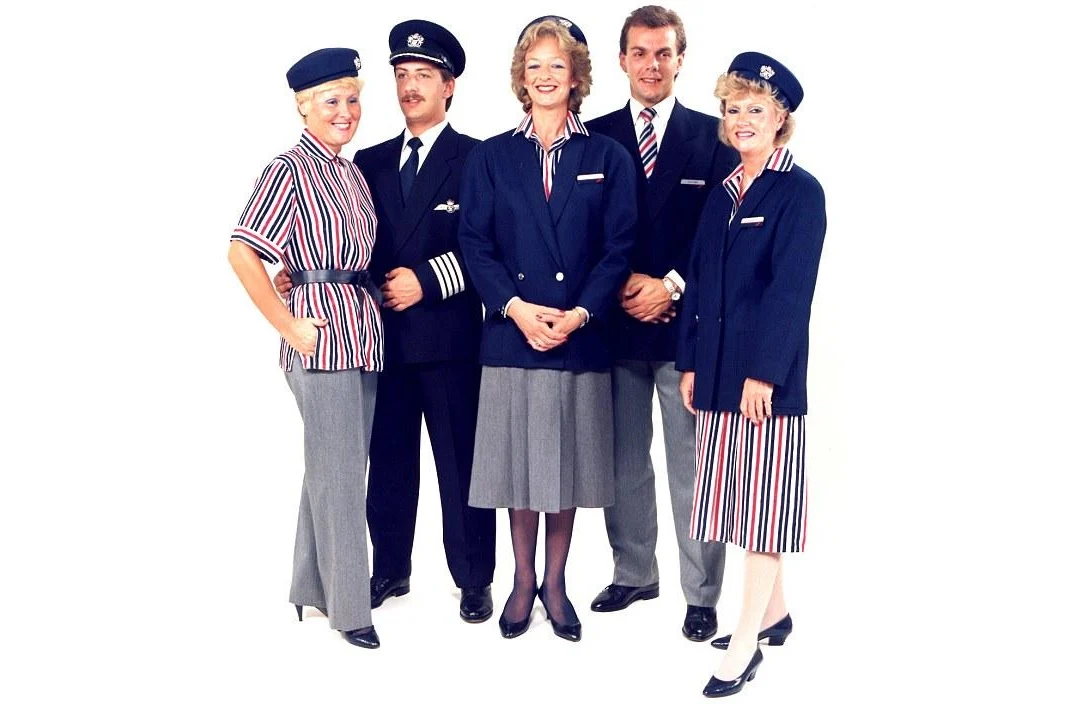
In 1987, the British Broadcasting Corporation (BBC) aired a compelling installment of its acclaimed documentary series, Forty Minutes, which offered an unfiltered look into the rigorous training protocols at the British Airways (BA) Cranebank Training Centre. This documentary, titled "Crew," followed a cohort of trainees as they navigated the transition from civilian life to becoming the frontline representatives of the United Kingdom’s flag carrier. At a time when the aviation industry was undergoing significant structural changes—most notably the privatization of British Airways—the film captured a pivotal moment in the history of commercial flight. The footage provides not only a technical record of 1980s aviation procedures but also a cultural time capsule reflecting the societal norms, corporate branding strategies, and technological limitations of the era.
The Historical Context of British Airways in 1987
The year 1987 was a watershed moment for British Airways. Under the leadership of Chairman Lord King and Deputy Chairman Colin Marshall, the airline was officially privatized in February of that year, transitioning from a state-owned enterprise to a public limited company (PLC). This transition necessitated a massive rebranding effort to position the airline as "The World’s Favourite Airline." The documentary "Crew" highlights the human element of this corporate evolution, focusing on the individuals tasked with delivering the high-standard service that the new brand promised.
At the time, British Airways was operating a diverse fleet, with the Boeing 747-200 serving as the backbone of its long-haul operations. The "Jumbo Jet" represented the pinnacle of luxury and efficiency, and the training at Cranebank was specifically tailored to ensure that crew members could manage the complexities of such a massive aircraft. The Cranebank facility, located near London Heathrow Airport, was the epicenter of this effort, housing full-scale cabin mock-ups, motion simulators, and survival pools designed to replicate emergency scenarios.
The Recruitment and Selection Process
The documentary begins by introducing the diverse backgrounds of the trainees, illustrating the rigorous selection process that preceded their arrival at Cranebank. In the late 1980s, British Airways received tens of thousands of applications annually for cabin crew positions, with an acceptance rate that rivaled elite academic institutions. The candidates were selected based on a combination of physical appearance, communication skills, and psychological resilience.
The film highlights specific trainees to illustrate the demographics of the 1987 intake. Paul Higgins, 21, and Neil Dover, 21, are presented as contrasting figures. Higgins, with an interest in classic Hollywood actresses like Bette Davis, and Dover, a former builder from Durham who expressed concerns about how his peers would perceive his career choice, represent the shifting gender dynamics of the era. During this period, the role of the "steward" was becoming increasingly common, though it remained shadowed by the traditional "air hostess" archetype. The documentary’s commentary on these individuals reflects the 1980s social landscape, where career paths were often viewed through a lens of traditional masculinity and femininity.
The Rigor of Safety and Emergency Procedures (SEP)
While the public often associated cabin crew with meal service and comfort, the "Forty Minutes" documentary emphasizes that the primary responsibility of the crew was—and remains—passenger safety. The training at Cranebank was notoriously grueling, focusing on Safety and Emergency Procedures (SEP). Trainees were required to master the operation of heavy exit doors, the deployment of inflatable slides, and the management of onboard fires.
A significant portion of the training involved the "90-second rule," a global aviation standard requiring that a full aircraft be evacuated in under 90 seconds using only half of the available exits. The documentary captures the intensity of these drills, where trainees were subjected to simulated smoke, darkness, and the frantic noise of a simulated crash. The Boeing 747-200 mock-ups allowed trainees to practice "ditching" procedures—emergency landings on water—complete with life raft inflation and passenger boarding in the Cranebank training pool. These sequences underscore the fact that beneath the polished exterior of the crew lay a foundation of intensive emergency medical and technical training.
Corporate Identity and the Roland Klein Uniform
One of the more scrutinized aspects of the documentary is the focus on the British Airways uniform. In 1985, two years prior to the film, BA had introduced a new uniform designed by Roland Klein. The attire was intended to project an image of professional authority and British tradition. However, the BBC narrator’s description of the female uniforms as having a "Prison Wardress touch" highlights the tension between 1980s "power dressing" and the desired elegance of the airline industry.
The grooming standards of 1987 were exacting. Trainees were instructed on everything from the specific shade of lipstick permitted to the way hair should be pinned back to avoid interference with oxygen masks. These segments of the film demonstrate the "total brand" approach adopted by Colin Marshall, where every detail of the crew’s appearance was calibrated to instill confidence in the passengers and maintain a sense of British discipline.
Technological Evolution and the Boeing 747-200
For aviation enthusiasts, the documentary serves as a rare visual record of the Boeing 747-200’s interior and operational environment. Unlike modern aircraft equipped with digital displays and fly-by-wire technology, the 747-200 was a "classic" jet with analog gauges and a three-person flight deck crew, including a flight engineer.
The cabin crew training reflected the technology of the time. Galley equipment was manual, and the communication systems between the cabin and the cockpit were primitive compared to today’s integrated digital networks. The film shows trainees learning the "silver service" techniques required for First Class passengers, emphasizing the era’s commitment to high-end hospitality in the "Upper Deck" lounges. This juxtaposition of high-stakes safety drills and meticulous meal service illustrates the dual nature of the cabin crew role during the golden age of the Jumbo Jet.
The Legacy of Cranebank and the Shift to Vanguard House
The Cranebank Training Centre, which served as the backdrop for the documentary, remained the heart of British Airways training for decades. However, as the airline industry evolved and the fleet transitioned to more modern aircraft like the Boeing 777 and 787 Dreamliner, the aging facilities at Cranebank became obsolete.
In 2014, British Airways began moving its training operations to the state-of-the-art Global Learning Academy (GLA) at Vanguard House, located near Hatton Cross. The Cranebank site was eventually closed and became a destination for urban explorers before its eventual redevelopment. Recent footage from explorers has shown that when the facility was vacated, much of the 1980s-era equipment, including seat rows and training manuals, was left behind, frozen in time. This abandonment marks the end of an era for the thousands of crew members who began their careers within its walls, including those featured in the 1987 BBC film.
Broader Implications for Modern Aviation Training
Reflecting on the 1987 documentary allows for an analysis of how much—and how little—has changed in the world of aviation. While the social commentary and fashion of the 1980s may seem dated, the core principles of cabin crew training remain remarkably consistent. The emphasis on psychological readiness, the rigor of safety drills, and the necessity of maintaining a calm demeanor under pressure are still the pillars of the profession.
However, modern training has integrated several advancements that were unavailable in 1987:
- Crew Resource Management (CRM): While nascent in the late 80s, CRM is now a cornerstone of training, focusing on the communication and interpersonal dynamics between the cockpit and the cabin to prevent human error.
- Digital Integration: Modern trainees use tablets and digital simulators that can replicate thousands of specific malfunction scenarios with high fidelity.
- Mental Health Awareness: Contemporary training programs place a much greater emphasis on the mental well-being of the crew and the psychological management of unruly or distressed passengers.
Conclusion: A Record of Excellence and Evolution
The BBC’s "Forty Minutes: Crew" stands as a significant historical document that captures British Airways at its most transformative stage. It demystifies the profession of the cabin crew, showing that the "glamour" of the job was earned through sweat, study, and the mastery of life-saving skills. For the trainees like Paul and Neil, the program was a gateway to a global career; for the airline, it was a showcase of the standards that would make it a dominant force in the post-privatization era.
As the aviation industry looks toward a future of sustainable fuels and autonomous systems, the 1987 documentary serves as a reminder of the human element that remains central to flight. The Boeing 747s may have been retired, and Cranebank may be a relic of the past, but the legacy of excellence documented by the BBC continues to inform the training of the next generation of aviators. The film remains a vital piece of media for understanding the intersection of corporate ambition, technical skill, and the enduring human desire to take to the skies.




 Anjar Salim
 Chandra Hamzah
 Tatiana Tantri Indah Sari

