
 Budi Mulyono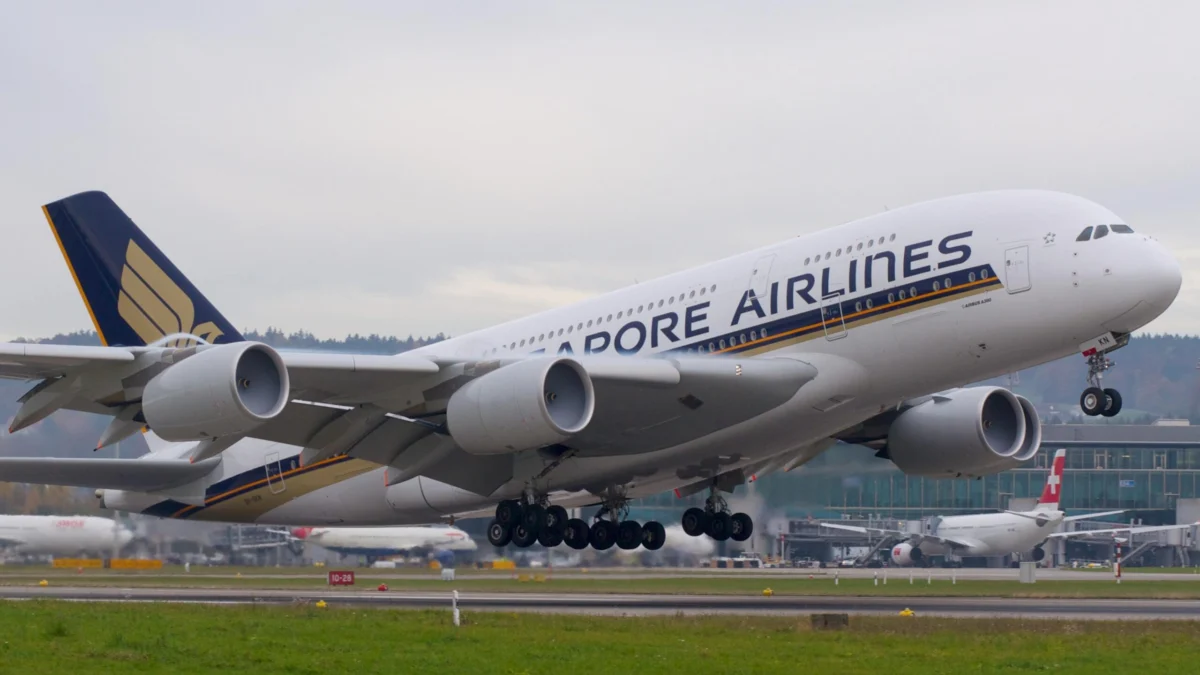
Singapore Airlines (SIA) has officially entered into a strategic agreement with SpaceX’s Starlink to integrate high-speed, low-latency satellite internet across a significant portion of its long-haul fleet, marking a major shift in the carrier’s digital experience strategy. Starting in the first quarter of 2027, the airline will begin the progressive introduction of Starlink’s Low Earth Orbit (LEO) satellite-based broadband service on its Airbus A350-900 long-haul and ultra-long-range (ULR) variants, as well as its flagship Airbus A380 double-decker aircraft. This partnership positions Singapore Airlines among a growing cohort of global tier-one carriers seeking to bridge the gap between terrestrial fiber-optic speeds and the traditionally limited bandwidth available at 35,000 feet.
The Evolution of In-Flight Connectivity and the Shift to LEO Technology
For decades, in-flight connectivity (IFC) has been a point of friction for international travelers. Most legacy systems rely on Geostationary (GEO) satellites, which orbit the Earth at an altitude of approximately 35,786 kilometers. Due to the vast distance the signal must travel from the ground to the satellite and then to the aircraft, GEO systems are plagued by high latency—often exceeding 600 milliseconds—and limited bandwidth that struggles to support data-intensive tasks.
In contrast, Starlink’s constellation operates in Low Earth Orbit, roughly 550 kilometers above the planet’s surface. This proximity allows for a drastic reduction in latency, bringing it down to sub-100 milliseconds, which is comparable to home broadband services. By utilizing a network of over 10,000 satellites, Starlink can deliver a "multi-gigabit" experience to an aircraft. The hardware involved, known as the Starlink Aero Terminal, is capable of supporting speeds of up to 1 Gbps per antenna. In practical application for passengers, this translates to download speeds frequently exceeding 300 Mbps, enabling activities that were previously impossible or unreliable on flights, such as 4K video streaming, online gaming, live cloud-based collaboration, and the seamless transfer of large corporate files.
Chronology of the Starlink Aviation Rollout
The adoption of Starlink within the aviation sector has moved with remarkable velocity since the service was first teased for commercial use. The timeline of its integration highlights a broader industry trend toward ubiquitous high-speed access:
- 2022: JSX, a semi-private jet carrier, became the first to sign on and implement Starlink, proving the viability of the Aero Terminal on smaller airframes.
- 2023: Hawaiian Airlines followed suit, becoming the first major US carrier to announce plans for free Starlink Wi-Fi across its transpacific fleet.
- Early 2024: Major international players began to consolidate around the technology. Air Baltic and Qatar Airways announced massive implementation plans, with Qatar Airways aiming to provide the service entirely free of charge.
- Late 2024: United Airlines made industry headlines by announcing a fleet-wide Starlink rollout, the largest of its kind.
- November 2024: Singapore Airlines officially joins the alliance, setting a 2027 target for its most prestigious long-haul aircraft.
The 2027 start date for Singapore Airlines reflects the complexities of the aviation certification process. Each aircraft type requires a Supplemental Type Certificate (STC) to permit the installation of the Starlink antenna and internal hardware. Given SIA’s rigorous safety and quality standards, the three-year lead time accounts for the engineering, testing, and phased retrofitting of dozens of wide-body aircraft without disrupting the airline’s dense flight schedule.
Detailed Implementation and Fleet Specifics
The initial rollout focuses on the "backbone" of Singapore Airlines’ long-haul operations. The Airbus A350-900, of which SIA is the world’s largest operator, will be the primary recipient. This includes the standard long-haul configuration used for European and Australian routes, as well as the specialized Ultra-Long-Range (ULR) variant that services the world’s longest commercial flights between Singapore and New York (JFK and Newark).
The inclusion of the Airbus A380 is also significant. As many airlines have retired their "Superjumbos," Singapore Airlines remains committed to the A380 for high-capacity hubs like London, Sydney, and Delhi. Providing Starlink on the A380 ensures that even with nearly 500 passengers on board simultaneously, the bandwidth will remain sufficient to prevent the "slowdown" effect often seen on large aircraft using older GEO-based systems.
Notably absent from the current announcement are the airline’s Boeing aircraft, including the Boeing 787-10 Dreamliners and the Boeing 777-300ERs. Industry analysts suggest this may be due to existing contractual obligations with current providers like Panasonic Avionics and SITA, or pending certification timelines for Boeing airframes. Furthermore, the regional configuration of the A350-900, typically used for medium-haul flights within Asia, is not included in this initial phase, suggesting SIA is prioritizing its most premium, long-duration routes where connectivity is a higher-value proposition for business travelers.

Impact on Passenger Experience and Loyalty Programs
Singapore Airlines has already established itself as a leader in the "Free Wi-Fi" movement. In mid-2023, the carrier expanded its complimentary Wi-Fi offering to include all KrisFlyer members, regardless of cabin class. However, the current experience is often throttled by the limitations of existing satellite technology.
Under the Starlink agreement, the "unlimited complimentary" model will remain in place but will be significantly enhanced. Passengers in Suites, First Class, and Business Class, along with PPS Club members, will continue to receive priority access. Crucially, KrisFlyer members in Premium Economy and Economy Class will also benefit from the upgraded speeds.
Mr. Yeoh Phee Teik, Senior Vice President of Customer Experience at Singapore Airlines, emphasized that the move is a response to the changing definition of travel. "Fast, seamless connectivity is, today, an essential part of the travel experience," Yeoh stated. He noted that while SIA already offers a comprehensive Wi-Fi product, Starlink represents a "next-generation" leap that ensures passengers remain productive and entertained from take-off to landing.
Technical Specifications and Operational Advantages
From an operational standpoint, the transition to Starlink offers several advantages over traditional systems:
- Global Coverage: Starlink’s LEO constellation provides coverage even over polar regions and remote oceans where GEO satellite beams are often weak or non-existent. This is vital for SIA’s ULR routes to North America.
- Redundancy: With thousands of satellites in orbit, the loss of a single satellite does not result in a service outage for the aircraft, as the Aero Terminal can quickly hand off the signal to the next available satellite.
- Hardware Efficiency: The Starlink Aero Terminal features an electronically steered phased-array antenna. Unlike older mechanical antennas, it has no moving parts, reducing maintenance requirements and improving aerodynamic efficiency.
- Scalability: As SpaceX continues to launch more "Version 2" satellites with direct-to-cell and increased backhaul capabilities, the available bandwidth for aircraft is expected to grow over time without requiring new hardware on the plane.
Broader Industry Implications and Market Analysis
The entry of Singapore Airlines into the Starlink ecosystem is a clear signal to the rest of the aviation industry that high-speed internet is moving from a "luxury add-on" to a "standard utility." For decades, airlines used Wi-Fi as a secondary revenue stream, charging exorbitant fees for small data packages. However, the "Starlink Effect" is forcing a shift toward a "freemium" or entirely free model.
Competitively, this move places pressure on other major Asian carriers. Airlines like Cathay Pacific, Japan Airlines, and ANA (All Nippon Airways) will likely need to re-evaluate their IFC roadmaps to remain competitive with SIA’s 2027 offering. In the Middle East, the competition is already heating up, with Qatar Airways and Emirates both moving toward high-capacity solutions to cater to the tech-savvy "global nomad" demographic.
Furthermore, this partnership highlights the growing influence of Elon Musk’s SpaceX in the aerospace sector beyond rocket launches. By capturing the IFC market of the world’s most awarded airlines, Starlink is effectively sidelining traditional telecommunications giants that have dominated the aviation space for 20 years.
Conclusion: A New Standard for the Skies
The integration of Starlink into the Singapore Airlines fleet represents more than just a technical upgrade; it is a realignment of the passenger experience to meet the demands of a hyper-connected world. By 2027, the "digital dead zone" of a 19-hour flight from Singapore to New York will effectively cease to exist.
While the rollout is phased and currently limited to the Airbus fleet, the implications are clear: the future of aviation is low-latency and high-speed. As SIA prepares for the 2027 launch, the industry will be watching closely to see if the Boeing fleet follows suit and how the airline manages the massive data demands of a fully connected A380. For the traveler, the message is simple: the days of struggling to load a basic webpage at 30,000 feet are coming to an end, replaced by a sky that is just as connected as the ground.




 Anjar Salim
 Chandra Hamzah
 Tatiana Tantri Indah Sari
 Lukman Taruna Persada Ramadan
