
 Anjar Salim
The editorial direction of Outside magazine’s Summer 2026 issue signals a significant shift in the narrative of American outdoor recreation, focusing on the systemic reclamation of natural spaces by marginalized communities. Led by Editorial Director Kevin Sintumuang, the publication explores a multi-faceted approach to inclusivity, ranging from the restoration of Indigenous land stewardship to the revival of Black-owned coastal resorts. This editorial shift arrives at a pivotal moment for the outdoor industry, which has historically struggled with a lack of diversity and equitable access. By centering the issue on the theme of "widening the circle," the magazine examines the cultural and social barriers that have historically defined the American wilderness and the grassroots efforts currently dismantling those barriers.
The Philosophical Framework of Inclusivity: José Andrés and the Circle
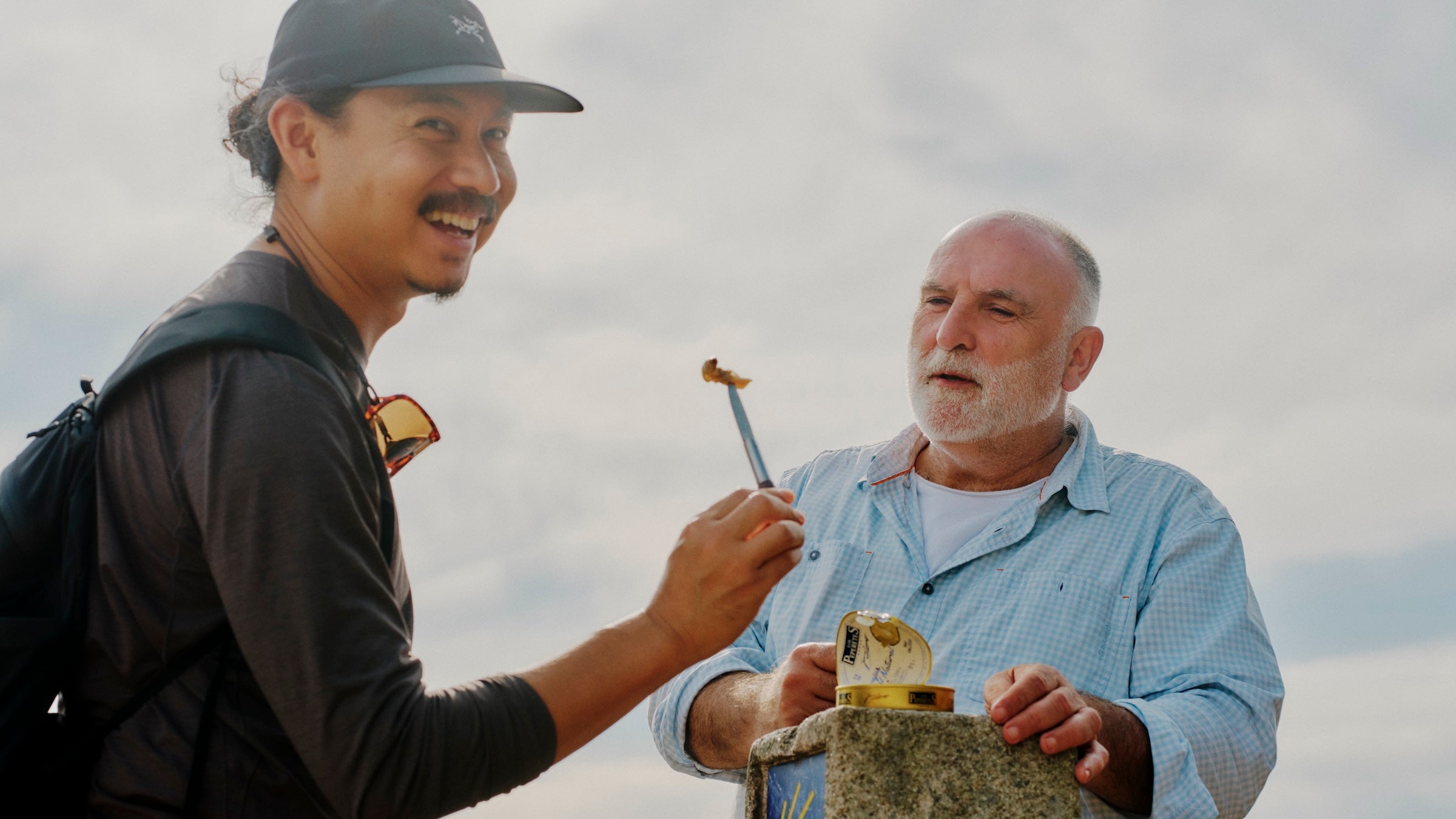
At the heart of the Summer 2026 issue is a profile of world-renowned chef and humanitarian José Andrés. Known primarily for his work with World Central Kitchen (WCK), which has served over 500 million meals in global disaster zones, Andrés serves as the cover subject and a metaphorical anchor for the issue’s theme. During a trek along the Camino de Santiago in Spain with his wife, Patricia, Andrés shared a theological interpretation of hell found in a cathedral carving in Santiago de Compostela. In this depiction, hell is defined not by physical pain, but by social isolation: a man suspended and unable to accept food offered by others.
This narrative serves as a catalyst for the issue’s exploration of "the circle." In a journalistic context, this metaphor addresses the systemic exclusion of certain demographics from the benefits of the outdoors. The profile of Andrés emphasizes that his humanitarian work and his personal outdoor pursuits are intrinsically linked by the act of "handing things to other people." This philosophy is applied throughout the issue to evaluate who has been left outside the circle of American conservation and recreation and what is required to bring them back in.
Reclaiming the Coast: The Legacy of Black Beach Resorts
One of the primary investigative pieces in the issue, reported by Gloria Liu, delves into the history and resurgence of Black beach resorts. During the Jim Crow era, African Americans were legally barred from the vast majority of public beaches in the United States. In response, Black entrepreneurs established their own coastal sanctuaries, such as the original Ebony Beach Club. These spaces were more than mere vacation spots; they were essential hubs for community building and safety in a segregated society.
The Summer 2026 reportage connects this historical context to contemporary movements. Organizations and surfers today are working to revive these spaces, not just as nostalgic landmarks, but as active sites of reclamation. Data from the Outdoor Industry Association (OIA) has historically shown a "nature gap," where communities of color have significantly less access to nearby parks and coastal areas. The efforts to revive the Ebony Beach Club and similar initiatives represent a direct challenge to the "green ceiling" and the historical privatization or segregation of the American coastline.
Indigenous Stewardship and the Path to Ocmulgee Mounds National Park
The issue provides an in-depth look at the legislative and cultural journey of Ocmulgee Mounds in Georgia. Reported by Sheeka Sanahori, the story details the site’s significance as an ancient capital of the Muscogee (Creek) Nation. The Muscogee people were forcibly removed from this land two centuries ago during the Trail of Tears, yet the site remains a sacred ancestral home.
Currently, there is a bipartisan effort to designate Ocmulgee Mounds as the 64th National Park in the United States. If successful, it would represent a landmark model of co-stewardship between the federal government and the Muscogee Nation. This movement follows a growing trend in the Department of the Interior, under the leadership of Secretary Deb Haaland, to integrate Indigenous knowledge and management into the National Park System. The article analyzes the implications of such a designation, noting that it would serve as a formal recognition of the "stewardship" that existed long before the concept of national parks was codified in American law.
Food Sovereignty and Sustainability in Hawai‘i
The Summer 2026 issue also features a dispatch from Martha Cheng regarding the urgent state of food security in Hawai‘i. Despite its fertile volcanic soil and favorable climate, the island chain currently imports approximately 90% of its food. This reliance on long-distance supply chains makes the state uniquely vulnerable to climate-related disruptions and economic volatility.
The report follows a new generation of farmers and fishpond keepers who are looking toward ancestral Hawaiian techniques to build a self-sustaining food system. By restoring traditional lo‘i (taro patches) and loko i‘a (ancient fishponds), these practitioners are aiming to decouple Hawai‘i’s food supply from global shipping lanes. This movement is framed not just as an agricultural shift, but as a form of cultural sovereignty—reclaiming the land’s productivity to serve the local population rather than the tourism or export industries.
Rectifying the Historical Record: The Journey of Moncacht-Apé
In a piece described as a "historical detective story," Mike Bezemek investigates the life of Moncacht-Apé, a Yazoo explorer who is believed to have crossed the North American continent a full century before the Lewis and Clark expedition. While Meriwether Lewis and William Clark are staples of American education, Moncacht-Apé’s journey has remained largely relegated to the margins of history.
The inclusion of this story in the Summer 2026 issue serves as a critique of how American history has been curated to prioritize European discovery over Indigenous exploration. By analyzing the primary accounts of Moncacht-Apé’s travels, the article seeks to restore his place in the chronology of continental exploration. This effort to "help history catch up" is a central component of the issue’s broader goal: ensuring that the contributions of those "shut out" by the historical record are finally acknowledged.
Technical Innovations and the Scout Report
Complementing the long-form narratives, the magazine’s "Scout Report" provides a technical look at the equipment and vehicles shaping the modern outdoor experience. The Summer 2026 issue highlights two notable developments: the Jeep Anvil 715 Concept and the New Balance 1080v15.
The Jeep Anvil 715 Concept
The Anvil 715 is a retro-inspired concept vehicle that debuted at the Easter Jeep Safari in Moab. It draws aesthetic cues from Jeep’s military trucks of the 1960s, featuring a boxy front fascia and a raised roof with integrated skylights. Beyond its visual appeal, the vehicle is a powerhouse of off-road engineering, equipped with:

- A 470-horsepower V-8 engine.
- 37-inch all-terrain tires.
- Heavy-duty axles designed for extreme inclines.
The report suggests that while the Anvil 715 remains a concept, its features point toward a future for the production Wrangler that prioritizes both "big-sky" visibility and high-torque performance for overlanding expeditions.
The New Balance 1080v15
In the realm of athletic performance, the New Balance 1080v15 represents a significant evolution of a "normcore" classic. The v15 model introduces nitrogen-infused supercritical foam, a technology that reduces the shoe’s weight by approximately one ounce while increasing energy return.
- Performance Analysis: The supercritical foam provides a more "springy" feel, suitable for tempo training, while maintaining the high-stack cushioning necessary for long-distance recovery runs.
- Context: This update reflects a broader industry trend toward "super-trainers"—shoes that utilize racing-grade foam in a durable package intended for daily high-mileage use.
Broader Impact and Industry Implications
The Summer 2026 issue of Outside arrives as the United States approaches its 250th anniversary. The "America’s Next 250" package within the magazine serves as a manifesto for the next quarter-millennium of American outdoor life. The editorial stance suggests that the future of the outdoors is not merely about conservation of land, but about the democratization of the experience.
Market data indicates that the "New Outdoor" demographic—younger, more urban, and more ethnically diverse—is the fastest-growing segment of the market. However, this demographic often faces higher barriers to entry, including lack of representation in media and the high cost of specialized gear. By highlighting Black surfers, Indigenous stewards, and Yazoo explorers, the magazine is positioning itself to lead a conversation that is as much about social justice as it is about adventure.
The overarching message of the issue, as summarized by Sintumuang, is a call to action for the current outdoor community. It asks readers to look at their own "trails, beaches, and parks" to identify who is missing and to take active steps to "pass the empanada"—a metaphor for sharing the resources, knowledge, and space that define the American outdoor tradition. As the industry looks toward the next 250 years, the Summer 2026 issue of Outside sets a benchmark for how outdoor media can evolve from a focus on individual achievement to a focus on communal equity and historical truth.

 Chandra Hamzah
 Gabriela Annisa
 Tatiana Tantri Indah Sari
 Hendra Ismail
 Walid Sujud Trenggono
 Budi Mulyono