
 Anjar Salim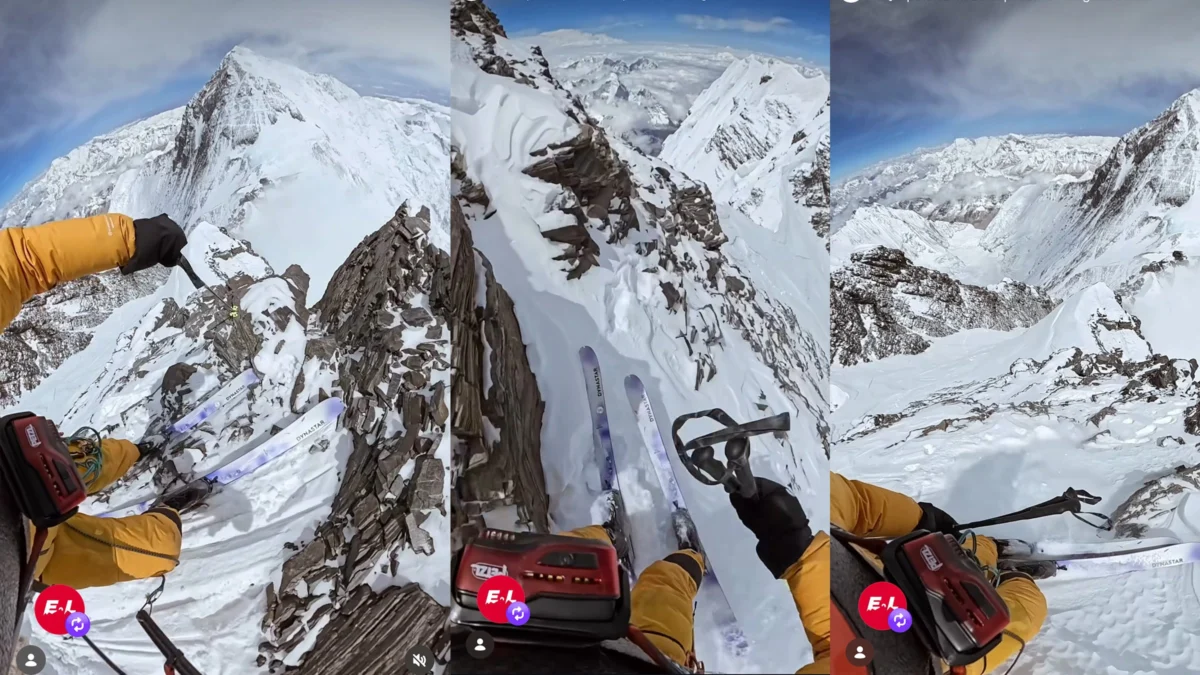
The landscape of high-altitude mountaineering is frequently defined by high-budget expeditions, corporate sponsorships, and a relentless drive for social media visibility. However, in May 2024, one of the most significant athletic achievements on the Himalayan massif was executed by Bartek Ziemski, a 37-year-old Polish software engineer who currently lives in a van and remains largely absent from the digital limelight. Ziemski completed a continuous ski descent of Lhotse, the world’s fourth-highest mountain at 8,516 meters (27,940 feet), traveling from the summit directly to Base Camp without the use of supplemental oxygen. This feat, characterized by its technical difficulty and physical demand, has resonated through the climbing community as a return to the purist roots of the sport.
While many climbers utilize the infrastructure of Everest and Lhotse to garner personal branding opportunities, Ziemski’s approach was notably understated. Clad in duct-taped ski pants and sporting long, blond-streaked hair, he arrived at Mount Everest Base Camp on May 12, appearing more like a casual hiker than an elite athlete who had just survived one of the most dangerous ski runs on the planet. His arrival followed a grueling push through the Khumbu Icefall and a descent of the steep, icy Lhotse Face—a section of the mountain that has claimed numerous lives and tested the limits of the world’s best mountaineers.
Technical Overview of the Lhotse Ski Descent
Lhotse is connected to Mount Everest via the South Col. The standard climbing route follows the Everest path through the Khumbu Icefall and the Western Cwm before diverging at the Lhotse Face. The specific line Ziemski descended is considered one of the "holy grails" of ski mountaineering. It involves navigating a 50-degree couloir, a narrow gully of snow and ice that requires precise, high-stakes turns where a single mistake can result in a fatal fall.
Ziemski is not the first to ski Lhotse, but his style set a new benchmark for the peak. In 2018, the renowned American ski mountaineers Hilaree Nelson and Jim Morrison completed the first full ski descent of the "Dream Line," the couloir stretching from the summit. Their expedition was a massive undertaking, supported by a large team of high-altitude Sherpas and a professional film crew. They utilized supplemental oxygen and chose to rest at Camp II (approximately 21,000 feet) before walking the remainder of the way through the Khumbu Icefall.
In contrast, Ziemski’s descent was a continuous effort from the 8,516-meter summit down to the 5,364-meter Base Camp. By eschewing supplemental oxygen, Ziemski subjected his body to extreme hypoxia, where the air contains only about one-third of the oxygen available at sea level. At these altitudes, even basic movement is exhausting; skiing requires an immense level of cardiovascular fitness and mental clarity to navigate technical terrain while the brain is deprived of oxygen.
Chronology of the Expedition and the Lhotse Summit Push
Ziemski’s journey began in early April 2024. Adhering to a strategy of early-season acclimatization, he first climbed the 6,476-meter (21,247-foot) Mera Peak. This allowed him to build the necessary red blood cell count to function at higher elevations without the immediate need for bottled oxygen. He then trekked to Everest Base Camp, arriving well ahead of the primary "summit window" in mid-to-late May.
The 2024 season was marked by significant logistical hurdles. A massive serac—a large block of glacial ice—within the Khumbu Icefall posed a severe threat to the climbing route, delaying the work of the "Icefall Doctors" (the Sherpas responsible for fixing ropes and ladders). Ziemski, eager to summit before the slopes became crowded with commercial clients, joined the rope-fixing team from the outfitter Imagine Nepal to help scout a safe passage around the obstruction. This participation allowed him to double as a scout for his own eventual ski descent through the shifting labyrinth of the glacier.
On May 11, Ziemski reached Camp IV, situated at approximately 7,925 meters (26,000 feet). After a brief rest, he began his summit push at 1:00 AM on May 12. Because he was the first climber of the season to attempt the summit, there was no established trail. Ziemski was forced to "break trail" through a mix of hard-packed wind crust and deep, unconsolidated snow, a task that is significantly more taxing than following a pre-trodden path.
He reached the summit in the early hours of the morning and immediately prepared for the descent. The initial meters off the summit were treacherous, with exposed rock requiring careful "side-stepping" on skis before he could enter the snow-filled couloir. From there, he navigated the Lhotse Face, a 1,125-meter (3,700-foot) wall of glacial blue ice and snow.
Historical Context and the Polish Mountaineering Tradition
Ziemski’s feat is a continuation of a storied tradition known as the "Polish School" of Himalayan climbing. During the 1980s, Polish climbers like Jerzy Kukuczka and Krzysztof Wielicki dominated the high-altitude scene, often completing first winter ascents of 8,000-meter peaks with limited resources and homemade equipment. This era earned them the nickname "Ice Warriors."
The Polish approach has historically emphasized suffering, endurance, and technical difficulty over the commercial comforts associated with modern Everest expeditions. Ziemski, who has now completed eight ski descents of 8,000-meter peaks, embodies this minimalist philosophy. His preference for anonymity and his "van-life" existence reflect a counter-culture movement within the sport that prioritizes the intrinsic value of the adventure over the extrinsic rewards of fame.
The Lhotse Face itself holds a special place in skiing history. In 1970, Japanese skier Yuichiro Miura attempted to ski down the face using a parachute to slow his speed. His attempt, which ended in a massive fall that he miraculously survived, was documented in the film The Man Who Skied Down Everest, which won an Academy Award for Best Documentary Feature. Where Miura’s descent was a chaotic battle against gravity, Ziemski’s was a display of controlled, modern technical skiing.
The Physical and Psychological Toll of High-Altitude Skiing
Skiing at 8,000 meters is an entirely different discipline than resort skiing or even standard backcountry touring. The primary challenge is the lack of oxygen. Without supplemental O2, the heart rate skyrockets, and the muscles fatigue almost instantly. Ziemski noted that he had to stop several times during the descent simply to catch his breath, despite his elite level of conditioning.
"The ski down was exhausting," Ziemski told reporters. "Because it’s a high mountain, I needed to stop a few times on the way down."
Beyond the physical exertion, the psychological pressure is immense. The Khumbu Icefall, which Ziemski skied through to reach Base Camp, is a moving river of ice that can collapse at any moment. Navigating this section on skis involves jumping over crevasses and crossing aluminum ladders—tasks that are inherently dangerous with skis strapped to one’s feet. Ziemski’s ability to maintain focus through these final miles, after having already summited and skied the Lhotse Face, is what distinguishes this achievement as a world-class feat of endurance.
Broader Implications for the Mountaineering Industry
Ziemski’s presence at Base Camp highlighted the stark contrast between different types of modern climbers. As he skied into camp, he was met by hundreds of climbers, many of whom were there as part of luxury commercial expeditions. The Everest "city," as Ziemski described it, felt far removed from the remote wilderness experiences he found on peaks like Gasherbrum II in Pakistan.
"Even on Lhotse, I was seeing hundreds of Sherpas going to the South Col with supplies, and it didn’t feel remote," Ziemski observed. "Here you feel like you’re in a city, almost."
This observation touches on a growing debate within the mountaineering community regarding the "Disneyfication" of Everest. While commercialization has made the mountain more accessible, it has also led to overcrowding and a reliance on heavy infrastructure. Ziemski’s success proves that it is still possible to execute high-level, purist objectives amidst the bustle of a commercial season, provided the athlete has the skill and the willingness to operate independently.
Future Outlook: The Everest Ambition
Despite his desire for solitude and "real adventure," Ziemski’s time in the Himalayas for the 2024 season did not end with Lhotse. During his post-descent interviews, he revealed that he had also secured a permit for Mount Everest.
The prospect of an oxygen-free ski descent of Everest remains one of the ultimate challenges in the sport. Only a handful of people have ever attempted to ski the world’s highest peak, and even fewer have done so without supplemental oxygen. Ziemski’s successful "warm-up" on Lhotse suggests that he is currently one of the few individuals on Earth with the physiological capacity and technical skill to attempt such a feat.
As the mountaineering world watches the 2024 season unfold, Bartek Ziemski stands as a reminder of the power of individual grit. In an era of influencers and highly produced mountain media, the "unemployed engineer in a van" has asserted that the most impressive stories are often those told through actions rather than posts. Whether he succeeds on Everest or returns to his van in Poland, his descent of Lhotse has already secured his place in the annals of modern ski mountaineering history.




 Chandra Hamzah
 Tatiana Tantri Indah Sari
 Budi Mulyono
 Lukman Taruna Persada Ramadan