
 Gabriela Annisa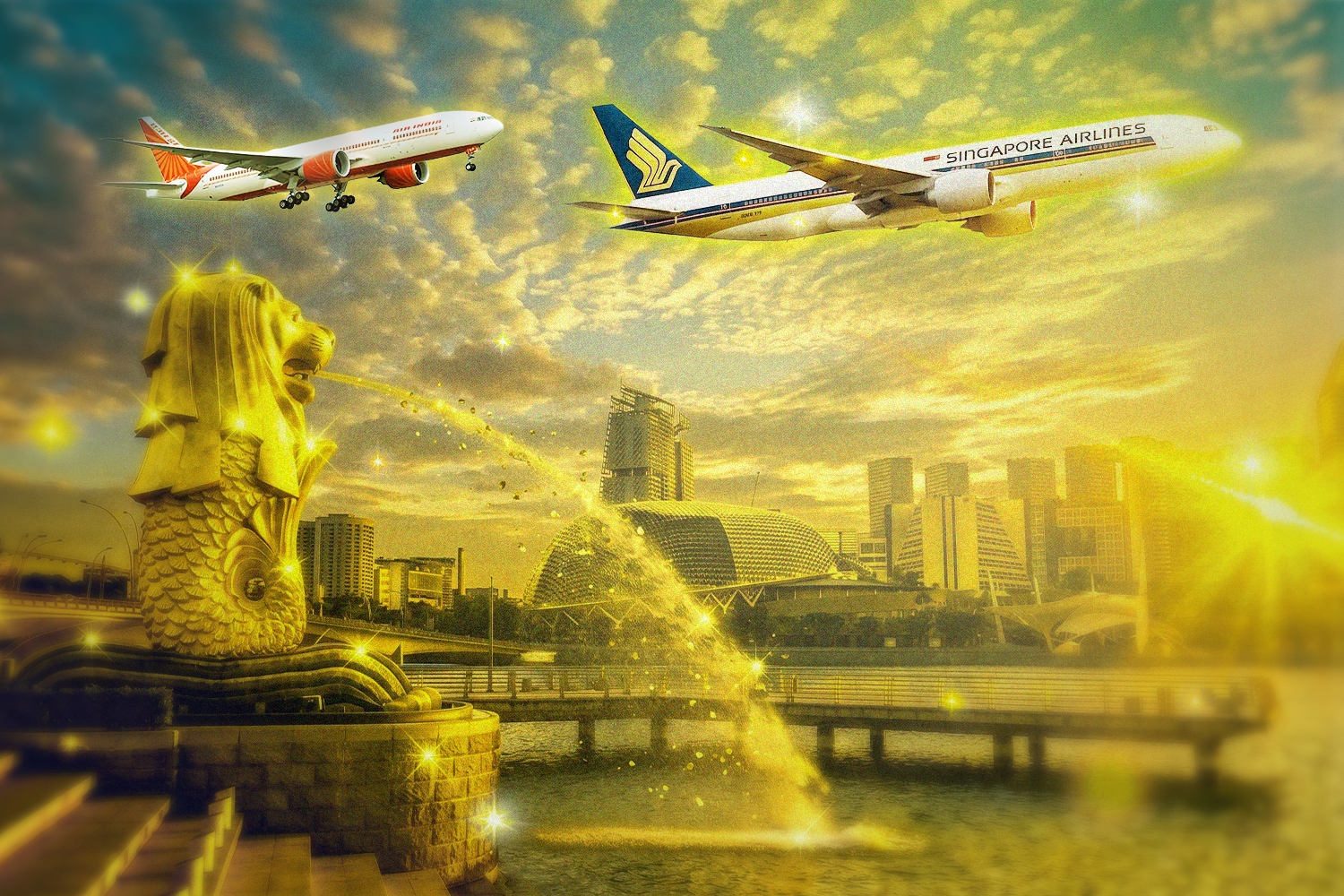
Singapore Airlines (SIA), long regarded as a benchmark for excellence in global aviation, finds itself embroiled in what many industry observers are calling its most challenging strategic investment yet: a 25% stake in the newly privatized Air India. This significant commitment, made amidst a booming recovery for SIA itself, draws stark parallels to a regrettable pattern of past ventures into struggling carriers, including Ansett Australia, Virgin Australia, and Air New Zealand, which ultimately resulted in substantial financial setbacks for the Singaporean flag carrier. The current juxtaposition of SIA’s robust financial performance, driven by soaring premium demand and a strategic rerouting of international traffic through its Changi hub, against Air India’s persistent struggle with legacy issues and significant financial hemorrhaging, raises critical questions about the viability and wisdom of this latest high-stakes gamble. The unfolding narrative presents a profound test of SIA’s long-term strategic vision and its ability to influence a massive, complex transformation in a challenging market.
The Strategic Imperative: Diving into India
Singapore Airlines’ decision to acquire a 25.1% stake in Air India, following the airline’s acquisition by the Tata Group in January 2022, was framed as a strategic move to deepen its presence in India, one of the world’s fastest-growing aviation markets. The investment, valued at approximately S$360 million (US$266 million at the time of announcement), was part of a broader agreement that would see Vistara, a joint venture between Tata Sons and SIA (51:49 ownership respectively), merge with Air India. This merger aims to consolidate the full-service international and domestic operations under the unified Air India brand, creating a formidable market player with an expanded network and fleet.
The rationale behind SIA’s investment is multifaceted. India’s burgeoning middle class, coupled with a vast diaspora and increasing business travel, presents an unparalleled growth opportunity. Analysts predict India will become the third-largest aviation market globally by 2024. For SIA, a strong presence in India offers the potential to feed passengers into its extensive global network via its Changi hub, strengthening its position against formidable competitors from the Middle East and other Asian carriers. The Vistara joint venture, established in 2013, had already demonstrated the potential for a premium offering in the Indian market, and integrating it into a revitalized Air India was seen as a logical progression to unlock greater scale and synergy.
A Recurring Theme: SIA’s History of Troubled Investments
While the potential rewards in India are substantial, SIA’s historical record with investments in struggling airlines casts a long shadow. This pattern of attempting to turn around financially distressed carriers has often led to significant losses and strategic retreats.
One of the most prominent examples is Ansett Australia. In 1999, SIA acquired a 50% stake in Ansett for A$500 million, aiming to establish a stronger foothold in the Australasian market. Despite SIA’s operational expertise and financial backing, Ansett was plagued by an aging fleet, internal management issues, and intense competition. The investment proved disastrous, culminating in Ansett’s collapse in September 2001, resulting in a reported loss of S$300 million for SIA and a major blow to its international expansion strategy.
Another significant venture was with Virgin Australia. SIA initially acquired a 10% stake in Virgin Australia in 2012, eventually increasing it to over 20% by 2016. The intent was to leverage Virgin Australia’s domestic network to complement SIA’s international routes, particularly to Australia. However, Virgin Australia faced persistent challenges in competing with Qantas, undergoing multiple restructurings and leadership changes. SIA ultimately divested its entire stake in 2020, just before Virgin Australia entered voluntary administration, incurring an estimated loss of S$284 million from its investment.
Briefly, SIA also held a significant stake in Air New Zealand in the early 2000s, an investment that was also ultimately divested without achieving the desired strategic outcomes. These experiences have instilled a degree of caution among market observers, who now scrutinize the Air India venture with a heightened sense of vigilance, wondering if SIA has truly learned from its past missteps or is simply repeating a familiar cycle.
Divergent Fortunes: SIA’s Triumph vs. Air India’s Travail
The timing of the Air India investment presents a stark contrast in the fortunes of the two airlines. Singapore Airlines has experienced a phenomenal resurgence in the post-pandemic era, demonstrating remarkable resilience and strategic agility.
Singapore Airlines’ Ascendant Trajectory:
The airline has consistently reported record-breaking profits, driven by robust demand for air travel, particularly in the premium segments. For the financial year ending March 31, 2023, SIA Group posted a record net profit of S$2.16 billion, a stark turnaround from the pandemic-induced losses. This was fueled by a rapid restoration of its network, strong cargo revenues, and a sustained surge in passenger traffic. Passenger load factors have consistently remained high, often exceeding 85%, reflecting effective capacity deployment.
SIA has also benefited significantly from geopolitical shifts and operational challenges faced by some of its Middle Eastern competitors, leading to a rerouting of some international traffic through Changi Airport. Its reputation for superior service, modern fleet, and strategic hub location has allowed it to capitalize on this trend. The airline has aggressively expanded its network, added new aircraft, and invested in cabin product enhancements, further solidifying its position as a global leader. Its financial strength provides a robust platform for continued growth, yet it also means that any significant drain from a struggling investment like Air India would be acutely felt.
Air India’s Herculean Task:
In stark contrast, Air India, despite its privatization, continues to grapple with the immense challenges of decades of state ownership. Historically, the airline accumulated staggering losses, reportedly over US$9.5 billion by the time of its sale, due to political interference, bloated workforce, inefficient operations, an aging fleet, and a diluted brand image.
Post-privatization, the Tata Group, under the leadership of Chairman N. Chandrasekaran, has embarked on an ambitious, multi-year transformation plan known as "Vihaan.AI." This plan aims to overhaul every aspect of Air India, from its fleet and network to its customer service, technology, and organizational culture. However, the scale of this undertaking is monumental. Air India is still "hemorrhaging money" as it invests heavily in its future. Significant operational losses are expected for several years as the airline absorbs new aircraft, upgrades existing ones, modernizes IT systems, retrains staff, and integrates Vistara.
The airline placed a historic order for 470 new aircraft from Airbus and Boeing in February 2023, a move signaling its long-term ambition but also requiring massive capital expenditure and a complex integration process. Issues such as inconsistent service quality, a disparate fleet, and the challenge of harmonizing diverse employee cultures (especially with the Vistara merger) remain pressing concerns. The Indian domestic market is also fiercely competitive, dominated by low-cost carriers like IndiGo and new entrants like Akasa Air, making profitability even harder to achieve for a full-service carrier undergoing such extensive restructuring.
The Vistara Merger: A Complex Integration Roadmap
Central to SIA’s strategy in India is the merger of Vistara into Air India. Vistara, known for its premium service and operational efficiency, was a bright spot in the Indian aviation landscape. The merger, announced in November 2022 and expected to be completed by early 2025, aims to create a single, stronger full-service carrier under the Air India brand.
The integration, however, is fraught with complexities. Regulatory approvals from bodies like the Competition Commission of India (CCI) were crucial and have largely been secured, but the operational and cultural aspects present significant hurdles. Harmonizing two distinct corporate cultures – Vistara’s relatively modern, customer-centric approach with Air India’s more traditional, bureaucratic legacy – will require delicate management. Integrating IT systems, standardizing fleet types (even with new orders), and rationalizing routes and staff without significant disruption or morale issues are massive undertakings. The goal is to leverage Vistara’s operational excellence and customer goodwill while shedding Air India’s historical baggage, a task easier said than done.
Statements, Commitments, and Analyst Perspectives
While Singapore Airlines itself has maintained a steadfast public position, emphasizing its long-term commitment to the Indian market and its confidence in the Tata Group’s ability to transform Air India, the underlying concerns are palpable. SIA’s CEO, Goh Choon Phong, has consistently highlighted the strategic importance of India and the potential for synergies once the transformation is complete. The company’s statements often focus on the demographic tailwinds and the opportunity to build a formidable full-service presence in a critical growth market.
Sources close to the Tata Group’s leadership have indicated a clear understanding of the challenges ahead but also convey an unwavering resolve. They point to the substantial financial commitments being made, including the historic aircraft orders and investments in employee training and technology, as evidence of their seriousness. The Tata brand, synonymous with trust and quality in India, is seen as a powerful asset in rebuilding Air India’s reputation.
Industry analysts, however, are divided on the immediate prospects. Some view the investment as a shrewd, long-term play, acknowledging the short-term pain but betting on India’s inevitable growth and Tata’s formidable capabilities. They argue that SIA’s expertise in premium service and network management, even as a minority shareholder, can provide invaluable guidance. Others remain skeptical, citing the sheer scale of Air India’s legacy issues, the intense competition, and SIA’s past experiences. They question how much influence SIA can truly exert with a 25.1% stake and whether the financial drain on SIA’s balance sheet during Air India’s transformation phase will be sustainable without impacting SIA’s own growth ambitions. The consensus is that patience and significant capital will be required over a decade, not just a few years, for Air India to genuinely turn the corner.
The Road Ahead: Hurdles and Opportunities
The journey for Air India and, by extension, for Singapore Airlines, is fraught with both immense challenges and significant opportunities.
Key Hurdles Include:
- Massive Capital Expenditure: The 470-aircraft order represents an investment of tens of billions of dollars, requiring consistent cash flow and robust financial planning. This will place a significant strain on Air India’s finances for years, translating into continued losses.
- Cultural Integration: Merging two distinct airline cultures (Air India and Vistara, and eventually AirAsia India and Air India Express) is notoriously difficult. Ensuring employee morale, retaining key talent, and creating a unified service standard will be critical.
- Operational Consistency: Achieving consistent, high-quality service across a vastly expanded and modernized fleet, with new IT systems and updated procedures, will be a monumental task.
- Market Competition: Competing against established low-cost carriers domestically and world-class full-service carriers internationally requires a differentiated and compelling value proposition that Air India is still working to build.
- Minority Shareholder Influence: While SIA brings unparalleled expertise, its minority stake means it cannot unilaterally dictate strategy or operational decisions, relying instead on its partnership with Tata.
However, the Opportunities are Equally Significant:
- Unrivaled Market Access: A transformed Air India, with its comprehensive domestic and international network, will offer SIA unparalleled access to the Indian market, feeding passengers into its global hub.
- Synergies: Potential for significant synergies in fleet procurement, maintenance, ground handling, loyalty programs, and network optimization.
- Brand Rejuvenation: The Tata Group’s reputation and financial muscle offer the best chance for Air India to shed its historical baggage and re-emerge as a premium global carrier.
- Demographic Dividend: India’s sustained economic growth and expanding middle class provide a powerful long-term tailwind for aviation demand.
In conclusion, Singapore Airlines’ investment in Air India represents a calculated, albeit high-risk, move to secure a pivotal role in one of aviation’s most promising growth markets. It is a testament to SIA’s strategic ambition but also a stern reminder of its past struggles with similar ventures. The dilemma for Singapore Airlines is profound: can it leverage its world-renowned expertise and the Tata Group’s financial might to finally break its "bad habit" and transform Air India into a profitable, world-class carrier, or will this become another painful chapter in its investment history? The answer will unfold over the next decade, with significant implications not only for both airlines but for the broader global aviation landscape.



 Anjar Salim
 Chandra Hamzah
 Tatiana Tantri Indah Sari
 Budi Mulyono

