
 Walid Sujud Trenggono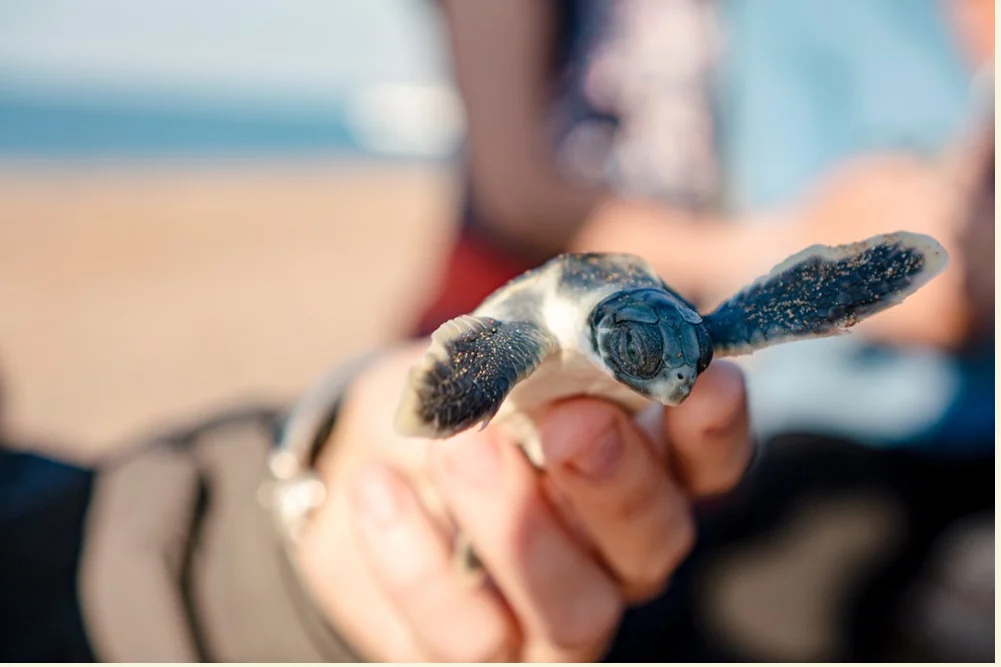
On the remote, windswept shores of Bare Sand Island, located approximately 50 kilometers off the coast of Darwin, a critical ecological drama unfolds every winter under the cover of darkness. As the tide reaches its zenith, the flatback turtle (Natator depressus), a species found exclusively in the waters of the Australian continental shelf, emerges from the inky depths of the Joseph Bonaparte Gulf to continue a reproductive cycle that has remained unchanged for millennia. Despite this ancient lineage, the flatback remains one of the most mysterious marine reptiles in the world, classified by both the Northern Territory government and the International Union for Conservation of Nature (IUCN) as "data deficient." This lack of fundamental biological information has spurred a decades-long effort by dedicated scientists and volunteers to document, protect, and understand a species that serves as a vital indicator of the health of Australia’s northern marine ecosystems.
The Biological Profile of Natator Depressus
The flatback turtle is unique among sea turtles for its limited migratory range. Unlike the green or leatherback turtles, which traverse entire oceans, the flatback rarely ventures beyond the shallow coastal waters of Australia, Papua New Guinea, and Indonesia. Its common name is derived from its distinctively flattened carapace, which features upturned edges. A mature female can weigh up to 90 kilograms and measure approximately one meter in length.
Biologically, the flatback’s reproductive strategy differs significantly from its peers. While most sea turtles lay large clutches of small eggs, the flatback lays a smaller number—typically around 50—of significantly larger eggs. These eggs, roughly the size of a billiard ball, produce larger, more robust hatchlings. Scientists theorize that this may be an evolutionary adaptation to the high concentration of predators in the shallow coastal waters they inhabit. However, even with these larger hatchlings, the estimated survival rate to adulthood is a staggering one-in-1,000.
The mystery of the "lost years"—the period between a hatchling entering the ocean and returning as a nesting adult 30 years later—remains one of the primary focuses of current research. Because flatbacks do not have an oceanic phase, their whereabouts during these three decades are difficult to track, leaving a significant gap in the conservation data required to implement robust federal protections.
Three Decades of Field Research: The AusTurtle Mission
For over 30 years, the all-volunteer organization AusTurtle has maintained a seasonal research station on Bare Sand Island. The island, known to the Traditional Owners as Ngulbitjik, serves as a primary rookery for approximately 650 nesting females each winter. The research camp is a testament to low-impact scientific inquiry; it is a "pop-up" facility consisting of tents and tarps, with no permanent structures, no running water, and a strict zero-impact policy.
The researchers and volunteers, often working in shifts from dusk until dawn, perform a rigorous set of tasks designed to build a comprehensive longitudinal dataset. When a female emerges to nest, the team monitors her progress with minimal interference. Once the egg-laying process begins—a state of trance-like focus for the turtle—researchers move in to measure the carapace, record the nest temperature, and check for identification tags. Newcomers are fitted with titanium flipper tags, and electronic pit tags are often inserted to ensure the turtle can be identified if she returns in future seasons.
The collection of nest temperature data is particularly critical. Like many reptiles, sea turtles exhibit temperature-dependent sex determination (TSD). The temperature of the sand during incubation determines the sex of the hatchlings: cooler temperatures produce males, while warmer temperatures produce females. With global temperatures rising, researchers are concerned that a "feminization" of the population could lead to a demographic collapse.
Chronology of Land Rights and Cultural Stewardship
The history of Bare Sand Island is as complex as its ecology. For decades, the island was used as a military firing range, evidenced by the scattered gunnery shells still found among the dunes. However, the island’s primary historical significance lies in its connection to the Kenbi people.
In 2016, after one of the longest-running Aboriginal land claims in Australian history—spanning nearly 40 years—native title over the Kenbi Open Area, including Bare Sand Island, was officially awarded to the Kenbi clan. This legal victory transitioned the island from a de facto public recreation and military site to a protected cultural landscape.
The Kenbi people hold the island sacred, believing that its seasonal freshwater pools are spiritually connected to mainland waterholes. Their involvement in the island’s management introduces a unique intersection of traditional ecological knowledge and modern conservation science. The Kenbi people continue to practice traditional harvesting of turtle eggs, a source of protein they have utilized for thousands of years. While this practice can appear at odds with conservation efforts to the uninitiated, senior researchers like Andrew Raith argue that the impact is negligible compared to broader environmental threats. Raith posits that by maintaining a cultural and nutritional connection to the turtles, the Kenbi people become the ultimate stakeholders in the species’ survival, ensuring the rookery is protected from industrial development or over-exploitation.
The Rescue Operations: Mitigating Natural and Human Pressures
The work of AusTurtle extends beyond data collection into active intervention. As dawn breaks over the Joseph Bonaparte Gulf, the research team conducts "nest excavations." Not all hatchlings successfully navigate the journey from the egg chamber to the surface; many become trapped under collapsed sand or tangled in debris.
During these morning rounds, volunteers carefully dig into recently hatched nests to recover "stragglers." These tiny turtles, often weighing only 43 grams, are kept in a cool, dark environment throughout the day to prevent dehydration and predation by birds or crabs. They are released under the cover of darkness during the next high tide, giving them the best possible chance to reach the safety of the deeper reef waters.
This hands-on approach serves a dual purpose: it increases the immediate survival rate of a vulnerable cohort and provides an invaluable educational opportunity for the volunteers and students who participate in the program. By involving the public in these rescues, AusTurtle builds a constituency of advocates for marine conservation.
Climate Change and the Looming Ecological Domino Effect
The most significant threat to the flatback turtle is not local predation or traditional harvesting, but the global phenomenon of climate change. The Northern Territory’s flatback populations are particularly vulnerable due to their geography. Unlike species that can migrate to cooler southern latitudes as temperatures rise, the flatback turtles of the NT are already at the northernmost limit of their habitable range.
Scientific modeling suggests several catastrophic scenarios for the species:
- Nest Inundation: Rising sea levels and increased storm surges threaten to drown nests located in low-lying dunes.
- Thermal Lethality: If sand temperatures exceed 34 degrees Celsius for extended periods, the embryos within the eggs will perish.
- Sex Ratio Imbalance: As previously noted, consistent warming leads to an overwhelming majority of female hatchlings, eventually making the population unviable due to a lack of breeding males.
The implications of losing the flatback turtle extend far beyond the loss of a single species. Marine biologists categorize sea turtles as "indicator species," meaning their health reflects the health of the broader environment. Flatbacks play a crucial role in maintaining the balance of the seabed by grazing on algae and sponges and serving as a prey source for apex predators like the saltwater crocodile. Andrew Raith warns that the collapse of the flatback population would likely trigger a "domino effect," destabilizing invertebrate populations, coral health, and the predatory structures of the Joseph Bonaparte Gulf.
Conclusion: A Collaborative Path Forward
The survival of the flatback turtle on Bare Sand Island depends on a delicate balance between scientific monitoring, traditional stewardship, and public awareness. The 2016 land rights settlement has empowered the Kenbi clan to take their place as the primary guardians of Ngulbitjik, while the ongoing work of AusTurtle provides the empirical evidence needed to lobby for greater environmental protections.
As the "data deficient" label is slowly replaced with concrete evidence of the flatback’s life cycle and vulnerabilities, the urgency of the situation becomes clearer. The island serves as a microcosm of the global conservation challenge: how to balance human tradition and economic activity with the preservation of a species that has survived since the age of the dinosaurs, but now faces a threat it cannot out-evolve.
For those looking to support these efforts, the island remains accessible through highly regulated volunteer programs and eco-tourism ventures. These initiatives provide the funding necessary for AusTurtle to continue its work, ensuring that the "halcyon days" of the winter solstice continue to bring these ancient mariners safely to the shores of Northern Australia. The fate of the flatback is inextricably linked to the human willingness to lose a week’s sleep, to tread softly on the sand, and to recognize that we are not separate from the ecosystems we study, but an integral part of their survival.




 Anjar Salim
 Chandra Hamzah
 Tatiana Tantri Indah Sari
 Budi Mulyono
 Lukman Taruna Persada Ramadan
