
 Cholid Fahmi Thalib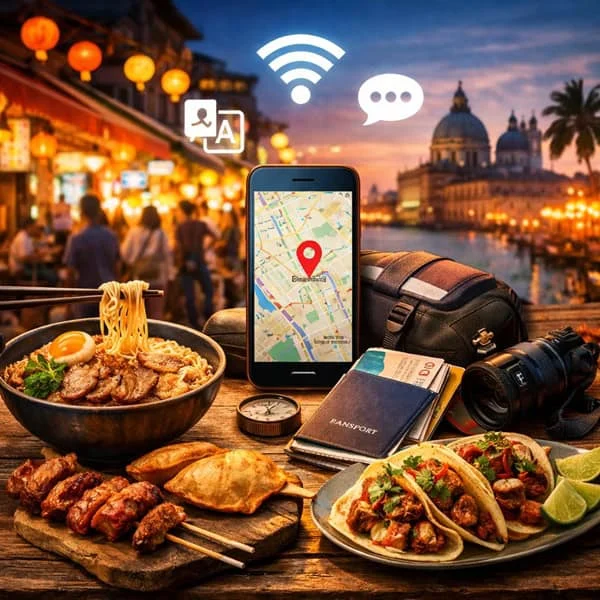
The allure of culinary travel lies in those serendipitous moments: waking up in a new locale, savoring a coffee with an unfamiliar yet delightful profile, and stumbling upon a neighborhood whose name you’re still mastering, only to discover the most exquisite meal of your year without a meticulously planned itinerary. While these experiences often feel like magic, their consistent occurrence is rarely a matter of chance. Instead, they are the result of thorough, albeit unglamorous, preparation – the kind that enables a traveler to navigate the unknown with confidence and a touch of foresight. This preparation doesn’t involve rigid schedules or pre-booked reservations for every meal weeks in advance. It’s about having the practical tools at your fingertips: the ability to pull up a map the moment you exit a metro station, to translate a menu without resorting to awkward pointing, to quickly share the discovery of a hidden culinary gem with a friend, to present an allergy card with clarity, to verify if a promising-looking establishment is actually open, and to access reservation QR codes even when unreliable Wi-Fi is on its last digital breath.
For the growing demographic of "foodie flashpackers" – travelers who prioritize smart navigation, exceptional dining, and sustained flexibility – maintaining a robust connection is not merely a convenience but a foundational element. This isn’t about living perpetually online, but rather about minimizing background friction to maximize presence in the foreground of experience. And when that foreground is a steaming bowl of noodles, a vibrant plate of tacos, or the comforting aroma of a neighborhood bakery wafting with the scent of butter and caramel, immersion and presence are paramount.
The Differentiated Demands of Culinary Exploration
Food-focused travel diverges significantly from conventional sightseeing. It’s a dynamic pursuit that transcends the typical journey from one landmark to another. Instead, it involves a fluid movement between bustling markets, unassuming side streets, ephemeral pop-up counters, vibrant late-night food stalls, cafes discovered in passing, and restaurants whose very existence might depend on precise timing. This intricate web of destinations magnifies the impact of minor logistical hurdles.
The cumulative effect of these small frictions can quickly transform a potentially delightful exploration into a source of frustration:
- Navigational Uncertainty: Relying solely on paper maps or pre-downloaded offline maps can be insufficient when trying to locate specific, often unmarked, food vendors or when trying to reroute based on new local information.
- Language Barriers: The inability to quickly translate menu items, ingredient lists, or street vendor descriptions can lead to missed culinary opportunities or, worse, accidental consumption of allergens.
- Spontaneity Hindered: The desire to spontaneously follow a local’s recommendation or explore an intriguing alleyway is curtailed by the fear of becoming disoriented and unable to find your way back or communicate your location.
- Operational Inefficiencies: Confirming opening hours, checking for last-minute changes, or verifying reservation details can become time-consuming endeavors without immediate access to digital information.
- Lost Discoveries: The ephemeral nature of many food stalls and pop-ups means that failing to quickly document or share a find can lead to its permanent loss from one’s culinary memory.
A moderate level of connectivity can effectively mitigate these challenges, transforming potentially stressful moments into opportunities for confident improvisation. The objective is not constant online engagement, but rather assured access to information precisely when it is needed most.
The Flashpacker’s Philosophy: Efficiency for Enjoyment
Flashpacking embodies a sophisticated balance between the unbridled freedom of a backpacker and the pragmatic efficiency of a seasoned traveler. It is characterized by an effort to streamline the travel process, not by making it more arduous, but by systematically removing unnecessary obstacles. This allows for a greater allocation of time and mental energy towards the elements that truly enrich the experience.
For the foodie flashpacker, this translates into a streamlined approach to connectivity:
- Essential Navigation: Reliable access to mapping services for real-time location tracking and route planning.
- Instant Communication: The ability to message local contacts, restaurant staff, or travel companions for updates, recommendations, or confirmations.
- Language Facilitation: Quick access to translation tools for menus, signs, and brief interactions with vendors.
- Dynamic Information Access: The capacity to verify opening hours, check social media updates for pop-ups, or confirm reservation details on demand.
- Digital Record Keeping: Tools to capture photos, locations, and notes of discovered culinary gems for future reference or sharing.
The final point is particularly critical, as culinary plans are inherently susceptible to change. The ability to adapt swiftly and decisively when circumstances shift is a hallmark of successful and enjoyable food travel.
eSIMs: A Streamlined Gateway to Global Connectivity
The familiar ritual of navigating the "airport SIM counter shuffle" upon arrival in a new country—a process often marked by harsh fluorescent lighting, perplexing plan denominations, and the hurried exchange of a physical SIM card, leaving one to anxiously test the functionality of essential communication apps—is a shared experience for many travelers. This often cumbersome process can detract from the initial excitement of arrival.
Embedded SIMs, or eSIMs, offer a significantly less disruptive alternative, effectively removing many of these logistical hurdles. Rather than physically swapping a small plastic card, travelers can activate a digital cellular plan directly on their compatible devices. For many, this represents the most straightforward method for ensuring immediate connectivity upon arrival, particularly for those whose primary focus is culinary exploration rather than troubleshooting telecommunications.
Services like the SIMOVO travel eSIM provide a quick and uncomplicated pathway to establish connectivity, circumventing the traditional SIM card procurement dance. The overarching aim is not to become preoccupied with the intricacies of mobile network providers, but rather to safeguard precious travel time. Minutes spent searching for a reliable connection are minutes that could otherwise be dedicated to the pursuit of exceptional food.
The Amplified Impact of Connectivity on Culinary Acumen
The reliable functionality of a mobile device during a food-centric journey can profoundly enhance a traveler’s experience and culinary discoveries:
Encouraging Exploration Beyond the Beaten Path
When travelers are preoccupied with the fear of getting lost, they tend to gravitate towards predictable choices: well-trodden tourist thoroughfares, prominently signposted restaurants, and establishments that offer a perceived guarantee of satisfaction. While these options have their place, the most profound culinary revelations often lie just a few turns away from the obvious. Robust data access empowers travelers to confidently take that intriguing detour, knowing they possess the means to reorient themselves. This freedom to explore deeper into a city’s fabric is essential for uncovering authentic local flavors.
Enhancing the Reception of Local Recommendations
Local recommendations rarely come with precise GPS coordinates. Instead, they are often articulated through landmarks, atmospheric descriptions, or contextual clues like, "It’s next to the pharmacy with the green sign." Connectivity enables rapid triangulation of these informal directions. By combining mapping data with a quick text message to the recommender, perhaps accompanied by a photograph of the identified storefront, travelers can efficiently locate even the most obscure culinary destinations.
Accelerating Menu Comprehension and Culinary Bravery
Translation applications serve not as a crutch for laziness, but as a catalyst for bravery. A reduced anxiety surrounding the potential for misordering encourages a greater willingness to experiment with unfamiliar dishes. Furthermore, these tools facilitate quick research into specific ingredients, regional culinary terminology, or the precise nature of an enigmatic sauce, transforming potential research rabbit holes into brief, informative diversions.
Fostering Smarter Temporal Planning
The essence of food is deeply intertwined with timing. The availability of certain delicacies, such as a popular birria stew, may be limited by daily sell-outs. A local bakery might reach its peak freshness and flavor at a specific morning hour, while a night market might only truly come alive after sunset. The ability to swiftly confirm operating hours, send a direct inquiry to a food vendor, or ascertain the seasonality of a particular dish allows for effective, yet flexible, planning that avoids over-scheduling and respects the natural rhythms of culinary offerings.
Cultivating a Personal Culinary Archive
Every traveler has experienced the profound disappointment of encountering an exceptional dish and then being unable to relocate it on subsequent visits. Reliable connectivity mitigates this frustration. When connected, travelers can:
- Save Locations: Bookmark precise coordinates of discovered restaurants, stalls, or markets.
- Capture Visual Evidence: Take photos of dishes, storefronts, or unique ingredients.
- Record Notes: Document details about the food, atmosphere, or the experience itself.
- Share Discoveries: Instantly share findings with friends or online communities, creating a collaborative repository of culinary intelligence.
This systematic approach transforms a singular positive food experience into a repeatable and expandable culinary strategy.
A Principled Connectivity Routine for Uninterrupted Exploration
A common apprehension regarding digital connectivity is the potential for it to become a distraction, hijacking the immersive travel experience. However, a structured approach can ensure that technology remains a supportive tool rather than a dominant force.
Consider adopting the following rhythm:
- Morning Briefing: Upon waking, dedicate a few minutes to reviewing any planned food activities, checking for last-minute changes in hours or locations, and confirming reservations. This sets a clear intention for the day’s culinary pursuits.
- Contextual Check-ins: As you navigate, use your device strategically for navigation, translation, or quick verification of information related to your immediate surroundings or planned stops.
- Discovery Documentation: When you encounter something remarkable, take a moment to save its location, capture a photo, and jot down a brief note. This is an active engagement with the discovery, not passive consumption of digital content.
- Evening Recap: Before retiring, spend a few moments organizing any saved notes or photos from the day, perhaps sharing a particularly noteworthy find. This consolidates the day’s experiences and prepares for future exploration.
This deliberate rhythm ensures that the mobile device serves its intended purpose: an enabler of experiences, not a replacement for them.
Embracing Travel with Enhanced Confidence, Not Increased Screen Time
The essence of food travel is to feel vibrantly alive, to engage in genuine discovery rather than passive consumption. Connectivity does not supplant the act of discovery; rather, it acts as a protective layer, safeguarding those precious moments of revelation. When fundamental needs are met – seamless navigation, effortless communication, accessible translation, and reliable access to reservations and payment information – travelers are liberated to fully engage in the core purpose of their journey:
- Immersive Sensory Engagement: The ability to fully appreciate the aromas, textures, and flavors without the distraction of logistical worries.
- Authentic Cultural Exchange: Engaging more readily with local vendors and residents, armed with the tools to bridge communication gaps.
- Spontaneous Adventure: The freedom to deviate from plans and embrace unexpected opportunities, knowing you have a reliable safety net.
- Deepened Culinary Understanding: The capacity to explore the nuances of local ingredients, preparation methods, and cultural significance behind dishes.
This philosophy is the bedrock of foodie flashpacking: establishing structure where it is most beneficial, and cultivating freedom across all other aspects of the journey. By approaching travel with this integrated strategy, individuals are more likely to encounter those profoundly memorable, "how did we end up here?" meals – the ones that resonate long after the journey concludes – without the usual chaotic toll that often accompanies true spontaneity. The ability to seamlessly integrate technology into the fabric of exploration, rather than allowing it to dominate, is the key to unlocking a richer, more confident, and ultimately more delicious travel experience.


 Anjar Salim
 Dwi Wanna
 Budi Mulyono
 Lukman Taruna Persada Ramadan
 Chandra Hamzah
 Gabriela Annisa