
 Anjar Salim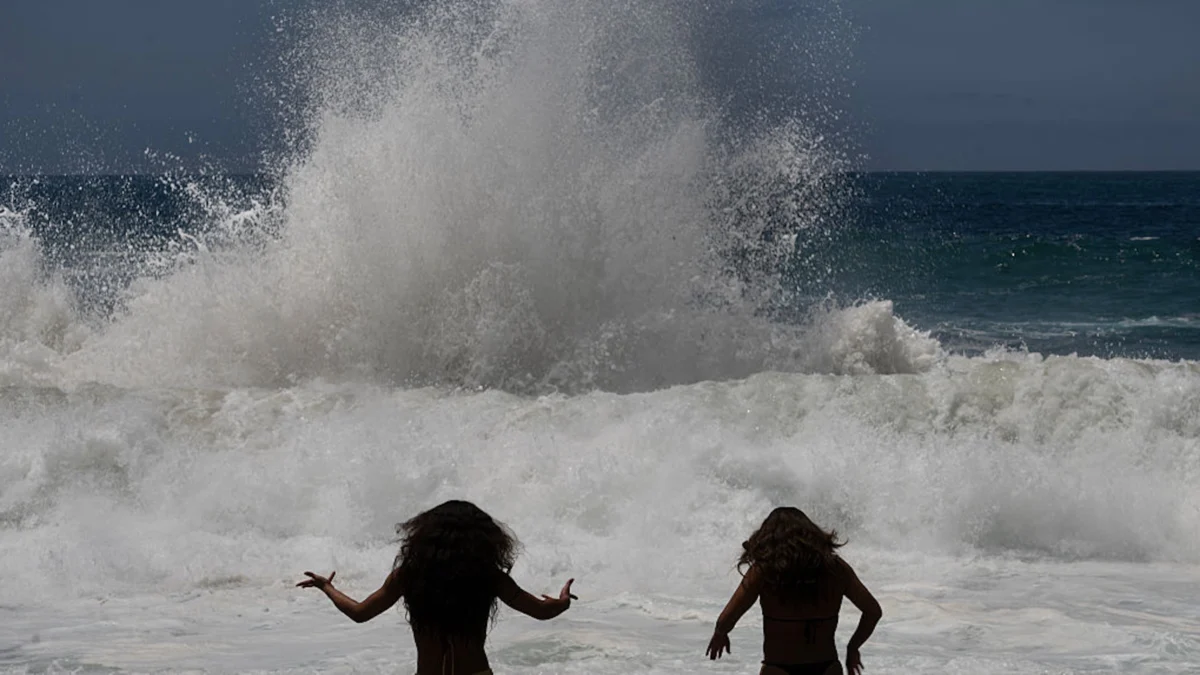
A powerful and historically anomalous June swell has battered the California coastline, resulting in at least three confirmed drownings and more than 100 emergency rescues as of June 18, 2026. The National Weather Service (NWS) has maintained active beach hazard advisories for several counties, stretching from the Greater Los Angeles area to the San Francisco Bay, as waves exceeding 20 feet continue to disrupt maritime activities and pose a lethal threat to beachgoers. Public safety officials and water rescue experts are now engaged in a massive public information campaign to prevent further loss of life during what has become one of the most dangerous early-summer surf events in recent memory.
The surge, which began impacting the coast during the second week of June, was generated by a series of intense storms in the Southern Hemisphere, sending long-period swell energy northward toward the Pacific Coast. While large swells are common during the winter months, the magnitude of this June event has caught many off guard, coinciding with the beginning of the peak summer tourism season when beaches are traditionally crowded with families and inexperienced swimmers.
Chronology of a Coastal Crisis
The severity of the conditions first became apparent on the evening of June 9, 2026, in Laguna Beach. According to reports from the U.S. Coast Guard, a five-year-old girl was playing near the water’s edge when a massive wave surged far beyond the normal high-tide line. The force of the water swept the child, her brother, and her mother into the ocean. While nearby bystanders were able to reach and pull the mother and son back to safety, the five-year-old was pulled into a deep-water channel.
A massive search and rescue operation was immediately launched, involving the U.S. Coast Guard, the Orange County Sheriff’s Department, and local Laguna Beach lifeguards. For more than 30 hours, aerial assets and marine vessels combed the shoreline under challenging conditions. The search concluded on the morning of June 11, when the girl’s body was recovered approximately one-quarter of a mile from where she was initially swept away.
The tragedy in Laguna Beach was followed by another fatal incident on June 10 near Santa Cruz. Two young women, identified as recreational visitors to a beach just north of the city, were standing on a rocky shelf when they were overtaken by high surf. Despite rapid response times from the Central Fire District of Santa Cruz County, both victims were pulled into the turbulent Pacific and drowned before rescuers could reach them.
On June 14, emergency services were again tested when two swimmers became trapped by a rapidly rising high tide against a cliff face near Santa Cruz. In this instance, the Central Fire water rescue team successfully utilized personal watercraft to extract the individuals moments before they were overwhelmed by incoming sets. Ryan Peters, a division chief and ten-year veteran of the water rescue team at the Central Fire District, noted that his team has responded to nearly a dozen calls for service in the last week alone, ranging from active rescues to safety checks on stranded surfers.
The Mechanics of the Historic Swell
Meteorologists at the National Weather Service have categorized this event as a "high-energy swell," characterized by long periods between wave peaks. Long-period swells carry significantly more energy and can produce "sneaker waves"—massive surges that appear without warning during periods of seemingly calm water.
In Southern and Central California, these waves have reached heights of 15 to 20 feet at west-facing beaches. The combination of these heights and high-tide cycles has led to significant coastal erosion and the flooding of low-lying beach parking lots. The NWS Beach Hazards Statements emphasize that these conditions create "deadly rip currents" and "extreme shore break," which can break in shallow water with enough force to cause spinal injuries or instantaneous drowning.
Expert Analysis: The Gap Between Competence and Conditions
The recent wave of incidents has highlighted a dangerous trend: even individuals with high levels of physical fitness and water experience are finding themselves in life-threatening situations. Ryan Peters of the Central Fire District explained that a significant portion of their rescue calls involves surfers and "strong" swimmers who underestimate the raw power of a 20-foot swell.
"We often find that it isn’t a lack of fitness that leads to a rescue, but a failure to appreciate the significance of the ocean conditions," Peters said. "The ocean is unpredictable, and even the fittest athlete can be overcome by the volume of water moving during a historic swell like this."
Peters noted that the danger is often compounded by "incident clusters." During a rescue for a single surfer in distress, first responders frequently discover multiple other people in the immediate vicinity who are also struggling to return to shore. This creates a logistical strain on emergency resources, requiring multiple teams to coordinate simultaneous extractions in high-surf zones.
The Hazards of Coastal Photography and Rocky Terrain
A recurring factor in the recent fatalities has been the use of elevated rocky points for photography. Public safety officials have observed an increase in beachgoers venturing onto jetties, cliffs, and "tide pool" rocks to capture images of the massive waves.
"People go down to an elevated point, one that seems high enough to be safe, but they turn their backs on the ocean to take a picture," Peters warned. "It only takes one larger-than-average wave to knock someone off their feet. If the surface is slippery or rocky, they are dragged into the water almost instantly. Once you are in the ‘washing machine’ of a high-surf zone near rocks, the chances of a self-rescue are very low."
Survival Protocols: Rip Currents and Child Safety
With the swell expected to persist through the upcoming weekend, officials are reinforcing survival protocols for those who find themselves in the water. The primary threat to swimmers remains the rip current—a powerful, narrow channel of water flowing away from the shore.
First responders emphasize that the most common mistake made by drowning victims is attempting to swim directly back to shore against the current. "You cannot outswim a rip current," Peters stated. "The strategy must be to stay calm, float to conserve energy, and then swim parallel to the shoreline until you are out of the current’s pull. Once the outward movement stops, you can then angle back toward the beach."
Regarding child safety, experts are urging a "zero-distraction" policy for parents. The Laguna Beach tragedy serves as a grim reminder that even shallow water can become a "kill zone" during high-surf events. Safety recommendations include:
- Enrolling children in professional swim lessons as early as possible to build "water confidence."
- Never allowing children to swim alone, regardless of their perceived skill level.
- Strictly adhering to "Lifeguarded Beaches" only, where professional observers can provide early warnings of incoming sets or changing currents.
Broader Implications and Resource Allocation
The economic and logistical impact of the June swell is being felt across California’s coastal counties. Many beaches have been forced to close to the public, impacting local tourism revenue. Simultaneously, the cost of sustained search and rescue operations—involving helicopters, cutters, and specialized dive teams—is substantial.
From a public policy perspective, these events are prompting discussions regarding the "permanent" nature of coastal hazards. As sea levels rise and weather patterns become more volatile, the frequency of "historic" swells is expected to increase. This has led to calls for more robust funding for year-round lifeguard services, as many beaches only staff their towers during the peak summer months of July and August.
The National Weather Service continues to monitor the Southern Pacific for subsequent swell pulses. For the time being, the message from the Central Fire District and the U.S. Coast Guard remains the same: "Know your limits, never turn your back on the ocean, and when in doubt, stay out."
As the weekend approaches, local authorities are expected to increase patrols along high-risk cliff areas and rocky shorelines to deter individuals from entering restricted zones. The focus remains on preventing the death toll from rising further as California grapples with the power of an ocean that, for the moment, has become a beautiful but deadly spectacle.


 Chandra Hamzah
 Gabriela Annisa
 Tatiana Tantri Indah Sari
 Hendra Ismail
 Walid Sujud Trenggono
 Budi Mulyono