Budi Mulyono
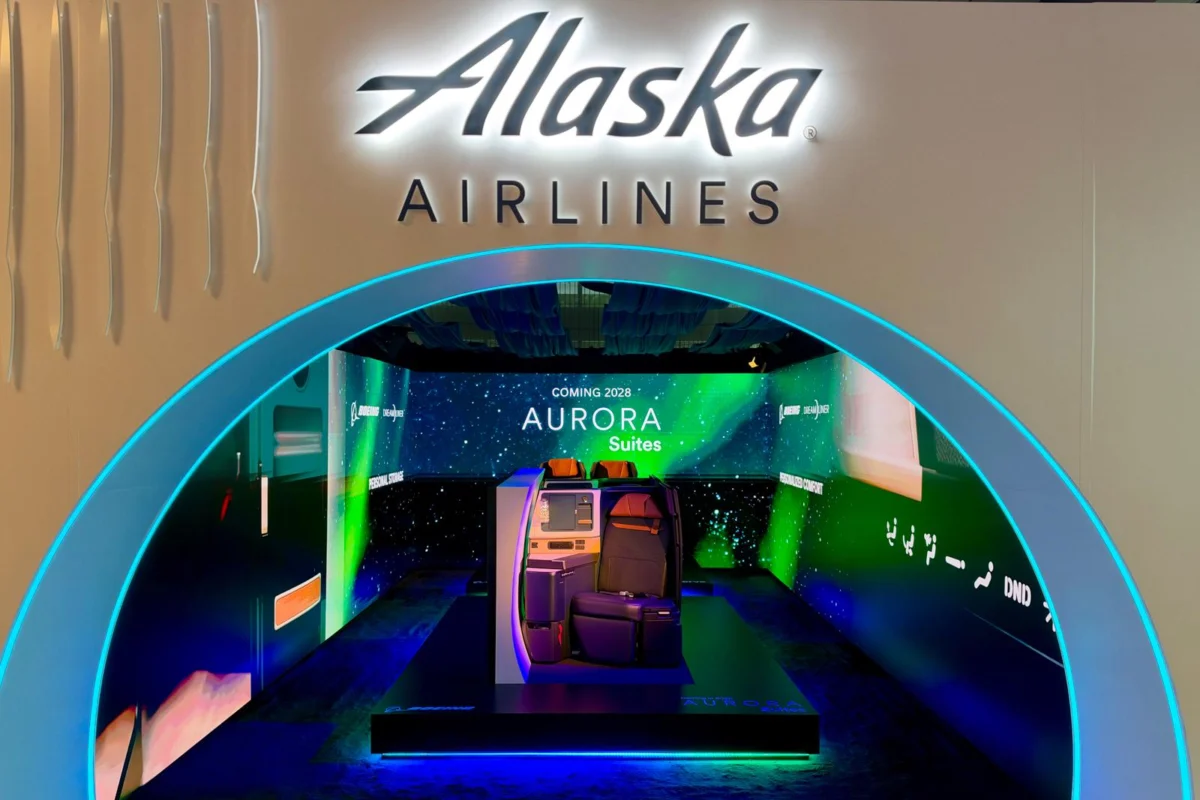
Alaska Airlines has officially announced a sweeping, comprehensive modernization initiative aimed at redefining its long-haul and premium transcontinental travel experience. The Seattle-based carrier’s ambitious overhaul introduces state-of-the-art business-class suites, the airline’s inaugural premium economy product, and a portfolio of four newly designed airport lounges. These sweeping enhancements form a cornerstone of the carrier’s broader financial and operational roadmap, known as the "Alaska Accelerate" strategy. Formulated in the wake of Alaska Air Group’s high-profile acquisition of Hawaiian Airlines, the combined corporate entity is targeting over $1 billion in incremental annual profit. While the first wave of these physical upgrades will begin rolling out to passengers in late 2027, the majority of the reimagined cabins are scheduled to make their official commercial debut throughout 2028. This monumental pivot toward the high-end travel market signals a structural shift for a carrier historically recognized for its regional efficiency and value-driven domestic service, positioning Alaska to compete directly with legacy network carriers on major global and domestic trunk routes.

Strategic Background and Financial Drivers of the Alaska Accelerate Plan

The genesis of this massive cabin retrofit and product launch can be traced directly to the corporate consolidation of Alaska Airlines and Hawaiian Airlines. Merging two distinct airline cultures and operational networks required a cohesive long-term vision to maximize profitability, standardize fleet efficiencies, and capture high-yielding corporate and leisure travelers. Under the banner of the Alaska Accelerate strategy, executive leadership has prioritized capital deployment into higher-margin seating classes. Industry analysts note that domestic and international travel demand has seen a permanent behavioral shift toward premium products, with passengers increasingly willing to pay a premium for enhanced personal space, elevated dining, and priority airport infrastructure. By upgrading the combined widebody and narrowbody fleets, Alaska aims to harmonize its onboard product offerings while unlocking lucrative revenue streams previously dominated by major international alliance members and domestic mega-carriers. The overarching financial target—exceeding $1 billion in incremental profit—relies heavily on the successful execution of this premium pivot, ensuring that the merged airline captures a larger share of high-spending corporate accounts and transpacific vacationers.

Alaska Aurora Suites on the Boeing 787 Fleet

At the forefront of the airline’s long-haul evolution is the introduction of the Alaska Aurora Suites, destined for the carrier’s flagship widebody fleet of Boeing 787 Dreamliners. Following the Hawaiian Airlines acquisition, Alaska inherited a sub-fleet of Boeing 787-9 aircraft. While these jets currently feature widely praised business-class hardware, the carrier has elected to systematically retrofit the existing 34-seat cabins with custom finishes, textiles, and color palettes that align with the fresh Aurora branding. Crucially, the underlying seat structure—the industry-renowned Elevate Ascent platform—will remain unchanged. Because this specific seat model is already fully certified by aviation regulators, Alaska avoids the notoriously protracted certification bottlenecks and regulatory delays that have plagued competitor fleet overhauls across the industry. Retrofitting work on the existing Boeing 787-9 fleet is slated to commence in late 2027.

In addition to retrofitting existing airframes, Alaska Airlines is taking delivery of brand-new Boeing 787-10 Dreamliners. The carrier has five of these extended-fuselage widebodies on firm order, each factory-fitted with 40 Aurora Suites. These new aircraft will showcase the absolute pinnacle of the product line, featuring high-definition 19-inch 4K OLED entertainment displays, integrated Bluetooth audio connectivity, and advanced USB-C fast-charging ports. The cabin layout on the 787-10 introduces a refined 1-1-1 reverse-herringbone configuration in the center section, replacing the honeymoon-style paired seating found on the inherited -9 models. Furthermore, the Boeing 787-10 will feature Alaska’s first-ever walk-up snack bar situated between the business-class cabin and the premium economy section, alongside adjustable armrests equipped with discrete personal storage compartments.

Pioneering Single-Aisle Luxury with the Boeing 737 MAX 10

In what represents a historic milestone for domestic U.S. aviation, Alaska Airlines is bringing lie-flat business-class suites to a single-aisle aircraft. The carrier has committed to installing the Aurora Suites across at least 25 of its upcoming Boeing 737 MAX 10 jets. Configured in a 1-1 reverse-herringbone layout spanning six rows, the cabin will feature 12 dedicated suites designed to operate premium transcontinental routes linking the West Coast with major East Coast business hubs, most notably New York.

Opting against sliding privacy doors—a feature common in widebody configurations—allowed Alaska to streamline the rigorous Federal Aviation Administration (FAA) safety certification process and avoid the requirement of adding an extra flight attendant beyond baseline safety staffing minimums. Despite the absence of closing doors, the narrowbody adaptation of the Elevate Ascent platform provides exceptional personal privacy, direct aisle access for every passenger, and a customized swivel-design storage cubby. While economy-class passengers on these specific MAX 10 jets will not have seatback entertainment screens, the front cabin promises an unprecedented level of comfort and privacy for transcontinental single-aisle travel.

Revitalizing Transpacific Routes with Hawaiian Leihōkū Suites on the Airbus A330

Complementing the Boeing widebody operations, Alaska Airlines is fundamentally transforming the long-haul Hawaiian Airlines network by introducing direct-aisle-access business class to the Airbus A330 fleet. Long anticipated by frequent flyers, this upgrade replaces older, outdated seating configurations with 22 newly minted Leihōkū Suites arranged in a spacious 1-2-1 reverse-herringbone layout.

The chosen hardware is the Collins Elevation seat, a proven product utilized by global carriers such as British Airways in their Club Suite and Etihad Airways in their Business Suite. These suites will offer 19-inch 4K OLED screens equipped with Bluetooth pairing, traditional AC outlets, USB-C ports, and integrated Qi wireless charging pads. Because the cross-section of the Airbus A330 is narrower than traditional large widebodies like the Boeing 777, the enclosed side storage compartments are slightly more compact. Nevertheless, the introduction of these modern suites represents a massive qualitative leap for travelers flying between the Hawaiian Islands and continental gateways.

Introduction of Premium Reserve Across the Fleet

Bridging the gap between standard economy and the luxurious Aurora and Leihōkū business suites is Alaska’s newly minted premium economy offering, branded as Premium Reserve. Recognizing that modern travelers demand enhanced comfort without necessarily purchasing a full business-class ticket, the airline has selected industry-leading hardware tailored to specific fleet types. Boeing aircraft will feature the Recaro PL3530 seat, while Airbus A330 airframes will utilize the Collins MiQ model.

Both seat selections provide a generous passenger experience defined by 38 inches of seat pitch, an expanded width of 19 inches, and a deep six-inch recline capability. Technologically, passengers seated in Premium Reserve will enjoy crisp 16-inch 4K OLED personal entertainment displays with Bluetooth audio integration. While the airline has yet to fully detail the comprehensive dining and amenity kit specifications for Premium Reserve, executive briefings indicate that the soft product will match the physical hardware’s elevated positioning, providing a cohesive premium journey from gate to gate.

Expanding Airport Infrastructure with Four New Flagship Lounges

To support its aggressive pivot toward high-end travelers, Alaska Airlines is significantly expanding and upgrading its airport lounge footprint with four strategic developments scheduled to open between late 2027 and early 2028. This infrastructure expansion is critical to maintaining a competitive edge against major legacy competitors at key hubs.

The centerpiece of this lounge strategy is the new Alaska Aurora Lounge, situated in Seattle-Tacoma International Airport’s newly expanded Concourse C. Designed exclusively for passengers ticketed in business class on long-haul and premium transcontinental flights, this 200-seat sanctuary will offer made-to-order dining, dedicated shower suites, a signature cocktail bar, wellness areas, and architectural design elements inspired by the Pacific Northwest. Scheduled to open in late 2027, it marks Alaska’s first-ever dedicated business-class lounge facility.

Positioned directly one level above the Aurora Lounge in Seattle’s Concourse C will be a massive, 500-seat traditional Alaska Lounge for annual members and eligible elite frequent flyers. Set to open concurrently in late 2027, this facility will feature an outdoor terrace complete with a built-in fireplace, an authentic pizza oven, a specialized coffee lab, and a striking two-story bar.

Expanding the footprint southward, Alaska will open a sprawling 14,000-square-foot lounge at San Diego International Airport in 2028, mirroring the modern design language established at its recently opened Portland outpost. This San Diego facility will offer dedicated quiet zones, a separate buffet area, and dual barista and traditional cocktail bars. Finally, international and interisland travelers passing through Honolulu will benefit from a new 13,000-square-foot Hawaiian Airlines Lounge in Terminal 1, slated for an early 2028 opening. Accommodating approximately 200 guests, the Honolulu lounge will incorporate sweeping floor-to-ceiling windows, a dedicated barista station, and a distinctly Hawaiian aesthetic.

Broader Industry Implications and Outlook

Alaska Airlines’ comprehensive fleet and lounge modernization represents one of the most significant strategic transformations in modern U.S. aviation history. By leveraging the financial backing of the Hawaiian Airlines merger and executing the structured milestones of the Alaska Accelerate plan, the airline is shedding its regional identity to emerge as a formidable global competitor. Fact-based analysis suggests that while the capital expenditures required for these extensive retrofits and new aircraft deliveries are substantial, the projected financial returns driven by high-yield premium ticket sales and expanded loyalty program engagement are expected to justify the investment. As these state-of-the-art suites and luxury lounges come online between late 2027 and 2028, the domestic and transpacific competitive landscape will face a recalibrated Alaska Airlines—one fully equipped to rival the world’s premier legacy carriers.


 Lukman Taruna Persada Ramadan
 Tatiana Tantri Indah Sari

 Anjar Salim