
 Anjar Salim
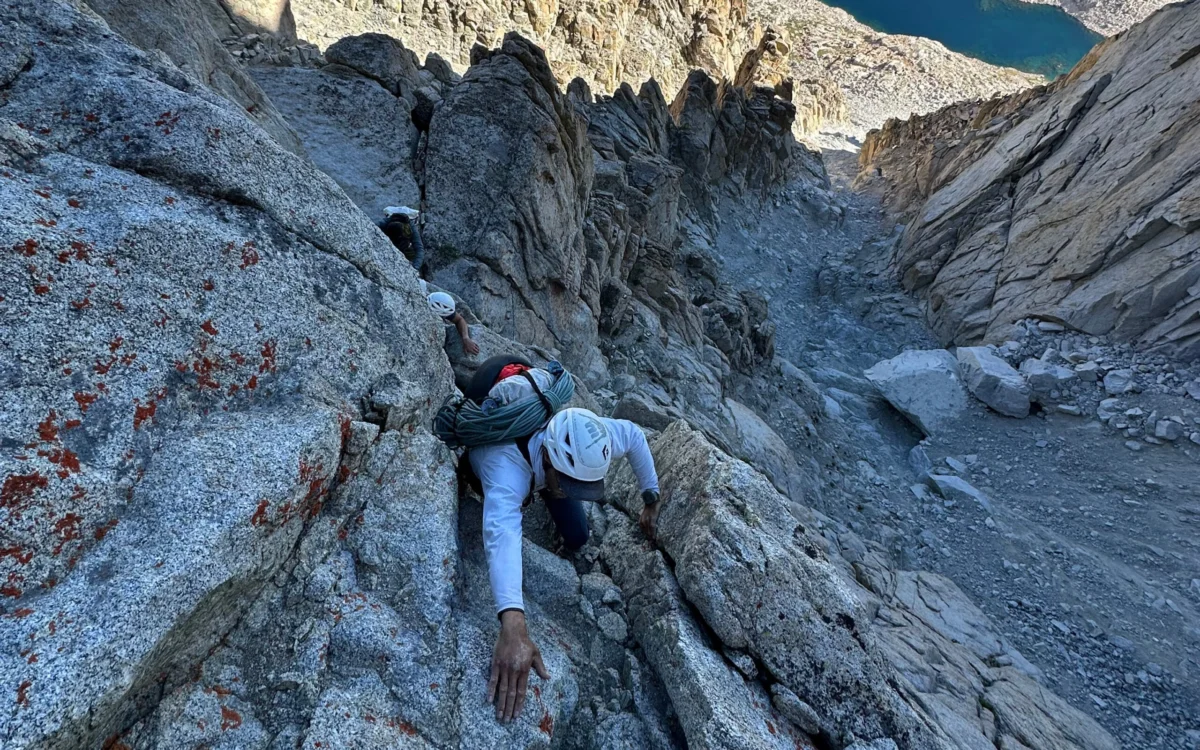
The evolution of modern extreme sports has long been characterized by generational prodigies—individuals who pick up a sport in early childhood, spend decades systematically mastering biomechanical efficiency, and eventually push the boundaries of human physical capability on vertical rock faces. Yet, a paradigm shift is quietly underway within the global climbing community, spearheaded by two athletes who began their vertical journeys as adults: Tanner Wanish and Michael Vaill. Their trajectory—from recreational novices to record-shattering endurance alpinists—culminates in the 2026 adventure documentary film Nobody & Goliath, a project that captures not only their staggering physical achievements but also the unorthodox ethos of a new breed of mountaineers.
The narrative of Wanish and Vaill challenges traditional paradigms of elite athletic development. While marquee mountaineering films have historically focused on lifelong professionals such as Alex Honnold, Tommy Caldwell, Adam Ondra, and Emily Harrington, this duo represents a starkly different demographic. Neither athlete possesses the generational genetic potential or twenty-year training background typically required to scale elite 5.15 routes. Instead, their success hinges on an extreme capacity for psychological commitment, unwavering partnership dynamics, and an accelerated learning curve that has compressed decades of conventional alpinism into a matter of years.
Chronology of a Meteoric Rise
The partnership began not in a high-altitude training camp or a specialized climbing gym, but on an online message board. In the late 2010s, Tanner Wanish—a former U.S. Navy SEAL who spent his early twenties consumed by weekend partying—and Michael Vaill—a biomedical sciences Ph.D. holder who first touched rock on Christmas Day in 2016 at the age of 24—crossed paths through a Mountain Project post. Both men were experiencing that rare, consuming phase of outdoor recreation where a newly discovered passion consumes all waking thought.
Prior to their partnership, neither man had an extensive background in elite athletics. Wanish was transitioning out of military service, while Vaill was deep into academic research. Geographically rooted in the southeastern United States during their formative years—Wanish in South Carolina and Vaill in Georgia—their early lives were defined by academia, military duty, and conventional social activities rather than technical mountaineering.
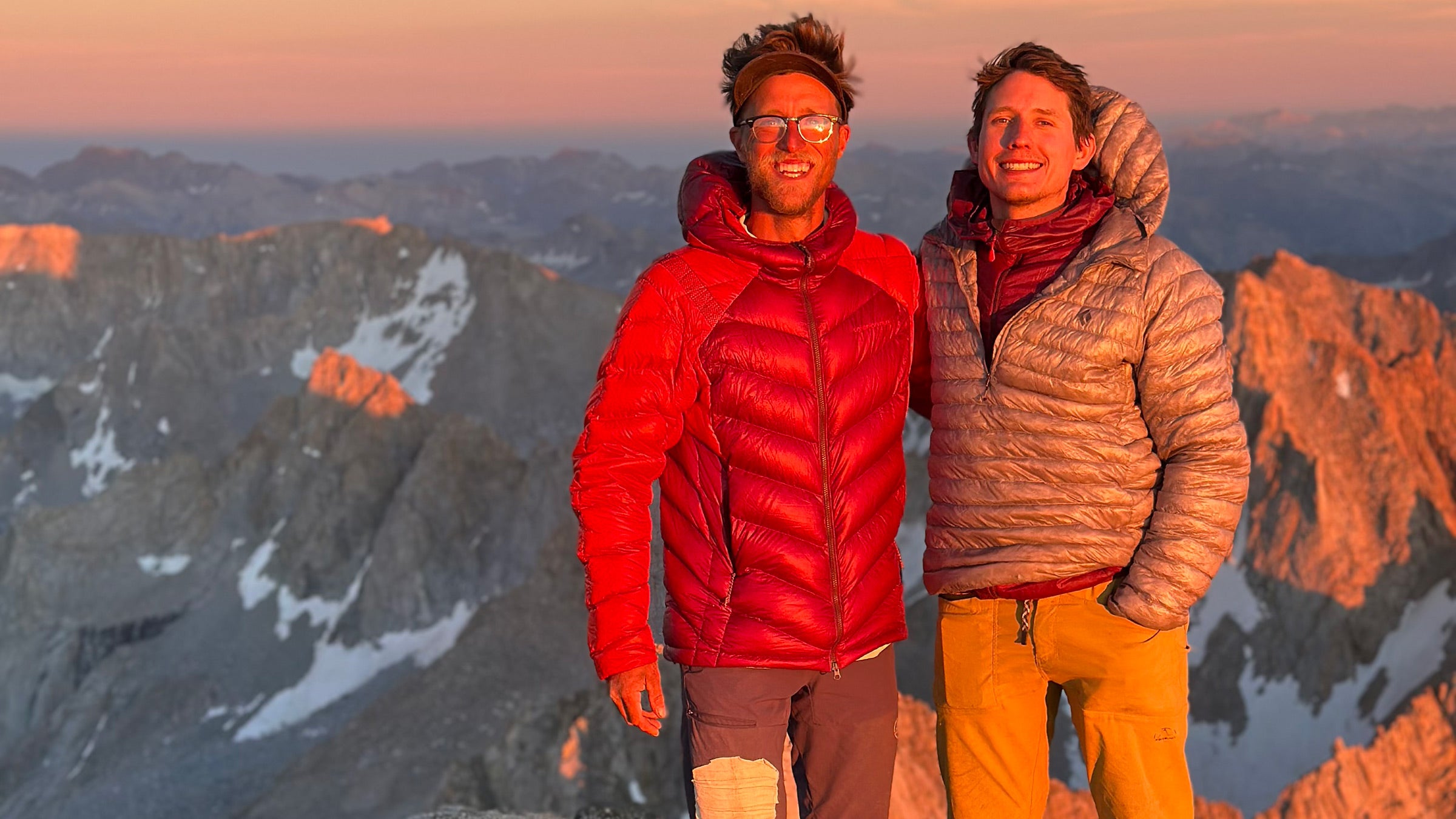
However, once united in Southern California, their shared intensity catalyzed an explosive progression. Within a single year of picking up the sport, the pair advanced from local crags near San Diego to the legendary, imposing granite monoliths of Yosemite National Park. Their early ascents signaled that they were not merely participating in the sport, but rapidly rewriting its operational tempo.
Shattering Yosemite Speed Records
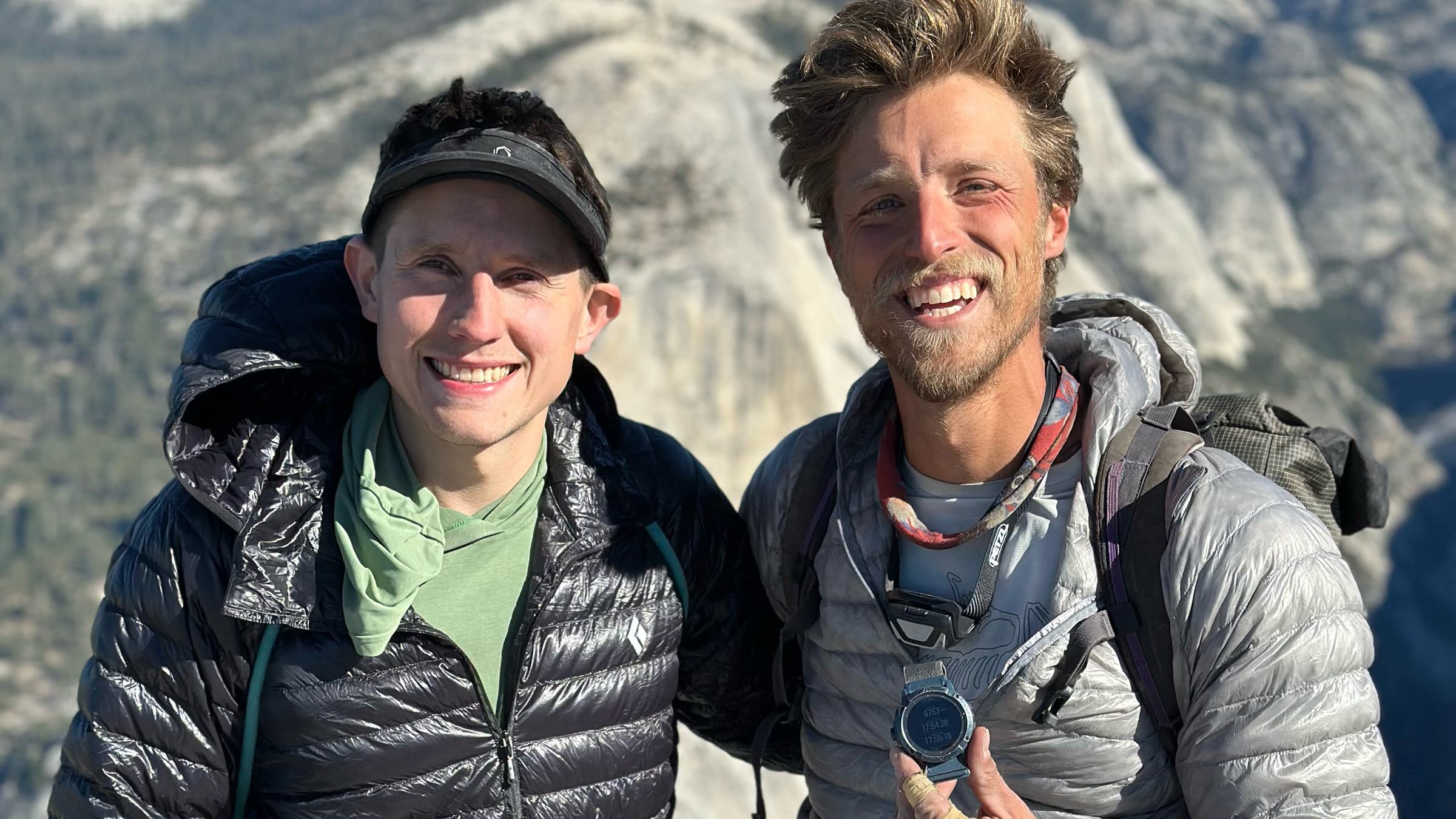
The defining moment of their early career arrived in October 2024, when Wanish and Vaill etched their names into the annals of American climbing history. Taking on the formidable "Yosemite Triple"—consisting of El Capitan, Half Dome, and Mount Watkins—the duo completed the massive link-up in 17 hours and 55 minutes. This blistering time surpassed previous records established by some of the most storied climbing partnerships in the history of the valley, including Alex Honnold, Tommy Caldwell, Dean Potter, Timmy O’Neill, Brad Gobright, and Jim Reynolds.
Undeterred by the monumental physical toll, the pair returned just one week later to repeat the triple, subsequently tacking on a fourth objective: the south face of the Washington Column. By pioneering this grueling test of sustained endurance, they established what is now known in the climbing community as the "Yosemite Quad."
What was largely overlooked in media coverage surrounding these feats was the minimal duration of their climbing careers. At the time of their record-breaking Triple, Wanish had been in the sport for less than five years, while Vaill was roughly seven years removed from his first day on natural rock. Operating at a technical limit generally capped around the 5.11 and 5.12 grades—far below the cutting-edge 5.15 standards achieved by modern sport-climbing prodigies—they compensated for technical limitations through sheer speed, seamless transitions, and the elimination of hesitation.
The Goliath Traverse and Cinematic Documentation
The release of the feature-length film Nobody & Goliath, touring theaters across the United States throughout 2026, documents the duo’s transition from regional anomalies to international figures. Directed by filmmaker Joshua Noll, the movie chronicles their most arduous undertaking to date: the Goliath Traverse in California’s Sierra Nevada.
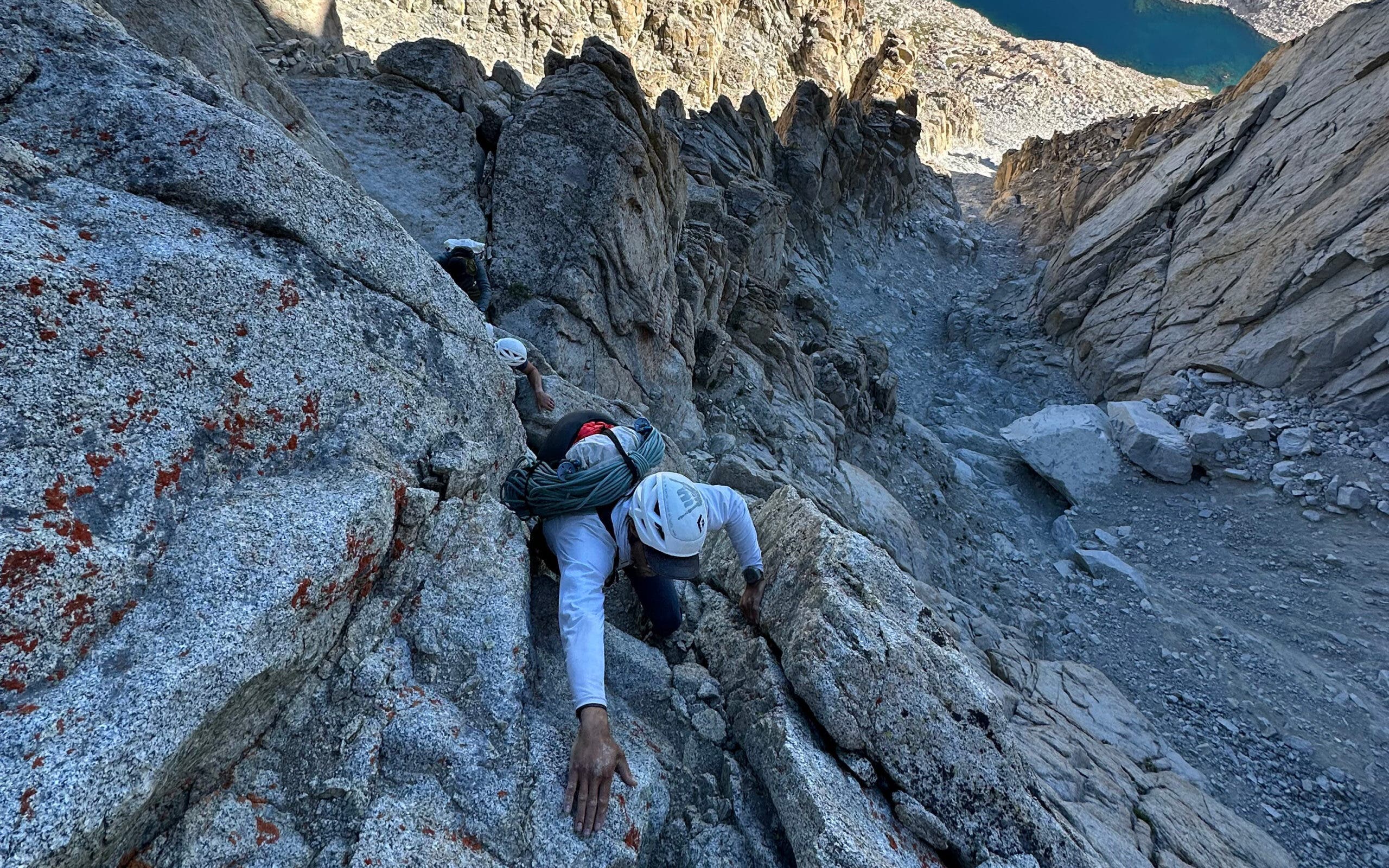
The Goliath Traverse is a punishing 32-mile ridgeline crossing over 60 high-altitude summits—a route previously completed by only one other team, led by climber Vitaliy Musiyenko in 2021. For eight days, Wanish and Vaill navigated a high-consequence, no-fall zone, frequently operating with limited water and nutrition while managing cumulative injuries and profound physical exhaustion.
Rather than framing the expedition as a grim, single-minded quest for summit glory, the documentary captures a lighter, deeply human side of modern endurance athletes. In one of the film’s most memorable sequences, the exhausted duo pauses at 12,000 feet after completing the bulk of the traverse to smoke cigarettes, celebrating their impending completion with casual camaraderie. This unpretentious moment encapsulates their broader philosophy: they are not detached, monastic elite athletes driven by existential pressure, but relatable peers who have discovered how to maximize collective endurance.
Partnership Dynamics as an Athletic Catalyst
Industry analysts and climbing historians have frequently pointed out that the true innovation behind Wanish and Vaill’s success is not an individual physical attribute, but the chemistry of their partnership. In technical mountaineering, fatigue often leads to hesitation, and hesitation leads to aborted missions.
"If you look at the way a normal person climbs a pitch, they look up, look down, think about what they’re going to do, and then maybe make a move," Wanish observed during interviews surrounding the film’s release. "We are able to commit to these moves without thinking about them. We’re not hesitating or pausing because we’re not scared."
Vaill describes their dynamic more bluntly as a "cheat code." When one climber’s energy wanes, the other absorbs the psychological and physical momentum, preventing the mutual surrender that often terminates long-distance alpine attempts. This symbiotic push-and-pull allows them to complete multi-day big-wall routes in a fraction of the standard timeframe.
Broader Implications for Adventure Sports Media
The mainstream resonance of Nobody & Goliath signals a broader demographic shift in how outdoor adventure narratives are consumed and produced. For decades, the dominant genre tropes required a protagonist with lifelong dedication, exceptional genetic predisposition, and a narrative arc centered on overcoming a singular, life-defining mountain.
By contrast, Wanish and Vaill’s journey reframes elite mountaineering as an accessible frontier. Their self-deprecating moniker—the "nobodies" of the title—serves as an intentional counter-narrative to the aura of untouchable perfection historically cultivated by sponsored mountaineers. Their emergence demonstrates that modern endurance sports are increasingly hospitable to late-career entrants who leverage psychological resilience, advanced logistical efficiency, and modern training methodologies over decades of childhood conditioning.
As the film continues its theatrical run, the legacy of Wanish and Vaill is already influencing a new generation of non-traditional athletes. By proving that elite-level endurance and speed records can be achieved without a lifetime of specialized climbing background, they have permanently altered the conversation surrounding who belongs on the world’s most formidable vertical walls.



 Budi Mulyono
 Lukman Taruna Persada Ramadan
 Cholid Fahmi Thalib

 Diana Nuri Rohmawati
