
 Budi Mulyono
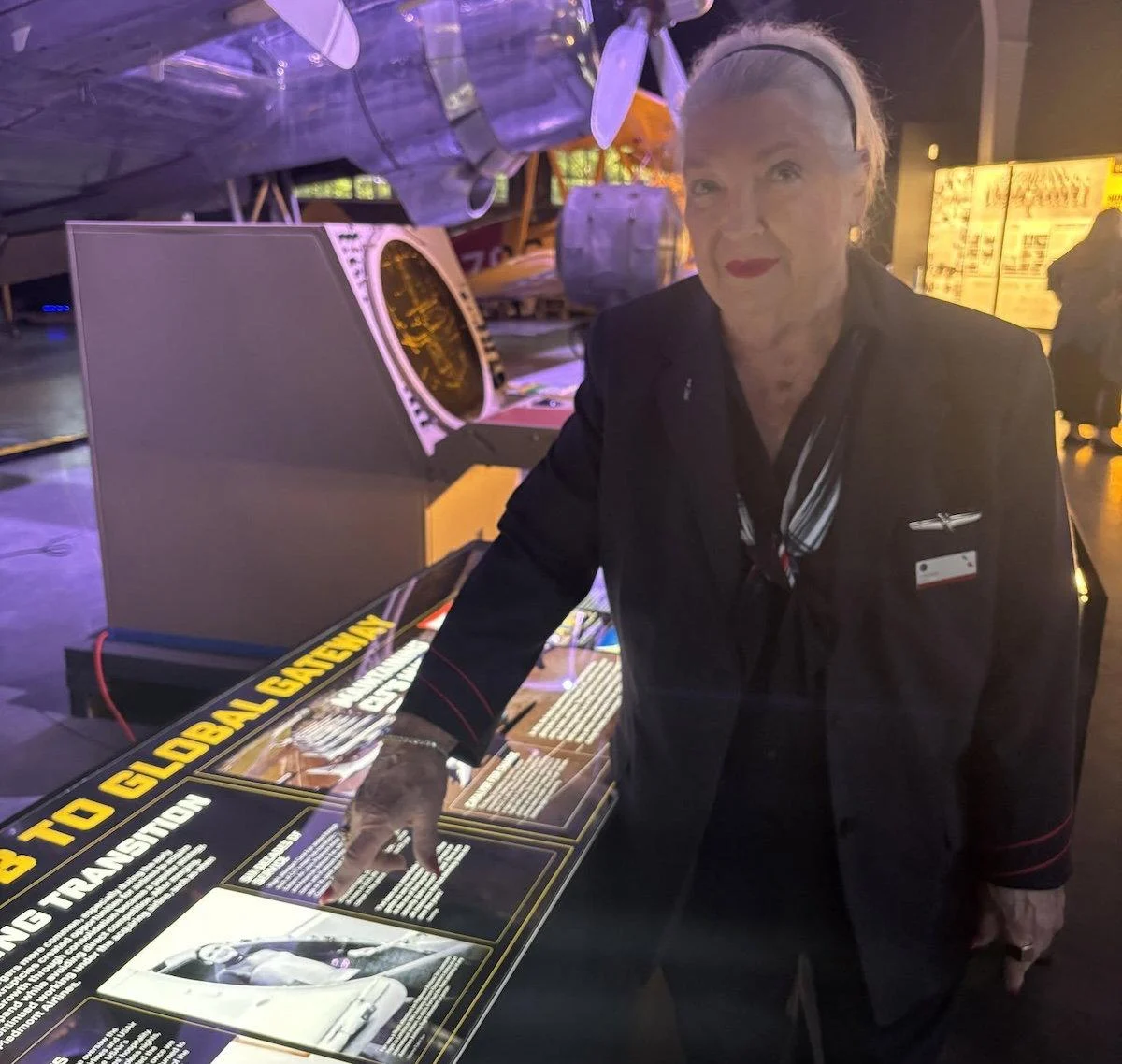
After an extraordinary aviation career spanning more than six decades, Carol Fair, the top-ranking active flight attendant at American Airlines, is stepping down from her post at the age of 83. Fair’s final operational duty will conclude on Monday, October 26, 2026, as she operates a transatlantic flight from London Heathrow Airport (LHR) to Charlotte Douglas International Airport (CLT). Her retirement marks the end of an era not only for American Airlines, but for the broader history of American commercial aviation, closing a chapter of service that began during the Kennedy administration in 1963.
Fair sits at the pinnacle of American Airlines’ active seniority list, representing approximately 30,000 flight attendants currently employed by the carrier. While two other flight attendants hold higher theoretical seniority numbers, neither remains actively airborne, making Fair the undisputed leader of the active cabin crew roster. Her departure brings into focus the unique structural incentives of the United States commercial aviation system, the evolution of career longevity in the skies, and the broader socioeconomic factors influencing older workers in the post-pandemic labor market.
The Evolution of a Historic Career: From Piedmont to American
Carol Fair’s entry into the aviation industry predates the deregulation of U.S. airlines, an era defined by heavily regulated route structures, strict demographic requirements for cabin crew, and a drastically different travel experience. She launched her career in 1963 with Piedmont Airlines, a regional carrier known for its dense network throughout the Eastern and Mid-Atlantic United States.
Over the subsequent decades, the landscape of American commercial aviation underwent massive consolidation. As smaller regional and legacy carriers merged to form mega-airlines, Fair’s corporate home shifted accordingly. Through successive corporate transactions, she transitioned from Piedmont Airlines to US Airways, and ultimately to American Airlines following the massive 2013 merger that created the world’s largest airline.
Ironically, Fair’s journey to American Airlines began with rejection. Early in her career, she applied for a position directly with American, only to be turned away by recruiters who claimed she did not fit the corporate image of the time. Decades later, through the relentless tide of corporate consolidation, she found herself wearing the uniform of the very airline that had once closed its doors to her.
Throughout her tenure, Fair primarily targeted international long-haul routes. Experienced flight attendants heavily favor these itineraries because they maximize allowable duty hours while minimizing the total number of working days required per month. Reflecting on her decades above the clouds, Fair noted that international passengers offered a more pleasant travel environment, dryly remarking that long-haul travelers "are vented better" compared to passengers on short-haul domestic legs.
Industry Traditions and Final Honors
To commemorate her unprecedented service, American Airlines has planned a traditional water cannon salute upon the arrival of Fair’s final flight in Charlotte on Monday. This high-honor ceremony—in which two airport emergency vehicles arc streams of water over the landing aircraft—is traditionally reserved for retiring airline captains on their final flights, making the tribute to Fair a rare and notable acknowledgment of cabin crew contributions.
Reflecting on her decision to hang up her wings, Fair expressed a profound sense of closure. "It’s time. I’ve enjoyed every minute of it," she stated. "I made No. 1 out of 30,000. You can’t go any higher, so I might as well hang it up."
Fair’s retirement follows closely behind the passing of another legendary figure in American aviation: Bette Nash. Nash, who began her career in 1957, held the Guinness World Record for the world’s longest-serving flight attendant, working for an astonishing 67 years until her passing in 2024 at the age of 88. While Fair’s 63-year career falls just shy of Nash’s historic benchmark, both women represent a vanishing breed of aviation professionals who dedicated their entire adult lives to commercial flight.
The U.S. Labor Framework: Why Flight Attendants Work Later in Life
The longevity of American flight attendants like Fair and Nash is largely facilitated by the regulatory and operational framework of the United States aviation labor market. Unlike many international carriers—particularly in regions like the Middle East or parts of Asia, where mandatory retirement ages or strict youth-oriented aesthetic standards prevail—U.S. federal aviation regulations do not mandate a maximum retirement age for flight attendants.
Instead, continued employment is contingent solely upon passing annual recurrent safety and emergency training. This training regimen requires crew members to demonstrate proficiency in door operation, slide deployment, firefighting, medical emergency response, and cabin evacuations.
Furthermore, seniority-based collective bargaining agreements in the United States create powerful financial and lifestyle incentives for long-tenured employees. As flight attendants climb the seniority ladder, they reach the top tier of the hourly pay scale. More importantly, seniority dictates bidding power for monthly schedules, vacation times, and route selections. Senior flight attendants enjoy the flexibility to build schedules that accommodate their personal lives, making the job increasingly attractive and sustainable over decades.
Broader Perspectives: Cultural Differences and Safety Debates
The presence of elderly flight attendants on U.S. carriers has occasionally been a point of international friction and cultural contrast. Past remarks by foreign airline executives—such as former Qatar Airways CEO Akbar Al Baker, who publicly criticized U.S. carriers for being staffed by "grandmothers"—highlight deep-seated cultural divergences regarding age and service roles in aviation. While passengers from Western nations are generally accustomed to encountering flight attendants of all age groups, travelers from regions that heavily emphasize youth and aesthetic conformity in customer-facing roles often express surprise.
Within the aviation safety community, however, the presence of ultra-senior crew members sparks nuanced debates. Industry analysts and safety advocates generally agree that experienced crew members offer unmatched crisis management capabilities, emotional stability, and institutional knowledge gained through decades of handling unpredictable cabin emergencies.
Conversely, questions occasionally arise regarding physical capabilities during high-stress evacuations. While regulatory bodies mandate annual training, critics point out that historical loopholes, such as the ability to retake practical exams after an initial failure, warrant rigorous oversight to ensure that all crew members—regardless of tenure—retain the requisite physical strength and agility to execute emergency protocols swiftly and effectively.
The Economic Realities of Modern Retirement
Beyond the intrinsic love for the profession, labor economists note that the trend of working into advanced age reflects broader macroeconomic pressures. While legacy U.S. airlines historically offered robust defined-benefit pension plans, decades of bankruptcies, industry restructurings, and the transition toward defined-contribution structures (such as 401(k) plans) have left many workers facing different retirement planning landscapes. For some aviation professionals, high living costs and the necessity of maintaining healthcare coverage drive the decision to remain on active flight rosters. For others, like Carol Fair, the job serves as a vital source of personal engagement, community, and routine.
Looking Ahead
As Carol Fair steps off her final aircraft in Charlotte, she leaves behind an industry transformed beyond recognition since her first day on the job in 1963. From piston-engine aircraft to modern widebody jets, and from the era of regulated fares to global airline alliances, her career has mirrored the maturation of commercial flight itself.
Her retirement closes an extraordinary chapter for American Airlines, leaving a legacy of dedication, resilience, and historic service that will long be remembered by colleagues and passengers alike.



 Gabriela Annisa

 Lukman Taruna Persada Ramadan

 Tatiana Tantri Indah Sari

 Anjar Salim


 Dwi Wanna
