
 Budi Mulyono
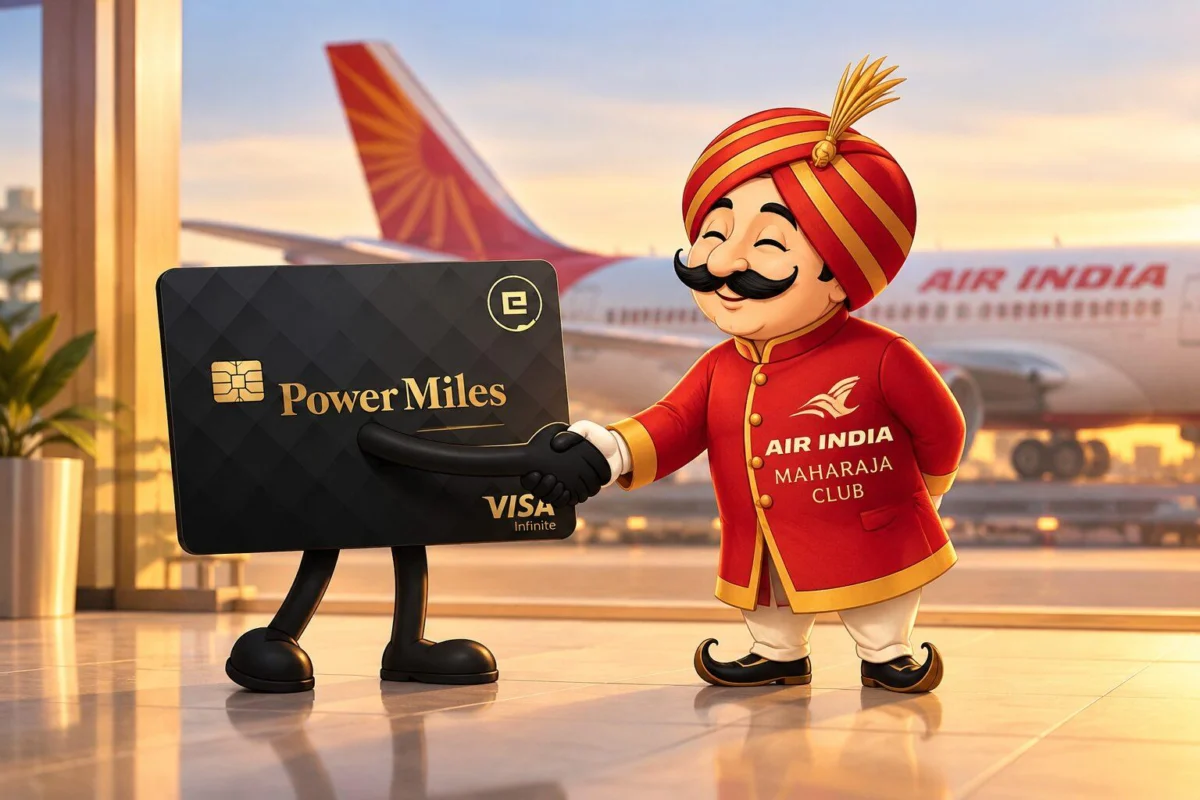
After a protracted series of delays spanning well over a year, Equitas Small Finance Bank has finally actualized one of the most anticipated features of its flagship PowerMiles credit card. Cardholders can now transfer their hard-earned reward points to an airline loyalty program, marking a crucial milestone for a product explicitly marketed as a premier travel rewards instrument. Air India’s Maharaja Club has emerged as the inaugural live transfer partner on the bank’s proprietary Xchange rewards platform.
This development is especially significant given the high expectations surrounding the PowerMiles card’s travel ecosystem. Since its inception, the card’s core value proposition has heavily relied on the promise of a robust rewards-to-miles conversion mechanism. However, prolonged administrative and technical setbacks throughout 2025 and 2026 left customers stranded with limited redemption choices, turning what was supposed to be a premier travel perk into a lingering exercise in patience.
The Genesis and Evolving Anatomy of the PowerMiles Rewards Ecosystem
At the heart of the Equitas PowerMiles credit card is an aggressive earning structure designed to capture both domestic and international spend. Cardholders earn three reward points for every INR 100 spent on eligible regular domestic transactions. For international purchases, the earning potential triples to nine reward points for every INR 100 spent.
The original commercial promise of the product centered on a lucrative 1:1 transfer ratio. Under this structure, every single Equitas Power Miles reward point was designed to convert seamlessly into one airline mile or hotel loyalty point across a diverse array of global travel partners. This feature was intended to elevate the card from a standard everyday payment instrument to a heavyweight contender in the Indian travel credit card landscape, competing directly with established offerings from major private and foreign banks.
However, the operational rollout of the Xchange rewards platform faced systemic bottlenecks. While the card successfully attracted consumers with promises of flexible international redemptions, the technological infrastructure required to support multi-partner point transfers lagged significantly behind the marketing schedule.

A Chronology of Repeated Delays
The journey toward launching the PowerMiles transfer program has been defined by a repeatedly shifting roadmap. Industry observers and cardholders have tracked a succession of missed deadlines that severely tested consumer trust.
Initially, financial sector trackers and early product disclosures indicated that the points-transfer capability would go live in early 2025. As development hurdles mounted, that target was pushed to January 1, 2026. When January arrived, the promised portal functionality was conspicuously absent, prompting the bank to recalibrate its expectations toward July 2026.
By the middle of 2026, the launch window had slipped further to September 2026. Most recently, official documentation and digital product listings pointed toward a broader March 2027 rollout for the complete ecosystem of partners. Against this backdrop of chronic delays, the sudden, unannounced activation of the Air India Maharaja Club in October 2026 represents a sudden and welcome shift in momentum. Nevertheless, the wider roster of promised partners remains offline, leaving the overarching program timeline anchored to the projected March 2027 completion date.
The Scope of the Proposed Transfer Network
Equitas Small Finance Bank initially publicized an expansive network comprising more than ten airline and hotel loyalty programs slated for the Xchange platform. The planned airline lineup includes major global carriers such as British Airways Executive Club, United Airlines MileagePlus, Finnair Plus, Air Canada Aeroplan, Etihad Guest, Thai Airways Royal Orchid Plus, AirAsia Rewards, Air India Maharaja Club, and Japan Airlines Mileage Bank. On the hospitality side, IHG One Rewards and Wyndham Rewards were earmarked as foundational hotel partners.
For Indian consumers, the inclusion of international heavyweights alongside domestic flag carrier Air India offered a comprehensive toolkit for optimizing award travel. Programs like British Airways Executive Club and United MileagePlus are heavily utilized by frequent flyers in the region for booking Oneworld and Star Alliance award seats, respectively.

Despite this ambitious roster, industry analysts emphasize a pragmatic approach: until individual partners officially appear as active selections on the Equitas Xchange interface, consumers should treat them strictly as future propositions rather than guaranteed operational benefits.
Current Functionality and User Experience
With the activation of the Air India Maharaja Club, cardholders finally possess a direct pipeline to convert their accumulated points into valuable airline currency. This integration allows consumers to build up Maharaja Club miles purely through everyday card expenditures rather than relying exclusively on actual flight segments or co-branded credit card spending.
Early adopters testing the newly launched portal, however, have noted that the integration is still undergoing growing pains. Initial trial transfers executed shortly after the feature went live indicated that point transfers are not processed instantaneously. This latency suggests that backend connectivity between the Equitas rewards engine and Air India’s frequent flyer database is still being optimized. Furthermore, users attempting to utilize the feature must navigate directly to the dedicated Xchange rewards portal to initiate transactions manually.
Broader Implications for the Indian Credit Card Market
The delayed rollout of the PowerMiles transfer platform highlights the operational complexities smaller financial institutions face when attempting to build sophisticated, multi-partner loyalty ecosystems. While major legacy banks possess deeply integrated API frameworks capable of supporting instant, multi-airline transfers, emerging small finance banks often encounter regulatory, technical, and commercial hurdles that impede rapid deployment.
For Equitas, the activation of Air India serves a dual purpose. On one hand, it validates the underlying architecture of the Xchange platform, proving that the bank can successfully execute cross-platform point transfers. On the other hand, the lingering absence of the remaining nine partners underscores the distance the institution still must travel to fulfill its original marketing commitments.

Market analysts note that consumer sentiment in the travel rewards segment is acutely sensitive to execution reliability. When a credit card leans heavily on aspirational travel perks to justify its place in a consumer’s wallet, repeated timeline slips risk alienating the core demographic of high-spending frequent flyers. Conversely, the successful onboarding of Air India demonstrates a commitment to eventually delivering on past promises, potentially restoring a degree of confidence among cardholders willing to weather the transition period.
Outlook and What Cardholders Should Expect Next
As the industry looks ahead toward the projected March 2027 deadline for the complete network rollout, current holders of the Equitas PowerMiles credit card are advised to evaluate their portfolios based on present utility rather than future projections.
The addition of Air India Maharaja Club transforms the card’s redemption equation, providing tangible value for domestic and international travelers who frequently utilize the airline’s network. However, until additional partners—such as British Airways, United, and Air Canada—go live, the card remains a transitional product on its way to becoming a fully realized travel rewards card.
Cardholders currently holding accumulated Equitas reward balances are encouraged to log into the Xchange rewards portal to verify their account status, review the newly minted Air India transfer interface, and assess how the 1:1 conversion ratio aligns with their personal travel redemption strategies. As Equitas Small Finance Bank works to onboard the remaining nine loyalty programs over the coming months, the broader financial community will be watching closely to see whether the institution can meet its revised 2027 benchmarks without further delay.



 Gabriela Annisa

 Lukman Taruna Persada Ramadan

 Tatiana Tantri Indah Sari

 Anjar Salim


 Dwi Wanna
