Budi Mulyono
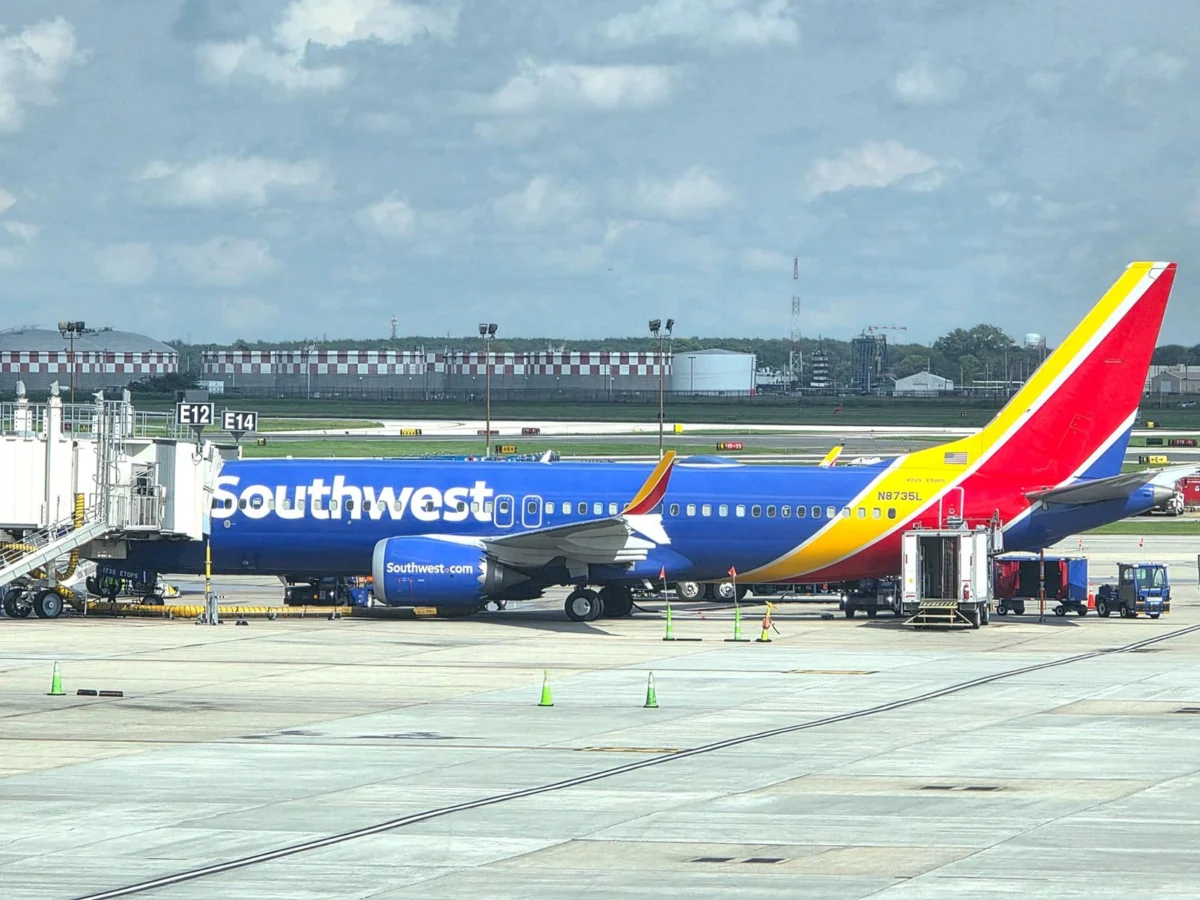
Southwest Airlines recently published its third-quarter 2026 financial results, celebrating what executive leadership framed as a historic corporate transformation driven by impressive top-line growth and surging ancillary revenue. Publicly, the carrier boasted a 21.2 percent year-over-year increase in total operating revenue, alongside an expansion in adjusted operating margins from 0.6 percent to 5.4 percent. The airline’s public relations campaign aggressively pushed the narrative that its newly implemented commercial model—featuring mandatory checked bag fees and assigned seating structures—was an immediate success embraced by consumers nationwide.
However, a meticulous examination of Southwest’s subsequent Securities and Exchange Commission (SEC) Form 10-Q filing reveals a significantly more complex and ambiguous financial reality. Beneath the optimistic corporate headlines lies a stark truth: the airline’s profitability remains heavily dependent on its lucrative partnership with JPMorgan Chase, rather than organic gains from its newly adopted passenger fee structures. As financial analysts delve deeper into the fine print of the quarterly report, serious questions are emerging about whether Southwest’s dramatic operational shift is genuinely revolutionizing its business model or merely masking underlying structural vulnerabilities.
The Core Financial Picture: Headline Numbers Versus SEC Disclosures
According to the official Q3 2026 earnings release, Southwest reported an adjusted pretax profit of $428 million. At first glance, this figure suggests a healthy rebound for the carrier as it navigates a challenging macroeconomic environment characterized by volatile fuel costs and changing consumer behavior. Yet, the 10-Q filing complicates this narrative by isolating the precise drivers of that profit.
When analyzing the baseline operating figures, it becomes apparent that financial contributions from the airline’s co-branded credit card agreement with Chase account for an astounding 61 percent of Southwest’s adjusted pretax profit. Furthermore, the line items tracking revenue attributed to the airline’s new commercial model do not cleanly isolate what individual passengers are paying out-of-pocket for newly instated fees. Instead, these categories heavily commingle traditional baggage and seat assignment fees with ongoing financial transfers from the Chase co-branded credit card portfolio.
This lack of granular transparency makes it exceedingly difficult for investors and industry analysts to determine whether everyday travelers are willingly adopting the airline’s new ancillary fee structure, or if the financial cushion is entirely being provided by credit card spend and contractual minimum guarantees.
A Closer Look at Ancillary Revenue and the Chase Partnership
To understand how Southwest’s revenue streams have shifted, one must examine the specific breakdowns provided in the quarterly financial tables. For the third quarter of 2026, non-loyalty passenger revenue stood at $6.122 billion, up from $4.896 billion in the same period of 2025. Loyalty award travel generated $734 million, a slight decrease from the $805 million recorded in Q3 2025. Meanwhile, the category capturing ancillary products sold separately—which explicitly includes associated Chase credit card benefits—jumped dramatically to $898 million, compared to $612 million a year prior. This represents a staggering 46.7 percent year-over-year increase in ancillary revenue, amounting to a $286 million surge.
However, the stagnant nature of pure loyalty program revenue—showing $563 million in Q3 2026 versus $557 million in Q3 2025—fails to clarify the underlying mechanics. Southwest has altered how it accounts for funds received through the Chase partnership. Specifically, Chase has adjusted its internal allocations, attributing a larger percentage of the partnership’s value directly to customer benefits (such as priority boarding and future seating perks associated with the new commercial model) rather than direct travel redemption. Because Southwest recently introduced assigned seating and tiered fares, the airline has justified shifting these accounting buckets, further muddying the waters regarding true consumer adoption of ancillary services.
Compounding this complexity, Southwest quietly amended its agreement with Chase yet again during the third quarter. This latest contract extension secures the partnership for the long term and incorporates provisions for a forthcoming premium credit card, alongside anticipated access to exclusive "Icon Lounges" slated to open across major airports beginning in 2027. Despite the monumental strategic importance of this partnership renewal, the SEC filing omits explicit disclosures regarding the exact financial value of the new amendment’s upfront payments, allocation formulas, or its immediate impact on Q3 revenue.
Stripping Out the Noise: Adjusted Operating Profit Realities
To accurately gauge the health of Southwest’s airline operations independent of accounting anomalies and credit card subsidies, financial analysts often strip away non-operating gains. When evaluating the core airline business, the narrative of a completely transformed enterprise begins to fracture further.
Southwest reported a company-adjusted operating profit of $452 million for Q3 2026, a massive leap from the paltry $42 million reported in Q3 2025. However, a significant portion of this profitability was artificially inflated by non-operational items. Specifically, the airline recorded $214 million in aircraft and engine transaction gains, alongside a $48 million residual-value depreciation benefit. In the prior year’s third quarter, these figures stood at just $13 million and $11 million, respectively.
When these accounting benefits are removed from the ledger, the remaining operating profit—holding other fixed costs constant—drops to $190 million for Q3 2026, compared to a meager $18 million in Q3 2025. As a share of total revenue, this core remainder represents just 2.26 percent, up from 0.26 percent a year prior. While this demonstrates a modest positive trajectory, it underscores the reality that Southwest’s day-to-day flying operations are generating razor-thin margins, with the bulk of its financial security propped up by asset sales, accounting adjustments, and the Chase credit card engine.
Strategic Implications: Imitating Legacy Carriers Without the Infrastructure
The broader strategic implication of Southwest’s Q3 2026 report is that the carrier is undergoing an identity crisis. For decades, Southwest distinguished itself through a simple, highly efficient business model: a single aircraft family (the Boeing 737), open seating, no checked bag fees, and point-to-point routing that avoided major hub congestion. This unique value proposition allowed Southwest to maintain lower operating costs and carve out a profitable niche that consistently outperformed legacy competitors during economic downturns.
By dismantling open seating, implementing bag fees, planning airport lounges, and introducing premium credit card tiers, Southwest is systematically shedding its historic differentiators. In doing so, the airline is intentionally reshaping its commercial strategy to mirror network legacy carriers like American Airlines, Delta Air Lines, and United Airlines.
Yet, industry experts point out a fundamental flaw in this imitation strategy. Southwest still lacks key infrastructure elements that sustain legacy profitability, such as a robust first-class cabin, long-haul international route networks, and true seat-back entertainment systems. By stripping away its historic cost advantages and customer-friendly quirks to adopt a standard legacy playbook, Southwest exposes itself to the harsh realities of industry mean reversion. Instead of outperforming the market through disruptive innovation, the airline is positioning itself to perform on par with competitors—only with a restricted product offering and a heavy reliance on financial engineering.
Chronology of Southwest’s Commercial Shift
To fully grasp how Southwest arrived at this critical juncture, it is helpful to trace the timeline of its recent corporate evolution:
- Late 2024 to Early 2025: Facing mounting shareholder pressure and activist investor campaigns demanding higher returns, Southwest leadership announces a comprehensive strategic review of its business model, signaling an end to sacred-cow policies like free checked bags and open seating.
- Mid-2025: The airline formally outlines its transition timeline, introducing tiered fare structures, assigned seating schedules, and foundational updates to its digital booking platforms to accommodate ancillary monetization.
- Late 2025: Southwest reports initial earnings under the transitional phase, noting compressed margins and highlighting the urgent need for ancillary revenue streams to offset rising labor and maintenance costs.
- Q3 2026: Southwest officially declares its transformation "complete" in public earnings releases, pointing to a 21.2 percent jump in revenue and an operating margin expansion to 5.4 percent. However, the accompanying SEC 10-Q filing reveals deep reliance on the Chase co-branded credit card agreement, which generates 61 percent of adjusted pretax profit.
- Late 2026 and Beyond: Southwest amends its Chase partnership to incorporate upcoming premium credit card tiers and an ambitious airport lounge network (Icon Lounges) scheduled for debut in 2027, locking the airline further into a financial model anchored by credit card liquidity rather than pure passenger ticket sales.
Investor Reactions and Market Outlook
Wall Street’s reaction to the Q3 2026 financial disclosures has been characteristically cautious. While equity analysts initially responded favorably to the headline revenue growth and margin expansion, subsequent deep dives into the 10-Q filing sparked debates regarding the long-term sustainability of the airline’s earnings quality.
Institutional investors are increasingly viewing Southwest not as a uniquely positioned low-cost disruptor, but rather as a traditional domestic carrier whose valuation is heavily supported by banking partnerships. The valuation of airline loyalty programs and co-branded credit card portfolios has historically provided a reliable safety net during industry downturns. However, tying the airline’s fundamental operating narrative so closely to financial transfers from JPMorgan Chase creates systemic exposure to changes in consumer credit health, interest rates, and regulatory scrutiny surrounding credit card swipe fees and loyalty point valuations.
Furthermore, consumer advocates and frequent flyers have voiced ongoing frustration regarding the erosion of Southwest’s legendary customer service ethos. The introduction of fees for services that were once included in the base ticket price has created friction among legacy loyalists, many of whom feel the airline is compromising its core identity without delivering the premium hard product upgrades—such as true first-class seating or modern cabin amenities—offered by competitors.
Conclusion: A Critical Crossroads for LUV
As Southwest Airlines looks toward fiscal year 2027 and the rollout of its newly announced premium credit card and airport lounge network, the carrier stands at a definitive crossroads. The Q3 2026 financial disclosures prove that while the corporate rebranding and commercial overhaul have generated massive headline revenue figures, the underlying engine of Southwest’s profitability remains tethered to financial engineering and credit card partnerships rather than operational supremacy.
Whether this calculated gamble will pay off in the long run depends entirely on consumer acceptance of the airline’s new fee structure and its ability to successfully execute high-end ancillary ventures like the Icon Lounge network. For now, however, the narrative that Southwest has effortlessly transformed its airline operations into a modern profit powerhouse is severely undermined by the numbers hidden within its own SEC filings. The airline may be flying into a more lucrative future, but it is doing so on the financial wings of credit card rewards rather than the friendly skies of traditional passenger service.



 Tatiana Tantri Indah Sari

 Dwi Wanna

 Anjar Salim

 Lukman Taruna Persada Ramadan