
 Cholid Fahmi Thalib
The landscape of modern gastronomic travel is undergoing a subtle yet profound shift. While upscale tasting menus and destination restaurants have traditionally dominated the itineraries of culinary travelers, an increasing number of food enthusiasts are looking past the dining room to discover regional identity on the shelves of local farm markets, bakeries, and roadside stands. In Pennsylvania, this grassroots approach to food culture has turned everyday agricultural hubs into vital stops for travelers seeking an authentic taste of the commonwealth.
Rather than relying solely on sit-down eateries, visitors navigating the state’s winding rural routes are discovering that a single afternoon spent browsing a regional market can reveal more about local heritage than a week of formal dining. From the rolling hills of Lancaster County to the fertile terrain of the Susquehanna Valley, these establishments serve as community anchors, offering an unfiltered look at what residents grow, bake, preserve, and bring to their family tables.
The Evolution of Agritourism and Direct-to-Consumer Markets
The modern fascination with farm markets is not merely a lifestyle trend; it is part of a broader evolution in American agritourism that has accelerated over the past decade. Historically, these spaces functioned primarily as utilitarian outlets where local farmers sold surplus harvests directly to neighbors. However, economic shifts, rising consumer interest in traceable food sourcing, and a post-pandemic desire for outdoor, open-air experiences have transformed them into sophisticated destinations.
According to data compiled by the United States Department of Agriculture (USDA) regarding direct-to-consumer food sales, farm stands, community-supported agriculture (CSAs), and regional farmers markets continue to play a critical role in the economic viability of small-scale family agriculture. These direct channels allow growers and independent producers to bypass traditional wholesale distribution networks, retaining a higher percentage of profit while building direct relationships with their customer base.
Agricultural economists note that this localized economic model provides a crucial buffer against supply chain volatility. When national food distribution networks face disruptions, regional food systems—anchored by farm markets, local orchards, and independent processors—often demonstrate remarkable resilience. For the traveling public, patronizing these markets translates into meaningful economic support for the growers, bakers, and artisans who define a region’s distinct character.
Seasonal Chronology: Navigating Pennsylvania’s Agricultural Calendar
Understanding the rhythm of a Pennsylvania farm market requires an appreciation of the state’s distinct seasonal transitions. Unlike commercial grocery stores that offer uniform produce year-round, independent markets operate in tandem with the agricultural calendar, creating a dynamic environment where the inventory shifts dramatically from month to month.
The agricultural year typically begins in late winter and early spring, a period when market shelves are dominated by shelf-stable goods, artisan preserves, bulk baking supplies, comfort foods, and fresh items emerging from heated greenhouses. During these months, visitors frequently seek out regional specialties such as homemade noodles, spiced apple butter, locally cured meats, and traditional baked goods that reflect the commonwealth’s deep-rooted heritage.
As temperatures rise, the landscape shifts rapidly. Summer ushers in a wave of perishable abundance. From June through August, market tables overflow with sweet corn, vine-ripened tomatoes, peaches, berries, and cherries. This is peak season for road-trip picnics, prompting travelers to assemble impromptu midday meals consisting of fresh artisanal cheeses, regional deli meats, crusty breads, and seasonal fruit.
By September, the atmosphere transitions into the harvest phase. Autumn brings an influx of crisp apple varieties, sweet cider, pumpkins, squashes, and robust baking spices. This period often sees the highest volume of agritourism traffic, as families combine scenic foliage drives with visits to orchards and country stores. This seasonal cycle ensures that no two visits to a Pennsylvania farm market are identical, encouraging repeat patronage and continuous exploration.
Anatomy of a Market Stop: Beyond the Produce Bin
For the uninitiated, a comprehensive farm market offers a sensory experience that starkly contrasts with the standardized aisles of corporate supermarkets. A single location frequently houses multiple distinct culinary operations under one roof or across a sprawling homestead.
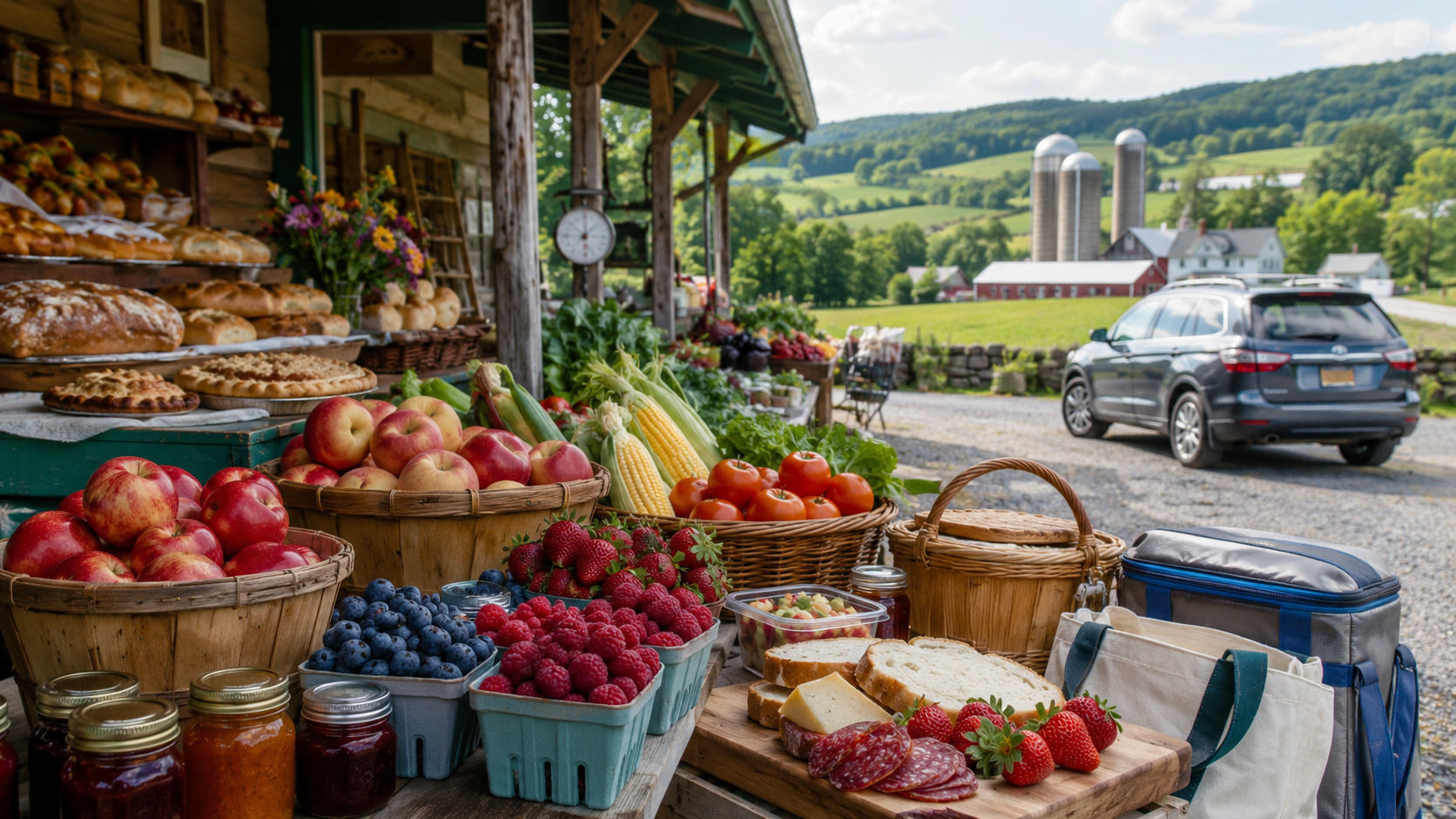
Produce bins feature varieties of fruits and vegetables selected as much for flavor and regional adaptability as for shelf life. Bakery cases, often stocked before dawn, produce traditional items such as whoopie pies, fruit pies, artisan sourdoughs, and sweet rolls that reflect cultural preferences passed down through generations. Meanwhile, deli counters serve as focal points for locals, providing specialized meats, house-made salads, spreads, and regional cheeses.
Furthermore, bulk-food sections offer a glimpse into traditional provisioning habits. Shelves lined with dried fruits, nuts, baking mixes, local honey, and proprietary spice blends reveal how regional households maintain their pantries. These items, valued for their shelf stability, make popular take-home purchases for travelers looking to replicate flavors long after returning home.
Economic and Cultural Implications for Small Towns
The presence of a thriving farm market often exerts a stabilizing influence on surrounding rural economies. When a destination draws visitors for its agricultural offerings, neighboring businesses—including antique shops, historic sites, bed-and-breakfasts, and independent cafes—frequently experience a corresponding rise in foot traffic.
Local municipal leaders and tourism boards have increasingly recognized this symbiotic relationship. In central regions of the state, itineraries are frequently designed to link morning agricultural stops with afternoon explorations of nearby historic boroughs, state parks, and localized dining establishments. For instance, travelers exploring the outskirts of Huntingdon County often pair a morning visit to an area orchard or market with a downtown dining excursion, effectively bridging the gap between rural agriculture and urban hospitality.
Industry analysts suggest that this multi-stop tourism model distributes visitor spending more equitably across rural communities. Rather than concentrating economic impact in a single commercial district, agritourism encourages exploration along secondary highways and country roads, directing revenue toward independent operators who might otherwise be bypassed by major interstate traffic.
Strategic Planning for the Culinary Traveler
Maximizing the experience of a Pennsylvania farm-market excursion requires a methodical approach, blending flexibility with practical preparation. Travel experts recommend structuring day trips around the operational cycles of these businesses.
Morning arrivals are widely considered optimal for securing the widest selection of baked goods, fresh-picked produce, and hot breakfast items before popular inventory sells out. Early visits also afford travelers the opportunity to converse with proprietors and staff, who can provide recommendations regarding seasonal specialties and nearby points of interest.
Midday stops are best utilized for provisions. Rather than relying on fast-food chains along major thoroughfares, travelers can curate custom picnics using locally sourced cheeses, fresh bread, deli meats, and seasonal fruit, enjoying them at nearby state parks, scenic overlooks, or along the Susquehanna River.
Late-day visits, conversely, are ideal for acquiring shelf-stable goods, preserves, and gifts. Packing a portable cooler and maintaining a supply of reusable shopping bags in the vehicle ensures that perishable purchases remain intact throughout a long day of driving.
The Broader Impact on Modern Travel Behavior
The growing preference for farm markets over conventional dining and shopping outlets highlights a broader psychological shift among modern travelers. Increasingly, consumers are seeking authenticity, transparency, and a tangible connection to the origins of their food.
By stepping away from standardized itineraries and engaging directly with regional producers, travelers gain a more nuanced appreciation of Pennsylvania’s diverse culinary landscape. Whether it is a jar of locally harvested honey, a warm pastry from a family-run bakery, or a basket of tree-ripened fruit, these simple acquisitions offer a lasting connection to the communities that produce them. Ultimately, incorporating farm markets into a travel itinerary transforms a routine journey across the commonwealth into an immersive exploration of regional culture, heritage, and flavor.



 Chandra Hamzah
 Gabriela Annisa
 Budi Mulyono

 Susilo Edi Turonggo
 Walid Sujud Trenggono