
 Budi Mulyono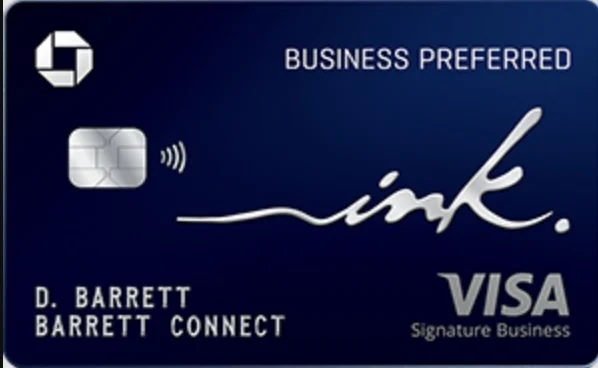
The competitive landscape of small business financing has been increasingly defined by the strategic utility of rewards-based credit instruments. Among the most prominent offerings in the United States market is the Chase Ink Business suite, a portfolio of cards managed by JPMorgan Chase & Co. that targets a diverse range of commercial entities, from sole proprietorships to established corporations. Within this ecosystem, the Chase Ink Business Preferred® Credit Card and the Chase Ink Business Cash® Credit Card represent two distinct philosophies in capital management: the premium, travel-oriented approach versus the high-yield, no-annual-fee cash flow model. Understanding the structural differences, earning potentials, and strategic synergies between these two cards is essential for business owners seeking to optimize their operational expenditures.
The Evolution of the Chase Ink Business Portfolio
The Chase Ink brand has undergone significant transformations over the last decade to adapt to the changing needs of the American entrepreneur. Originally anchored by products like the Ink Bold and Ink Plus, Chase streamlined its business offerings to provide more targeted value propositions. The introduction of the Ink Business Preferred in 2016 marked a shift toward a travel-centric premium model, designed to compete directly with high-end business cards from American Express. Conversely, the Ink Business Cash was positioned as a foundational tool for businesses with high overhead in specific categories like office supplies and telecommunications.
This dual-track strategy allows Chase to capture market share across different business life cycles. While the Preferred card targets the "road warrior" or the digital agency with significant advertising spend, the Cash card serves as a high-earning utility for localized businesses. Recent data suggests that the small business sector increasingly relies on these revolving credit lines not just for capital, but as a mechanism for generating "soft" returns through loyalty points and cash back, which can then be reinvested into business travel or employee incentives.
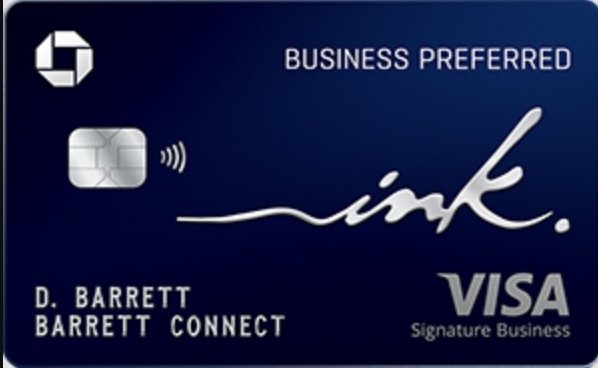
Chase Ink Business Preferred: The Premium Travel Engine
The Chase Ink Business Preferred® Credit Card is categorized as a "premium" card, characterized by its $95 annual fee and its integration into the broader Ultimate Rewards ecosystem. The card is designed for businesses that maintain a high volume of spend in specific growth-related categories.
Reward Structure and Spending Thresholds
The primary draw of the Ink Preferred is its tiered earning structure. Cardholders earn 3 points per $1 spent on the first $150,000 in combined purchases each account anniversary year in the following categories:
- Shipping purchases
- Advertising purchases made with social media sites and search engines
- Internet, cable, and phone services
- Travel
For businesses focused on e-commerce or digital marketing, the 3x multiplier on advertising and shipping represents a significant return on investment. Once the $150,000 threshold is met, the earning rate reverts to 1 point per $1.
Redemption and Transferability
The "premium" designation of this card is most evident in its redemption options. Points earned on the Ink Preferred are worth 1.25 cents each when redeemed for travel through the Chase Ultimate Rewards® portal. More significantly, this card grants the ability to transfer points at a 1:1 ratio to a variety of airline and hotel partners, including United Airlines MileagePlus, Southwest Airlines Rapid Rewards, British Airways Executive Club, and World of Hyatt. Financial analysts often value these transferred points at 2.0 cents or higher depending on the redemption, effectively doubling the card’s baseline value for savvy travelers.
Chase Ink Business Cash: The Operational Utility Tool
In contrast to the travel-focused Preferred card, the Chase Ink Business Cash® Credit Card is a no-annual-fee product that emphasizes high-yield returns on everyday business operations. While it is marketed as a cash-back card, it technically earns Ultimate Rewards points that can be redeemed for cash at 1 cent per point.
High-Yield Categories
The Ink Business Cash offers a tiered 5% and 2% reward structure, which is particularly aggressive for a card with no annual fee:
- 5% Cash Back (or 5x points): On the first $25,000 spent in combined purchases at office supply stores and on internet, cable, and phone services each account anniversary year.
- 2% Cash Back (or 2x points): On the first $25,000 spent in combined purchases at gas stations and restaurants each account anniversary year.
- 1% Cash Back: On all other purchases with no limit.
For a small business with high telecommunications costs or a consistent need for office supplies, the 5% category provides a maximum of $1,250 in annual rewards (or 125,000 points) on a relatively modest spend.
The Limitation of "Cash" Points
A critical distinction in the Chase ecosystem is that the Ink Business Cash, when held in isolation, does not allow for point transfers to travel partners. Points are capped at a value of 1 cent per point for cash back or travel portal redemptions. This creates a strategic ceiling for business owners who do not hold a companion premium card.
Quantitative Comparison and Data Analysis
To determine which card offers superior value, a business must analyze its annual spend across the specific bonus categories. A business spending $20,000 a year on digital advertising would earn 60,000 points on the Ink Preferred (valued at $750 for travel via the portal). The same spend on the Ink Business Cash would only earn 20,000 points (valued at $200).
However, a business with $10,000 in office supply and internet expenses would earn 50,000 points on the Ink Business Cash (valued at $500). That same spend on the Ink Preferred would earn only 30,000 points (valued at $375 for travel), while also incurring the $95 annual fee.
Welcome Bonus Requirements
The welcome offers for these cards frequently fluctuate, but they typically involve high spending requirements that reflect the cards’ commercial nature. Historically, the Ink Business Preferred requires a spend of $8,000 to $10,000 within the first three months to trigger a bonus of 100,000 points. The Ink Business Cash usually requires a spend of $6,000 within three months for a bonus of $750 (75,000 points). These requirements necessitate that a business has sufficient upcoming expenses to meet the threshold without overextending its cash flow.
The Synergy of the "Chase Business Trifecta"
Financial experts and credit analysts frequently advocate for a "multi-card strategy" to maximize returns. Because Chase allows for the consolidation of Ultimate Rewards points across different accounts, a business owner can hold both the Ink Business Preferred and the Ink Business Cash to create a highly efficient rewards engine.
By holding the Ink Business Preferred, a cardholder "unlocks" the value of the points earned on the Ink Business Cash. Points earned at the 5x rate on the Cash card can be moved to the Preferred account, where they then become eligible for the 25% travel portal bonus or 1:1 transfers to airline partners. This synergy effectively turns the 5% cash back on office supplies into a 5x point yield that could be worth 10% or more when redeemed for high-value international travel.
Institutional Perspectives and Market Positioning
Market analysts note that Chase’s strategy with the Ink suite is designed to create ecosystem "stickiness." By offering a no-fee card with high-yield categories (Ink Cash) alongside a premium card with transfer capabilities (Ink Preferred), Chase encourages businesses to move all their expenditures into the Chase environment.
From a credit risk perspective, Chase maintains strict eligibility requirements. The "5/24 rule," an unofficial but widely recognized policy, generally prevents applicants from being approved if they have opened five or more personal credit cards from any issuer within the last 24 months. Interestingly, while an applicant must be under 5/24 to be approved for an Ink card, the Ink cards themselves—as business products—typically do not count toward a user’s 5/24 total once opened, as they do not appear on personal credit reports. This makes them a strategic tool for credit enthusiasts and serious business owners alike.
Broader Implications for Small Business Management
The choice between the Ink Business Preferred and the Ink Business Cash often mirrors the broader financial health and goals of a company.
- Travel and Growth: The Preferred card is a tool for expansion. Its inclusion of travel insurance, primary rental car coverage for business purposes, and cell phone protection ($600 per claim against theft or damage) provides a safety net for growing enterprises with mobile workforces.
- Cash Flow Optimization: The Cash card is a tool for overhead reduction. For a business operating on thin margins, the ability to claw back 5% of fixed costs like internet and phone services is a direct contribution to the bottom line.
Industry reactions suggest that the "business" definition for these cards is broader than many realize. Under current banking regulations, freelancers, "gig" economy workers, and consultants operating as sole proprietors are often eligible for these products using their Social Security Number in lieu of an Employer Identification Number (EIN). This democratization of business credit has allowed smaller entities to access the same reward structures once reserved for large corporations.
Conclusion and Strategic Outlook
As the financial sector moves toward more personalized and data-driven credit offerings, the Chase Ink Business suite remains a benchmark for the industry. The Ink Business Preferred stands as the superior option for businesses with high travel and advertising spends that value the flexibility of point transfers. The Ink Business Cash remains the premier choice for businesses seeking to maximize returns on fixed operational costs without the burden of an annual fee.
Ultimately, the decision is not necessarily binary. The most sophisticated financial strategy involves utilizing the Ink Business Cash for its 5% categories while maintaining an Ink Business Preferred (or a personal Chase Sapphire card) to act as a conduit for high-value redemptions. As small businesses continue to navigate an era of fluctuating costs and digital transformation, these credit tools will remain pivotal in turning necessary expenses into strategic assets.




 Anjar Salim
 Chandra Hamzah
 Tatiana Tantri Indah Sari
 Lukman Taruna Persada Ramadan
