
 Budi Mulyono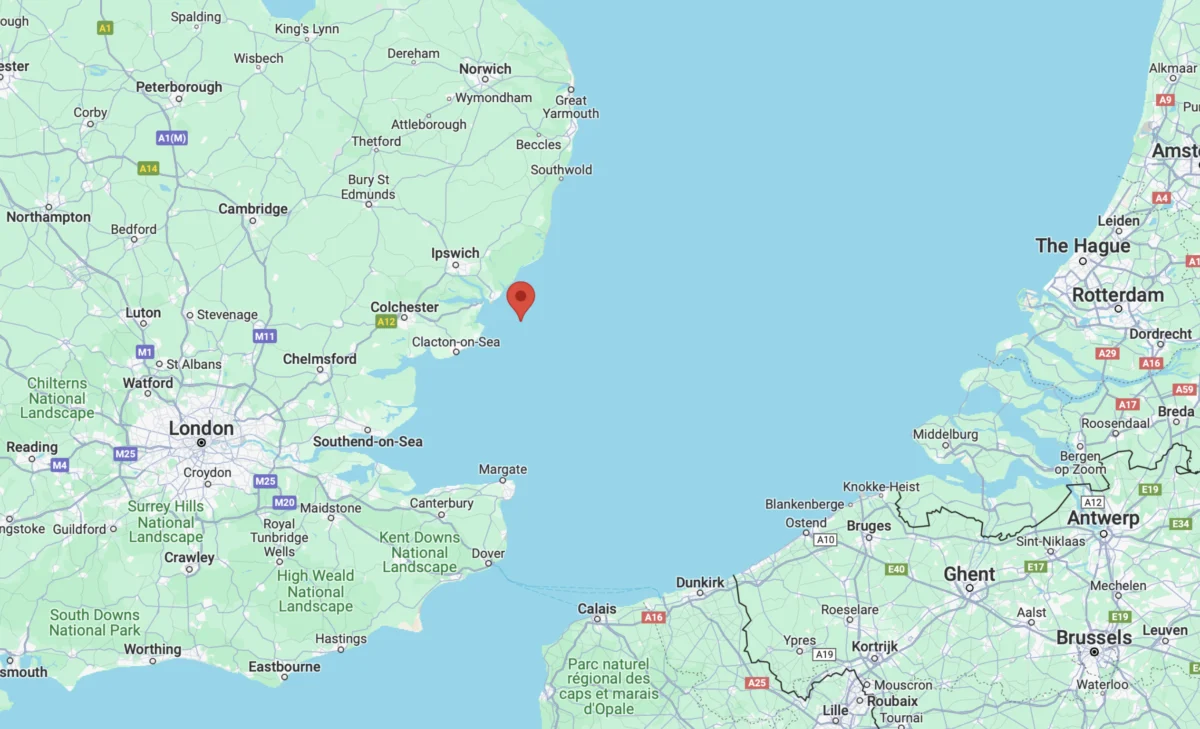
The Principality of Sealand stands as one of the most paradoxical entities in modern geopolitics, occupying a decommissioned World War II anti-aircraft platform in the North Sea while claiming the full status of a sovereign nation. Located approximately seven miles off the coast of Suffolk, England, this micronation possesses no natural land, no indigenous flora or fauna, and no formal recognition from any member state of the United Nations. Despite these conventional absences, Sealand maintains all the trappings of a functional state, including a national constitution, a unique currency, a flag, and a government that issues passports and titles of nobility. The existence of Sealand challenges traditional definitions of statehood and raises complex questions regarding international law, territorial waters, and the persistence of individual autonomy in a globalized world.
The Historical Genesis: From Military Outpost to Sovereign Claim
The physical foundation of Sealand is HM Fort Roughs, one of several Maunsell Sea Forts designed by Guy Maunsell for the British Royal Navy during the Second World War. Built in 1942, the structure consists of a floating pontoon base with two hollow towers joined by a deck upon which a flight deck and living quarters were constructed. During the war, the fort housed between 100 and 120 personnel and was equipped with heavy anti-aircraft weaponry to defend the United Kingdom against German mine-laying aircraft and E-boats.
Following the cessation of hostilities, the fort was decommissioned and abandoned by the Royal Navy in 1956. For a decade, the structure remained a rusting relic in international waters—at the time, British territorial waters extended only three nautical miles from the coast, and HM Fort Roughs sat roughly seven miles out. This legal vacuum became the catalyst for the birth of Sealand. In 1966, Paddy Roy Bates, a former British Army major and a pioneer of "pirate" radio, occupied the fort. Bates had previously operated Radio Essex from another fort, Knock John, but sought a location further out to evade the reach of the British government’s broadcasting restrictions.
On September 2, 1967, Bates declared the independence of the Principality of Sealand. Rather than launching a radio station, he chose to establish a sovereign state, naming himself Prince Roy and his wife Joan as Princess Joan. This declaration was not merely a symbolic gesture; it was the beginning of a decades-long struggle to maintain autonomy against legal and physical challenges.
A Chronology of Conflict and Legal Precedent
The early years of Sealand were marked by significant legal and military confrontations that the Bates family cites as evidence of their de facto sovereignty. In 1968, the British military attempted to remove Bates from the platform. During the confrontation, shots were fired from the fort as a warning to a vessel from the Trinity House lighthouse authority. This led to Roy Bates being summoned to a British court on firearms charges.
In a landmark ruling for the micronation, the presiding judge concluded that the UK courts had no jurisdiction over the matter because the incident occurred outside British territorial waters. Sealand supporters view this 1968 court decision as the first instance of de facto recognition by the British judiciary, as the state essentially admitted it had no legal authority over the platform at that time.
The most dramatic challenge to Sealand’s sovereignty occurred in 1978. While Roy Bates was in England, Alexander Achenbach, who described himself as the Prime Minister of Sealand, hired several German and Dutch mercenaries to stage an armed takeover of the platform. They took Bates’ son, Michael, hostage before Roy Bates launched a counter-attack via helicopter, retaking the fort and detaining the invaders as prisoners of war.
The incident necessitated diplomatic intervention. While the Dutch and German governments petitioned the UK to intervene, the British Foreign Office maintained its stance that it had no jurisdiction. Consequently, Germany sent a diplomat from its London embassy to Sealand to negotiate the release of its citizen. The Bates family argues that this direct diplomatic negotiation constitutes de jure recognition of Sealand’s sovereignty by the German government.
The Infrastructure of Statehood and National Identity
Despite its diminutive size—the habitable area of the platform is roughly 550 square meters—Sealand has developed a comprehensive national identity. In 1975, the Principality introduced its constitution, followed by the adoption of a national anthem ("E Mare Libertas," or "From the Sea, Freedom") and a red, white, and black flag.

The Sealandic economy is perhaps the most unique aspect of its survival. Since it cannot rely on natural resources or traditional industry, the government has turned to the digital and symbolic economy. The Principality was an early adopter of the concept of a "data haven." In 2000, a company called HavenCo was established on Sealand, aiming to provide managed colocation services that were ostensibly immune to the jurisdiction of any other country. While the venture eventually faced internal disputes and technical hurdles, it highlighted Sealand’s potential as a hub for digital sovereignty.
Today, the primary source of revenue for the maintenance of the fort—which requires constant protection against the corrosive effects of the North Sea—is the sale of titles of nobility. Through its official website, individuals can purchase titles such as Lord, Lady, Baron, or Baroness. Notable figures, including singer-songwriter Ed Sheeran, have reportedly acquired Sealandic titles, further embedding the micronation into popular culture. The state also issues its own currency, the Sealand Dollar (pegged to the U.S. Dollar), and postage stamps, although their use is largely limited to collectors.
The Bureaucracy of Immigration and Visitation
For the average traveler, Sealand remains one of the most difficult "countries" to visit. The Bureau of Internal Affairs manages a highly restrictive visa process. Unlike traditional tourist destinations, Sealand does not have the infrastructure to support regular visitors; there are no hotels, restaurants, or public facilities. Access to the platform is usually achieved via a winch system from a boat, a process that is weather-dependent and inherently dangerous.
Official communications from the Sealand government emphasize that visas are rarely granted to the general public. Priority is given to those who have demonstrated a significant commitment to the Sealandic community, such as long-term citizens or those holding high-ranking titles of nobility. The Principality occasionally invites members of the media or prominent influencers to document life on the platform, but these visits are strictly controlled and meticulously planned. This exclusivity has created an aura of mystery around the daily operations of the fort, which is usually manned by at least two residents to maintain the claim of permanent occupation.
Legal Standing Under International Law
The legitimacy of Sealand is a frequent subject of debate among scholars of international law. Most legal experts point to the 1933 Montevideo Convention on the Rights and Duties of States, which outlines four criteria for statehood: a permanent population, a defined territory, a government, and the capacity to enter into relations with other states.
Sealand argues it meets all four:
- Permanent Population: Though small, there is a consistent human presence on the fort.
- Defined Territory: The physical structure of HM Fort Roughs serves as its land.
- Government: The Bates family has maintained a continuous administrative structure since 1967.
- Capacity for Relations: They cite the 1978 German diplomatic visit as evidence of this capacity.
However, the international community generally adheres to the "constitutive theory" of statehood, which posits that a state only exists if it is recognized as such by other sovereign states. Furthermore, the United Nations Convention on the Law of the Sea (UNCLOS) states that artificial islands and structures do not possess the status of islands and have no territorial sea of their own. The UK’s decision in 1987 to extend its territorial waters to 12 nautical miles effectively placed Sealand within British territory, though Sealand officially protested the move, claiming their sovereignty was "grandfathered" in.
Broader Implications and the Future of Sealand
The story of Sealand is more than a historical curiosity; it represents a broader human impulse toward self-determination and the exploitation of legal "grey zones." In an era where the digital world often transcends national borders, Sealand serves as a physical precursor to concepts like "network states" or autonomous floating cities.
The current head of state, Prince Michael Bates, who took over following his father’s death in 2012, continues to advocate for the Principality’s independence. The government has recently focused on environmental initiatives and expanding its digital presence through e-residency programs, mirroring the strategies of larger nations like Estonia.
While Sealand may never receive a seat at the United Nations, its continued existence for over half a century is a testament to the resilience of the Bates family and the enduring allure of the idea that one can carve out a nation from the sea. For geographers, lawyers, and travelers alike, Sealand remains a fascinating anomaly—a sovereign entity built on steel and concrete, standing defiantly against the waves of both the North Sea and international diplomacy. Whether viewed as a legitimate state or a decades-long performance art piece in sovereignty, Sealand continues to occupy a unique space in the global landscape, proving that the definition of a "country" is often a matter of perspective, persistence, and the courage to defend a few hundred square meters of rusted iron.



 Anjar Salim
 Chandra Hamzah
 Tatiana Tantri Indah Sari
 Lukman Taruna Persada Ramadan
