
 Anjar Salim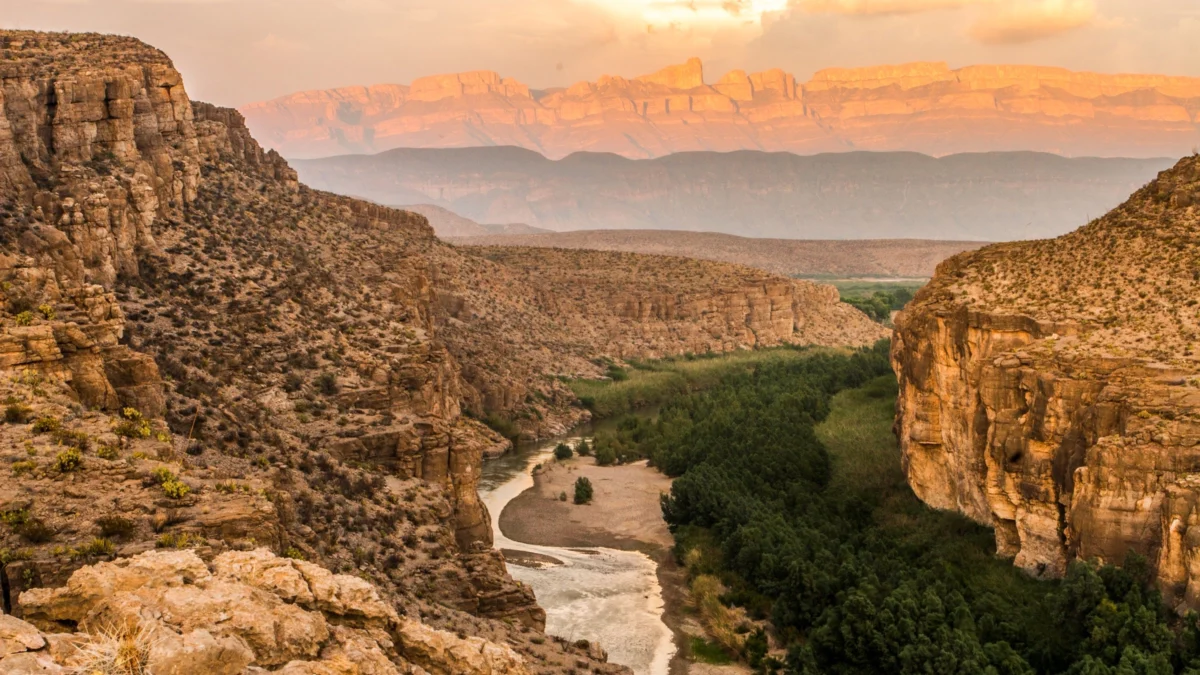
In the most remote corners of the Chihuahuan Desert, where the Rio Grande carves deep limestone canyons along the southern edge of Texas, federal officials are signaling a major shift in border security strategy. U.S. Customs and Border Protection (CBP) has reportedly abandoned plans to construct a traditional physical wall through Big Bend National Park, opting instead to rely on the region’s formidable natural terrain and a sophisticated network of surveillance technology. This decision, emerging after more than a year of intense legal battles and bipartisan political pressure, marks a significant departure from the administration’s previous insistence on a continuous physical barrier along the 1,954-mile U.S.-Mexico border.
The pivot toward a "Smart Wall" approach was confirmed by CBP Commissioner Rodney Scott in a recent report by The Washington Examiner. Scott indicated that the vertical limestone walls of the Big Bend region, some rising hundreds of feet above the river, serve as a more effective—and sustainable—deterrent than man-made steel bollards. By leveraging these natural barriers alongside cutting-edge surveillance systems, the agency aims to secure the border without the logistical nightmare and environmental devastation associated with heavy construction in one of North America’s most rugged landscapes.
A Strategic Reversal Amid Local and National Pressure
The decision to scrap the physical wall in Big Bend follows a period of significant administrative volatility. In January 2025, President Trump signed a proclamation to initiate the "Smart Wall" project, funded by the "One Big, Beautiful Bill Act." Initially, the project was interpreted as a hybrid of physical fencing and technology. Maps released by CBP in early 2025 showed proposed segments of steel wall cutting through portions of the 800,000-acre national park, which shares a 118-mile border with Mexico.
However, the proposal immediately met with a wall of resistance that transcended traditional party lines. Conservationists, local business owners, and law enforcement officials in the border counties voiced concerns that a physical barrier would be not only ineffective but also destructive to the region’s delicate ecosystem and its tourism-driven economy.
In an email to Outside, a CBP spokesperson clarified the new direction: "By deploying cameras, sensors, and barriers in strategic areas, CBP is restricting unlawful vehicle access while utilizing the natural barriers that already exist in the area. In locations where minimal barriers may be adjacent to parks, we are actively coordinating with park officials to ensure the alignment does not impede recreational access or activities."
Chronology of the Big Bend Border Dispute
The timeline of the conflict reveals a rapid escalation of tensions between federal mandates and local interests.
- January 2025: President Trump signs a proclamation declaring a national emergency and authorizing the construction of a "Smart Wall" using funds from the One Big, Beautiful Bill Act.
- February 17, 2026: The Department of Homeland Security (DHS) waives 28 federal laws—including the Endangered Species Act, the Clean Water Act, and the Clean Air Act—to expedite construction in the Big Bend region.
- February 18, 2026: The National Park Conservation Association (NPCA) issues a scathing rebuke, arguing the wall would disrupt wildlife corridors and archaeological sites.
- March 2026: A group of Texas sheriffs from five border counties writes to state and federal officials, arguing that a physical wall in the Big Bend’s terrain is logistically impractical and a waste of resources.
- April 2026: A coalition of local residents and nonprofits, led by the Center for Biological Diversity, files a lawsuit against the administration, alleging that the waiver of environmental laws was illegal.
- Late April 2026: CBP quietly removes interactive maps of the proposed wall from its official website.
- May 11, 2026: CBP Commissioner Rodney Scott publicly indicates that natural barriers and technology will take precedence over physical fencing in the Big Bend sector.
The "Smart Wall" Concept: Technology Over Steel
The "Smart Wall" strategy for Big Bend focuses on a 535-mile stretch of the border—roughly a quarter of the total length—where the terrain is considered too rugged for traditional construction. Instead of 30-foot steel bollards, the CBP plans to deploy an array of "detection technology."
This technological suite includes:
- Autonomous Surveillance Towers (ASTs): Solar-powered towers equipped with radar and thermal imaging that use artificial intelligence to distinguish between humans, animals, and vehicles.
- Remote Video Surveillance Systems (RVSS): High-definition cameras capable of long-range day and night monitoring, providing real-time feeds to Border Patrol agents.
- Ground Sensors: Unattended sensors buried in the earth that detect vibrations and movement, alerting agents to foot traffic in remote canyons.
- Drones and Lidar: Small unmanned aerial systems (sUAS) and light detection and ranging technology to map and monitor areas inaccessible by road.
Additionally, CBP has stated it will focus on improving existing public and park roads. These infrastructure upgrades are intended to provide Border Patrol agents with faster response times and better access to the riverbank, which is often obstructed by dense thickets of invasive saltcedar and river cane.
Environmental and Cultural Implications
Big Bend National Park is often referred to as the "Texas Gift to the Nation." It is a biosphere reserve that hosts more species of birds, bats, and cacti than any other national park in the United States. The prospect of a physical wall raised alarms regarding the movement of iconic species such as the Mexican long-nosed bat, the black bear, and the desert bighorn sheep.
Cary Dupuy, the Texas Regional Director for the NPCA, emphasized the risks in a statement earlier this year: "Building a wall here makes no logistical sense and only serves to harm the region’s wild scenery and thriving community-based tourism economy."
The Rio Grande serves as a vital water source for wildlife in the Chihuahuan Desert. A physical barrier would have effectively severed the connection between the upland desert and the river, potentially leading to a localized ecological collapse. Furthermore, the park contains thousands of documented archaeological sites, including remnants of Indigenous cultures that date back nearly 10,000 years. Heavy machinery and trenching for wall foundations posed a direct threat to these irreplaceable cultural resources.
By shifting to a technology-based approach, CBP may mitigate some of these environmental impacts. Sensors and cameras have a significantly smaller footprint than a concrete and steel wall, and they do not impede the movement of wildlife or the natural flow of water during the region’s intense monsoon seasons.
Economic and Logistical Realities
The cost of building a physical wall in Big Bend was estimated to be exponentially higher than in flatter sectors like the Rio Grande Valley or the deserts of Arizona. The sheer cliffs of Santa Elena, Mariscal, and Boquillas canyons provide a natural defense that would require billions of dollars to augment with man-made structures.
Furthermore, local law enforcement officials argued that a wall would create a "false sense of security." The sheriffs of Brewster, Presidio, Jeff Davis, Terrell, and Val Verde counties noted that the geography of the Big Bend region makes it one of the least-traversed areas for unauthorized crossings due to the extreme heat and lack of water. They advocated for increased personnel and better communication technology rather than a static barrier that could be bypassed or tunneled under.
The "One Big, Beautiful Bill Act" provided the financial framework for this project, but the logistical challenges of transporting steel and concrete into the heart of a roadless wilderness proved to be a significant deterrent. The current pivot suggests a pragmatic realization within the DHS that technology offers a more cost-effective and flexible solution for the 21st-century border.
Broader Impact on Border Policy
The decision to utilize a "Smart Wall" in Big Bend could serve as a blueprint for other protected lands along the border, such as the Organ Pipe Cactus National Monument in Arizona or the Lower Rio Grande Valley National Wildlife Refuge. It represents a compromise between the administration’s mandate for border security and the public’s demand for environmental stewardship.
However, the "Smart Wall" is not without its critics. Civil liberties advocates have raised concerns about the "surveillance state" being established in wilderness areas, noting that high-tech monitoring could impact the privacy of park visitors and residents of nearby "gateway" communities like Terlingua and Marathon.
As of May 2026, the Department of the Interior has yet to release a formal statement confirming the permanent cancellation of the physical wall. While Commissioner Scott’s comments provide a clear indication of the agency’s current trajectory, the legal challenges filed by the Center for Biological Diversity and other groups remain active in the court system. These lawsuits seek to overturn the 2025 environmental waivers, which could set a precedent for how federal agencies must handle construction on protected lands in the future.
For now, the vertical limestone walls of Big Bend remain the primary sentinels of the southern border. The transition from a physical fence to a digital one reflects a maturing understanding of the complexities of the American landscape—a recognition that in some places, the Earth itself provides the most formidable barrier of all.




 Chandra Hamzah
 Tatiana Tantri Indah Sari
 Budi Mulyono

