
 Walid Sujud Trenggono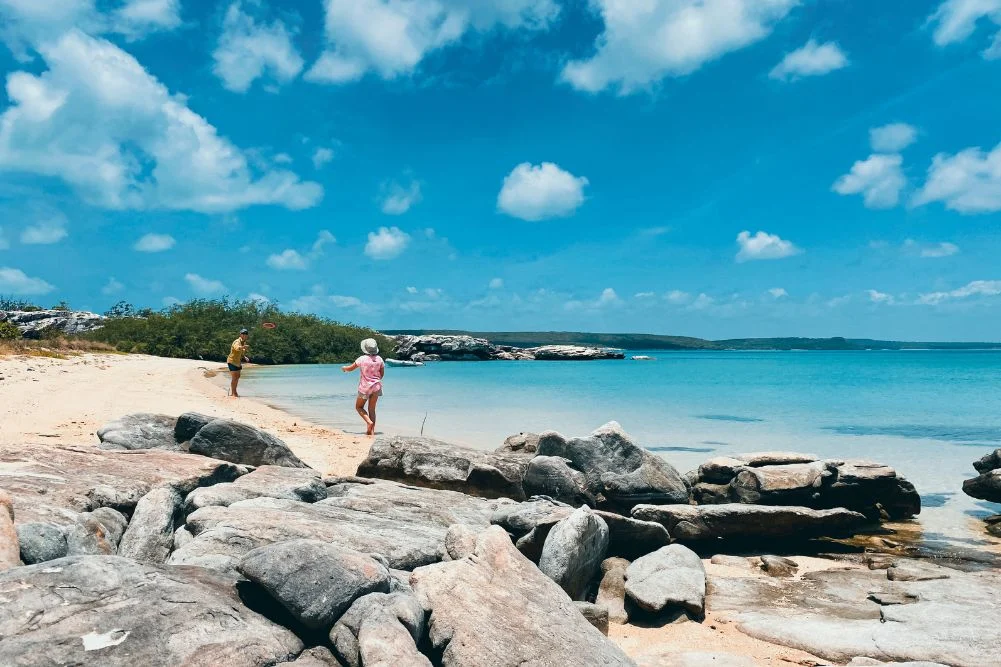
The Gove Peninsula, situated on the northeastern tip of Arnhem Land in the Northern Territory, serves as a profound testament to Australia’s complex pre-colonial history and the enduring sovereignty of the Yolngu people. Nhulunbuy, the region’s primary township, is not merely a remote outpost but a focal point for cultural preservation, where the legacy of international maritime trade predates European settlement by centuries. Today, the region is transitioning from an economy historically dominated by bauxite mining toward a sustainable model of cultural and ecological tourism, anchored by the Buku-Larrnggay Mulka Art Centre and the ancient Wurrwurrwuy stone arrangements.
A Chronology of International Diplomacy: The Makassan Trade
The historical narrative of Northern Australia is often framed through the lens of 18th-century European exploration; however, the Gove Peninsula offers evidence of a much older international relationship. For centuries, the Yolngu people maintained a sophisticated and harmonious trading partnership with Makassan seafarers from the port of Makassar in present-day Sulawesi, Indonesia.
Historical evidence suggests these interactions began as early as 1640. Each year, with the arrival of the northwesterly monsoon winds in December, fleets of up to 60 wooden perahu (sailing boats) would traverse the Arafura Sea to the shores of Arnhem Land. Their primary objective was the harvest of trepang, or sea cucumber, which was highly valued in Chinese markets for its culinary and medicinal properties.
This was not a relationship of exploitation but one of mutual benefit and cultural exchange. In exchange for access to local waters and Yolngu labor, the Makassans provided dugout canoes (lipa-lipa), metal knives, axes, cloth, tobacco, and glass. This exchange fundamentally altered Yolngu hunting and fishing techniques, allowing for more efficient harvesting of dugong and turtle. The linguistic impact remains evident today, with numerous Yolngu words—such as rupiah (money) and balanda (white person/foreigner)—tracing their origins to Makassan influence.
The depth of this connection was such that some Yolngu men joined the return voyages to Sulawesi, living in Makassar for years before returning home. This era of international diplomacy continued until 1906, when the newly federated Australian government imposed heavy duties and restricted licenses, effectively ending the trade to protect domestic industries and enforce the White Australia Policy.
The Wurrwurrwuy Stone Arrangements: A Lithic Record of History
At Garanhan, located approximately 38 kilometers southeast of Nhulunbuy, the Wurrwurrwuy stone arrangements provide a rare, tangible record of this maritime history. Unlike the ephemeral nature of oral tradition, these arrangements are a "pictorial diary" set in stone by Yolngu elders, likely in the late 19th century, to ensure the history of the Makassan era was preserved for future generations.
The site features low-lying arrangements of stones that depict the physical infrastructure of the trade. Visitors can identify the outlines of perahu with their distinctive masts and rudders, stone fireplaces used for boiling and curing trepang, and elaborate fish traps. These arrangements serve as a sophisticated map of the cultural landscape, illustrating how the Yolngu viewed and categorized their international visitors.
In the 1960s, anthropologist Campbell Macknight documented the site through interviews with Mungurrawuy Yunupingu, a prominent clan leader and artist. Yunupingu’s testimony highlighted the pedagogical purpose of the stones: they were intended to teach young Yolngu about their ancestors’ travels and the technology of the visitors. The site is now recognized for its immense national significance, offering a counter-narrative to the "terra nullius" myth by demonstrating active Indigenous management of international trade long before the arrival of the First Fleet.
The Yirrkala Art Centre: Cultural Preservation and Political Activism
Nineteen kilometers from the center of Nhulunbuy lies Yirrkala, a community that has become a global epicenter for Indigenous Australian art. The Buku-Larrnggay Mulka Centre is more than a gallery; it is a repository of Yolngu law, history, and political resistance.
The center’s importance is underscored by the "Church Panels," two massive ochre-on-masonite works created in 1962. These panels, representing the Dhuwa and Yirritja moieties (the two halves of the Yolngu universe), were originally placed on either side of the altar in the local Methodist church. Their creation was a deliberate political act. As mining companies began to show interest in the bauxite-rich soils of Arnhem Land, the elders painted the panels to assert their spiritual and legal ownership of the land.
This artistic resistance paved the way for the 1963 Yirrkala Bark Petitions—the first traditional documents prepared by Indigenous Australians to be recognized by the Australian Parliament. While the petitions did not immediately stop the mining, they were the catalyst for the eventual passage of the Aboriginal Land Rights (Northern Territory) Act 1976.
Today, the center continues to foster innovation through the Mulka Project, a digital archive and production studio. Artisans at the center are renowned for their intricate weaving using gunga (pandanus spiralis). Traditionally used for nganiyal (conical baby mats), these woven works now command international attention, blending ancient techniques with contemporary aesthetic sensibilities.
Ecological Conservation and the Higginson Important Bird Area
The environmental profile of the Gove Peninsula is as significant as its cultural heritage. The region’s isolation has preserved a level of biodiversity that is increasingly rare in more developed coastal areas. Bremer Island (Dhambaliya), located a short boat ride from Nhulunbuy, serves as a critical sanctuary for marine and avian life.
The island is a primary nesting site for four species of sea turtles: the green, flatback, hawksbill, and olive ridley. The management of these nesting grounds is overseen by the Yolngu, who balance traditional harvesting with modern conservation science.
Furthermore, the nearby East Bremer Islets are designated as the Higginson Important Bird Area (IBA). This area supports globally significant populations of bridled and roseate terns. Notably, it is the only known breeding site for common noddies in the Northern Territory. The protection of these habitats is a key priority for the Dhimurru Aboriginal Corporation, the ranger group responsible for managing the land and sea country around Nhulunbuy.
Economic Transition: From Bauxite to Sustainable Tourism
Nhulunbuy was originally established in the early 1970s to service a bauxite mine and alumina refinery. However, the 2014 curtailment of the Rio Tinto alumina refinery marked a significant shift in the town’s economic trajectory. With the refinery closed and the mine approaching its projected end-of-life in the coming decades, the focus has shifted toward diversifying the local economy.
Tourism, specifically high-value, low-impact cultural tourism, has emerged as a primary pillar of this new economy. The Banubanu Beach Retreat on Bremer Island exemplifies this trend. Operated in partnership with the Yolngu traditional owners, the retreat provides an "off-the-grid" luxury experience that emphasizes environmental stewardship and cultural immersion.
The Northern Territory government and local councils have recognized the need for infrastructure that supports this transition while respecting the permit system that governs Arnhem Land. Visitors are required to obtain permits from the Dhimurru Aboriginal Corporation to access designated recreation areas. This system ensures that tourism remains sustainable and that the privacy and sacred sites of the Yolngu people are protected.
Analysis of Broader Implications
The story of Nhulunbuy and the Gove Peninsula is a microcosm of the broader challenges and opportunities facing remote Indigenous communities in Australia. The region’s ability to maintain its cultural integrity while engaging with the global economy—first through the trepang trade and now through art and eco-tourism—offers a model for self-determination.
The preservation of the Wurrwurrwuy stone arrangements and the continued vitality of the Yirrkala Art Centre demonstrate that Yolngu culture is not a static relic of the past but a living, evolving force. By integrating traditional ecological knowledge with modern conservation and tourism practices, the region is positioning itself as a leader in the "blue economy" of Northern Australia.
As the world increasingly seeks authentic cultural experiences and sustainable travel destinations, Arnhem Land stands as a premier example of how ancient history and modern aspirations can coexist. The legacy of the Makassan traders—one of respect, trade, and shared prosperity—continues to inform the way Nhulunbuy engages with the world today.
Technical Summary and Visitor Logistics
For those seeking to explore this region, the "dry season" (May to September) offers the most favorable conditions, characterized by clear skies and manageable temperatures.
- Access: Airnorth and Qantas operate regular flights to Gove Airport (PGV) from Darwin and Cairns.
- Permit Requirements: Arnhem Land is Aboriginal Land. A Dhimurru Access Permit is mandatory for visiting recreation areas such as Garanhan and the Granite Islands. These can be obtained online through the Dhimurru Aboriginal Corporation.
- Cultural Etiquette: Visitors are encouraged to engage with the Buku-Larrnggay Mulka Art Centre to understand the local customs and moieties. Photography of certain sacred sites or ceremonies is strictly prohibited without prior authorization.
- Safety: The region is home to the estuarine (saltwater) crocodile (baru). Water activities should only be conducted in designated areas, and "croc-wise" behavior is essential at all times.
The ongoing development of Nhulunbuy as a cultural hub ensures that the history of the Yolngu and their Makassan allies remains not just a memory, but a cornerstone of the region’s future identity.



 Anjar Salim
 Chandra Hamzah
 Tatiana Tantri Indah Sari
 Budi Mulyono
 Lukman Taruna Persada Ramadan
