
 Budi Mulyono
The intersection of international tourism and environmental conservation has reached a critical flashpoint at Ocean Cay MSC Marine Reserve in the Bahamas, where a viral social media report has shed light on the rigorous security measures used to protect fragile marine ecosystems. A video recently shared by a frequent traveler under the handle @sailinstylelife on TikTok has garnered nearly 300,000 views, documenting the moment security personnel intercepted multiple passengers attempting to remove protected coral and conches from the island. The footage, which features a tub filled with confiscated natural artifacts, highlights a persistent challenge for the cruise industry: balancing guest experience with the non-negotiable legal and ecological requirements of marine preservation.
The incident at Ocean Cay serves as a stark reminder that what may appear to be a harmless beach souvenir is often a vital component of a protected habitat. Under the onscreen caption, “You really thought you could take protected coral as a souvenir??” the video captures the interactions between smiling but firm security agents and travelers returning to their vessel. While the tone of the social media post was lighthearted, the underlying implications for biodiversity and international law are profound. Security at the island, which is located approximately 119 miles west of Nassau, operates under a zero-tolerance policy regarding the removal of any natural resources, including sand, shells, and coral fragments.
The Transformation of Ocean Cay: From Industrial Site to Hope Spot
To understand the gravity of these security measures, one must look at the history of Ocean Cay itself. For decades, the site was an industrial aragonite sand-mining facility. When MSC Cruises took over the lease for the island in 2015, the area was ecologically degraded. The company embarked on a multi-year, multi-million-dollar restoration project to transform the 95-acre site into a flourishing marine reserve. This involved the removal of 1,500 tons of scrap metal and the planting of 75,000 indigenous plants and shrubs.
In 2023, the success of these efforts was recognized globally when Mission Blue, an organization founded by renowned oceanographer Dr. Sylvia Earle, designated Ocean Cay as a "Hope Spot." Hope Spots are scientifically identified areas of the ocean that are critical to the health of the planet. Ocean Cay’s designation is largely due to its "Super Coral" program, which focuses on developing coral genotypes that are more resilient to the rising temperatures of the Atlantic Ocean. By attempting to take even a small fragment of coral, visitors are essentially disrupting a decade of intensive ecological recovery and scientific research.
The Ecological Stakes: Why Coral Protection Is Mandatory
The strict enforcement seen in the viral footage is necessitated by the dire state of coral reefs globally and specifically in the Caribbean. According to data from the National Oceanic and Atmospheric Administration (NOAA), elkhorn coral, a primary species found around the Bahamas, has seen its population decline by a staggering 97% since the 1980s. This decline was initially driven by white band disease, but it has been exacerbated in recent years by unprecedented marine heatwaves. In 2023 and 2024, some wild and restored colonies in the nearby Florida Keys experienced mortality rates between 89% and 100%.
Coral reefs are not merely aesthetic features of the ocean; they are "ecosystem engineers." They provide essential storm protection for coastlines by absorbing wave energy, support 25% of all marine life, and contribute billions of dollars to the global economy through tourism and fisheries. At Ocean Cay, the MSC Foundation is currently monitoring 94 fragments of critically endangered elkhorn coral, with plans to scale this number to 1,100 fragments. When a tourist removes a piece of coral—even if it appears to be dead or washed up on the shore—they are removing calcium carbonate that would otherwise break down to replenish the sand or provide a substrate for new coral polyps to attach to.
The Legal Framework and International Customs Regulations
The confiscation of natural materials at the cruise pier is the first line of defense in a broader legal framework. The Bahamas has strict laws under the Fisheries Resources (Jurisdiction and Conservation) Act, which prohibits the harvesting or export of coral without specific government permits. Furthermore, many coral species are protected under CITES (the Convention on International Trade in Endangered Species of Wild Fauna and Flora), an international agreement between governments aimed at ensuring that international trade in specimens of wild animals and plants does not threaten their survival.
Travelers who bypass shipboard security often face even harsher penalties upon arrival at their home ports. In the United States, Customs and Border Protection (CBP) requires all travelers to declare any biological materials, including plants, wildlife, and animal products. The purpose of these regulations is twofold: to protect endangered species and to prevent the introduction of invasive pests and diseases.
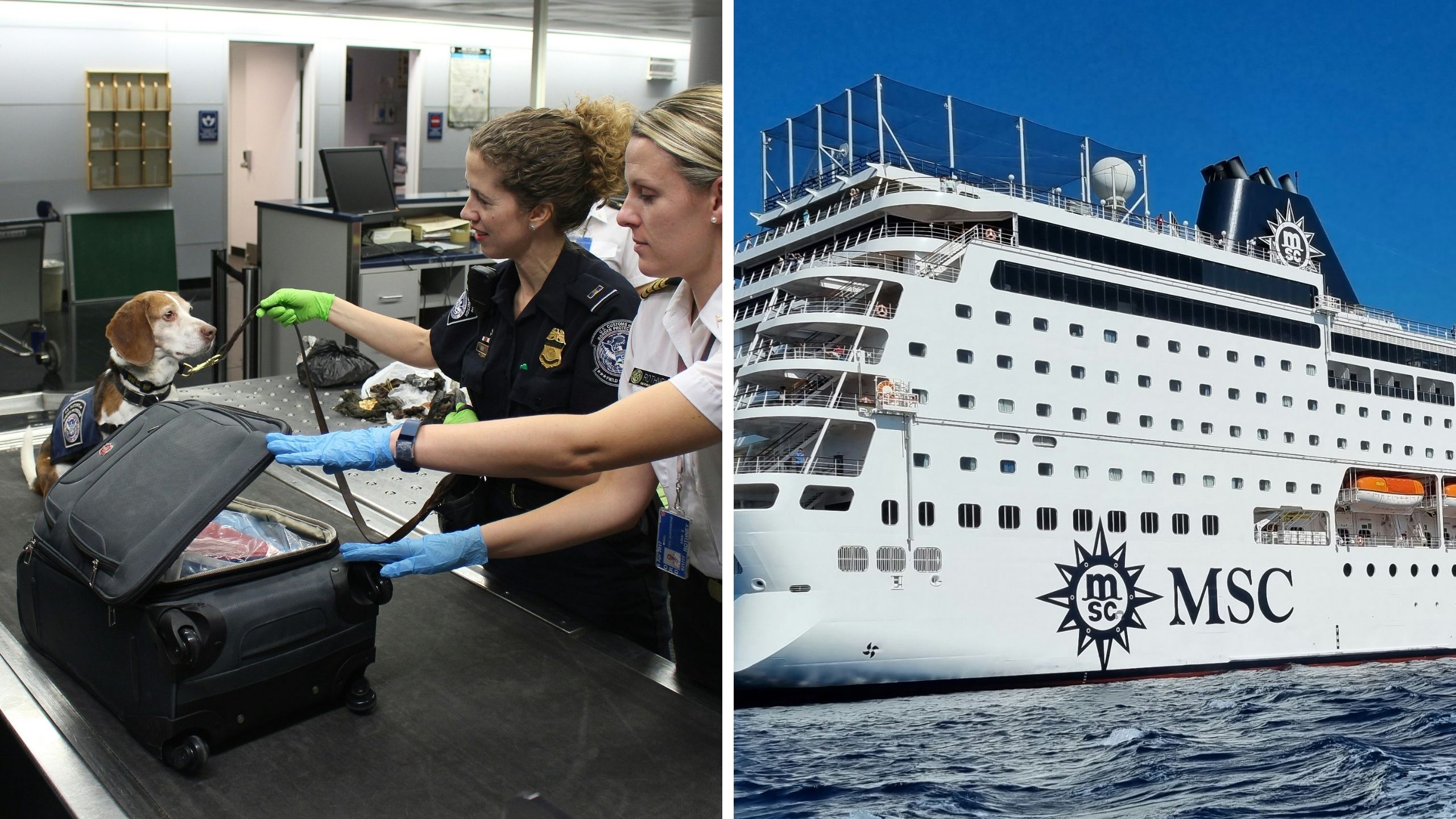
The anecdotal evidence shared in response to the viral video illustrates the reach of these regulations. One traveler, identified as Bear & Sammy, recounted having a $5.00 bamboo hat confiscated by Miami customs agents because the material was deemed a potential biosecurity risk. While some travelers, like the user Jayden mentioned in the source material, claim to have successfully bypassed security with coral and shells in the past, such instances represent a failure of enforcement rather than a lack of illegality. Modern screening technology, including X-ray machines and AI-enhanced scanners, is making it increasingly difficult for contraband natural items to go undetected.
The Role of MSC Cruises and the Super Coral Program
MSC Cruises has positioned Ocean Cay as a flagship for corporate environmental responsibility. The cruise line’s commitment to the island extends beyond tourism; it serves as a living laboratory. The Super Coral Program, a collaboration between the MSC Foundation, several universities, and marine biologists, seeks to identify "thermally tolerant" corals. These are specimens that can survive the bleaching events that are currently decimating reefs worldwide.
The security agents featured in the viral video are trained not just in traditional port security, but in the specific environmental protocols of the reserve. Their "good-natured but strict" demeanor reflects a corporate strategy to educate guests while maintaining firm boundaries. By confiscating these items at the source, MSC prevents passengers from facing potential legal prosecution or heavy fines from federal authorities when they disembark in Miami or other international ports.
The Psychology of the Souvenir and the "Tragedy of the Commons"
The persistent attempt by tourists to remove natural artifacts can be explained through the lens of the "Tragedy of the Commons." This economic theory suggests that individuals, acting independently and rationally according to each’s self-interest, behave contrary to the best interests of the whole group by depleting some common resource. A single tourist may believe that taking one small piece of coral or one conch shell is inconsequential. However, when multiplied by the thousands of passengers who visit Ocean Cay weekly, the cumulative effect would be the total stripping of the island’s natural beauty and ecological health within months.
The rise of social media has created a dual effect on this issue. On one hand, platforms like TikTok and Instagram drive "set-jetting" and the desire for "authentic" souvenirs, which can encourage the removal of natural items for "aesthetic" home decor. On the other hand, viral videos like the one from @sailinstylelife serve as a powerful deterrent and educational tool, publicly shaming the practice and informing future travelers of the rules before they even step foot on the ship.
Broader Implications for the Cruise Industry
The incident at Ocean Cay is indicative of a broader shift within the cruise industry toward sustainable destination management. As cruise lines face increasing scrutiny over their environmental footprint, the management of private islands provides a controlled environment where they can demonstrate conservation success. However, this also places the burden of enforcement on the cruise lines themselves.
Industry analysts suggest that we may see an increase in mandatory environmental briefings for passengers. Much like the mandatory "Muster Drill" for safety, some advocates are calling for "Eco-Drills" that clearly outline the legal and ecological consequences of removing natural resources. The success of Ocean Cay’s restoration depends entirely on the cooperation of the public.
Conclusion: A Collective Responsibility
The confiscated tub of coral at Ocean Cay is more than just a collection of lost souvenirs; it is a testament to the ongoing struggle to protect the planet’s remaining biodiversity. Forging a path toward sustainable tourism requires a shift in the traveler’s mindset—from one of extraction to one of stewardship.
As the National Oceanic and Atmospheric Administration and organizations like Mission Blue continue to sound the alarm on the collapse of reef systems, the actions of individual travelers take on a new level of importance. The message from the security agents at Ocean Cay is clear: the most valuable thing a visitor can take from a marine reserve is a photograph and a memory. The coral, the shells, and the sand must remain, ensuring that the "Hope Spot" continues to offer a future for the marine life that depends on it. Through rigorous enforcement and public education, the cruise industry and conservationists hope to ensure that these fragile ecosystems remain intact for generations to come.



 Anjar Salim
 Chandra Hamzah
 Tatiana Tantri Indah Sari
 Lukman Taruna Persada Ramadan
