
 Walid Sujud Trenggono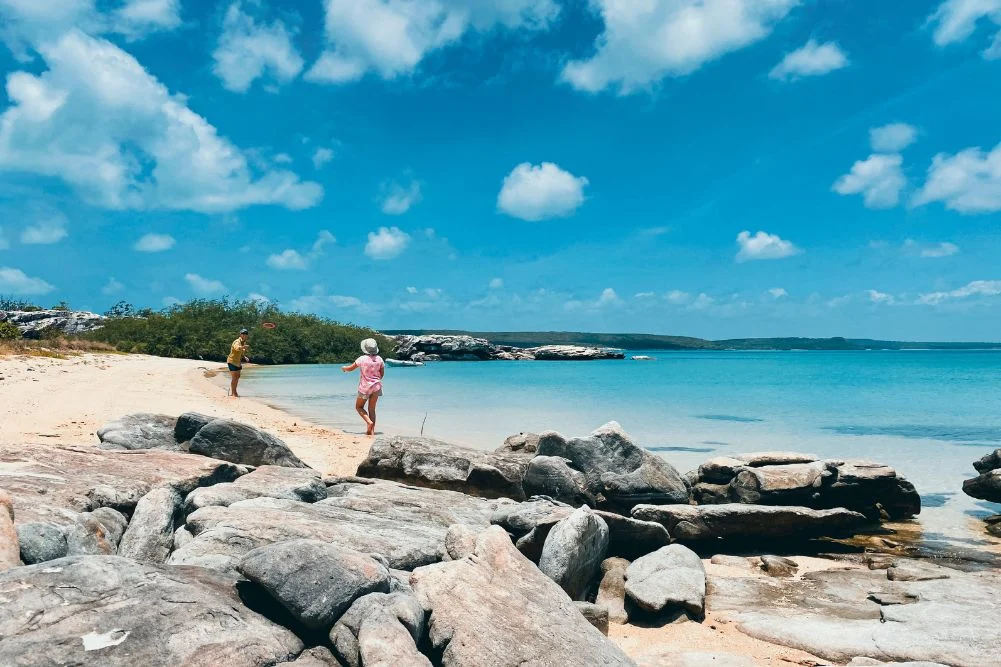
The Gove Peninsula, situated on the northeastern tip of the Northern Territory’s Arnhem Land, represents one of Australia’s most significant cultural and historical landscapes. Centered around the township of Nhulunbuy, the region serves as a gateway to the ancient traditions of the Yolngu people and a little-known chapter of international commerce that predates British settlement by more than a century. Today, the area is a focal point for researchers, historians, and travelers seeking to understand the complex maritime history of the Arafura Sea and the enduring resilience of Indigenous law and art.
The Makassan Connection: A Pre-Colonial Trading History
While the narrative of Australian history often begins with European exploration in the 18th century, the Gove Peninsula provides physical evidence of a much older international relationship. From as early as 1640, the Yolngu people of East Arnhem Land engaged in a sophisticated and harmonious trading partnership with Makassan seafarers from the island of Sulawesi, in what is now Indonesia.
Driven by the northwesterly monsoon winds each December, fleets of up to 60 wooden perahu (sailing boats) crossed the Arafura Sea in search of trepang, or sea cucumber. This marine delicacy was highly prized in Chinese markets for its culinary and medicinal properties. Upon arrival at Garanhan (Macassan Beach), the seafarers sought permission from the local Lamamirri and Yolngu clans to fish the coastal waters and process their catch on the shore.
This interaction was characterized by mutual benefit rather than conquest. In exchange for the right to harvest trepang, the Makassans provided the Yolngu with dugout canoes, metal knives, axes, and glass. These tools revolutionized Yolngu hunting and fishing practices, as evidenced by the high concentration of dugong and turtle bones found in historical shell middens along the coast. The cultural exchange was so profound that it influenced the Yolngu language, which still contains hundreds of words of Makassan origin, and integrated Indonesian motifs into local art and songlines.
The Wurrwurrwuy Stone Arrangements: A Pictorial Record
The most enduring physical record of this era is the Wurrwurrwuy stone arrangements at Garanhan. Located approximately 38 kilometers southeast of Nhulunbuy, these arrangements are not merely artistic; they are educational and historical documents. Constructed by Yolngu elders in the late 19th century, the stones were laid out to preserve the memory of the Makassan visitors for future generations after the Australian government banned the trade in 1906.
The site features detailed stone outlines depicting the various elements of the Makassan industry. Visitors can identify the shapes of perahu with their distinct tripod masts, dugout canoes, and the stone fireplaces (known as "smoke houses") used to boil and dry the sea cucumbers. There are also depictions of fish traps and the houses where the traders lived during their seasonal stay.
The significance of these arrangements was highlighted in the 1960s when historian Campbell Macknight interviewed the prominent Yolngu leader Mungurrawuy Yunupingu. As a senior custodian of the land and a renowned artist, Yunupingu provided the cultural context necessary to understand the site’s importance. He recounted his own father’s voyages to Makassar, revealing that the relationship was reciprocal; Yolngu men often joined the return voyage to Indonesia, spending months or years abroad before returning with the next monsoon.
Artistic Sovereignty and the Buku-Larrnggay Mulka Centre
Nineteen kilometers from the center of Nhulunbuy lies Yirrkala, a community that has become a global hub for Indigenous Australian art. The Buku-Larrnggay Mulka Yirrkala Art Centre serves as a gallery, museum, and digital archive, playing a critical role in the preservation of Yolngu culture.
The center is famous for its bark paintings, which use natural ochres to depict the complex "moieties" (social and spiritual divisions) of Yolngu society: the Yirritja and the Dhuwa. One of the most significant artifacts housed here is the "Church Panels." Created in 1962, these two large-scale works were originally placed on the altar of the Yirrkala Methodist Church. They represent a monumental claim to land ownership and spiritual authority at a time when the Australian government was beginning to grant mining leases on Yolngu territory without local consent.
The Mulka Museum, a wing of the art center opened in 1988 by former Prime Minister Gough Whitlam, serves as a "sacred holding space." It utilizes digital technology to repatriate historical photos and films of Yolngu ancestors, ensuring that the community maintains control over its own narrative.
Beyond painting, the region is renowned for its fiber art. Using gunga (pandanus) leaves dyed with natural pigments derived from roots and bark, Yolngu women create intricate mats and baskets. Traditionally, these included the nganiyal, a conical mat used to protect infants from mosquitoes—the natural scent of the pandanus acting as a repellent.
Environmental Stewardship and Eco-Tourism on Bremer Island
The Gove Peninsula’s transition from an economy dominated by bauxite mining to one increasingly focused on sustainable tourism is exemplified by Bremer Island (Dhambaliya). Located a short boat ride from Nhulunbuy, the island is largely uninhabited, save for a small Yolngu outstation and the Banubanu Beach Retreat.
The retreat is a model for minimal-impact tourism. Fully solar-powered and operating off-the-grid, it provides an economic stream for the Yolngu traditional owners while ensuring the protection of the island’s fragile ecosystem. The waters surrounding Bremer Island are remarkably clear, offering a sanctuary for marine life that is often inaccessible in other parts of the Northern Territory due to the presence of saltwater crocodiles (baru).
The island is a critical nesting ground for four species of sea turtles: the green, flatback, hawksbill, and olive ridley. Furthermore, the nearby East Bremer Islets have been designated as the Higginson Important Bird Area. This site supports globally significant populations of bridled and roseate terns and serves as the only known breeding site for common noddies in the Northern Territory.
Logistics, Governance, and Visitor Access
Travel to East Arnhem Land is strictly regulated to ensure the protection of the environment and the privacy of Yolngu communities. The Dhimurru Aboriginal Corporation, an Indigenous-owned organization, manages the land and sea country surrounding Nhulunbuy.
Visitors are required to obtain a Dhimurru Access Permit before entering designated recreation areas, such as the Wurrwurrwuy stone arrangements or the Granite Islands (Ganinyara). These permits, which cost approximately $39 for a three-day pass, fund the ranger programs that maintain the sites and manage invasive species.
Nhulunbuy itself is accessible via direct flights from Darwin, operated by Air North and Qantas. While the town was originally built in the 1970s to support the Rio Tinto alumina refinery, it has evolved into a resilient community with a thriving local market scene. The monthly community markets at the Surf Life Saving Club are a central social event, bringing together local artisans, musicians, and residents.
Analysis: The Implications of Yolngu Self-Determination
The story of the Gove Peninsula is one of successful cultural maintenance in the face of external pressures. From the early days of the Makassan trade to the legal battles over mining rights in the 20th century, the Yolngu people have consistently used their art and land management practices to assert their sovereignty.
The growth of Indigenous-led tourism initiatives, such as the Banubanu Beach Retreat and the Buku-Larrnggay Mulka Art Centre, represents a shift toward economic self-determination. By controlling the "tourist gaze" and requiring permits for land access, the Yolngu ensure that visitors engage with the land on terms that respect traditional law (Rom).
Furthermore, the preservation of sites like Wurrwurrwuy challenges the "terra nullius" myth by proving that Australia was a participant in international trade networks long before European arrival. This history provides a broader context for contemporary discussions regarding Australian identity and the recognition of Indigenous history within the national curriculum.
Timeline of Key Events in the Gove Peninsula
- c. 1640: Estimated beginning of regular seasonal contact between Makassan seafarers and Yolngu clans.
- 1803: English explorer Matthew Flinders encounters a Makassan fleet at Cape Wilberforce and records the presence of Yolngu men on board.
- 1906: The South Australian government (then administering the NT) imposes heavy duties and bans the Makassan trepang trade to protect European interests.
- Late 19th/Early 20th Century: Yolngu elders construct the Wurrwurrwuy stone arrangements to record the history of the Makassan trade.
- 1962: The Yirrkala Church Panels are painted, asserting Yolngu spiritual and territorial rights.
- 1963: The Yolngu send the Bark Petition to the Australian Parliament, the first formal assertion of Indigenous land rights in Australian law.
- 1988: The Mulka Museum is officially opened by Gough Whitlam.
- 2020s: Nhulunbuy continues to transition toward a diversified economy focusing on tourism, art, and environmental management following the scale-down of local mining operations.
As Australia continues to grapple with its pre-colonial past and its future relationship with Indigenous nations, the Gove Peninsula stands as a testament to the power of cultural memory and the importance of preserving the physical sites that tell the full story of the continent.



 Anjar Salim
 Chandra Hamzah
 Tatiana Tantri Indah Sari
 Budi Mulyono
 Lukman Taruna Persada Ramadan
