
 Walid Sujud Trenggono
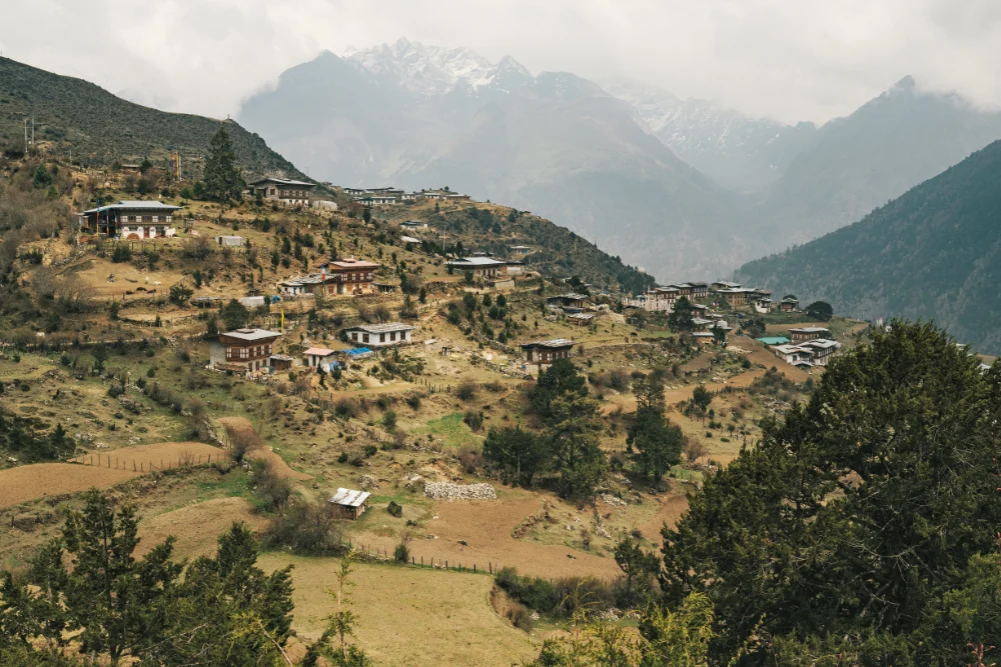
In an era defined by perpetual connectivity, hyper-productivity, and chronic burnout, a growing number of overextended professionals are seeking refuge in unconventional destinations. For one solo-parenting entrepreneur juggling two businesses, elderly parents, and relentless digital demands, the breaking point arrived during an ordinary domestic disruption. Confronted by her young son’s plea to put away her smartphone and be fully present, she realized she was not merely exhausted; she was approaching a psychological and physical precipice. Rather than opting for a conventional wellness retreat, she booked a journey to the Kingdom of Bhutan, a landlocked Himalayan nation globally renowned for prioritizing Gross National Happiness over unchecked economic expansion.
This personal pilgrimage mirrors a broader global trend: travelers fleeing the relentless pace of industrialized societies to study cultures that institutionalize slower, community-oriented living. Bhutan, nestled between the economic superpowers of China and India, offers a distinct socio-economic model that challenges modern paradigms of success.
Main Facts and Sociopolitical Context
With a population of approximately 760,000, Bhutan presents a stark contrast to the industrialized world. Never colonized, the nation maintained a policy of strict isolationism until the 1960s, permitting foreign visitors only beginning in the 1970s. Television and the internet were not introduced until 1999. Today, Bhutan remains the world’s first and only carbon-negative country, protected by constitutional mandates requiring at least 60 percent of its landmass to remain under forest cover.
Unlike major urban centers globally, Bhutan’s capital, Thimphu, famously operates without a single traffic light, relying instead on white-gloved traffic police directing vehicles with choreographed hand gestures. Commercial billboards are banned, and international fast-food chains are absent, preserving a distinct cultural integrity.
At the heart of Bhutan’s governance is the philosophy of Gross National Happiness (GNH), coined in 1972 by the fourth King of Bhutan, Jigme Singye Wangchuck. GNH measures collective well-being through nine domains: psychological wellbeing, health, education, time use, cultural diversity and resilience, good governance, community vitality, ecological diversity and resilience, and living standards. Every proposed government policy undergoes rigorous GNH screening to ensure it does not compromise cultural heritage, environmental sustainability, or community health.
Chronology of the Himalayan Expedition
The traveler’s journey began with a precarious descent into Paro International Airport, widely regarded as one of the most challenging commercial aviation approaches in the world due to the surrounding 18,000-foot Himalayan peaks. Navigation requires specialized visual flight rules, with only a select group of commercial pilots certified to land.
The itinerary was structured to bridge traditional spiritual practices with extreme remote exploration:
- Day 1–3 (Paro and Thimphu): Acclimatization and initial immersion into Bhutanese urban and cultural landscapes, characterized by a mandatory adjustment to the nation’s strict 20 km/h urban speed limits and deliberate, unhurried pace.
- Day 4 (Dodedrak Monastery): A rigorous two-and-a-half-hour ascent through an unexpected mountain thunderstorm to reach a 12th-century Buddhist monastery. The evening concluded with communal prayer alongside resident monks, providing an immediate physiological downregulation evidenced by slowed respiration and reduced muscular tension.
- Day 5–7 (Laya Village): A trek to one of the highest permanently inhabited settlements globally, located at 3,800 meters above sea level. Accessible exclusively on foot or via pack animals, Laya is home to approximately 1,600 indigenous Layap people of Tibetan descent. The traveler resided with a local matriarch, experiencing daily life dictated by seasonal rhythms rather than digital clocks.
- Day 8–10 (Gasa Hot Springs and Return): Participation in the biennial Bumkor Festival, followed by therapeutic immersion in the mineral-rich Gasa hot springs, historically cataloged as sacred healing waters by 13th-century Buddhist traditions.
Supporting Data and Cultural Observations
The immersion into rural Bhutan exposed stark contrasts between Western consumerism and Himalayan minimalism. In Laya, hospitality is woven into the social fabric; community infrastructure projects are executed through reciprocal labor, where villagers construct homes for one another without monetary compensation.
Interviews with local residents underscored a philosophy of sufficiency. When asked about the prerequisites for a fulfilling life, village elders consistently emphasized freedom from excessive desire and an appreciation for immediate communal security—a stark departure from the endless accumulation models driving Western economies.
Statistical data from the Bhutan National Statistics Bureau supports these qualitative observations. According to the 2022 GNH Index survey, 48.1 percent of the population was categorized as extensively or deeply happy, while 47.9 percent were categorized as narrowly happy, demonstrating high baseline life satisfaction despite per capita GDP figures that lag far behind Western nations. Furthermore, universal healthcare and education are guaranteed by the state, removing major financial stressors common in industrialized economies.
Institutional Insights and Official Perspectives
Bhutanese cultural and civic leaders frequently emphasize that Gross National Happiness is not an idealistic pursuit of perpetual bliss, but a pragmatic framework for policy-making.
"GNH is the recognition that human development must be holistic," noted local cultural guide Pema Wangchuk during the expedition. "Economic metrics alone cannot account for spiritual health, environmental stability, or the strength of family and community bonds. If a development project increases gross domestic product but destroys our forests or fractures our social cohesion, it is rejected."
Public health officials in Bhutan note that the integration of mindfulness, meditation, and regular contemplation of mortality into daily life serves as a psychological buffer against existential anxiety. While Western societies often pathologize or avoid discussions of death, Bhutanese cultural norms encourage individuals to contemplate mortality multiple times daily as a mechanism to prioritize meaningful action and reduce attachment to trivial stressors.
Broader Economic and Sociological Implications
The experiences of travelers returning from Bhutan highlight a growing disconnect between modern professional demands and fundamental human psychological needs. Sociologists and public health researchers increasingly point to chronic hyper-connectivity as a major driver of burnout, anxiety, and diminished cognitive capacity.
Bhutan’s model demonstrates that deliberate technological and infrastructural restraint can foster higher levels of social capital and ecological preservation. However, economists note that maintaining this balance presents ongoing challenges, particularly for younger generations. As global connectivity increases, the Bhutanese government faces the delicate task of balancing economic modernization—such as addressing youth unemployment and expanding digital infrastructure—with the preservation of traditional values.
For the individual traveler, the journey served less as a permanent escape and more as a cognitive recalibration. Months after returning to a high-pressure corporate and domestic environment in the West, the physiological impacts of the journey persisted. The memories of unhurried communal gatherings, unpolluted natural soundscapes, and an economy anchored in human wellbeing provided a cognitive anchor against professional overload.
Ultimately, the experiment of Bhutan offers a provocative counter-narrative to globalized capitalism. By demonstrating that national progress can be measured through the contentment of its citizenry rather than the velocity of its commerce, the Himalayan kingdom continues to serve as both a living laboratory for sustainable development and a profound mirror for overextended modern societies seeking a path back to balance.



 Gabriela Annisa

 Lukman Taruna Persada Ramadan

 Tatiana Tantri Indah Sari

 Anjar Salim


 Dwi Wanna
