
 Walid Sujud Trenggono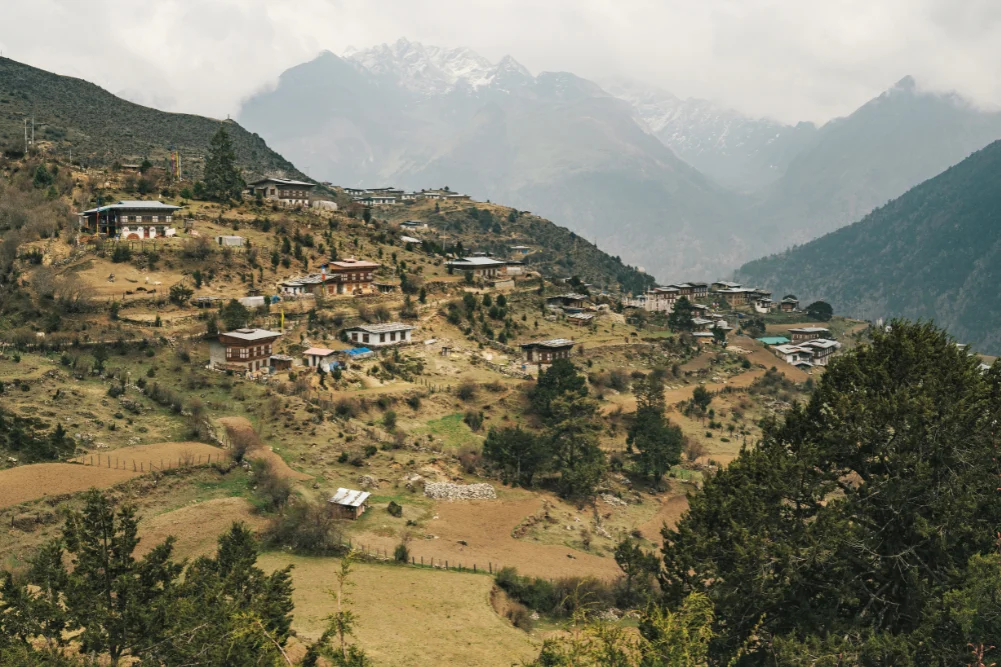
The escalating crisis of professional burnout and digital fatigue in Western societies has led to a surge in "transformative travel," a sector of the tourism industry focused on psychological reset rather than mere leisure. A primary destination for this movement is the Kingdom of Bhutan, a landlocked Himalayan nation that has gained international recognition for prioritizing collective well-being over traditional economic metrics. For high-stress professionals, including business owners and solo parents grappling with the "always-on" culture of the 21st century, Bhutan represents a radical alternative to the conventional success-driven paradigm. Recent case studies of travelers visiting the region highlight a growing trend: individuals are no longer seeking temporary breaks from their lives, but rather a fundamental shift in how they perceive presence, community, and contentment.
The Landscape of Modern Burnout
In recent years, the psychological toll of "hyper-connectivity" has reached a breaking point for many in the global workforce. According to data from the World Health Organization (WHO), burnout is now recognized as an occupational phenomenon resulting from chronic workplace stress that has not been successfully managed. For those balancing the dual pressures of entrepreneurship and caregiving—specifically solo parents managing aging relatives and young children—the risk of "decision fatigue" and emotional exhaustion is acute.
The narrative of the modern professional is often defined by a "distracted presence," where the presence of digital devices creates a barrier between parents and children. This social fragmentation has prompted a search for environments that offer a "digital detox" by design rather than by choice. Bhutan, which did not introduce television or the internet until 1999, serves as a controlled environment for observing the effects of a society that has intentionally moderated the pace of technological integration.
Chronology of a Himalayan Reset: From Paro to Laya
The journey into the Bhutanese interior typically begins at Paro International Airport, widely regarded as one of the most challenging landings in the world due to its location in a deep valley surrounded by 5,500-meter peaks. This physical entry serves as an immediate psychological threshold, forcing travelers to confront the scale of nature. Unlike the frenetic pace of international hubs like London, New York, or Singapore, the arrival in Paro is characterized by a conspicuous lack of commercial noise; the country famously prohibits billboards and large-scale outdoor advertising to preserve its visual landscape.
The transition from a high-velocity lifestyle to the Bhutanese "slow gear" often begins with spiritual immersion. One notable site is the Dodedrak Monastery, a 12th-century institution located above the capital of Thimphu. Reaching such sites requires physical exertion—often a multi-hour trek through mountainous terrain—which serves as a form of somatic therapy. At the monastery, the ritual of "butter lamps" and the rhythmic chanting of ancient scriptures by monks in burgundy robes provide a sensory environment that facilitates a reduction in cortisol levels.
Further into the interior lies the village of Laya, situated at an altitude of 3,800 meters. Accessible only by foot or pack animal, Laya is home to the indigenous Layap people. The village serves as a living laboratory for communal living. In Laya, social cohesion is a survival mechanism; when a home is constructed, the entire village participates in the labor, a practice rooted in the belief that collective effort ensures future reciprocity.
The Pillars of Gross National Happiness (GNH)
At the core of Bhutan’s unique societal structure is the philosophy of Gross National Happiness (GNH). Coined in 1972 by the Fourth King, Jigme Singye Wangchuck, GNH suggests that sustainable development should take a holistic approach toward notions of progress and give equal importance to non-economic aspects of well-being.
The GNH framework is built upon four primary pillars:
- Sustainable and Equitable Socio-Economic Development: Ensuring that the benefits of growth reach all sectors of society.
- Environmental Conservation: A constitutional mandate requires that at least 60% of Bhutan’s land remains under forest cover for all time. Currently, the figure stands at approximately 72%.
- Preservation and Promotion of Culture: Protecting the unique traditions of the Bhutanese people from the homogenizing effects of globalization.
- Good Governance: Ensuring that the government acts in the best interest of the people’s happiness.
The 2022 GNH Index, a rigorous statistical tool used to measure these pillars, indicated that approximately 48.1% of the population is classified as "deeply or extensively happy." For Western observers, the most striking aspect of this data is the "Time Use" domain, which measures how much time individuals spend on sleep, work, and community activities. In Bhutan, the balance is legally and culturally encouraged, with town speed limits often capped at 20km/h and a general rejection of the "hustle culture" prevalent in the West.
Environmental Stewardship as Public Health
Bhutan’s status as the world’s first carbon-negative country is not merely an environmental achievement but a public health strategy. The nation’s forests sequester more carbon than the entire country emits. This commitment to the natural world has direct implications for the well-being of its citizens and visitors. Research into "forest bathing" (Shinrin-yoku) suggests that spending time in pristine forest environments can lower blood pressure, reduce heart rates, and improve immune system function.
Furthermore, the integration of traditional medicine with modern healthcare is a hallmark of the Bhutanese system. Healthcare and education are provided free of charge to all citizens, removing two of the primary stressors found in Western capitalist societies. The Gasa hot springs (Gasa Tsachu) exemplify this approach. These sacred geothermal pools are frequented by locals and travelers alike, believed to possess healing properties derived from minerals and historical spiritual blessings. Unlike luxury spas in the West, these springs are communal spaces where social hierarchies are dissolved, and the focus is on collective healing.
Philosophical Perspectives on Mortality and Contentment
Perhaps the most counterintuitive aspect of Bhutanese culture for Westerners is the daily contemplation of death. Citizens are encouraged to think about their own mortality five times a day. In Western psychology, such a practice might be viewed as morbid; however, in the Bhutanese Buddhist context, it is a tool for productivity and joy. By acknowledging the impermanence of life, individuals are driven to prioritize meaningful interactions and let go of trivial anxieties.
This perspective directly challenges the "greed-driven" dissatisfaction often found in consumer-heavy societies. As noted by local residents in remote villages like Laya, contentment is often measured by the sufficiency of basic needs—such as a bowl of rice or a warm hearth—rather than the accumulation of luxury goods. This "philosophy of enough" serves as a powerful antidote to the endless scrolling and consumption cycles of the digital age.
Broader Impact and Global Implications
The lessons derived from the Bhutanese model are increasingly being analyzed by global policymakers. As nations grapple with rising rates of depression, anxiety, and social isolation, the GNH lens offers a potential alternative for measuring a country’s success. The United Nations has previously hosted high-level meetings on "Happiness and Well-Being," inspired by Bhutan’s lead.
For the individual traveler, the impact of such an environment is often long-lasting. While the immediate "escape" of a Himalayan trip ends upon departure, the psychological shift—moving from a state of "digital zombie" to one of "present awareness"—provides a new toolkit for navigating high-stress environments back home. The "Bhutanese effect" is characterized by an improved ability to set boundaries, a reduction in the urge to over-schedule, and a renewed focus on community belonging.
Conclusion: The Way Back to "Enough"
Bhutan remains a complex nation facing its own modern challenges, including youth emigration and the pressures of global economic shifts. However, its steadfast commitment to happiness as a policy goal provides a stark and necessary contrast to the global norm. For the burnt-out professional, the kingdom offers more than just a scenic backdrop; it provides a rigorous proof of concept that life can be lived at a slower, kinder pace.
As the world continues to move toward an increasingly automated and digital future, the "quiet defiance" of Bhutan serves as a reminder that human well-being is inextricably linked to nature, community, and the courage to stop before one breaks. The journey to Bhutan is, ultimately, a journey toward the realization that "enough" is not a lack of ambition, but the pinnacle of contentment.




 Budi Mulyono
 Anjar Salim
 Chandra Hamzah
 Tatiana Tantri Indah Sari

 Lukman Taruna Persada Ramadan