
 Lukman Taruna Persada Ramadan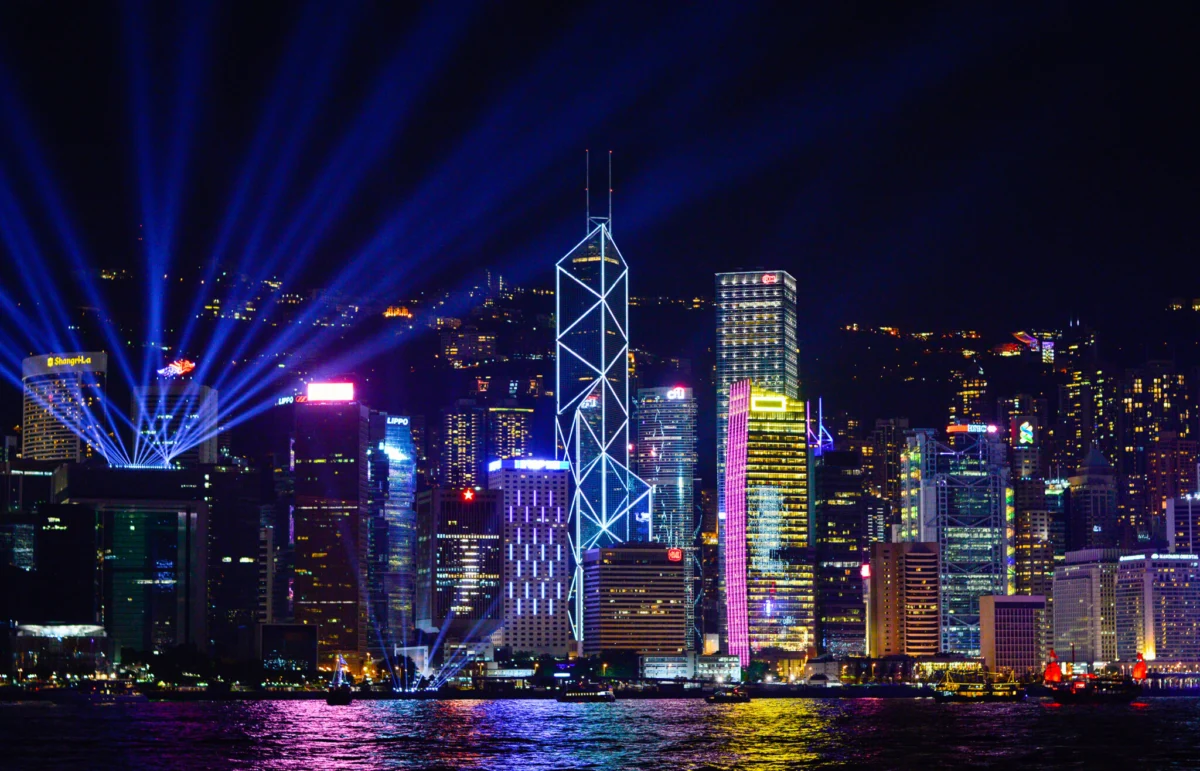
For decades, the aviation world spoke in hushed, adrenaline-fueled tones of the "Kai Tak heart attack"—the thrilling yet terrifying final approach into Hong Kong’s historic Kai Tak Airport. Airliners were routinely required to execute a sharp, low-altitude bank at the eleventh hour, navigating past dense clusters of hills and towering apartment blocks just to align with a single runway jutting aggressively out into Kowloon Bay. Today, that aviation icon is long gone, replaced by the modern engineering marvel of Chek Lap Kok on Lantau Island. Yet, international visitors are once again arriving at Kai Tak, albeit with a far more tranquil cadence. Modern cruise liners dock smoothly at the Kai Tak Cruise Terminal, an architectural masterpiece designed by renowned British architect Sir Norman Foster, marking a seamless transition from a high-stakes aeronautical hub to a premier maritime destination.
This continuous evolution from an aviation nexus to a maritime sanctuary perfectly epitomizes a territory defined entirely by the dramatic interplay between towering mountains and surrounding marine environments. Hong Kong’s iconic high-rise skyline squeezes precariously between the surging coast and steep, unforgiving terrain. Approximately 70 percent of the territory’s total land area remains too rugged and steep for conventional building development, forcing planners to repeatedly look toward the sea for expansion.
Historical Chronology and the Shaping of Victoria Harbour
While the Kai Tak site sits securely on the Kowloon Peninsula, directly connected to the Chinese mainland, the remainder of the territory is composed of a fragmented archipelago encompassing more than 260 distinct islands, including Hong Kong Island and Lantau Island. An intricate web of sub-sea tunnels, sprawling suspension bridges, and perpetually shuttling cross-harbor ferries has long been required to thread together these disparate geographic segments.

The systematic reshaping of the Hong Kong coastline is not a modern phenomenon; it has been a consistent driving theme throughout the territory’s turbulent and fascinating history. Long before concrete skyscrapers sprouted from the earth, the naturally sheltered deep-water basin of Victoria Harbour lured British traders and naval forces ashore in the early 19th century. Positioned strategically between South Asia and the Far East, the settlement rapidly evolved from a ramshackle scattering of maritime fishing villages into a booming global trading hub. It soon became vital to the international exchange of silk, tea, and porcelain.
As the British colony thrived economically, its severe physical limitations necessitated geopolitical intervention. This culminated in the signing of the Convention for the Extension of Hong Kong Territory in 1898, securing a 99-year lease from China for the agricultural and rural New Territories to guarantee a sustainable supply of food and fresh water. Though that historic lease expired precisely on July 1, 1997, formally bringing British colonial rule to an end and transferring sovereignty to the People’s Republic of China, the maritime traditions established during the 19th century remain inextricably linked to the city’s modern identity.
Megadevelopments and the Expanding Urban Frontier
This relentless drive to alter the physical geography has manifested in a contemporary generation of ambitious megadevelopments designed to secure Hong Kong’s competitive edge in the 21st century. Directly across the waters from the bustling financial corridors of Hong Kong Island, the final construction phases of the West Kowloon Cultural District are reaching completion. Encompassing vast open parkland and 17 world-class cultural and performing arts venues, the entire district sits atop 99 acres of reclaimed land.
Concurrently, the broader Kai Tak Development project continues to push forward at a rapid pace. This multi-billion-dollar initiative is actively transforming the former airport’s concrete runway into a master-planned grid of sustainable eco-parks, luxury residential condominiums, and a state-of-the-art, 50,000-seat sports stadium complex designed to host international entertainment and athletic spectacles.

However, the territory’s most radical and expansive frontier lies farther north. The ultra-ambitious Northern Metropolis initiative is poised to fundamentally shift Hong Kong’s economic axis away from Victoria Harbour. By converting more than 100 square miles of rural borderlands adjacent to mainland China into a high-tech urban center and innovation hub, the government has issued a striking declaration of intent: within this vertical metropolis, the map is never permanently settled.
Economic Resilience and Financial Dominance
Powering this continuous physical and infrastructural reinvention is a dynamic, highly resilient financial engine. Hong Kong maintains its status as an undisputed titan of global commerce, functioning as the primary gateway for capital flowing securely into and out of mainland China. Operating under the unique "One Country, Two Systems" constitutional framework, the territory retains its own distinct capitalist economic model, a common law legal system inherited from the British era, and a fiercely competitive low-tax regime.
This business-friendly sanctuary continues to attract regional headquarters and multinational corporations from across the globe. Towering financial nodes such as the Central district and the International Commerce Centre (ICC) in West Kowloon operate as true vertical ecosystems, housing the world’s largest investment banks, asset management firms, and global trading enterprises. As the city deepens its economic integration into the Greater Bay Area—a technological and economic mega-region tying Hong Kong directly to mainland powerhouses such as Shenzhen and Guangzhou—its regional and global economic influence expands exponentially.
Industry Perspectives: Logistics, Luxury, and the Cruise Sector
For passengers standing on the teak decks of an arriving cruise ship, history, geography, and financial might converge to deliver one of the most visually stunning panoramas on earth. Whether gazing out at the neon-reflecting glass facades of Hong Kong Island or watching the sun descend behind the western peaks from the rooftop park of the Kai Tak Cruise Terminal, the underlying message remains constant: Hong Kong is what occurs when human ingenuity resolutely refuses to be constrained by the limitations of nature.

Kevin Lo, an advisor at Travel Advisers Ltd, a leading provider of maritime logistics and shore excursions for cruise companies operating in Hong Kong, highlights the strategic advantages that continue to attract elite global travelers.
"We benefit from world-class infrastructure, strategic geographic positioning, and profound cultural diversity," Lo explains, noting the seamless air-sea connectivity and sophisticated transport systems that define the port. "Our deep-water harbor features two distinct cruise terminals capable of accommodating diverse vessel specifications, allowing our guests to experience smooth logistics within a destination that beautifully bridges historic heritage, modern urban attractions, and pristine natural landscapes."
Addressing the operational evolution brought about by the Kai Tak facility, Lo emphasizes the tangible improvements in passenger processing and experiential delivery. "The Kai Tak Cruise Terminal provides modern facilities, spacious berths, and panoramic harbor views. This allows us to streamline guest movements, coordinate large-scale shore excursions with microscopic efficiency, and deliver a vastly superior turnaround experience. For arriving passengers, it instantly enhances their first impression of Hong Kong, combining pure operational convenience with an unmistakable sense of arrival."
Looking toward the future of the regional cruise market, Lo points to shifting consumer demands toward experiential tourism and ecological stewardship. "I see robust potential in themed and experiential excursions—programs that transcend standard sightseeing to offer genuine cultural immersion, wellness therapies, and bespoke culinary journeys. Sustainability is another paramount trend, as luxury travelers increasingly value eco-friendly practices and authentic, community-based encounters. Backed by proactive government tourism policies, we see a clear win-win environment for continued cruise sector growth."

When evaluating the expectations of high-net-worth travelers stepping ashore, Lo notes that luxury clients demand exclusivity and flawless execution. "Luxury passengers look for private visits, behind-the-scenes artistic workshops, gourmet dining curated by local master chefs, and wellness-oriented pursuits. Drawing on our long-standing partnerships with premier global brands like The Ritz-Carlton Yacht Collection, Regent Seven Seas, Ponant, Silversea, Seabourn, and Oceania, we focus heavily on small-group dynamics, personalized logistics, and deep storytelling."
Essential Travel Logistics and Navigating the Territory
Navigating the dense fabric of Hong Kong is an adventure in its own right, offering travelers a masterclass in blending historic transit infrastructure with ultra-modern efficiency. For a nominal fare, the historic Star Ferry continues to shuttle passengers back and forth across the choppy waters of Victoria Harbour between Kowloon and Hong Kong Island, effectively doubling as a low-cost, highly scenic sightseeing cruise.
Once ashore on Hong Kong Island, visitors can board a "ding-ding"—the affectionate local nickname for the historic double-decker electric trams that have rattled along the bustling northern coastline since 1904. Deep beneath the congested streets and harbor waters, the MTR underground railway system moves more than five million passengers daily aboard sleek, high-frequency trains. All of these diverse transport modes are seamlessly unified by the contactless Octopus Card, available as a mobile application that also doubles as a digital payment method in convenience stores and cultural attractions across the territory.
Travelers ascending Victoria Peak to take in the sprawling urban expanse can choose between a strenuous one- to two-hour hiking ascent or a ride aboard the historic, steeply inclined Peak Tram. To experience the territory’s surprisingly wild, mountainous topography, visitors frequently utilize the Ngong Ping 360 cable car, which glides across the forested ridges of Lantau Island to the monumental Tian Tan Big Buddha, with crystal-bottom cabins offering direct views of the dense canopies below.
Quick Facts for Travelers
- Visa and Entry Requirements: U.S. citizens require a passport valid for at least one month beyond their intended departure date, proof of sufficient financial funds, and confirmed onward travel documentation. American visitors are permitted to stay in Hong Kong for up to 90 days without a visa. However, separate travel documentation and visas are legally required for any subsequent travel into mainland China.
- Time Zone: Greenwich Mean Time (GMT) +8 hours.
- International Dialing Code: +852.
- Official Currency: Hong Kong Dollar (HKD).
- Official Languages: English and Yue Chinese (Cantonese).
- Primary Airport: Hong Kong International Airport (HKG), located approximately 20 miles west of the Kowloon Peninsula, connected directly to the downtown core via the 24-minute Airport Express high-speed rail link.

 Anjar Salim
 Dwi Wanna
 Budi Mulyono
 Chandra Hamzah