
 Budi Mulyono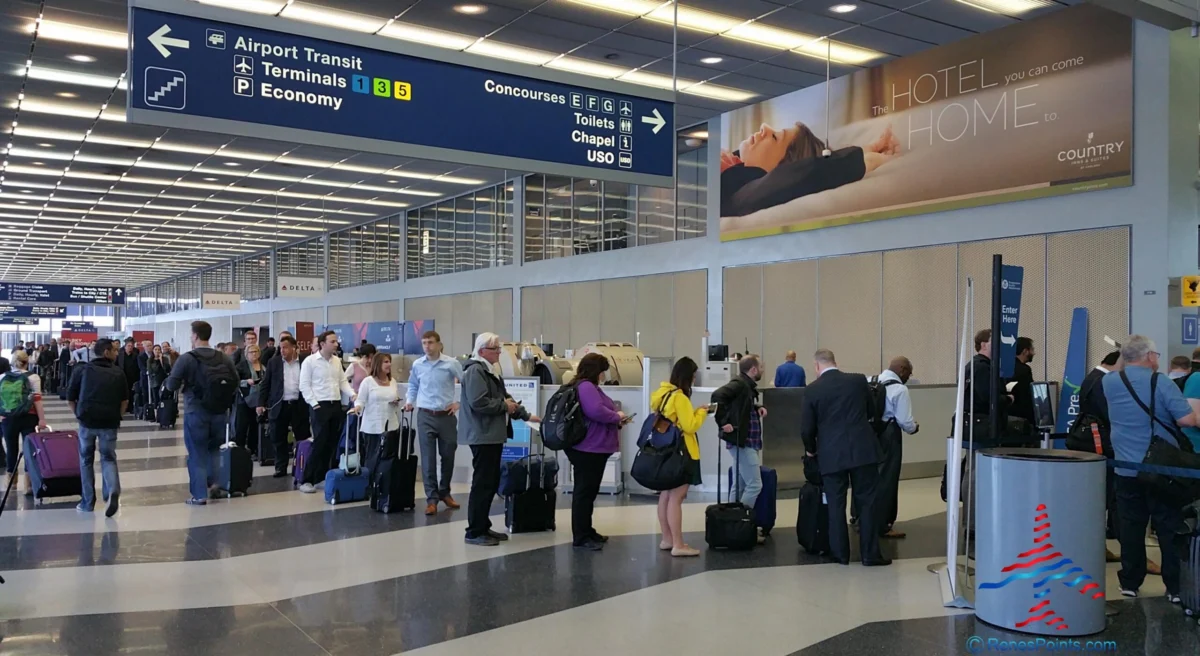
Significant shifts in international health protocols, European transport infrastructure, and United States aviation security have emerged this week, marking a period of transition for the global travel sector. From the implementation of enhanced biosafety measures at major American transit hubs to the rejection of massive cruise developments in North America, the landscape of commercial travel is undergoing a rigorous re-evaluation of safety, environmental impact, and operational efficiency.
Public Health and International Entry Protocols
The United States Centers for Disease Control and Prevention (CDC) has formally expanded its enhanced Ebola entry screening protocols to Hartsfield-Jackson Atlanta International Airport (ATL), effective May 22, 2025. This move integrates Atlanta into a strategic network of designated screening points that already includes Washington Dulles International (IAD) and Houston’s George Bush Intercontinental Airport (IAH). These measures are specifically targeted at travelers arriving from or having transited through the Democratic Republic of the Congo (DRC), Uganda, and South Sudan.
The escalation in screening follows the World Health Organization’s (WHO) recent declaration of a public health emergency regarding the current outbreak of the Bundibugyo strain of the Ebola virus. Unlike the more common Zaire strain, the Bundibugyo variant currently lacks an approved vaccine, complicating containment efforts. In tandem with the increased screening, the CDC has implemented a strict entry ban on non-U.S. citizens who have visited the three affected nations within the previous 21 days.
Historically, Ebola screenings have been a critical component of the U.S. biosecurity strategy, particularly following the 2014-2016 West African outbreak. The current measures represent a proactive stance by health authorities to prevent the domestic introduction of a strain that presents significant therapeutic challenges. Travelers with itineraries involving East or Central Africa are advised to monitor federal advisories, as these protocols may lead to extended processing times and potential rerouting of international arrivals.
European Rail Infrastructure and the Alpine Tunnel Network
A massive engineering transformation is currently underway beneath the Alps, as European nations invest heavily in high-speed rail infrastructure to provide a viable alternative to short-haul aviation. The primary objective of these multi-billion-euro projects is to integrate the continent’s major cities through a network of tunnels that bypass the traditional geographic barriers of the mountain range.
The centerpiece of this effort is Switzerland’s Gotthard Base Tunnel. Opened in 2016, it remains the world’s longest rail tunnel at 35 miles, reaching depths of over 7,500 feet. However, its record is slated to be surpassed by the Brenner Base Tunnel, a joint project between Austria and Italy. Scheduled for completion in 2032, the 40-mile tunnel will facilitate a dramatic reduction in travel time between Innsbruck, Austria, and Bolzano, Italy, cutting the current two-hour transit to approximately 50 minutes.
Parallel to these efforts, Austria is progressing with the Semmering Base Tunnel, expected to open in 2030, while France and Italy continue work on a new trans-Alpine link. Beyond the mountains, the Fehmarnbelt Fixed Link is under construction to connect Denmark and Germany via a tunnel under the Baltic Sea. This infrastructure surge aligns with the European Union’s Green Deal objectives, aiming to shift passenger and freight traffic from carbon-intensive road and air transport to electrified rail. For the travel industry, these developments suggest a future where the "flight-to-rail" transition becomes the standard for intra-European travel.
The Evolution of Aviation Security: TSA Gold+
In the United States, the Transportation Security Administration (TSA) is exploring a significant shift toward privatization through a proposed program titled "TSA Gold+." During a closed-door Industry Day meeting held on May 21, administration officials briefed private contractors on a model that would allow private firms to assume responsibility for both security staffing and the ownership of screening technology at select airports.
The proposed expansion represents a substantial departure from the current Screening Partnership Program (SPP), which is utilized by only 20 of the more than 430 airports nationwide. The impetus for this shift is largely fiscal. In 2025, the TSA processed a record 906 million passengers, yet the agency faces mounting budgetary constraints. Maintenance costs for screening equipment have nearly doubled to $600 million annually. Furthermore, the operational stability of the agency was tested earlier this fiscal year by a 109-day partial government shutdown, during which federal screeners were required to work without immediate compensation.
If implemented, TSA Gold+ could revolutionize the passenger experience by incentivizing private companies to deploy newer technology more rapidly than the federal procurement process allows. However, critics often point to the complexities of maintaining uniform security standards across a privatized workforce. The industry remains watchful of how this proposal might affect wait times and security efficacy in the coming years.
Regulatory and Environmental Challenges in the Cruise Sector
The cruise industry is facing a dual challenge of legal liability and environmental regulation, as evidenced by recent developments in Mexico and the United States.
Environmental Rejection of ‘Perfect Day Mexico’
In a significant blow to Royal Caribbean’s expansion strategy, Mexico’s environmental agency, SEMARNAT, has denied permits for the "Perfect Day Mexico" project in Mahahual. The planned 200-acre development on the southern Caribbean coast was envisioned as a premier destination featuring 30 waterslides, the world’s longest lazy river, and a massive array of hospitality venues.
The rejection followed an intense period of public opposition, including 14,000 formal comments and a Greenpeace-backed petition signed by 4.8 million people. President Claudia Sheinbaum confirmed the decision, citing the potential for irreparable damage to the local ecosystem. Royal Caribbean had projected that the development would double annual visitors to the region to 4.1 million by 2030. Local residents and environmental advocates argued that the regional infrastructure and fragile coastal environment could not sustain such a surge in tourism density.
Safety Litigation and Thermal Hazards
Simultaneously, Carnival Cruise Line is facing a high-profile lawsuit filed by Jorge Luis Alverio Nunez, who alleges he suffered second-degree burns while walking on the deck of the Carnival Magic in May 2025. The lawsuit targets the "API Syntheteak" resin decking used across the fleet, claiming the material can reach temperatures high enough to cause severe thermal injury within seconds of contact.
The litigation alleges that Carnival was aware of the hazard, citing 25 prior burn incidents and 42 formal complaints regarding deck temperatures over the preceding six years. The plaintiff is seeking over $5 million in damages. While Carnival has not commented on the pending litigation, the case highlights the growing scrutiny regarding material safety in the design of modern "mega-ships."
Norwegian Cruise Line’s Counter-Expansion
In contrast to Royal Caribbean’s setbacks, Norwegian Cruise Line (NCL) has confirmed the opening date for its Great Tides Waterpark at Great Stirrup Cay in the Bahamas. Scheduled for September 4, 2026, the six-acre facility will feature 19 slides and the industry’s first "cliff jumps." This expansion indicates a diverging trend in the industry, where private island developments in the Bahamas continue to see regulatory success compared to projects on the Mexican mainland.
Judicial Precedent in the Italian Hospitality Sector
Italy’s highest court, the Court of Cassation, has issued a final ruling in a long-standing dispute regarding the provision of tap water in luxury establishments. The case originated in 2019 when a tourist at a five-star hotel in the Dolomites was refused tap water at a restaurant table and was instead required to purchase bottled mineral water for €7.
The plaintiff sought €2,700 in damages, arguing that access to water is a fundamental human right and a basic expectation of a hotel stay. However, the court ruled in favor of the hotel, establishing that there is no legal obligation for Italian restaurants to provide free tap water. The ruling clarified that while water must be available within the hotel (such as in guest rooms or public fountains), the specific service at a restaurant table is at the discretion of the establishment. This stands in contrast to jurisdictions like England and Wales, where licensed venues are legally mandated to provide free potable water upon request.
Aerospace and Connectivity: SpaceX and Virgin Atlantic
The aerospace and aviation sectors saw both technological triumphs and setbacks this week, centered largely on the infrastructure provided by SpaceX.
Starship Flight 12 Mishap
On May 22, SpaceX conducted the Flight 12 test of its Starship vehicle. While the V3 Super Heavy booster achieved successful separation, it suffered a catastrophic engine failure during its return burn, leading to a loss of the vehicle in the Gulf of Mexico. Additionally, the Starship upper stage lost one of its six Raptor engines during its flight profile.
The Federal Aviation Administration (FAA) has classified the event as a "mishap," triggering a mandatory investigation. This setback is expected to delay SpaceX’s anticipated mid-June IPO and could impact the timeline for NASA’s Artemis program, which relies on Starship for lunar landings. The failure of the V3 booster, central to SpaceX’s goal of total reusability, represents a significant hurdle in the company’s immediate growth strategy.
In-Flight Connectivity Milestones
While SpaceX’s launch program faced difficulties, its Starlink satellite constellation achieved a milestone in the commercial aviation sector. Virgin Atlantic has completed the rollout of free Starlink Wi-Fi across its entire fleet. To celebrate, the airline hosted a live-streamed concert by the Sugababes at 35,000 feet on a London-to-New York flight.
The performance, which relied entirely on the Starlink connection and seat-back power, served as a demonstration of the high-bandwidth capabilities now available to passengers. However, the rollout has also sparked debate among frequent flyers, as Virgin Atlantic—following the lead of British Airways—now permits voice and video calls onboard, a move that has met with mixed reactions regarding cabin etiquette and passenger comfort.
Conclusion
The developments of this week underscore a period of high-stakes evolution for the travel industry. As health authorities tighten borders to contain emerging threats, and as courts and environmental agencies redefine the limits of hospitality and expansion, the sector is being forced to balance growth with sustainability and safety. The ongoing shift toward high-speed rail in Europe and privatized security in the U.S. suggests that the fundamental structures of how people move across the globe are being rebuilt for a more complex, data-driven, and environmentally conscious era.




 Anjar Salim
 Chandra Hamzah
 Tatiana Tantri Indah Sari
 Lukman Taruna Persada Ramadan